




Brown Earthy Painting
Brown earthy painting brings together muted landscapes and pastoral scenes executed in oil and watercolour across the nineteenth and twentieth centuries.
Brown Earthy Painting
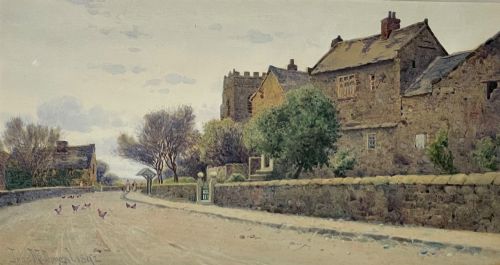
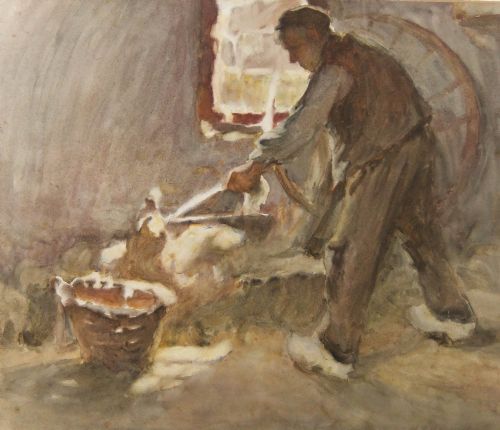
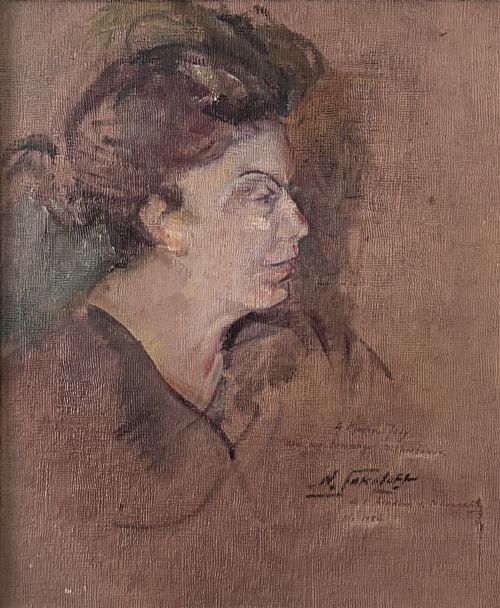
A brown earthy painting typically encompasses rural landscapes, farm yards, and coastal views rendered in subdued, naturalistic palettes during the nineteenth and twentieth centuries. The pieces on this page span the Victorian era, Edwardian period, and mid-century modern movements, capturing pastoral scenes and village settings.
Buyers will encounter oil paintings on canvas or wood panel alongside watercolours on paper. The works often depict cattle, horses, working farmyards, and rustic cottages set in British and European countryside.
Materials and Technique
Artists utilised oil paint and watercolour paint applied to prepared canvas, wood panels, or heavy paper supports. The handling of these mediums relies on tonal modulation to build up deep, earthy colour fields rather than bright primaries.
Stretcher frames, original wooden mounts, and surface varnishes protect the pigment layers. Brushwork ranges from tight, descriptive detail in Victorian watercolours to looser, impressionistic strokes in later oil compositions.
The listings incorporate works spanning from the nineteenth century through the 1960s, featuring both canvas supports and watercolours on paper.
Quality and Execution
The strength of a composition rests on the artist's command of light, shadow, and tone within a restrained palette. Superior pieces demonstrate confident handling of perspective and atmosphere, successfully conveying the depth of a landscape or the texture of a rustic interior.
Condition of the pigment and support influences the overall integrity of the work. Well-preserved surfaces retain their original varnish and colour saturation without heavy retouching or destabilised grounds.
William H Myers·Tom Campbell·John McDougal·Henry Silkstone Hopwood·James Tower·Raimond Louis Lecourt·James Orrock·Vincenzo Irolli·John Atkinson·Herbert Royle·John Frederick Herring·Robert Finley McIntyre·Alfred Grey·R P Noble·Paul Jones·William Traies·Ernest Higgins Rigg·Rowland Henry Hill·Tom Dudley·J L Van Leemputten·Frederick William Jackson·Eugene Boudin·Kershaw Schofield·William Greaves·Francis William Topham
The Brown Earthy Painting Glossary
- Oil Paint
- A slow-drying medium composed of pigments suspended in a drying oil, typically linseed. This allows for rich blending and deep tonal depth.
- Watercolour
- A paint consisting of colour pigments suspended in a water-soluble vehicle, usually applied to paper. It relies on the white of the paper to provide luminosity.
- Wood Panel
- A rigid wooden support used instead of canvas for oil paintings, frequently employed in earlier periods. It provides a firm foundation for detailed brushwork.
- Barbizon School
- A mid-nineteenth-century French art movement characterised by tonal realism and a focus on pastoral landscape painting. It heavily influenced subsequent European landscape artists.
Brown Earthy Painting: Frequently Asked Questions
What subjects appear in these paintings?
The artworks predominantly feature rural landscapes, farm yards, coastal views, and pastoral scenes involving livestock or agricultural labour. Village streets and woodland settings also recur frequently.
Scenes are drawn from British countryside locations as well as continental European settings, reflecting the regional interests of nineteenth and twentieth-century painters.
How do I care for an antique watercolour?
Watercolours require protection from direct sunlight to prevent fading of the delicate pigments on paper. Framing behind UV-resistant glass helps preserve the medium.
Keep the works away from damp environments to avoid mould growth or foxing spots on the paper support.
What is the difference between oil and watercolour?
Oil paint uses an oil binder on canvas or wood panel, yielding rich, buildable layers with deep texture. Watercolour uses a water-soluble binder on paper, creating translucent washes.
Oils are generally more resilient to atmospheric moisture than unglazed watercolours, though both benefit from stable indoor conditions.
How can I tell the period of a painting?
Stylistic markers, framing techniques, and signatures often point to specific eras like the Victorian period or the early twentieth century. Subject matter and clothing styles in figurative works offer further chronological clues.
Exhibition labels, inscriptions on stretchers, or biographical dates of the artist provide precise historical context.