
Brown Dining Chairs
Brown dining chairs anchor a room with rich timber tones and honest craftsmanship, offering both practicality and historical character.
Brown Dining Chairs
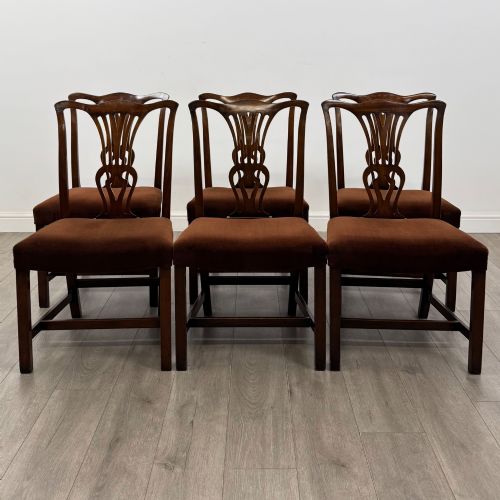
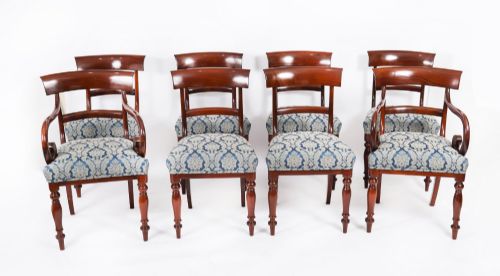
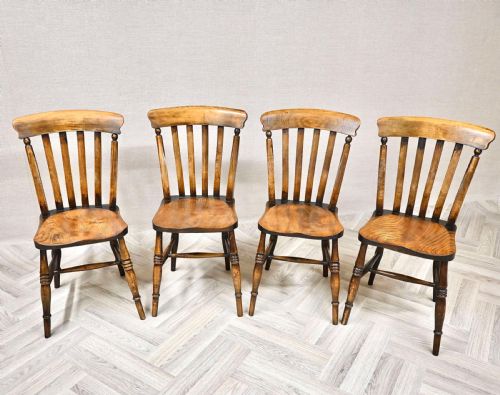
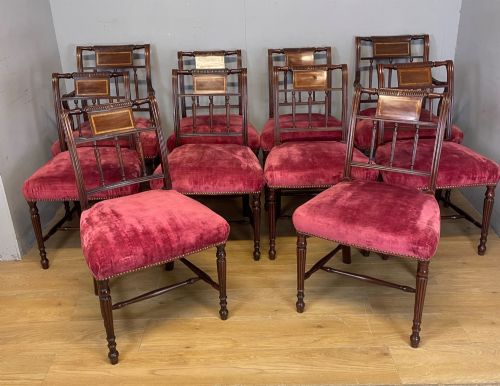
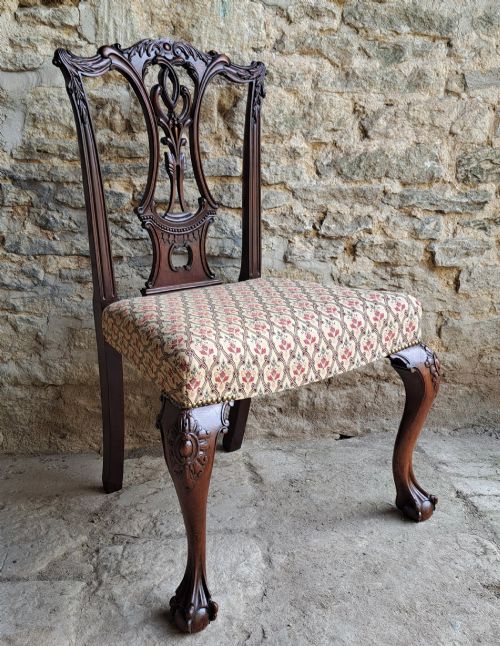
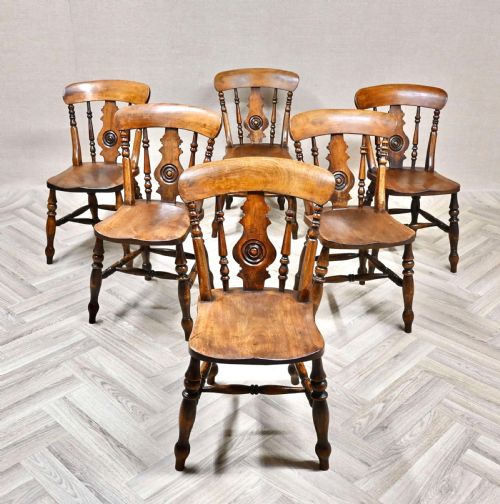
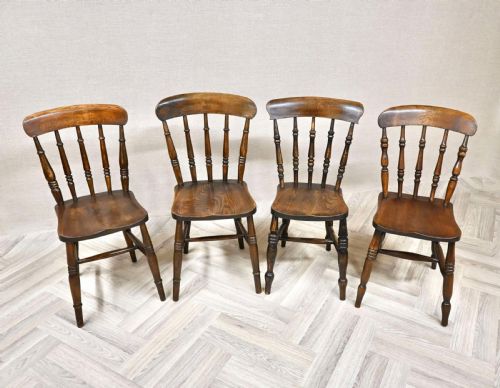
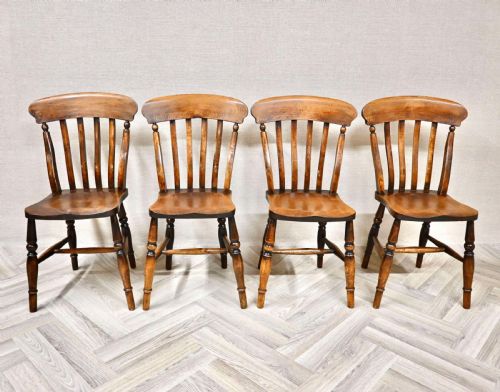
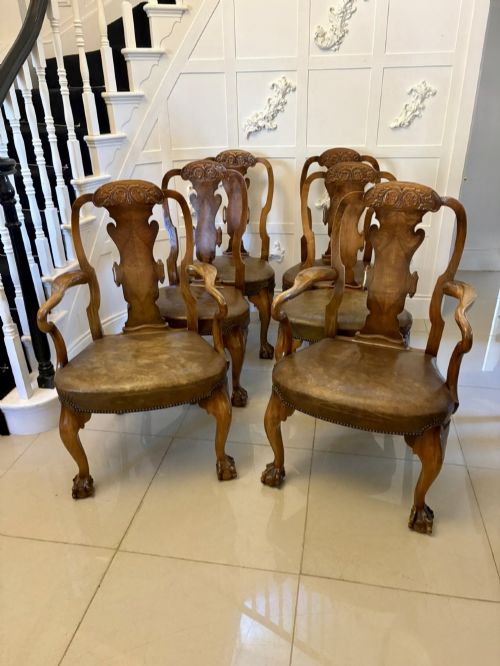
Brown dining chairs encompass everything from formal George III mahogany sets to rustic elm and beech country Windsors. When you search for brown dining chairs, you encounter formal dining seats alongside robust farmhouse chairs intended for everyday use. The examples recorded here span the eighteenth, nineteenth, and early twentieth centuries, reflecting diverse domestic interiors.
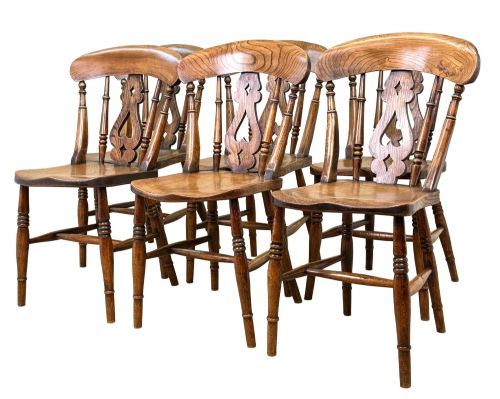
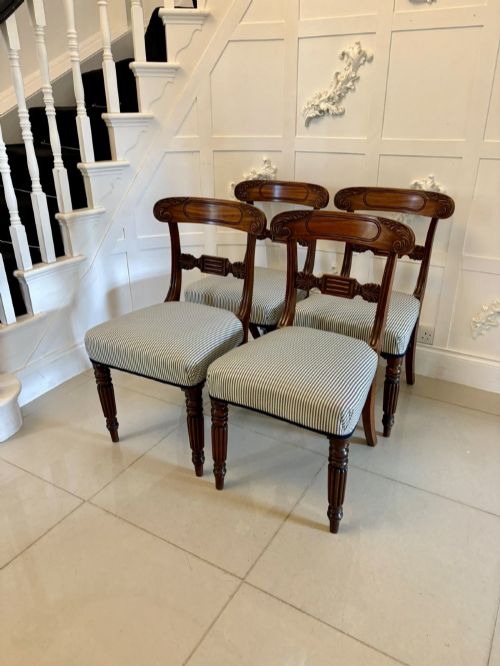
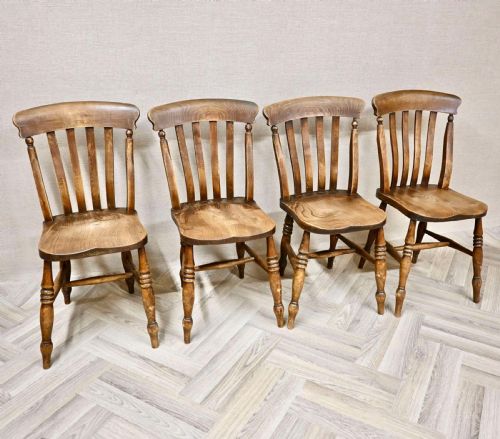
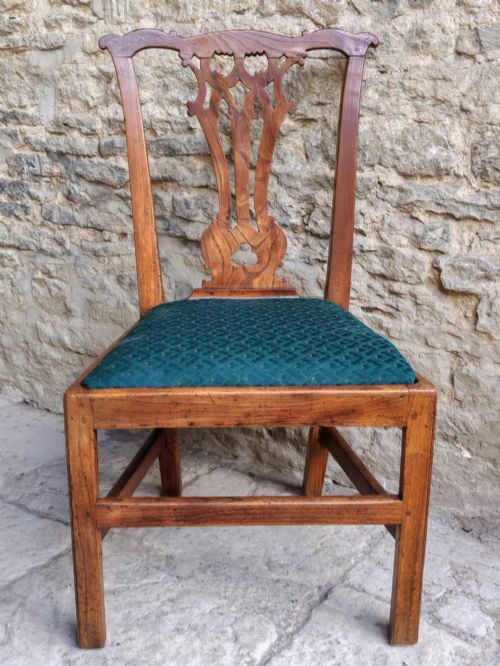
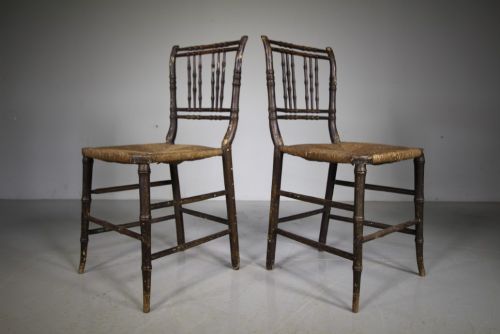
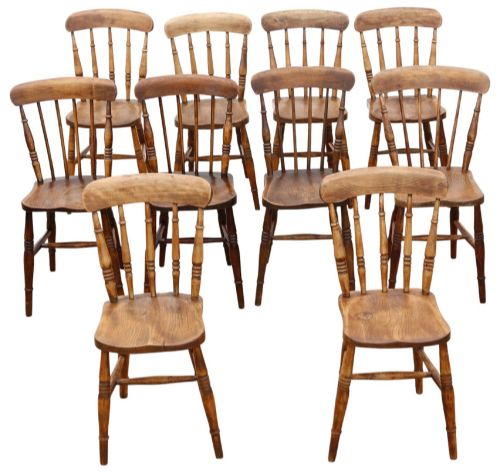
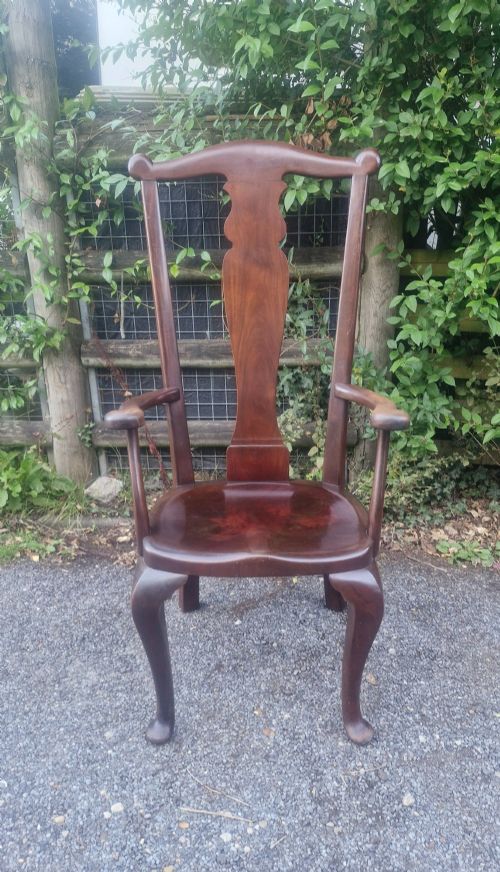
Formal dining sets often feature mahogany, walnut, or oak, adopting Chippendale, Sheraton, or Regency styles with carved backs and upholstered seats. Country variants utilise elm, ash, fruitwood, and pine, frequently taking the form of spindle backs, bar backs, or Windsor armchairs. These pieces provide durable seating solutions rooted in historical cabinet-making traditions.
Materials and Construction
Cabinet makers relied heavily on dense hardwoods such as mahogany, walnut, and oak for formal seating, turning and carving them into precise architectural forms. Regional makers constructed vernacular country chairs using native timbers like elm, ash, beech, and fruitwood, often combining woods within a single frame for structural strength.
Traditional joinery methods, including mortise and tenon joints and steam-bending for Windsor bows, ensured long-term durability. Seats were frequently shaped from solid timber or dropped in to receive textile, leather, or cane coverings.
Some nineteenth-century Windsor chairs retain small ink stamps beneath their seats left by provincial makers who counted their output by the dozen.
Indicators of Quality
Quality rests upon the crispness of carved details, the selection of figured timber veneers, and the structural integrity of the frame. Superior sets exhibit matching grain patterns across multiple chairs, indicating careful selection from the original log.
In country seating, quality shows in the balance of the spindle turnings, the comfort of the saddle-shaped seat, and the tightness of the wedge joints. Altered frames, mismatched elements, or replaced components distinguish standard utilitarian items from well-preserved masterworks.
The Brown Dining Chairs Glossary
- Windsor chair
- A wooden chair built with a solid sculpted seat into which the legs and back sticks are wedged directly. They often feature steam-bent bows and central splats.
- Bar back
- A dining chair style featuring a horizontal wooden slat across the upper back, frequently seen in nineteenth-century designs. This shape provides lower back support while keeping the profile clean.
- Balloon back
- An oval or rounded upholstered backrest popular during the Victorian period. This profile mirrors the curved contours of a hot air balloon.
- Carver
- An armchair designed to match a set of single dining chairs, typically placed at the head of the table. These seats include integrated armrests for added comfort.
- Harlequin set
- A collection of dining chairs that share a similar period, style, or material but were not originally manufactured together. These groupings were assembled later to match larger tables.
Brown Dining Chairs: Frequently Asked Questions
How do I care for antique wooden chairs?
Apply natural beeswax periodically to nourish the timber and maintain a soft lustre without building up heavy chemical layers.
Keep wooden seating away from direct heat sources and strong sunlight to prevent the timber from splitting or drying out.
Can I mix different chair styles around a table?
Mixing styles creates an eclectic look, provided the wood tones or overall heights share a common visual thread.
Harlequin sets demonstrate that combining related chairs from the same century has a long domestic precedent.
What is the difference between a side chair and a carver?
Side chairs are built without arms to allow multiple seats to fit compactly alongside a dining table.
Carvers include armrests and were traditionally reserved for the head of the household or honoured guests.
How do I identify a Windsor chair?
Windsor chairs are defined by their solid plank seats where the legs and back spindles insert into bored holes rather than connecting to a traditional frame.
They rely on turned parts and bentwood bows rather than traditional cabinet joinery.