

Brown Country Armchair
A brown country armchair brings solid vernacular timber and generous proportions to a room, offering tactile seating shaped by regional craft.
Brown Country Armchair
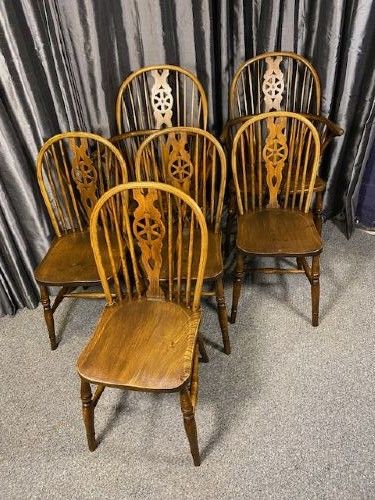
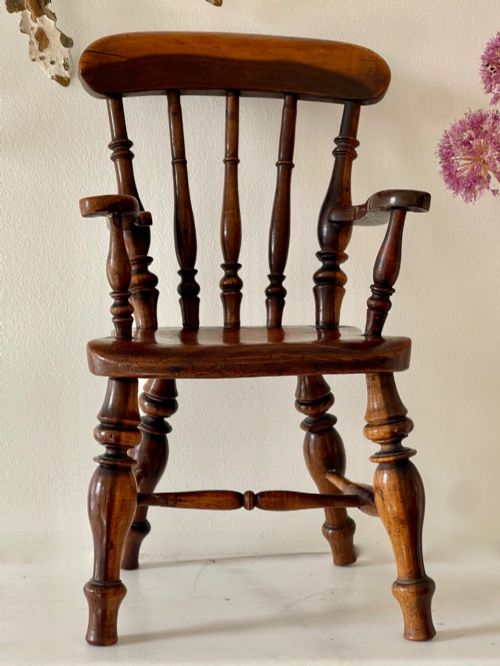
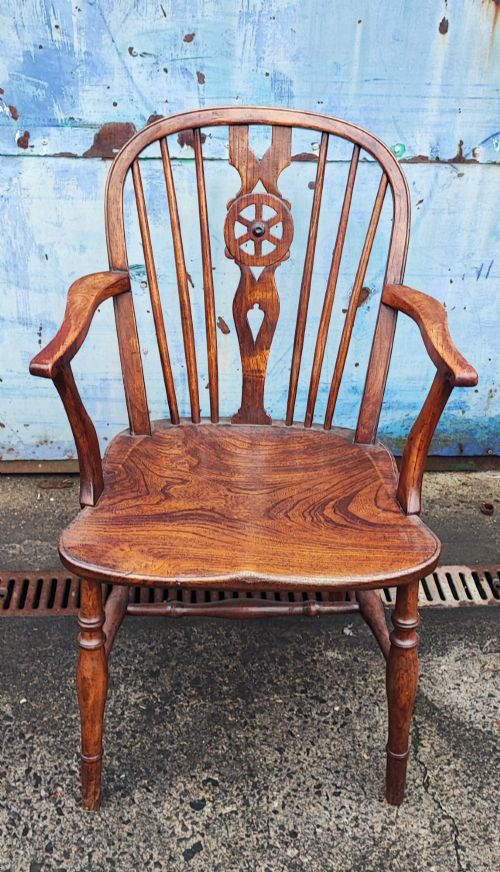
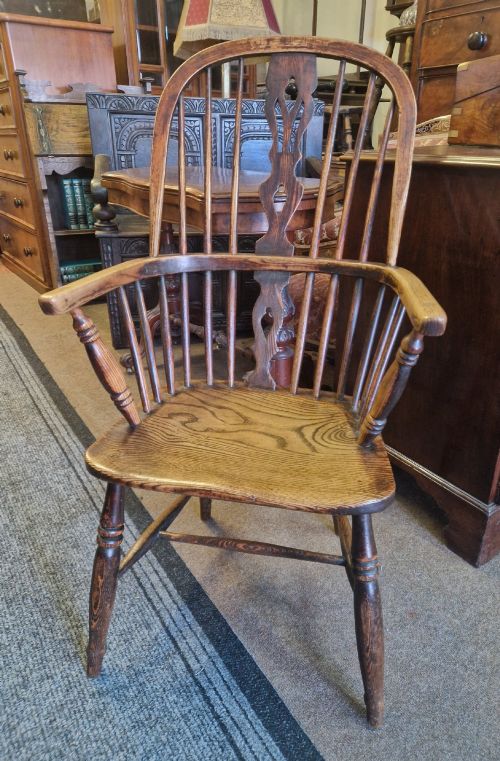
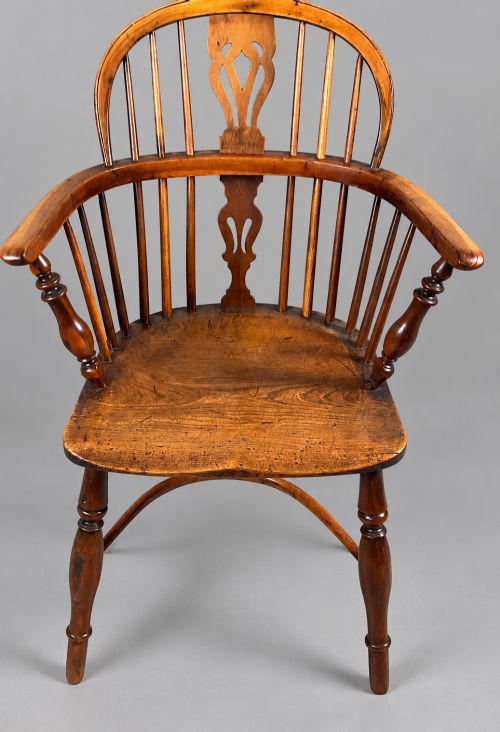
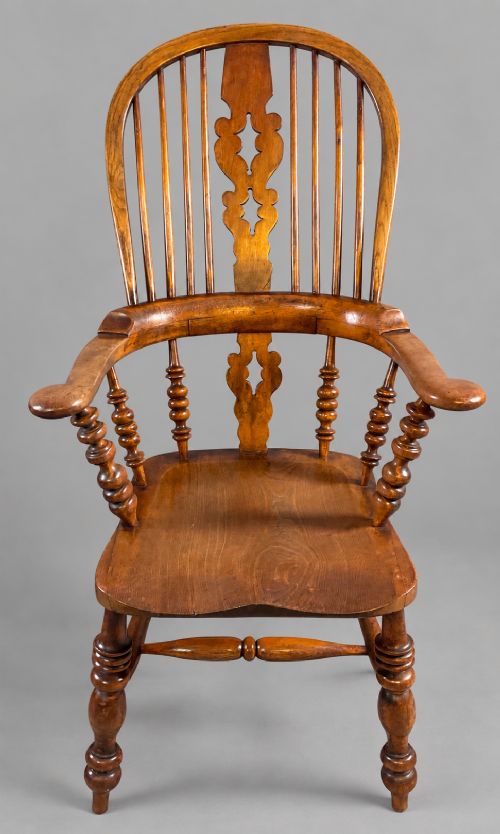
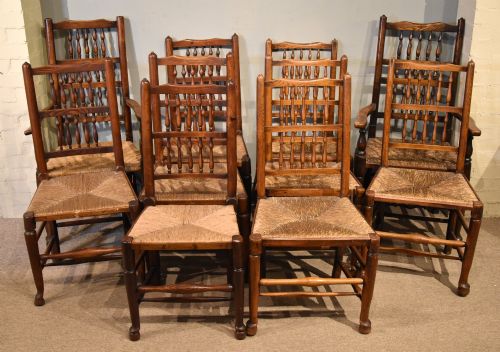
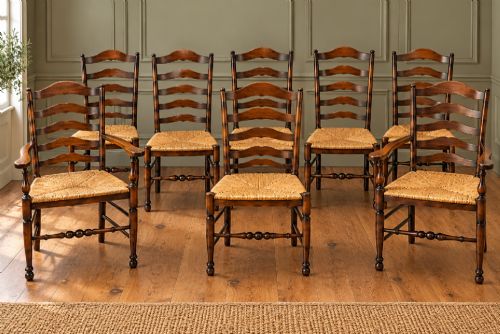
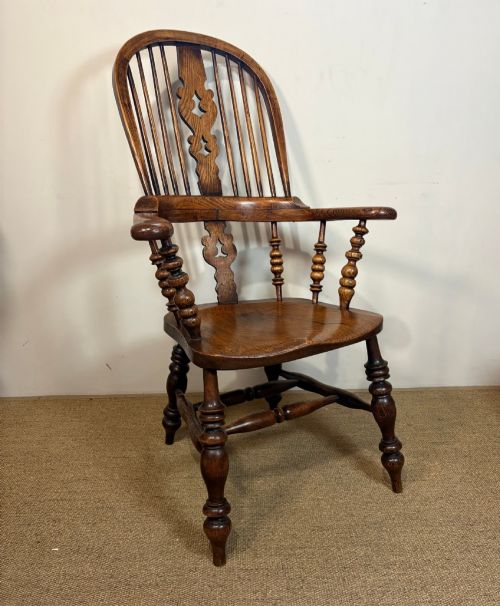
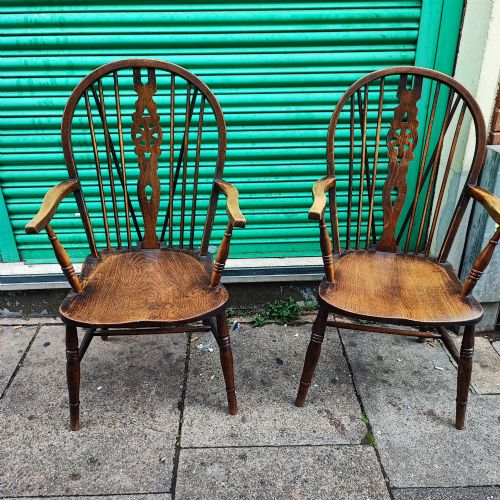
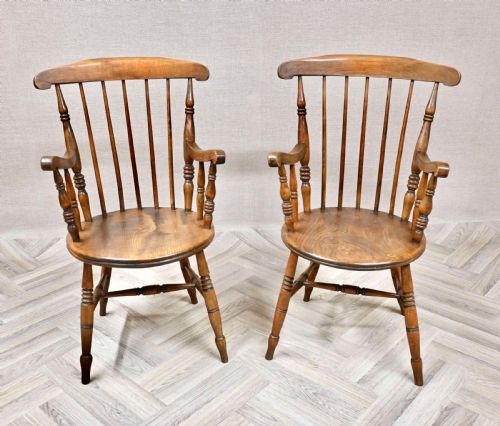
A brown country armchair is a seating form rooted in provincial workshops, appearing as Windsors, smokers' bows, captains' chairs, and ladderbacks. Buyers searching for a brown country armchair encounter regional British seating types spanning the eighteenth, nineteenth, and early twentieth centuries, constructed without urban pretension.
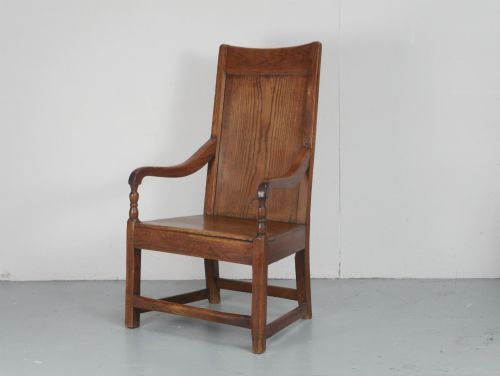
The versions most common in these listings include nineteenth-century elm and yew Windsor armchairs with high or low backs, alongside oak wainscot, ash stickbacks, and beech framing. These heavy timber chairs reflect domestic farmhouses, cottages, and provincial parlours where comfort and utility governed construction.
Regional variations define the group, from Thames Valley hoop backs to provincial vernacular seating utilising local coppice woods. The forms range from deep-seated farmhouse carvers to compact children's chairs and desk chairs, all sharing a patinated brown timber surface.
How they were made
These chairs rely on a combination of solid native hardwoods where different timbers serve specific structural roles, such as elm seats paired with ash spindles and yew or beech bending work. Traditional bodging and joinery techniques united turned legs, steam-bent hoops, and carved plank seats without relying on metal fasteners.
Makers utilised greenwood working methods, turning unseasoned timber on pole lathes and assembling components so that shrinking joints locked together permanently as the wood dried. Surfaces finished with natural wax or accumulated friction developed deep patination over generations of daily use.
Brown Country Armchair Retail Price Guide 2026
Typical asking prices for brown country armchair among the pieces listed under this phrase on Sellingantiques today, from the lower quarter to the upper quarter. They describe what is for sale here now, not the wider market.
Many rural chairs show ancient ink stains and saddle wear from generations of writing letters by the hearth.
What varies in quality
Quality in these vernacular chairs rests in the harmony of timber selection, such as the dramatic figuring found in yew wood grain and the thickness of a well-sculpted elm saddle seat. Master makers achieved balance in spindle placement, ergonomic comb-back curves, and the retention of crisp turned details on legs and arm supports.
The distinction between ordinary utility seating and superior examples lies in structural integrity, original surface patination, and restrained proportions. Chairs retaining their early components without excessive timber replacement command attention from those who value unaltered regional craftsmanship.
Gabbitass of Worksop·J Spencer
The Brown Country Armchair Glossary
- Windsor chair
- A wooden chair built with a heavy solid timber seat into which the legs and back spindles are directly fitted. This construction method creates a sturdy, resilient frame typical of country workshops.
- Smoker's bow
- A low-backed Windsor armchair featuring a continuous bentwood rail forming the arms and upper backrest. These comfortable chairs originated in provincial taverns and domestic parlours.
- Comb back
- A Windsor chair design where the central vertical spindles extend upward through a top headboard resembling a hair comb. This regional variation provides additional head support.
- Bodge
- A traditional woodland craft method where green timber is turned and shaped on a temporary lathe near the coppice. It allowed country artisans to supply component parts efficiently to chair makers.
- Wainscot chair
- An early seventeenth- or eighteenth-century heavy oak armchair constructed using panel-back frame and joinery techniques. These formal precursors to country seating display panelled backs and solid armrests.
Brown Country Armchair: Frequently Asked Questions
What is a brown country armchair?
A brown country armchair is a traditional wooden seat produced by regional makers using native timbers like elm, ash, and yew. These chairs prioritize ergonomic comfort and structural utility over formal decorative styles.
Common forms include Windsor chairs, smokers' bows, and captains' chairs, all characterised by warm patinated wood surfaces and robust vernacular construction.
How were Windsor armchairs constructed?
Windsor armchairs were built around a thick solid wood seat, usually sculpted from elm, which served as the anchor for the legs below and the spindles above. Makers used a combination of turned legs, steam-bent arm rails, and wedged tenon joints to create a resilient framework.
This clever engineering allowed the separate wooden components to lock tightly together as the unseasoned greenwood dried over time.
How do I style a country armchair at home?
Living with a country armchair involves placing the piece where its tactile timber and sculptural spindles can be appreciated as both seating and sculpture. They work naturally beside fireplaces, at rustic dining tables, or as standalone reading chairs in studies.
Pairing these chairs with plain walls and simple textiles allows the natural grain and aged patina of the wood to stand out in a modern interior.
How can I tell the age of a country armchair?
Dating a country armchair requires examining the tool marks, timber combinations, and the wear patterns on the seat and foot rails. Eighteenth-century examples often display deeper hand-sculpted saddle seats and peg joinery, while nineteenth-century versions frequently utilise machine-turned spindles and standardised undercarriages.
The specific species of wood, such as the use of Thames Valley yew or provincial ash, also provides clues regarding the region and era of production.