



Brown Cattle Artwork
Brown cattle artwork captures pastoral life through 19th-century and early 20th-century paintings that bring rural scenes into domestic interiors.
Brown Cattle Artwork
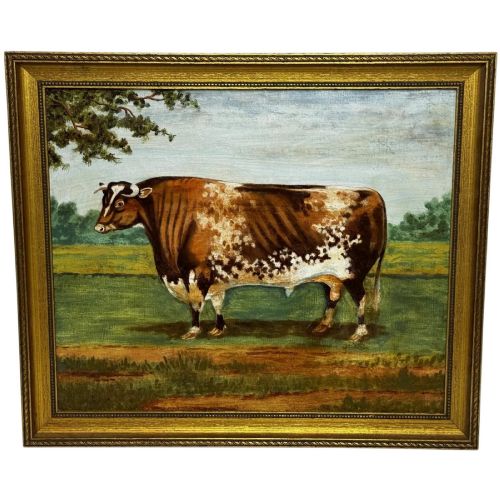
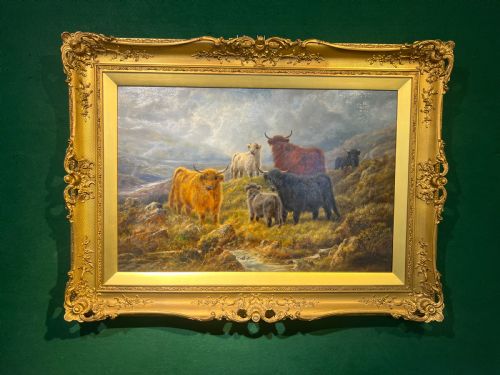
Brown cattle artwork encompasses historical paintings and watercolours depicting herds, bulls, and farmyard scenes across British and European landscapes. These pieces focus on livestock in natural settings, often highlighting Shorthorn, Longhorn, or Highland cattle by streams, lochs, and pastures.
The versions most commonly met on this page originate from the Victorian and Edwardian periods. They range from highly detailed oil paintings on canvas by named academic artists to atmospheric watercolours and naïve portrayals.
Subjects frequently combine animal portraiture with topographical views, showing drovers, barns, and farming valleys. The artistic approach shifts from romanticised pastoral realism to British impressionist interpretations.
Materials and Techniques
Artists worked primarily in oil paint on canvas or watercolour on paper, frequently mounted behind glass within wooden or giltwood frames. Oil paintings allowed for rich layering of earthy tones, capturing the textures of animal hides and landscape foliage.
Watercolour compositions rely on delicate washes of pigment on paper to depict atmospheric effects like morning mist over Scottish lochs. Frames often utilise gold leaf or burr wood surrounds characteristic of nineteenth-century framing traditions.
Listings feature works executed in oil on canvas, watercolour on paper, and pastel, framed in period giltwood and wood.
Assessing Quality in Pastoral Paintings
Quality rests upon the artist's ability to render the anatomy and posture of the cattle with anatomical conviction, distinguishing finer academic works from naive interpretations. Hand and brushwork control in capturing light on water, hair, and surrounding landscape elements determines the visual depth.
The integration of the livestock into the wider topography separates standard decorative pieces from accomplished works of the British School. Original period framing and documented provenance further elevate the standing of an individual canvas.
Henry Robinson Hall·Samuel Joseph Clark·Thomas Sidney Cooper·Sidney Richard Percy·Louis Bosworth Hurt·Owen Bowen
The Brown Cattle Artwork Glossary
- Canvas
- A heavy woven fabric stretched across a wooden frame to form the foundation for oil paintings. It provides a durable surface that accepts multiple layers of pigment.
- Giltwood
- Wood carved and coated with a thin layer of gold leaf or metallic gilt compound. It frames many nineteenth-century paintings.
- Watercolour
- A painting method where water-soluble pigments are suspended in a water-based solution on paper. It creates translucent washes of colour.
- Naive
- An artistic style characterised by a childlike perspective and a lack of formal academic training in proportion and perspective. These works rely on direct observation.
- Pastoral
- A genre of art depicting rural life, shepherds, and livestock in idealized or natural countryside settings. It emphasises peace and simplicity.
Brown Cattle Artwork: Frequently Asked Questions
What periods do these paintings date from?
The pieces span the nineteenth and early twentieth centuries, with a strong representation of Victorian and Edwardian eras. Painters worked across these decades recording rural and agricultural subjects.
Dates are often established through signatures, inscriptions on stretchers, or stylistic traits typical of British landscape painting traditions.
How were these artworks displayed originally?
Landscapes and animal paintings were framed in carved wood or giltwood surrounds to hang in domestic parlours and country houses. They served to bring the perceived tranquility of the countryside inside.
Many retain their original period frames, which complement the tonal palette of the canvas.
Are the cattle breeds identifiable in the paintings?
Artists frequently recorded specific farm animals, including Shorthorn bulls, Longhorn cows, and Scottish Highland cattle with prominent horns and long coats. Breeders and landowners often commissioned portraits of prized livestock.
Anatomical details help distinguish between working farm cattle and beef breeds depicted in pastoral landscapes.
How do watercolours differ from oil paintings here?
Watercolours on paper offer lighter, more translucent depictions of atmospheric conditions like valley mists and riverbanks. They require protection under glass to prevent environmental damage.
Oil paintings on canvas present heavier textures and deeper pigments that capture the solid form of cattle and the density of woodland.