


Brown Cane Chair
These brown cane chair examples combine resilient natural weaving with rich timber frames, offering practical seating shaped by centuries of revival styles and vernacular design.
Brown Cane Chair
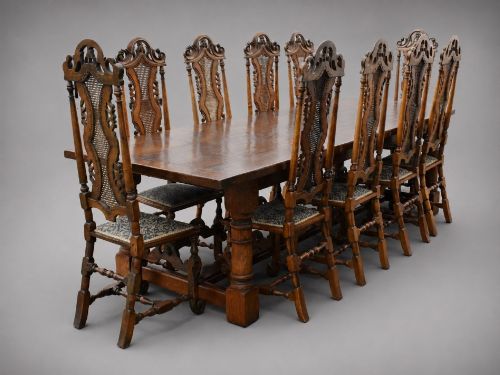
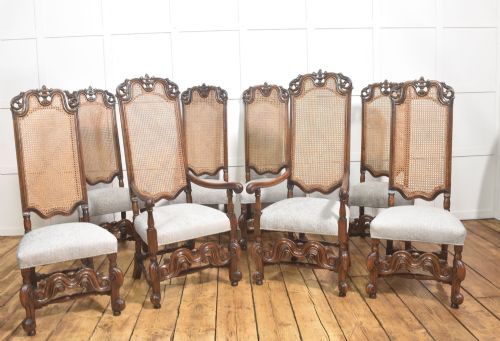
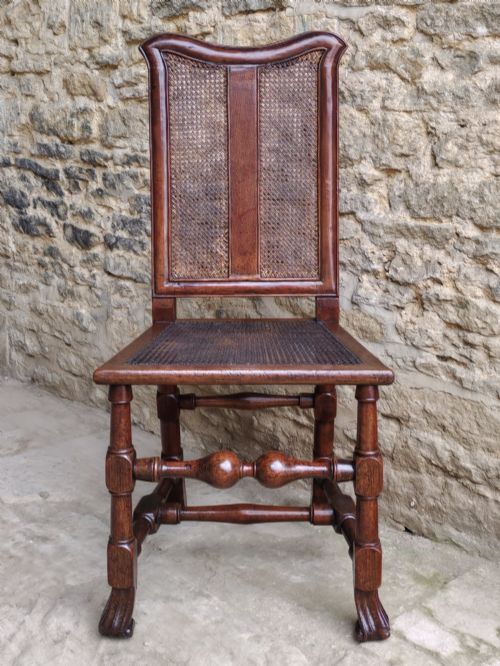
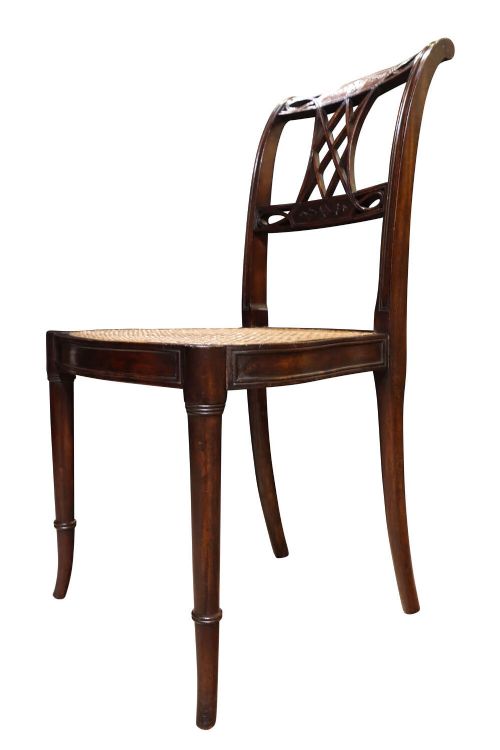
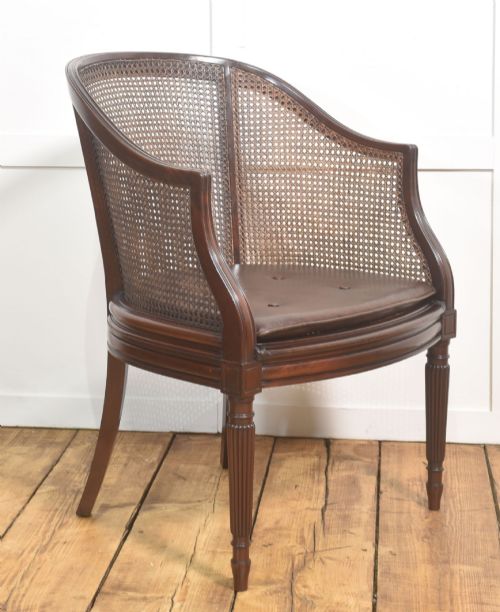
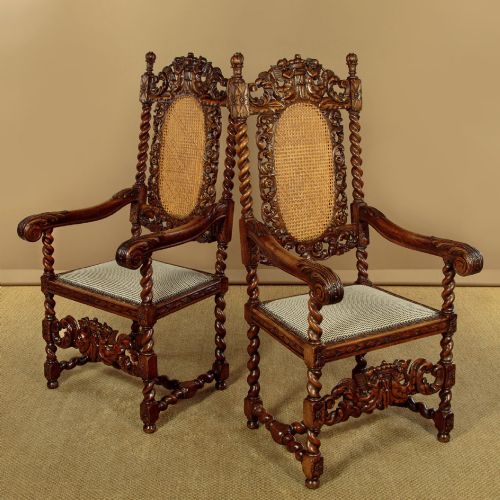
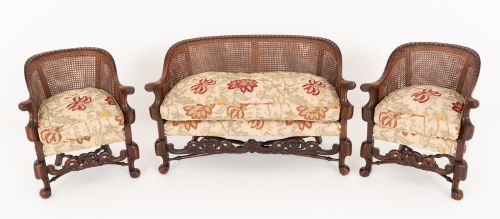
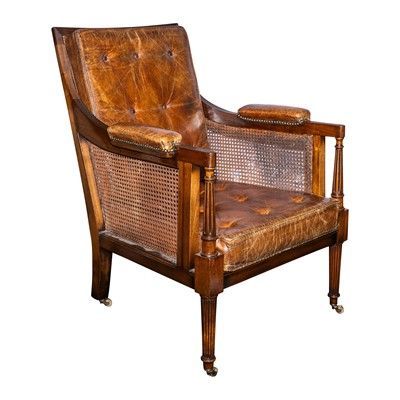
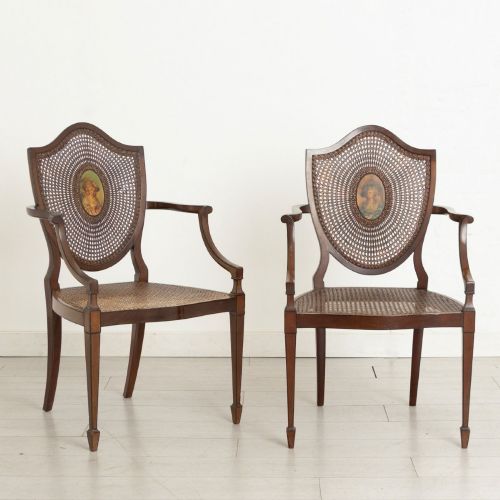
A brown cane chair spans dining sets, library armchairs, and low bedroom seating drawn from periods across the nineteenth and early twentieth centuries. When searching for a brown cane chair, buyers frequently encounter Edwardian mahogany tub models and robust walnut frames displaying revival influences.
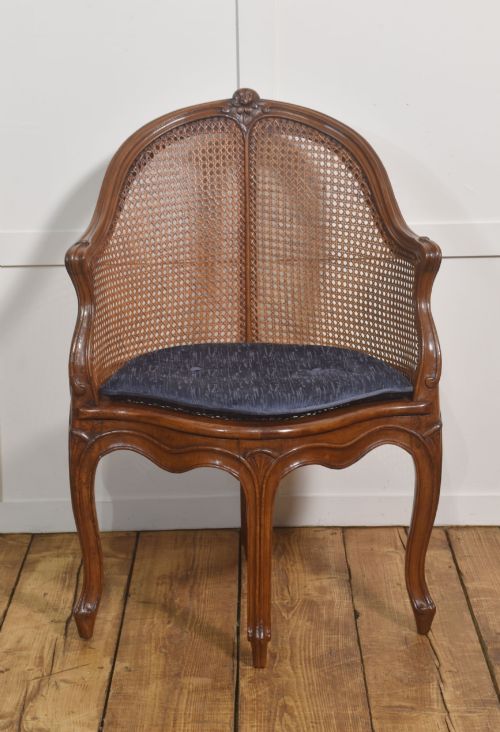
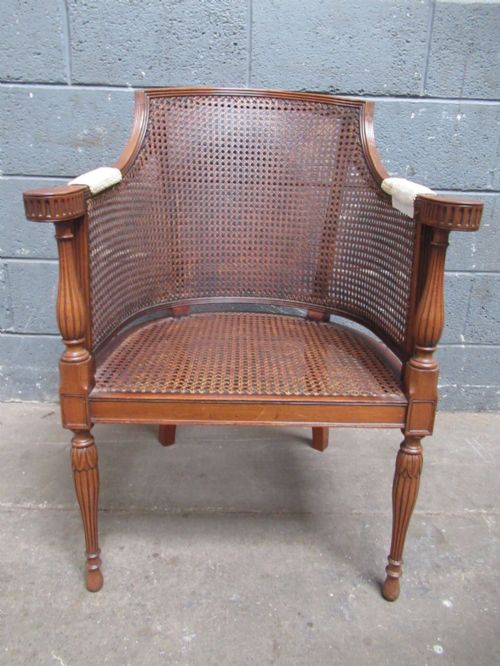
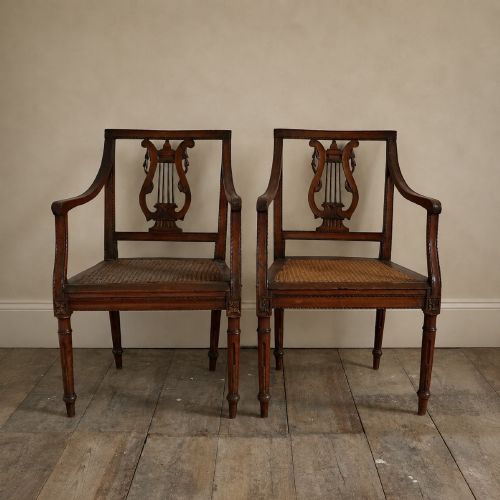
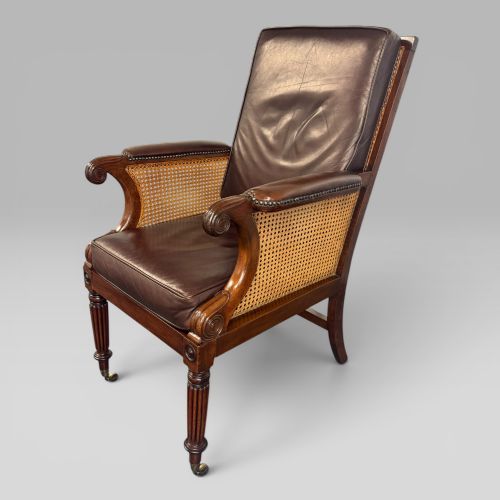
The selections on this page incorporate distinct regional styles, ranging from Anglo-Indian colonial armchairs to French Louis XV interpretations and English Regency library bergères. These pieces function as versatile desk chairs or decorative accents within living spaces and bedrooms.
How they were made
Frames rely principally on dense hardwoods such as mahogany, walnut, and oak, shaped through traditional joinery and detailed hand-carving. Selected pieces introduce supplementary elements in leather, brass, or satinwood to enhance structural support and decorative contrast.
Seating areas and backs utilise woven cane or rattan strands threaded tightly through drilled frame apertures. This technique yields a resilient, flexible mesh surface capable of distributing weight while maintaining interior ventilation.
Materials documented across the inventory include solid mahogany, walnut, oak, satinwood, leather, brass, and woven rattan.
What varies in quality
Differentiation across these chairs rests upon the crispness of timber carving, the selection of figured wood veneers, and the geometric precision of the hand-woven cane panels. Superior examples exhibit seamless joints and well-balanced proportions that reflect careful workshop execution.
Subtleties in historical revival detailing, such as accurate Regency curves or faithful Jacobean turnings, distinguish standard production items from finer cabinetmaker output. The integrity of the original wood finish and the tightness of the woven mesh further define the hierarchy of grade.
James Shoolbred·Dryad & Co·Waring & Gillow
The Brown Cane Chair Glossary
- Bergère
- An enclosed upholstered or caned armchair with closed sides, typically featuring a wooden frame. This form gained popularity during the eighteenth century and inspired numerous nineteenth-century revivals.
- Cane
- Strips of peeled rattan woven into a patterned mesh for chair seats and backs. The material provides a strong yet lightweight surface.
- Tub chair
- A curved seating form where the back and arms merge into a single continuous semi-circular rail. It wraps around the sitter for enclosed comfort.
- Klismos
- An ancient Greek chair design characterised by outwardly curved legs and a concave backrest. Revival versions appeared in nineteenth-century seating.
- Bobbin turned
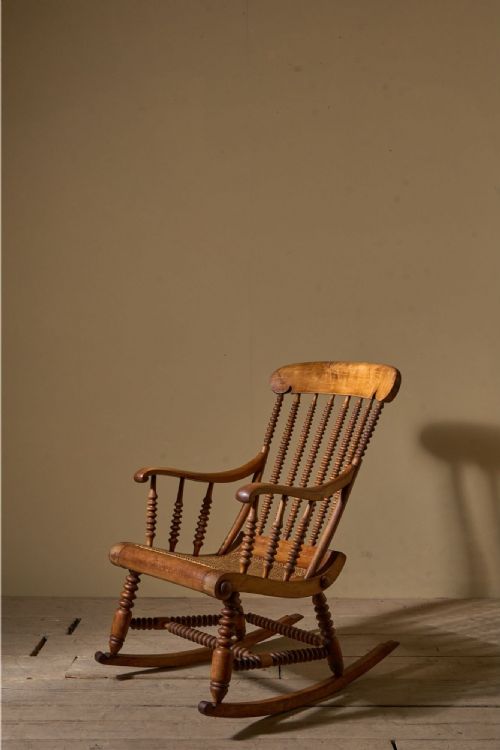
- Timber legs or stretchers shaped on a lathe to resemble a series of wooden reels or bobbins. This decorative turning method appears frequently on seventeenth-century revival frames.
Brown Cane Chair: Frequently Asked Questions
How do I clean a cane seat?
Dust the woven surface regularly using a soft brush and wipe occasionally with a damp cloth to prevent the rattan from becoming brittle.
Avoid soaking the material and ensure the room maintains moderate humidity to keep the natural fibres supple over time.
Can I use these chairs daily?
Most sturdy wood and cane designs handle regular use in studies, bedrooms, or dining rooms without difficulty. Distributing weight evenly helps protect older woven panels from localized stress.
Heavier library bergères and robust dining chairs suit frequent sitting, while delicate bedroom pieces benefit from lighter service.
How do I identify a Regency period chair?
Regency seating often displays classical influences, including saber legs, reeded frames, and scrolled back rails executed in dark mahogany. Proportions tend to be clean and architectural.
Later nineteenth-century copies replicate these motifs but frequently employ heavier timber dimensions and machine-shaped turnings.
What is the difference between a side chair and an armchair?
Side chairs lack armrests, making them suitable for tucking neatly beneath dining tables or placing against hallway walls. Armchairs incorporate structural supports for the arms, offering a more enclosed seat.
Both variants share matching timber frames and woven cane inserts when produced as part of larger dining sets or matching suites.