
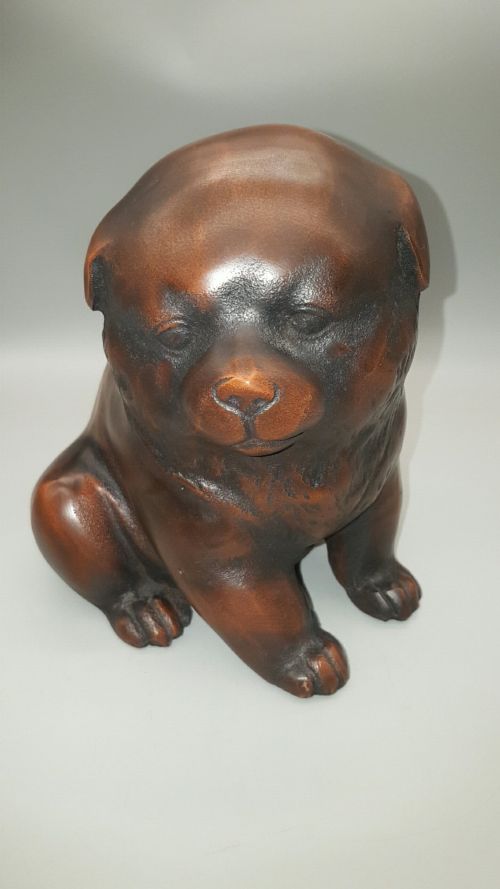
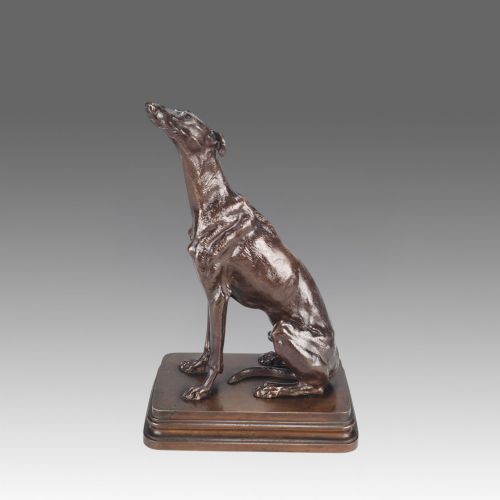
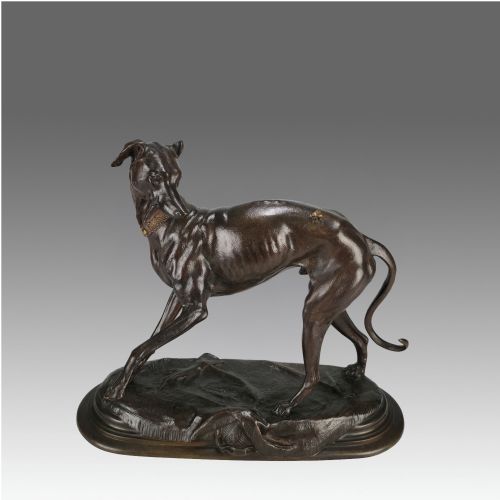
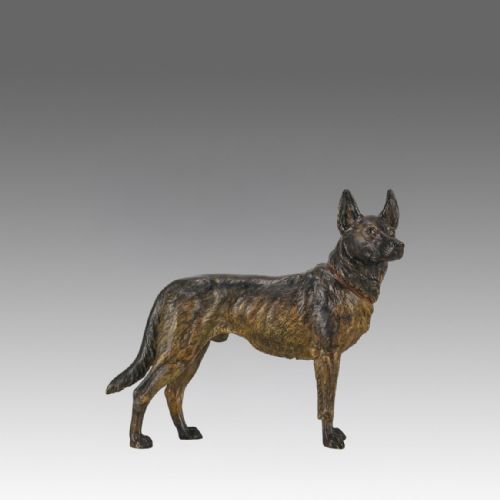
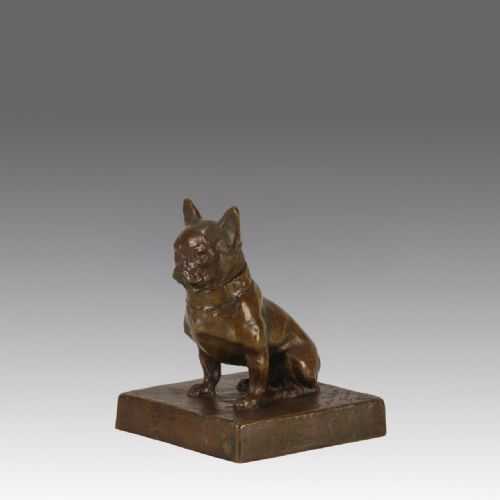
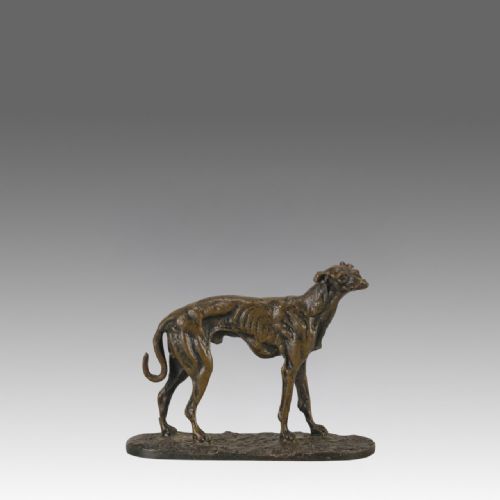

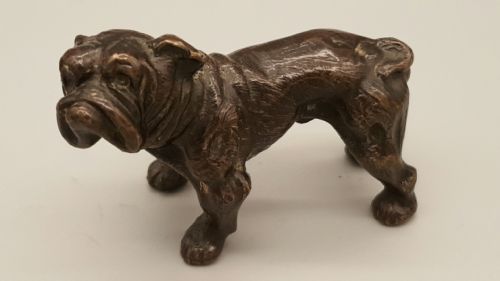


Brown Bronze Dog Sculpture
These brown bronze dog sculptures capture canine form with lasting realism, spanning nineteenth-century animalier studies to early twentieth-century miniatures.
Brown Bronze Dog Sculpture
When you search for a brown bronze dog sculpture, you encounter cast metal figures representing hound, terrier, pug, and sporting breeds. These pieces range from substantial nineteenth-century French animalier statues to small Austrian cold-painted Vienna bronzes and Japanese okimono.
The selections on this page concentrate heavily on works produced during the Victorian and Edwardian eras, alongside early twentieth-century examples. You will find table ornaments, bookends, inkwells, car mascots, and sculptural dishes alongside free-standing statues.
Subjects include greyhounds, setters, poodles, bulldogs, and terriers depicted in seated, standing, or hunting poses. Some pieces combine the canine figure with human elements, other animals, or functional objects like trays and inkwells.
How they were made
Foundries created these animal figures primarily through the lost-wax casting method or sand casting in bronze, applying patinas to achieve various shades of brown. Many pieces utilise cold-painting techniques over bronze or incorporate marble bases for stability.
Alternative materials represented here include bronzed plaster and cast iron, though solid bronze remains dominant. Artisans hand-finished the metal surfaces to define fur texture, musculature, and facial expressions before mounting or sealing the patina.
Listings feature bronze, cold-painted bronze, patinated metal, marble, cast iron, and plaster across Victorian and early twentieth-century periods.
What varies in quality
Quality rests upon the crispness of the casting and the fidelity of the anatomical modelling. Master sculptors captured skeletal structure, tension in the limbs, and realistic fur textures that lesser workshops rendered with flat, generalised surfaces.
The depth and preservation of the original patina or cold-painted polychrome finish dictate visual appeal. Finer pieces retain intricate hand-chasing work applied after casting, whereas commercial productions show minimal secondary tooling by the foundry.
Alfred Dubucand·Alfred Barye·Franz Bergman·Dora Heber·P J Mêne·Jules Moigniez·Edith Parsons·Auguste Nicholas Cain·Alexandre Kelety·Arthur Waagen·Antoine Louis Barye·Louis Riche·Tsunemitsu
The Brown Bronze Dog Sculpture Glossary
- Animalier
- A nineteenth-century artistic movement focused on the realistic depiction of animals, particularly in sculpture. Practitioners studied anatomy meticulously through observations at menageries.
- Cold-Painted Bronze
- Bronze objects decorated with paint applied without heat firing, popular in Austrian workshops around nineteen hundred. This technique produced vivid colouration on small figures.
- Patina
- The surface coloration and sheen developed naturally through age or applied chemically by the foundry. Brown patinas in these sculptures mimic natural canine coats.
- Okimono
- Japanese decorative objects designed for display on a shelf or in a tokonoma alcove. These metal sculptures often depict puppies and domestic animals with naturalistic charm.
- Car Mascot
- A sculptural ornament mounted on the radiator cap of early automobiles. Sturdy bronze dog figures frequently served this decorative and personal function.
Brown Bronze Dog Sculpture: Frequently Asked Questions
What is an animalier bronze dog sculpture?
An animalier bronze is a nineteenth-century realist sculpture focusing specifically on animal subjects. These pieces portray dogs in active or resting postures with careful attention to anatomical accuracy.
Artists aimed to capture the true behaviour and movement of specific breeds rather than idealised forms. This style gained immense popularity across France and wider Europe during the Victorian period.
How do I care for a bronze dog sculpture?
Maintenance requires only occasional dusting with a soft, dry cloth to prevent particulate accumulation. Avoid chemical cleaners, polishes, or abrasive cloths that can strip the historic brown patina.
Keep the metal away from direct moisture and extreme temperature fluctuations to protect the surface finish. Applying microcrystalline wax occasionally helps preserve exposed bronze surfaces.
What is cold-painted bronze?
Cold-painting involves applying oil or enamel paints to a bronze casting without subjecting the piece to kiln firing. This technique allowed Austrian workshops to produce vibrantly coloured animal figures.
Over time, handling can cause this paint to show wear, making preserved painted surfaces particularly desirable. These pieces were frequently fashioned into small decorative items or desk accessories.
How can I tell the period of a bronze dog?
Dating relies on stylistic clues, foundry marks, signature styles, and the specific material composition. Nineteenth-century pieces often display naturalistic French animalier characteristics, while early twentieth-century works may show Art Deco influences.
Examining the base, mounting style, and casting seam techniques helps establish a chronological window. Maker signatures incised into the bronze base provide direct historical attribution.