
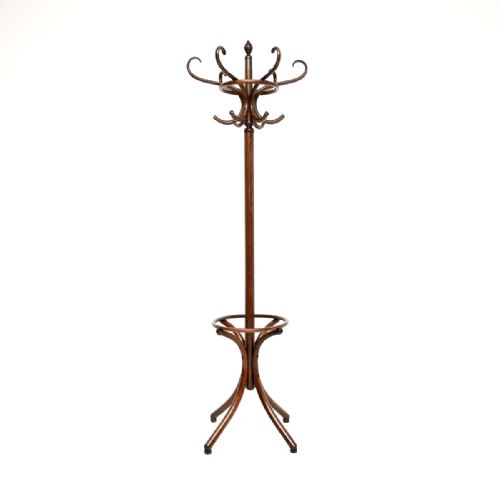
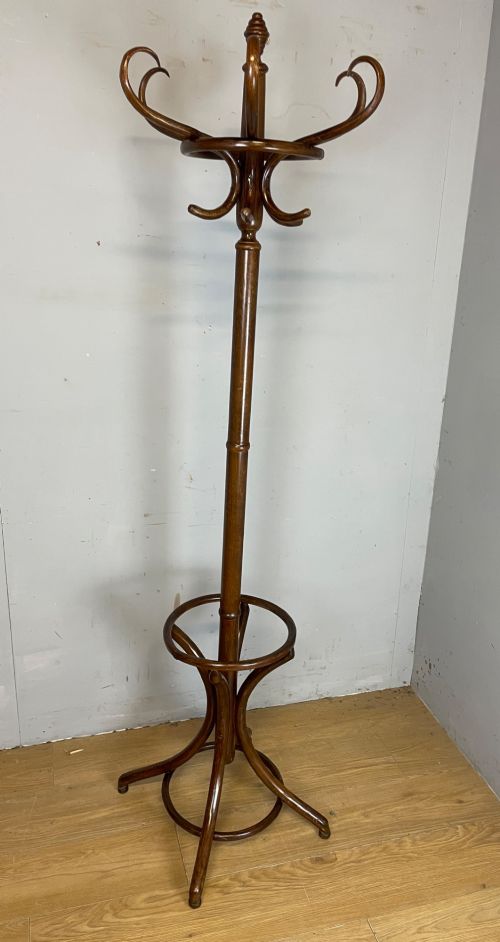
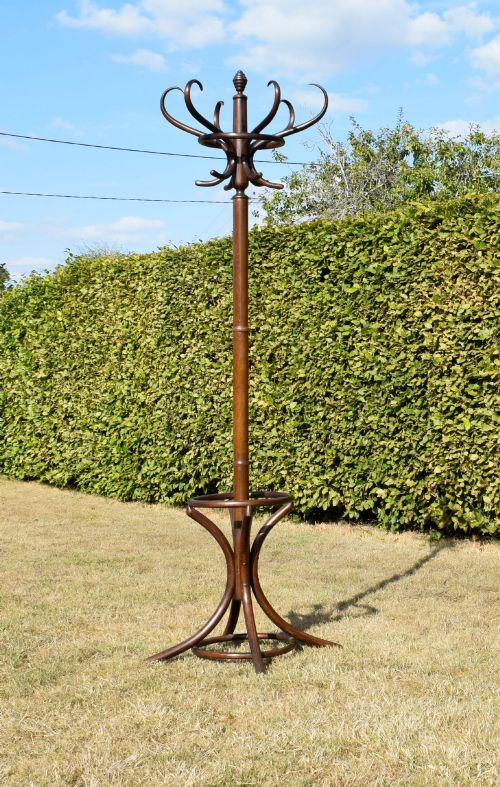
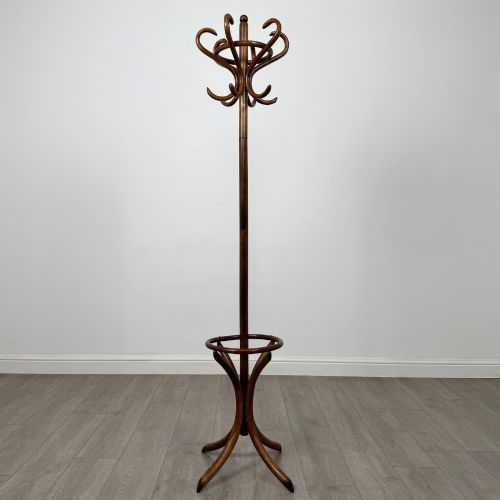
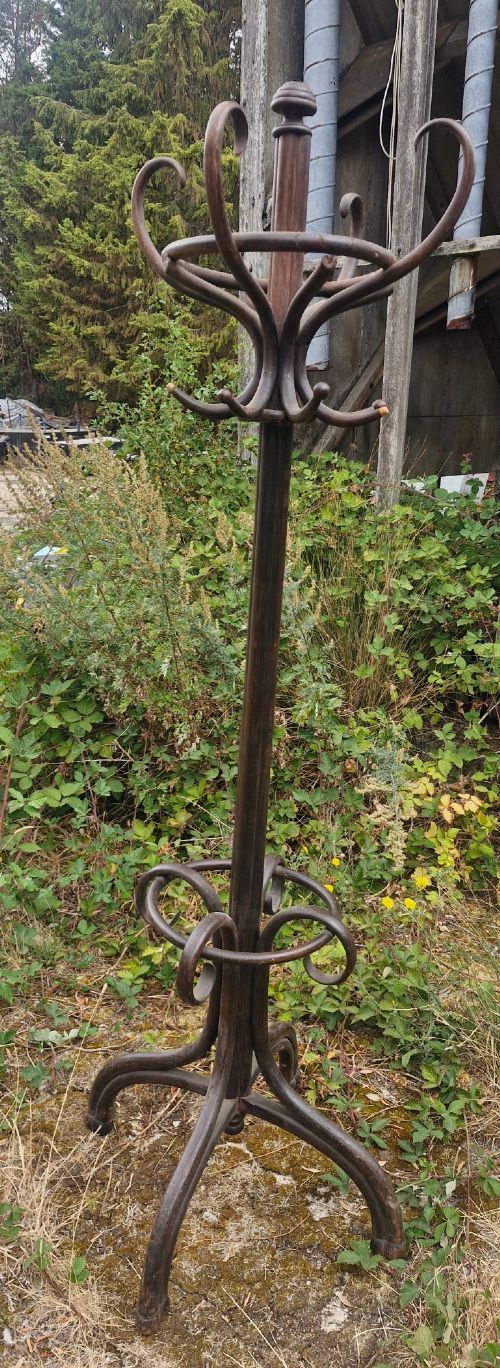
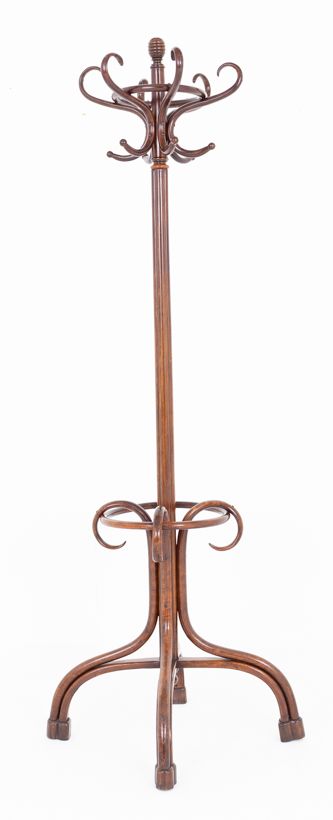
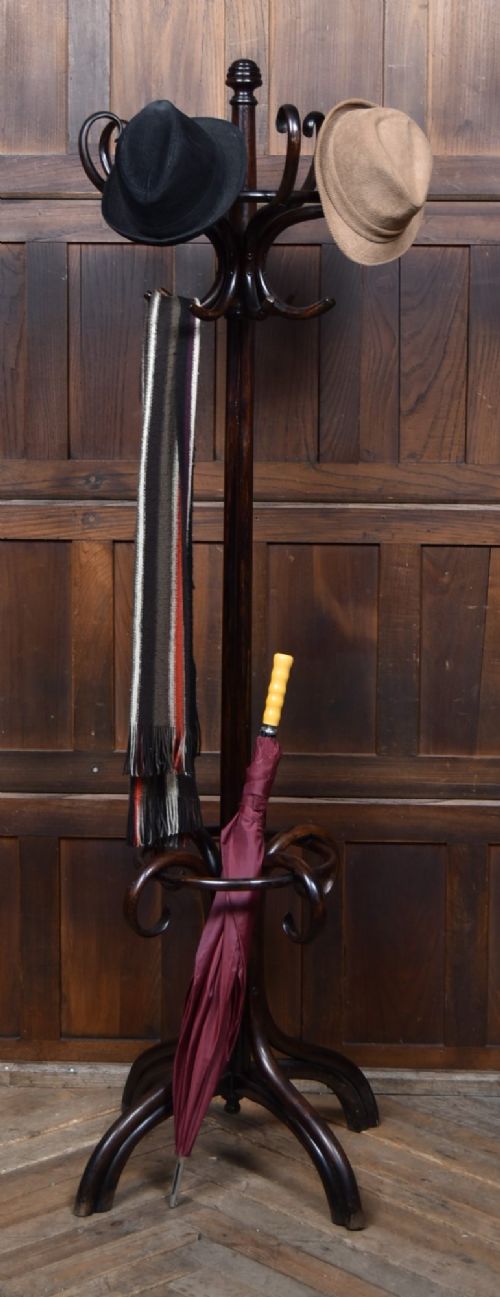
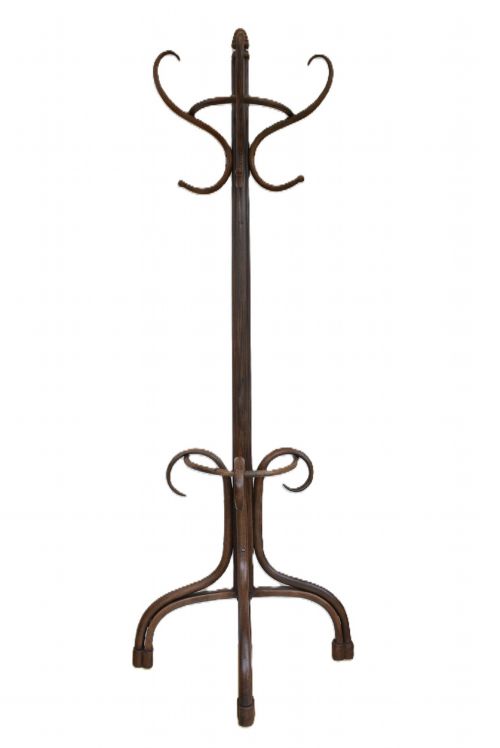
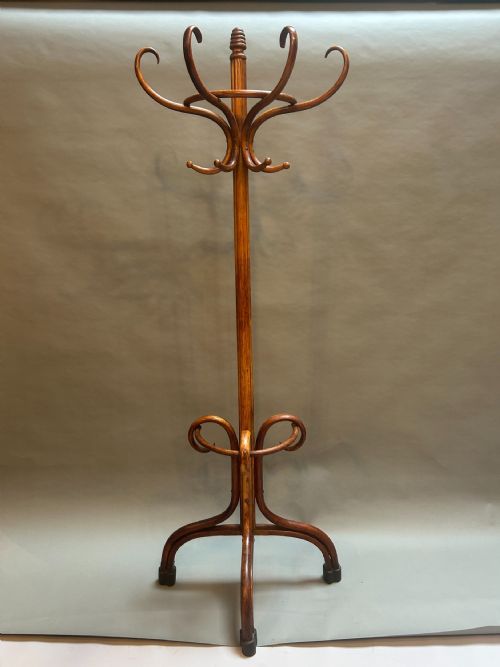
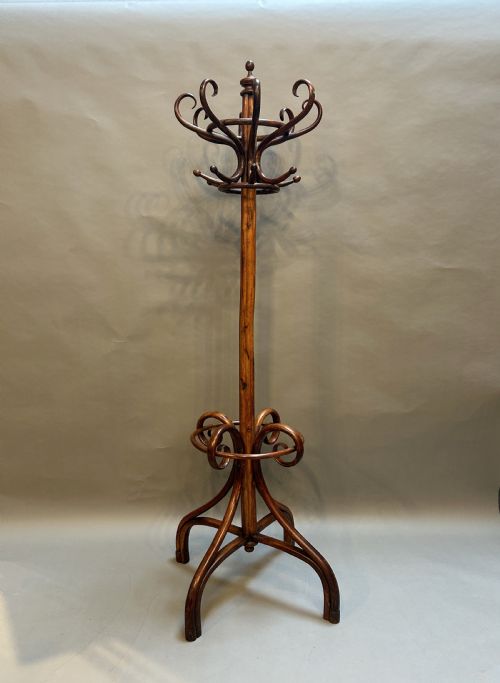
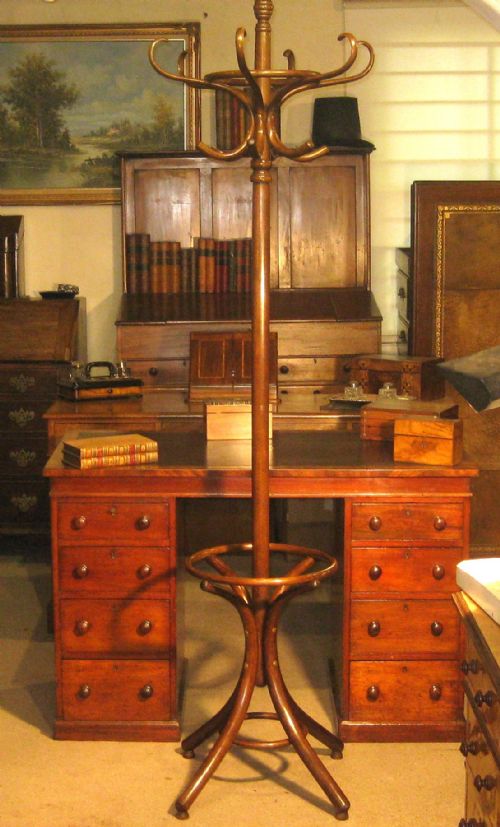


Brown Bentwood Hat Stand
A brown bentwood hat stand offers practical hallway storage formed from curved timber, bringing organic twentieth-century warmth to an interior.
Brown Bentwood Hat Stand
A brown bentwood hat stand is a hall furniture piece designed to hold coats, hats and sticks, appearing in forms such as half-round, demi-lune, and revolving designs. These tall vertical items utilise steam-bent wooden uprights and curved hooks to organise entranceways without occupying excessive floor space.
Most examples found here date from the Edwardian era through the early twentieth century, spanning periods like nineteen hundred, nineteen ten, nineteen twenty, and nineteen thirty. Pieces range from standard wall-standing frames to large variations featuring double tops for extra capacity.
How they were made
Makers utilised beech, beechwood, and steam-bent wood, subjecting solid timber to moisture and heat until it gained the flexibility required for radical curving. This method allowed craftsmen to shape the characteristic rounded hooks and sweeping structural frames without joints breaking under stress.
Wood stain was typically applied to the beech surface to achieve a rich brown tone, highlighting the natural grain while protecting the material. Skilled artisans secured the bent components using precise mechanical joints and screws to ensure rigidity in everyday hallway use.
Revolving hat stands allow you to spin your outerwear in a circle until you finally spot the scarf you lost last Tuesday.
What varies in quality
Quality in a brown bentwood hat stand depends upon the crispness of the timber curves and the overall balance of the structure. Superior examples maintain stability across multiple tiers of hooks without leaning, showcasing expert steam-bending where the grain follows the radius smoothly.
The complexity of the design also influences distinction, with double-top variants, revolving mechanisms, and demi-lune configurations representing more ambitious manufacturing. Fine quality often appears in the retention of original wood stain surfaces and robust section sizing that withstands daily weight.
Fischel
The Brown Bentwood Hat Stand Glossary
- Bentwood
- Wood that has been shaped by heating it with steam until pliable, then bending it into curved forms. This technique creates strong, lightweight furniture frames.
- Demi-lune
- A half-moon shape used for hall stands designed to sit flat against a wall. This profile saves floor space in narrow corridors.
- Thonet Style
- Furniture following the pioneering manufacturing methods of Michael Thonet, characterised by graceful curved beech components. Many early twentieth-century makers adopted this aesthetic.
- Revolving
- Featuring a rotating top section that allows easy access to hats and coats hung around the circumference. This mechanism adds functional versatility to the hall stand.
- Double top
- A configuration featuring an extra upper tier of curved hooks for increased hanging capacity. It provides additional support for numerous garments.
Brown Bentwood Hat Stand: Frequently Asked Questions
How do I date a bentwood hat stand?
Dating relies on period characteristics, construction methods, and design markers associated with Edwardian and early twentieth-century production.
Earlier examples from around nineteen hundred often feature refined turning and deep wood staining, while later pieces from nineteen thirty reflect simpler utility.
Are these hat stands stable enough for heavy coats?
Solid beech construction and wide-splayed base feet provide natural stability for everyday winter outerwear and walking sticks.
Distributing heavy items evenly across the upper hooks helps maintain balance on freestanding models.
How do I care for the wood stain?
Maintaining the finish involves dusting with a soft cloth and occasionally applying quality beeswax to nourish the beech surface.
Keeping the stand away from direct heat sources prevents the steam-bent timber from drying out or warping.
What is the purpose of a half-round design?
Half-round or demi-lune stands sit flush against hallway walls to maximise walking space in compact entrance areas.
This wall-standing design maintains full hanging capacity while occupying a smaller footprint than a complete circular frame.