

Brown Bedside Cupboard
A brown bedside cupboard brings practical surface space and enclosed storage to the bedroom, anchored in rich timber tones.
Brown Bedside Cupboard
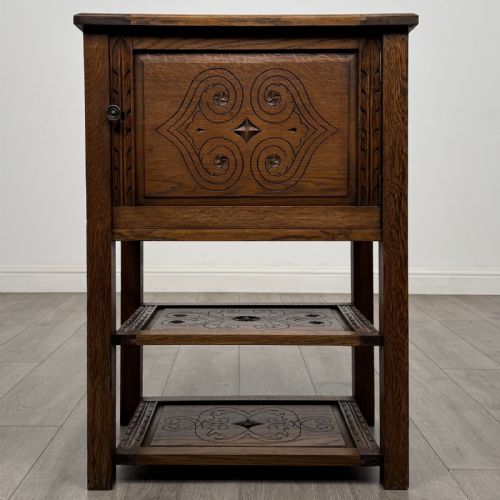
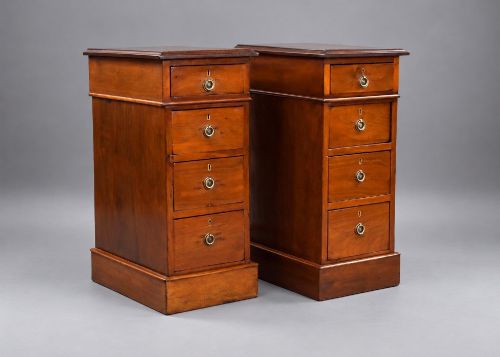
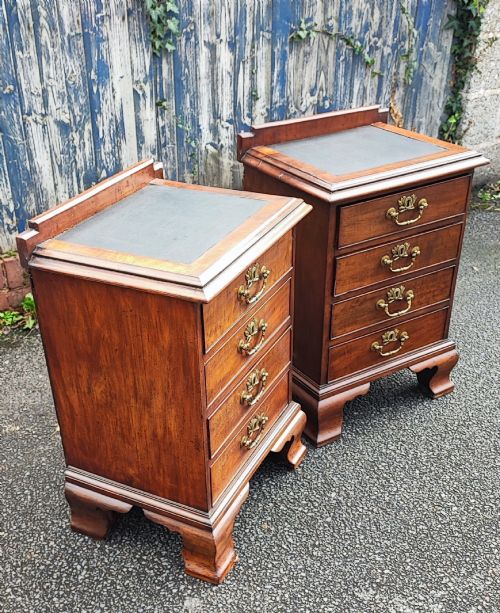
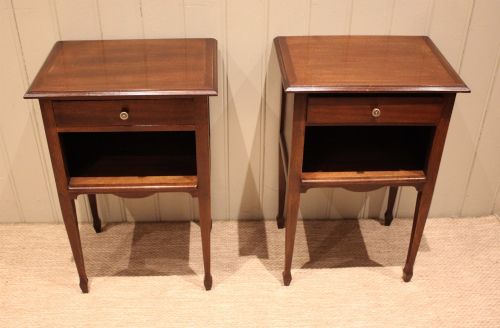
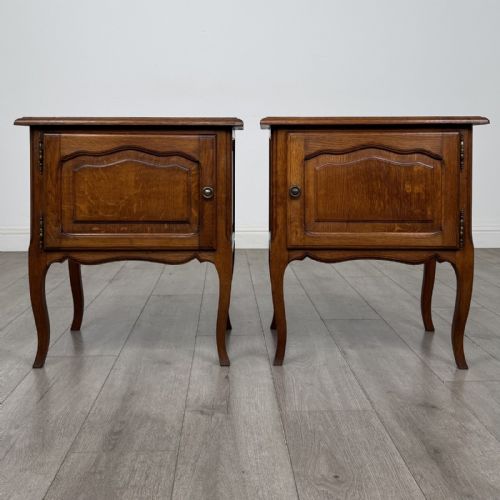
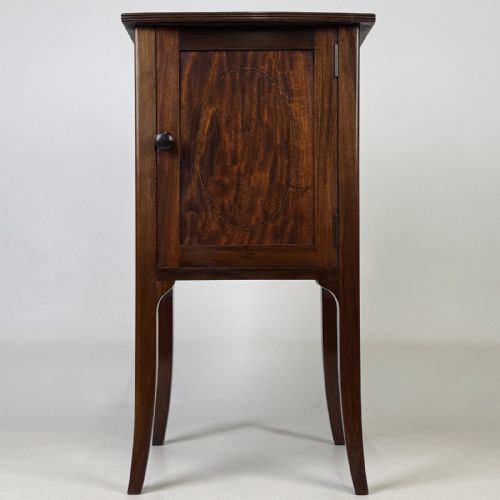
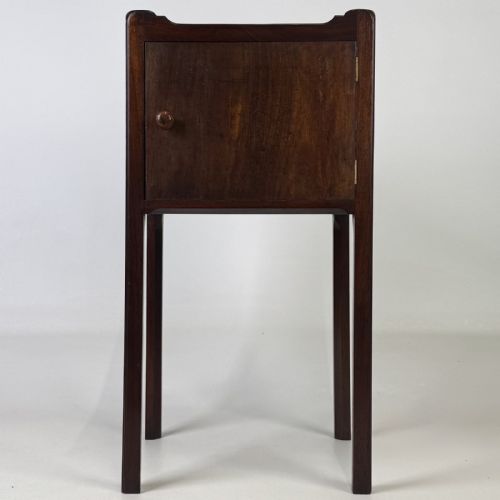
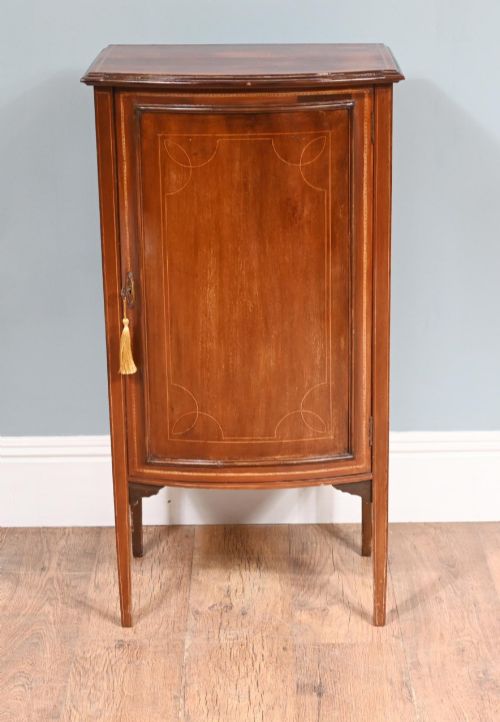
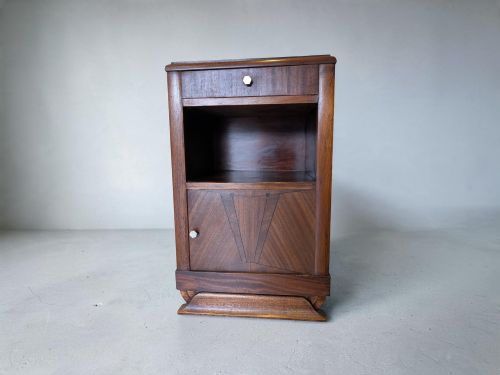
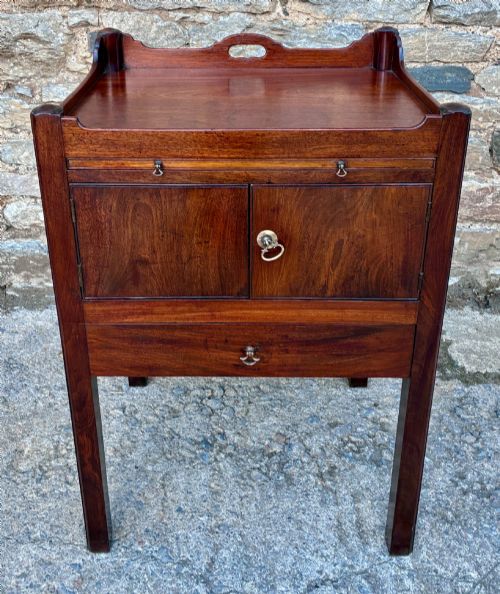
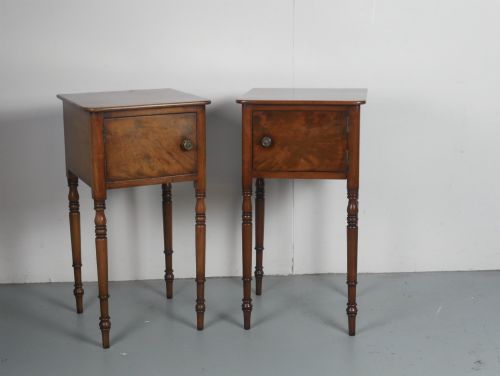
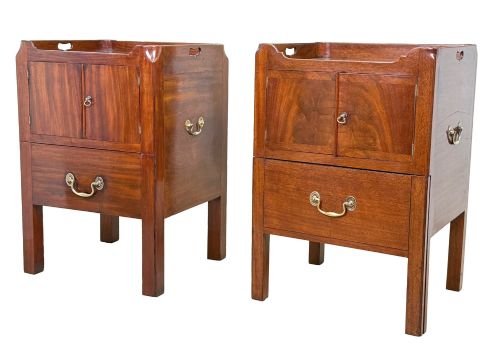
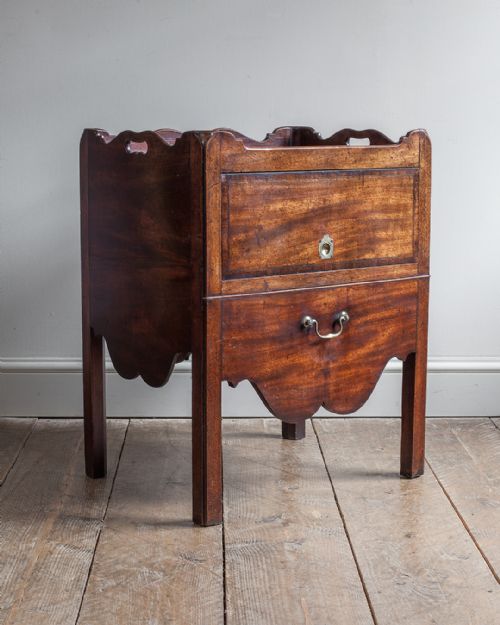
A brown bedside cupboard provides a dedicated spot beside the bed for nighttime essentials, often taking the form of a small cabinet, nightstand or pot cupboard. These pieces emerge across periods spanning the Georgian era through the Victorian years and into the Art Deco epoch of the 1930s.
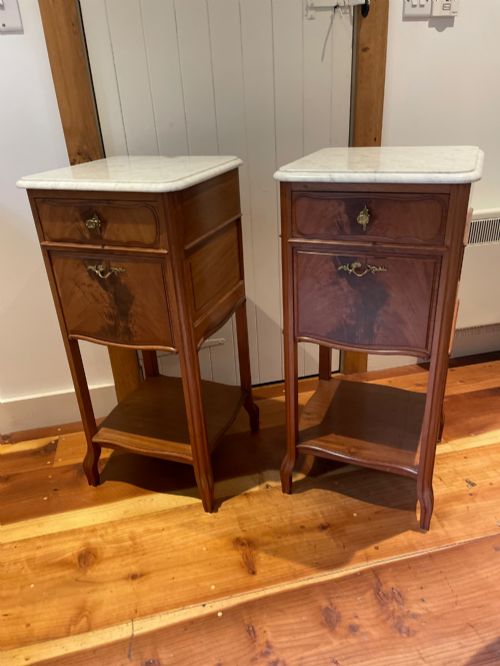
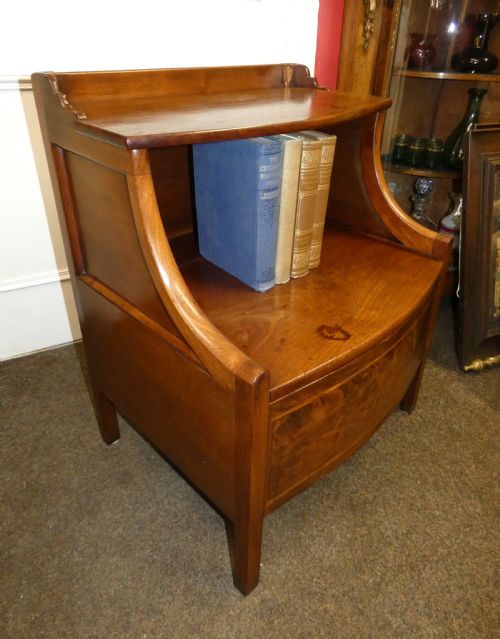
Mahogany, walnut and oak dominate the selection, frequently shaped into compact pedestals, bow fronts or tray top designs. Buyers will frequently encounter mahogany and walnut examples, ranging from simple Victorian cupboards to pairs finished with marquetry or marble tops.
How they were made
Cabinet makers utilised solid timbers alongside fine veneers such as flame mahogany, walnut and kingwood to achieve rich surface figures. Construction often incorporates dovetail joints for drawers and panelled doors to enclose the interior storage space.
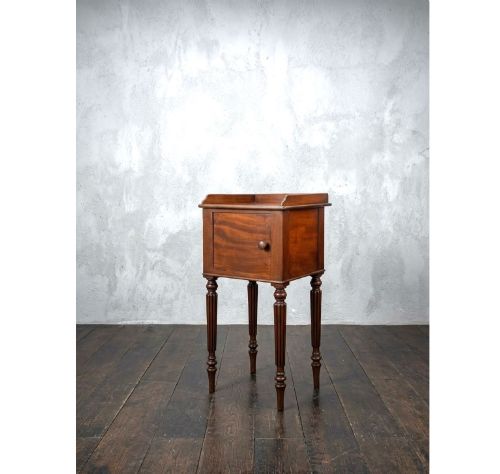
Surface ornamentation relies on brass hardware, inlaid marquetry work and carved details like baluster turned legs. Marble tops appear on specific French and Victorian pieces to provide a durable, wipe-clean surface.
Brown Bedside Cupboard Retail Price Guide 2026
Typical asking prices for brown bedside cupboard among the pieces listed under this phrase on Sellingantiques today, from the lower quarter to the upper quarter. They describe what is for sale here now, not the wider market.
Beneath a modest wooden door lies centuries of secret midnight storage, once tasked with holding chamber pots instead of modern novels.
What varies in quality
The choice of timber grain and veneer selection dictates the visual impact of the piece, with matched flame mahogany or burr walnut marking out superior examples. Crispness in carved elements, marquetry inlay and turned legs separates standard utility items from finer commission work.
The Brown Bedside Cupboard Glossary
- Pot cupboard
- A small bedside cabinet originally designed to house a chamber pot behind its single door. These pieces often feature an enclosed lower compartment and a small surface top.
- Tray top
- A raised rim surrounding the top surface of the cabinet to prevent items from rolling off. This feature appears frequently on Georgian and 19th-century mahogany models.
- Marquetry
- Decorative woodwork where pieces of veneer are fitted together to form pictorial or geometric patterns. It frequently embellishes the doors and tops of finer cabinets.
- Bow front
- A convex, curved front profile that softens the corners of the cabinet. This contour is common on Victorian and Edwardian mahogany and walnut chests.
- Baluster turned legs
- A turned support leg shaped with alternating curves and bulbs resembling a classical architectural baluster. These legs give elevation and lightness to 19th-century side cabinets.
Brown Bedside Cupboard: Frequently Asked Questions
What is a pot cupboard?
A pot cupboard is a compact bedside cabinet originally built to conceal a chamber pot inside the main compartment. Today, this enclosed space serves well for storing books or modern bedroom essentials.
These pieces typically feature a single door and stand at a convenient height next to the mattress. Their traditional proportions make them versatile for smaller rooms.
How do I style a bedside cupboard?
Pairing a timber cupboard with a simple bedside lamp balances the dark tones of the wood. The surface provides adequate room for reading material and a glass of water.
Using matching pairs creates symmetry across a double bed, while a single antique cabinet introduces character as an occasional accent piece.
Are marble top bedside tables practical?
Marble tops offer a durable, heat-resistant surface that withstands daily use from cups and lamps. This stone addition protects the underlying timber from accidental spills.
Originally favoured in French and Victorian schemes for hygiene and ease of cleaning, marble remains a functional choice today.
How do I identify Georgian bedside cabinets?
Georgian cabinets often display clean architectural lines, premium mahogany timbers, and functional details like tray tops or subtle brass handles. Proportions tend to be neat and balanced.
Look for hand-dovetailed drawer construction and traditional timber framing that reflect 18th-century cabinet making methods.