
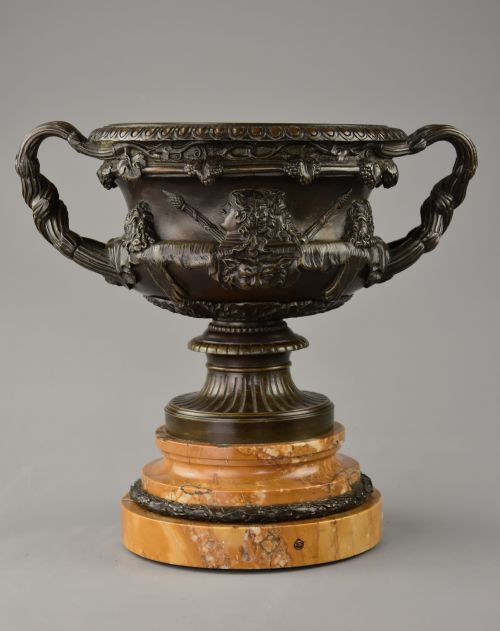
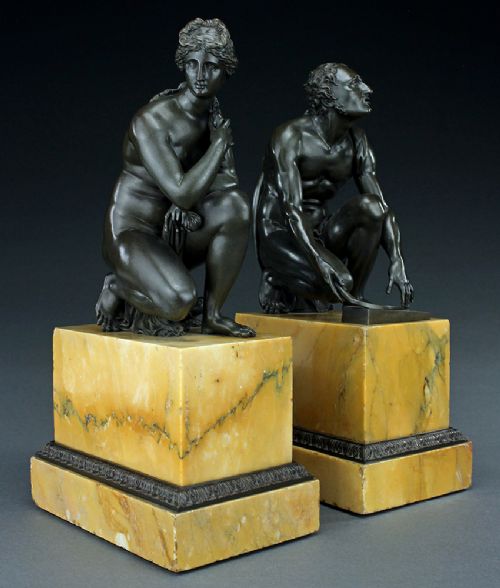
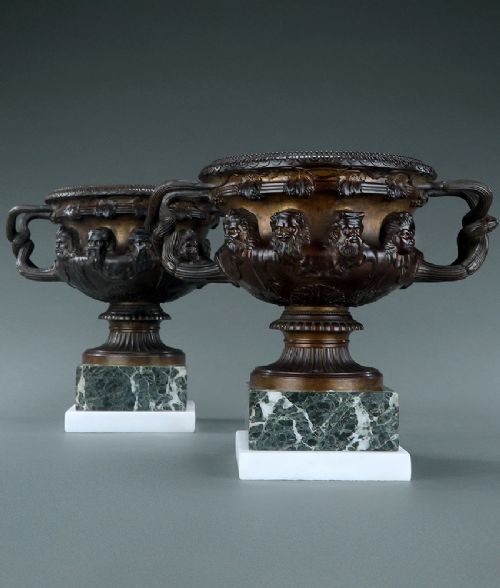
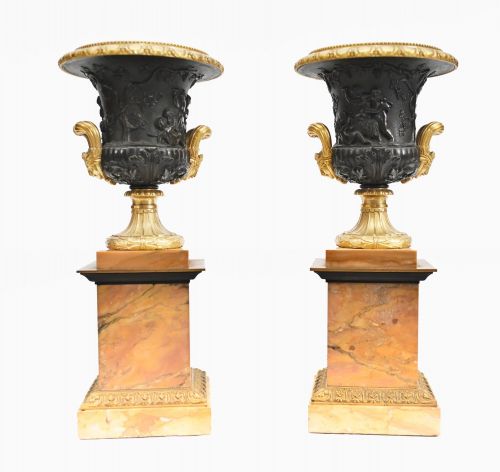
Bronzes on Marble Plinth
These bronzes on marble plinth combine cast metal figures and architectural stone bases, bringing classical subjects and animal studies into domestic rooms.
Bronzes on Marble Plinth
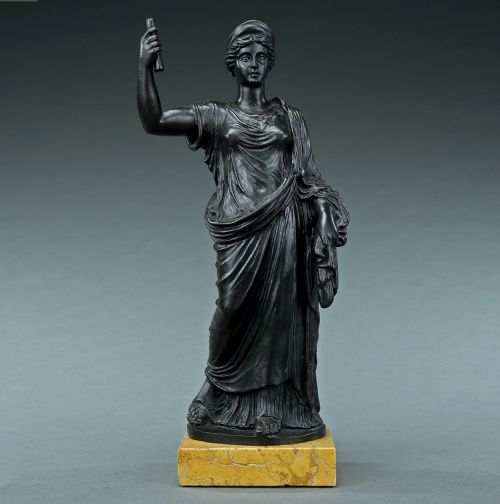
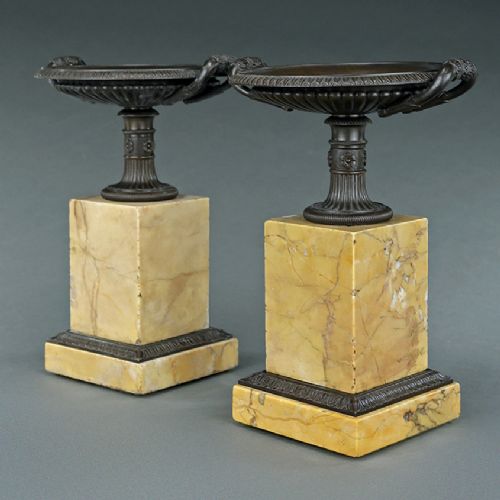
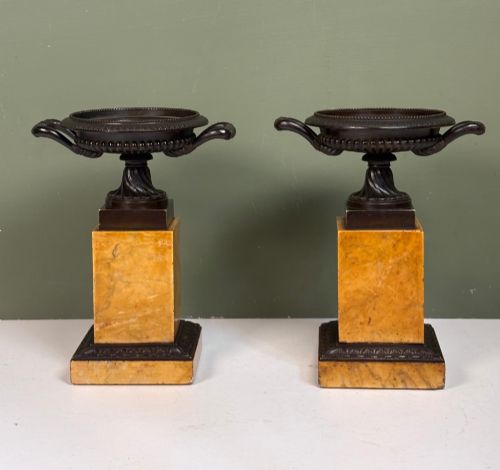
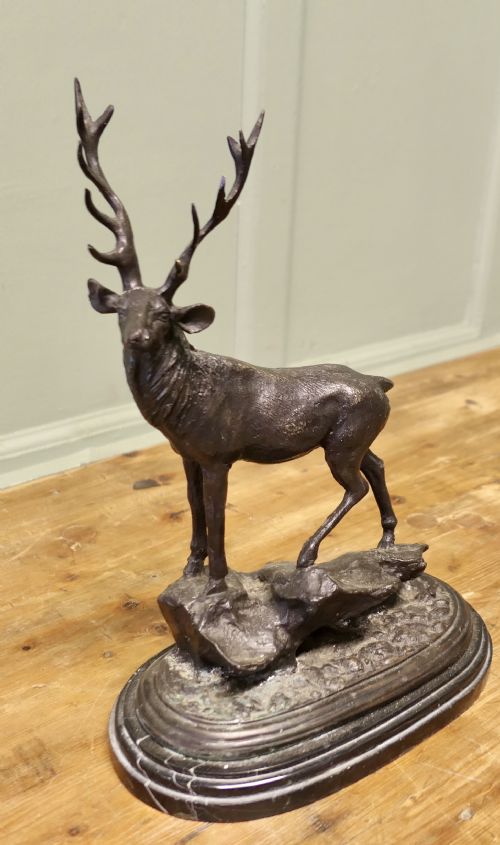
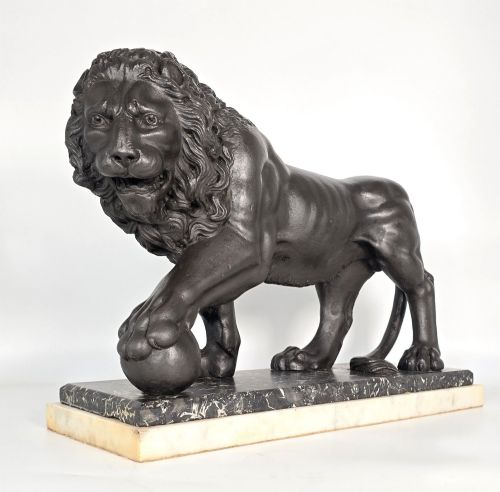
When searching for bronzes on marble plinth, a buyer encounters mixed-media works spanning the nineteenth and early twentieth centuries. These pieces encompass classical reductions, animalier subjects, and utility items like tazzas and candlesticks mounted on stone bases.
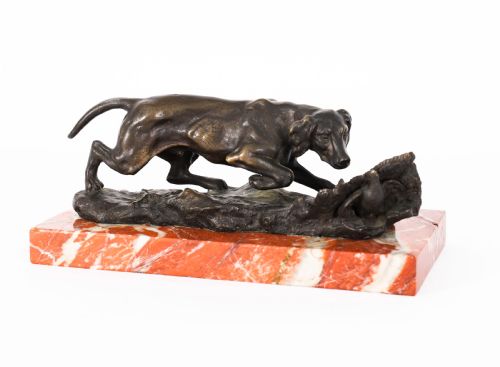
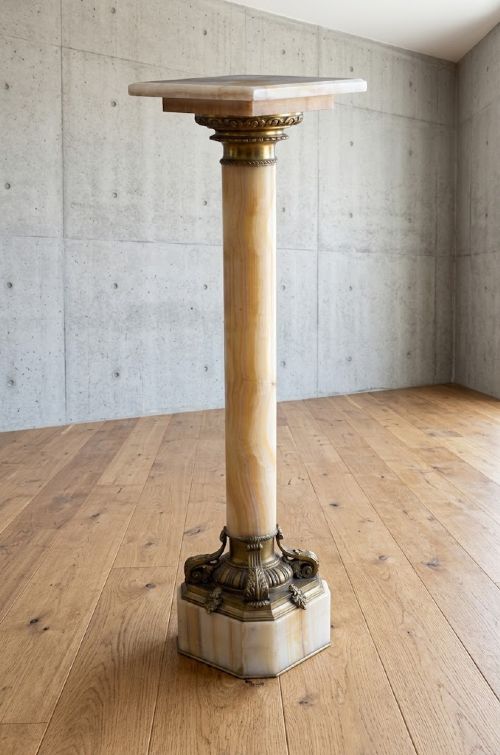
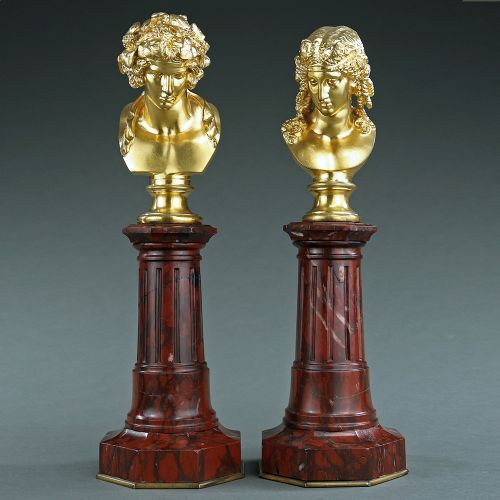
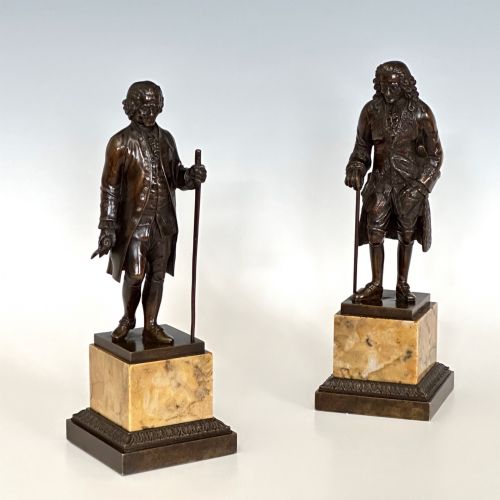
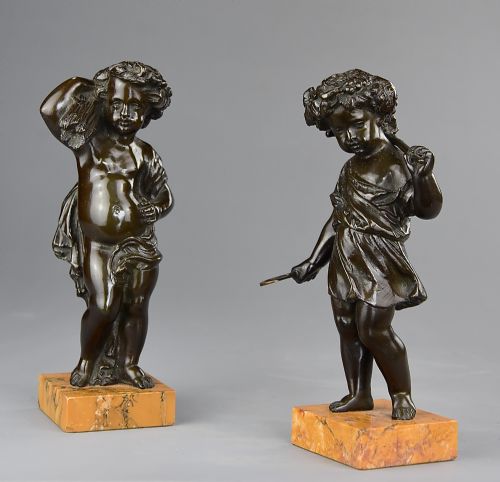
Victorian and Grand Tour examples dominate the selection, often taking the form of mythological figures, historical personages, or naturalistic animal studies. The stone components range from simple black or white bases to elaborate onyx and sienna columns.
Later twentieth-century works shift toward Art Deco figures and stylized animal studies mounted on geometric onyx or marble slabs. The union of cast metal and stone provides both physical stability and a distinct visual contrast.
Materials and Technique
Foundry work relied on traditional casting methods to produce detailed metal figures, which were subsequently patinated, cold-painted, or gilded. These metal sculptures were then secured to cut and polished stone plinths using threaded pins or internal fixings.
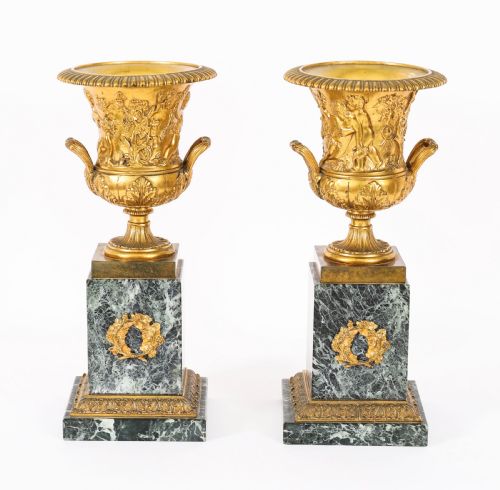
Marble, onyx, and occasionally sienna or green marble provide the heavy supportive bases, shaped into simple blocks, architectural columns, or stepped platforms. Ormolu and gilt bronze mounts frequently accent the junction between the metal subject and the stone plinth.
A stoic bronze fox surveys the room from its polished stone ledge, requiring neither food nor fencing.
Distinctions in Execution
The selection of the stone plinth also marks the grade of the piece, with dense, evenly veined marbles and precisely turned onyx columns indicating superior material choice. Proportion between the weight of the metal figure and the scale of the stone base dictates the overall harmony of the object.
Carl Kauba·Josef Lorenzl
The Bronzes on Marble Plinth Glossary
- Animalier
- A nineteenth-century artistic style focusing on realistic depictions of animals, particularly predators, stags, and hunting dogs. Works in this genre frequently utilise bronze mounted on marble bases.
- Grand Tour
- A traditional trip through Europe undertaken by young upper-class men to collect cultural artefacts. Souvenirs from these travels included bronze reductions of classical antiquities set on marble plinths.
- Ormolu
- Gilded brass or bronze applied as a decorative mount on furniture, vases, and stone pedestals. The technique involves coating the base metal with a mercury-gold amalgam and heating it.
- Tazza
- A shallow bowl or cup mounted on a stem and foot, often used for decorative display. In this category, tazzas incorporate marble bowls with bronze or ormolu collars.
- Patination
- The surface coloration of metal achieved through chemical treatment, age, or deliberate heating. This finish alters the appearance of the raw bronze from golden tones to deep browns and blacks.
Bronzes on Marble Plinth: Frequently Asked Questions
What subjects appear on these bases?
Subjects range from classical deities and historical figures to hunting dogs, stags, and dancers. Mythological representations draw heavily on ancient sculpture and Grand Tour traditions.
Animalier studies capture creatures in motion or repose, often paired with contrasting black or white marble plinths to ground the composition.
How were these decorative items used?
These pieces served primarily as mantel ornaments, library decorations, and tabletop displays in nineteenth-century interiors. Their substantial weight allowed them to anchor desks or anchor shelves.
Certain forms, such as tazzas and candlesticks, combined decorative sculpture with functional utility in domestic reception rooms.
How do I clean the marble plinth?
Dusting with a dry, soft cloth prevents the accumulation of grime on polished stone surfaces. Avoid harsh chemical cleaners that can etch the marble or onyx finish.
Moisture should be kept away from the junction where the metal figure meets the stone to protect internal pins and adhesives.
Are the bronze and marble original to each other?
Nineteenth-century workshops typically produced the metal sculpture and the stone base as a unified design, securing them with specialised fixings. Matching the stone type and mounting style helps confirm the integrity of the piece.
Variations in wear between the metal surface and the stone base can indicate whether components were joined at a later date.