


Bronzed Warrior Figurine
A bronzed warrior figurine brings heroic history and classical mythology into the home through finely cast metal figures.
Bronzed Warrior Figurine
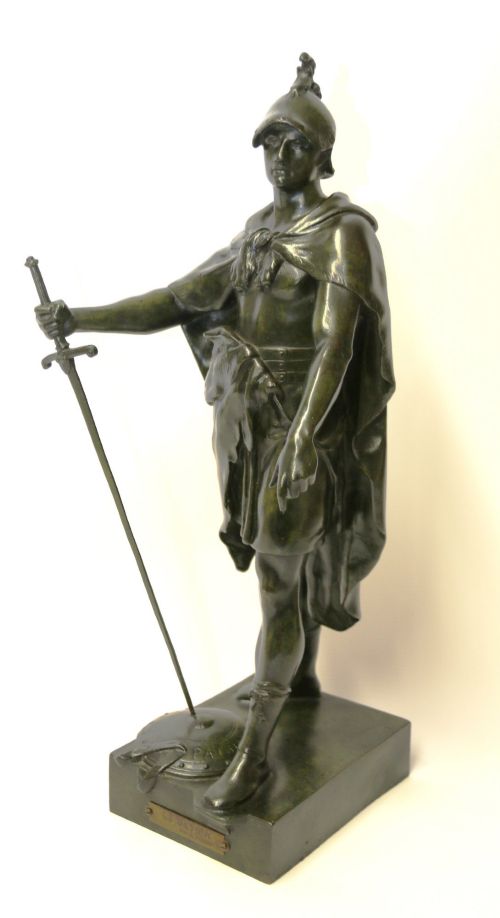
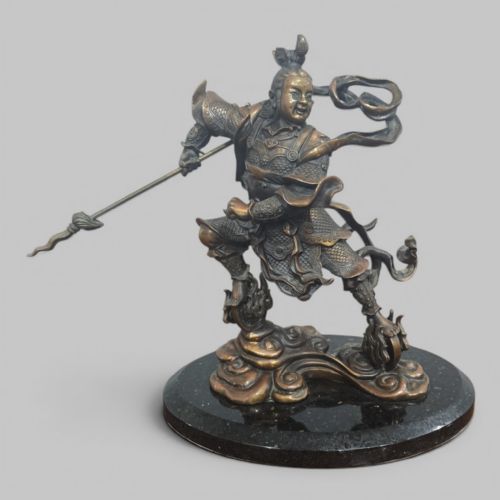
A bronzed warrior figurine represents historical soldiers, mythological heroes, and literary figures rendered in metal sculpture. These pieces draw heavily on classical revival, orientalism, and neoclassical styles, depicting figures such as Roman soldiers, Greek heroes, and Viking horn blowers.
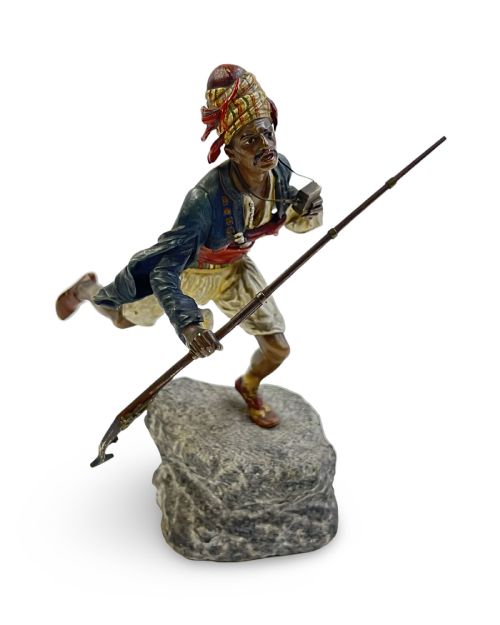
The selections available range from nineteenth-century French academic works to early twentieth-century Viennese cold-painted bronzes and art deco interpretations. Buyers frequently encounter representations of figures like Ajax the Great, Queen Boadicea, and classical deities like Athena and Zeus.
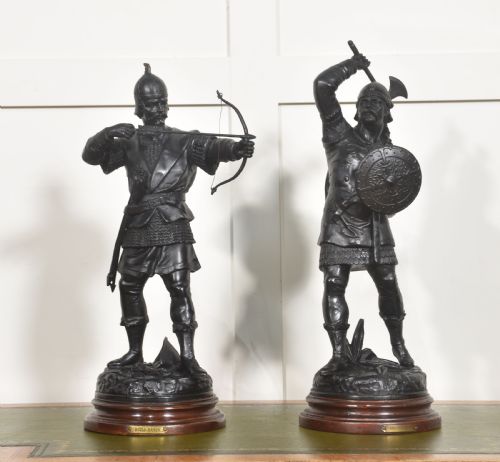
Objects appear across various scales, from cabinet-sized Grand Tour souvenirs to substantial statues designed as focal points. The physical forms encompass single figures in motion, seated portrait studies, and paired groups of soldiers or mythological combatants.
Evaluating craftsmanship
Quality in a bronzed warrior figurine depends primarily on the crispness of the casting and the sensitivity of the hand-finishing work. Superior examples exhibit sharply defined facial expressions, intricate armour details, and well-executed patination that enhances depth.
The reputation of the founder or sculptor influences the desirability of the piece, particularly signed works originating from established European art centres. Furthermore, the integrity of the base material and the preservation of original cold-painted pigment or patination dictate the overall standard of the object.
Listings feature figures constructed from bronze, spelter, marble, wood, and oil-painted surfaces across neoclassical and art deco styles.
Émile Louis Picault·Franz Xaver Bergman·Edward Aagaard·Raoul Francois Larche·Franz Iffland·Eden Antony Paul Noel
The Bronzed Warrior Figurine Glossary
- Patinated bronze
- Bronze treated with chemical solutions to produce a specific surface colour or aged appearance. This finish protects the metal and highlights sculptural details.
- Cold-painted bronze
- Metal sculpture painted with non-heat-set pigments, a technique particularly characteristic of Viennese workshops. The paint sits on the surface rather than being fired in a kiln.
- Spelter
- A zinc alloy used as a less expensive alternative to bronze in figural casting. It is softer than bronze and typically requires a bronze-coloured metallic coating.
- Grand Tour
- A nineteenth-century cultural excursion undertaken by wealthy Europeans to classical sites, resulting in the acquisition of small-scale souvenir bronzes after the antique.
- Neoclassical
- An artistic movement drawing inspiration from the art and culture of classical antiquity. It emphasises proportion, heroic subject matter, and restrained classical dignity.
Bronzed Warrior Figurine: Frequently Asked Questions
What periods do these warrior figures come from?
The pieces span the nineteenth and early twentieth centuries, capturing distinct stylistic movements from Victorian historicism to art deco. Makers during these eras reinterpreted classical and historical themes using traditional foundry methods.
Dates range from the early nineteenth century grand tour souvenirs up to pieces produced around the nineteen-thirties. Each era brought specific material preferences and patination styles to the depiction of historical soldiers.
How were these bronzes originally displayed?
These sculptures typically served as desk ornaments, library decorations, or focal points on mantelpieces in nineteenth-century homes. Their scale allowed them to be placed prominently on furniture to demonstrate the owner's classical education and taste.
Many smaller examples functioned as travel souvenirs collected during tours of continental Europe. Larger statues were designed to stand independently on pedestals or dedicated display tables.
How do I distinguish bronze from spelter?
Bronze is a heavier, harder alloy of copper and tin that develops a stable natural patina over time and rings with a clear tone when struck gently. Spelter is a zinc-based metal that feels lighter and often shows grey or white metal underneath worn surface paint.
Examining the underside or areas of wear usually reveals the base metal. Spelter pieces from the twentieth century frequently mimic the appearance of genuine bronze through applied metallic finishes.
How should I care for a bronze sculpture?
Maintenance requires only occasional dusting with a soft, dry cloth to prevent particulate buildup on the surface. Avoid using chemical cleaners, polishes, or water, which can strip the patinated finish or damage cold-painted pigments.
Keeping the piece away from direct sunlight and high humidity preserves the stability of the metal and any integrated marble or wooden bases.