


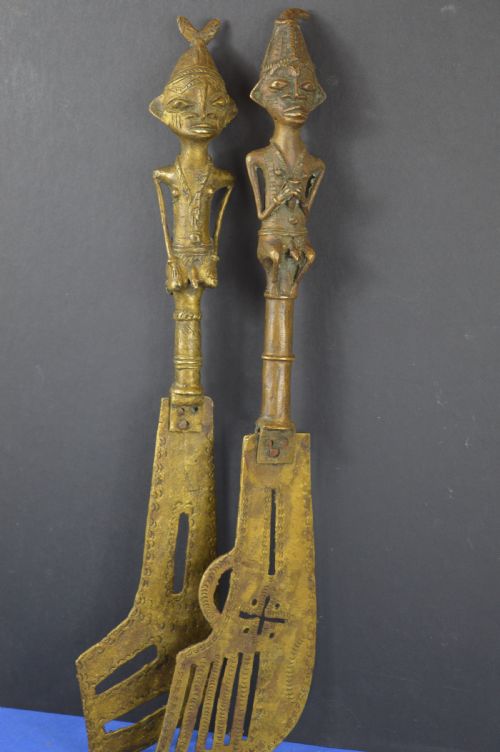


Tribal Bronze Figures
These tribal bronze figures span diverse global traditions, offering buyers striking metal sculptures rich in cultural narrative and historic presence.
Tribal Bronze Figures
When you search for tribal bronze figures, you encounter a fascinating cross-section of cultural metalwork spanning the nineteenth and twentieth centuries. These pieces encompass ceremonial staffs, warrior statues, Janus figures, and maternal statues originating from West African traditions alongside Indian folk art and Orientalist works.
The West African pieces dominate this selection, featuring prominent Yoruba and Benin creations cast in bronze and copper alloy. You will also find nineteenth-century Indian Hindu deities and European foundry productions reflecting global encounters through distinct artistic lenses.
Materials and Techniques
The makers relied primarily on bronze, brass, and copper alloy, often utilising traditional lost-wax casting methods to achieve remarkable detail. Certain pieces incorporate wood elements or cold-painted pigment to enhance their visual depth and surface character.
Foundry techniques vary from intricate traditional African casting to European studio production, resulting in substantial sculptures and tall ceremonial staffs. The physical weight and substantial scale of these statues demonstrate the demanding nature of working with molten metal.
Listings include bronze, brass, copper alloy, and wood materials across the 19th Century, Victorian era, and 1920 to 1950 decades.
Assessing Quality and Execution
Quality reveals itself through the crispness of the cast and the confidence of the form, distinguishing master foundry work from simpler execution. The handling of anatomical proportions and surface texture dictates the visual impact of each sculpture.
Patina and surface wear tell the story of age and handling, with superior examples retaining rich, undisturbed oxidation. The integration of secondary materials, such as wood or pigment, further separates exceptional pieces from standard productions.
Franz Bergman
The Tribal Bronze Figures Glossary
- Lost-wax casting
- A method of metal casting in which a molten metal is poured into a mould that has been created by means of a wax model. Once the metal cools, the wax mould is melted and drained away.
- Patina
- A green or brown film on the surface of bronze caused by oxidation over a long period. This natural ageing process indicates genuine antiquity.
- Janus figure
- A sculpture featuring two faces looking in opposite directions. These symbolic forms appear frequently in West African ritual objects.
- Copper alloy
- A metal group that includes bronze and brass, commonly utilised for traditional statuary. It provides durability and a rich metallic substrate for patination.
- Cold-painted
- Pigment applied to a metal surface after casting without subsequent firing. This decorative technique adds vibrant colour to specific sculptural details.
Tribal Bronze Figures: Frequently Asked Questions
What defines tribal bronze figures?
These pieces comprise cast metal sculptures and ceremonial staffs originating from various global cultures, notably West African traditions and Indian folk art. They capture significant cultural narratives through enduring metallic mediums.
Created across the nineteenth and twentieth centuries, the selection includes majestic warriors, deities, and maternal statues reflecting distinct regional artistry.
How were these bronzes made?
Craftsmen typically utilised traditional casting methods, pouring molten bronze, brass, or copper alloy into carefully prepared moulds to capture intricate details. Some pieces incorporate organic materials like wood or applied surface pigments.
The physical execution ranges from substantial foundry work to detailed ritual objects requiring significant technical skill.
How do I care for bronze sculptures?
Maintain these metal figures by gently dusting them with a soft, dry cloth to prevent particulate buildup on the surface. Avoid chemical polishes that can strip the historic patina.
Keep the sculptures away from excessive moisture and direct sunlight to preserve the stability of both the metal and any secondary materials.
How can I tell the period of a bronze statue?
Dating relies on stylistic conventions, casting characteristics, and the natural oxidation of the metal surface accumulated over decades or centuries. Examining the manufacturing technique often reveals the era of production.
Comparing regional attributes, such as Benin or Yoruba stylistic markers, helps narrow down the origin and approximate timeframe.