
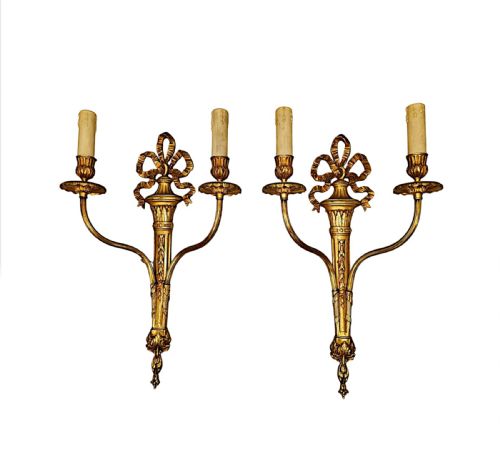
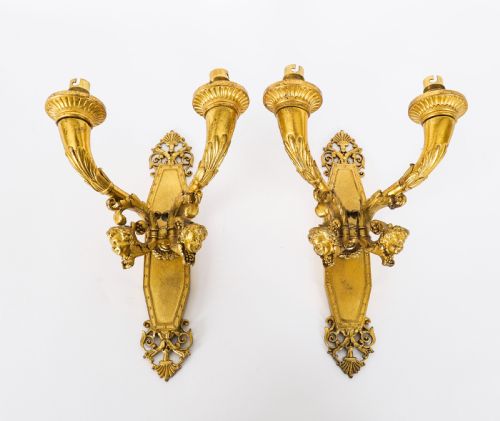
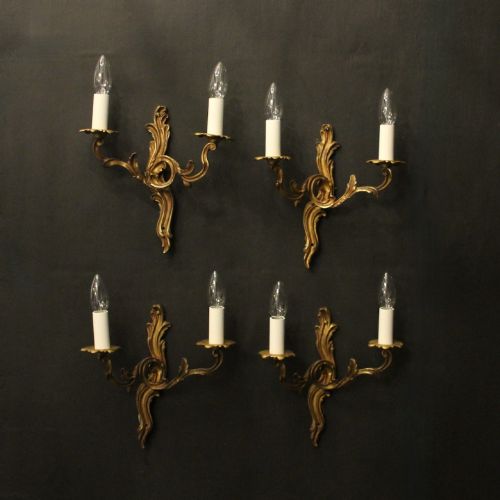

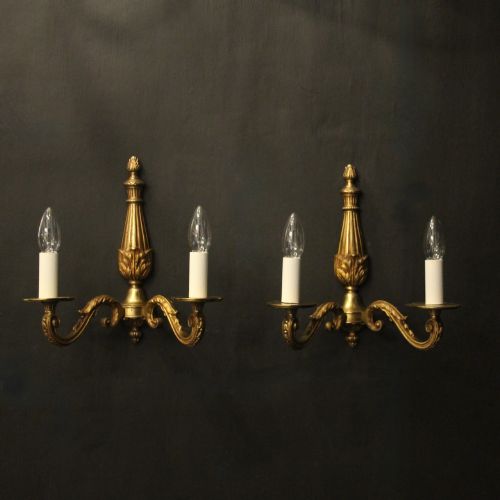
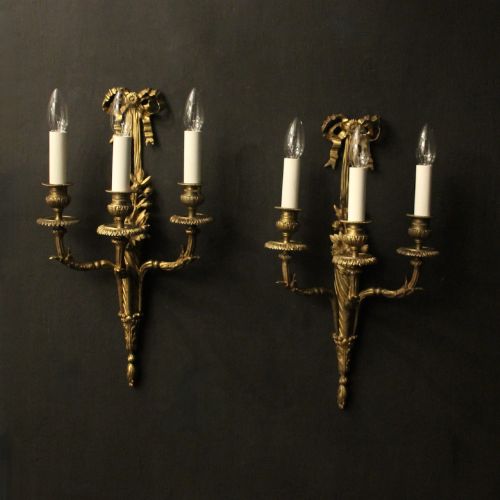
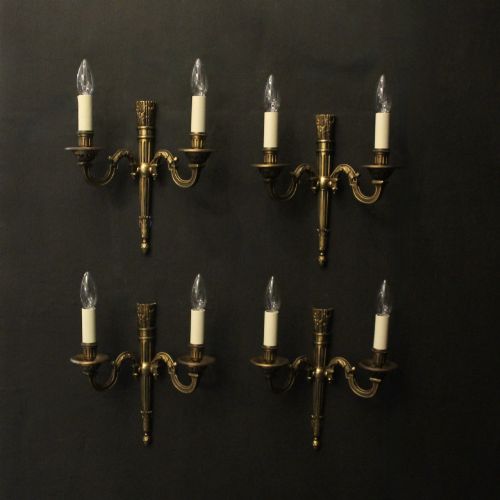
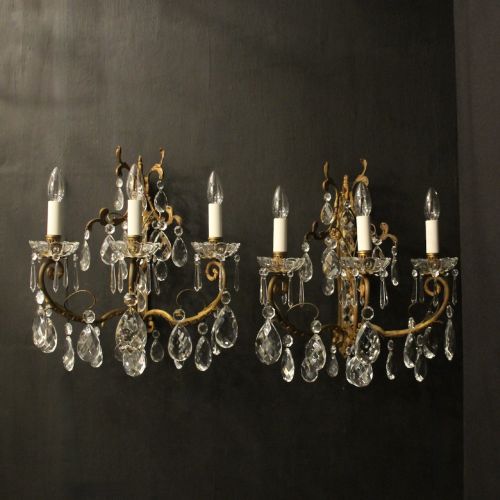
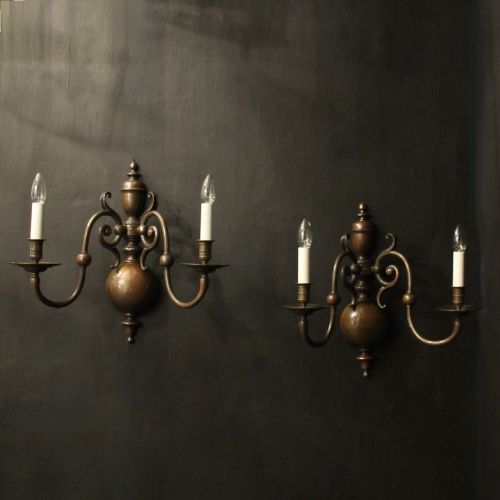
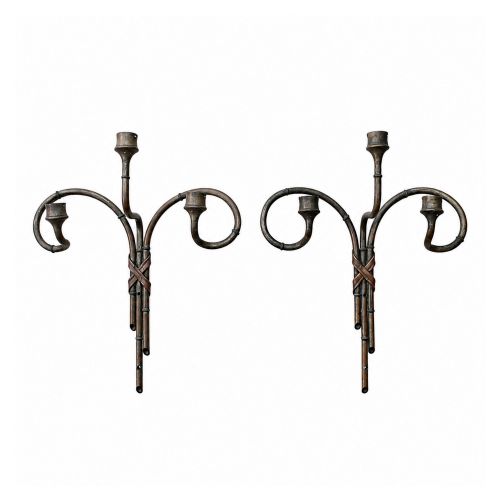
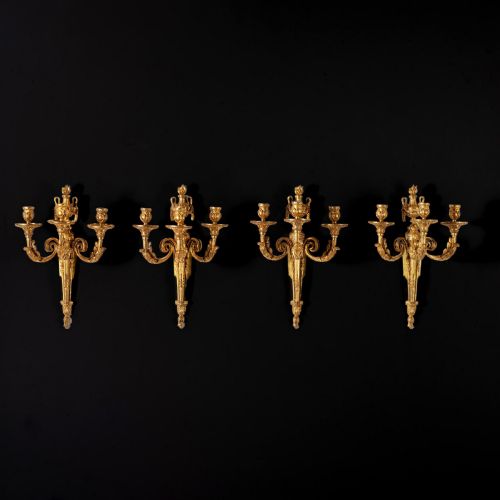
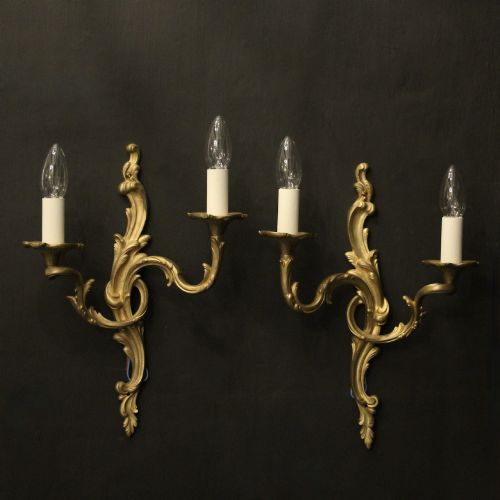
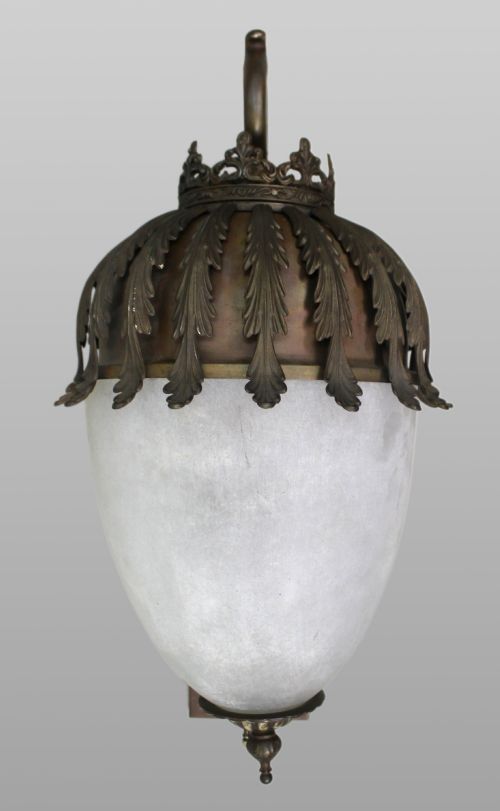
Bronzed Wall Sconces
These bronzed wall sconces bring sculptural metalwork and ambient candle or electric light to a room, drawing the eye directly to the wall.
Bronzed Wall Sconces
When you search for bronzed wall sconces, you encounter decorative lighting fixtures designed to mount directly onto vertical surfaces, providing both practical illumination and ornamental presence. The pieces listed here span the eighteenth, nineteenth, and early twentieth centuries, encompassing centuries of metalworking traditions from French and English workshops.
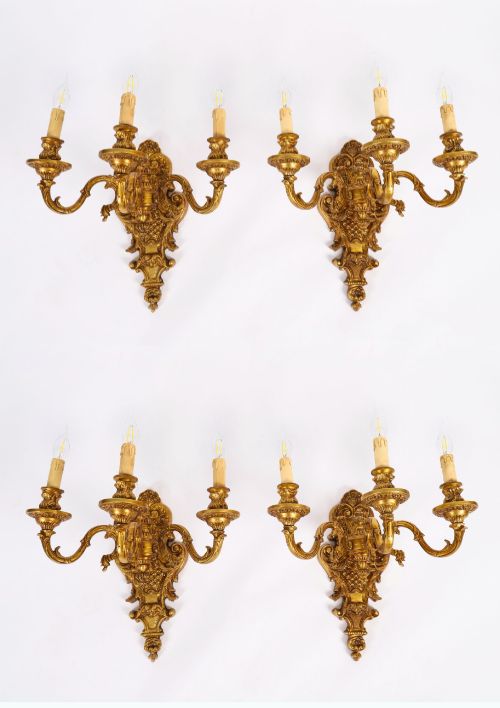
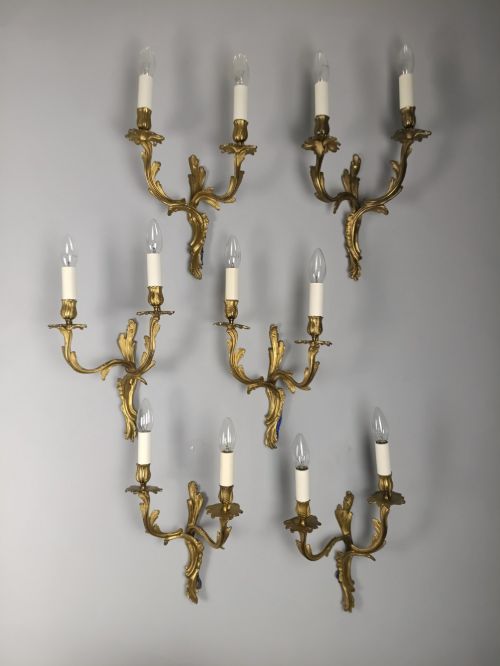
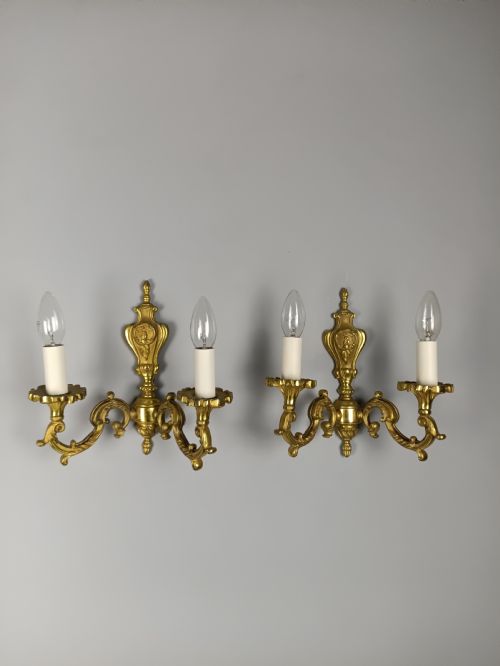
You are most likely to meet pairs and larger sets of twin-arm or triple-arm wall lights, often French in origin and finished in gilt bronze, ormolu, or gilded brass. Forms range from restrained neoclassical designs to elaborate rococo revival compositions involving scrolling foliage, ribbons, and cherubs.
Alongside standard wall lights and sconces, the selection includes girandoles, wall lanterns, and ormolu-mounted mirrors integrated with candelabra branches. These fixtures frequently incorporate materials such as crystal drops, porcelain flowers, and bevelled glass to catch and reflect the light.
How they were made
The construction of these wall fixtures relies heavily on cast bronze, brass, and copper alloys that are subsequently chased, gilded, or patinated. Many pieces employ ormolu, applying a finely ground high-carat gold amalgam to a bronze base through mercury gilding or modern electroplating methods.
Decorative elements such as crystal pendants, porcelain flowers, and mirrors are integrated into the metal frames using mechanical fixings like pins, screws, and threaded bolts. Backplates and arms are cast in separate sections before being assembled to create rigid structures capable of supporting multiple candle nozzles or lamp holders.
Materials across these listings include gilt bronze, ormolu, brass, silvered bronze, crystal, and porcelain.
What varies in quality
Quality in these lighting fixtures is determined by the crispness of the casting and the depth of the subsequent hand-chasing. Superior examples display sharp relief in floral motifs and scrolls, whereas inferior pieces exhibit softened details and smoothed surfaces from worn production moulds.
The standard of the surface finish plays a major role, distinguishing thick, durable layers of mercury gilding or high-grade ormolu from thin, uniform modern plating. Furthermore, the structural integrity of the backplate and the weight of the metal components indicate the overall robustness of the manufacture.
Casier
The Bronzed Wall Sconces Glossary
- Ormolu
- Gilded bronze, produced by applying a gold and mercury amalgam to a bronze object and heating it to drive off the mercury. This technique creates a rich, durable golden surface characteristic of fine French decorative arts.
- Girandole
- An ornamental branched wall light or sconce, typically featuring a mirror attached to the backplate to multiply the effect of the candles. These fixtures were designed to enhance illumination in eighteenth and nineteenth-century interiors.
- Applique
- A French term for a wall-mounted light fixture or sconce. It is frequently used interchangeably with wall lights in historical catalogues and dealer inventories.
- Chasing
- The process of hand-tooling metal surfaces with chisels and punches after casting. This technique sharpens details, adds texture, and removes surface imperfections on bronze and brass mounts.
- Patination
- The natural or artificial alteration of a metal surface over time through oxidation, handling, and wear. A desirable patination adds depth and character to bronze and brass antique pieces.
Bronzed Wall Sconces: Frequently Asked Questions
How were wall sconces originally used?
Historically, wall sconces held beeswax candles or tallow dips to illuminate hallways, drawing rooms, and bedchambers. Mirrored backplates were often positioned behind the flame to reflect and amplify the limited candlelight available before the invention of electricity.
Over time, many of these fixtures were professionally rewired to accommodate electric lamp holders while retaining their original decorative metal arms and backplates.
How do I distinguish eighteenth-century pieces from later revivals?
Differentiating period pieces from nineteenth or twentieth-century revivals involves examining the casting techniques, fixing methods, and tool marks on the reverse of the backplate. Eighteenth-century models often feature hand-filed components and specific alloy compositions that differ from later industrial casting methods.
Revival pieces, such as those made in the French rococo revival style during the nineteenth century, frequently employ heavier, more uniform castings with machine-cut threads.
Can antique wall lights be wired for modern electricity?
Most antique wall lights can be adapted for modern electrical standards by running insulated wiring through the existing hollow arms and backplates. Professional electricians typically replace internal candle tubes and lamp holders to ensure safety while preserving the external antique structure.
It is advisable to check whether a fixture has been previously rewired, as many period pieces in circulation have already undergone conversion.
What is the difference between ormolu and gilded brass?
Ormolu specifically denotes high-quality gilt bronze, where a gold amalgam is fused to a bronze substrate through heat. Gilded brass utilises a brass base metal and often employs different chemical or electrical plating techniques to achieve a gold-coloured finish.
Bronze generally offers a heavier weight and a more resonant metal quality, allowing for sharper and deeper chased details than standard brass.