



French Bronze Girandoles
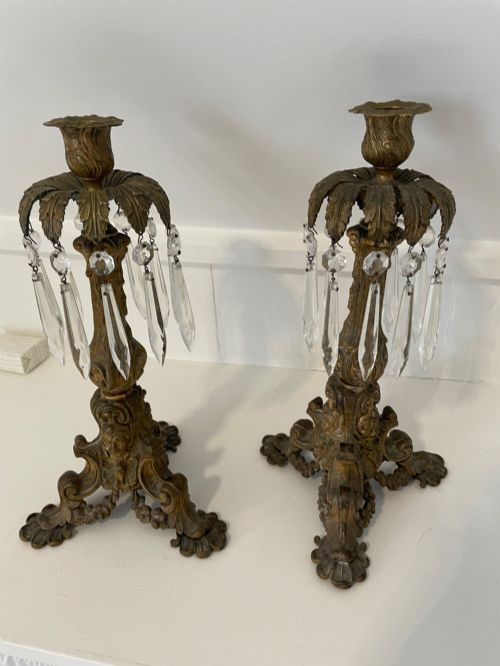
These french bronze girandoles combine reflective glass with cast metal and branch candelabras, bringing period lighting and decorative presence to a room.
French Bronze Girandoles
When you search for french bronze girandoles, you encounter ornate lighting pieces and wall mirrors designed to multiply candlelight through polished surfaces. These items bridge the gap between functional illumination and decorative wall furniture.
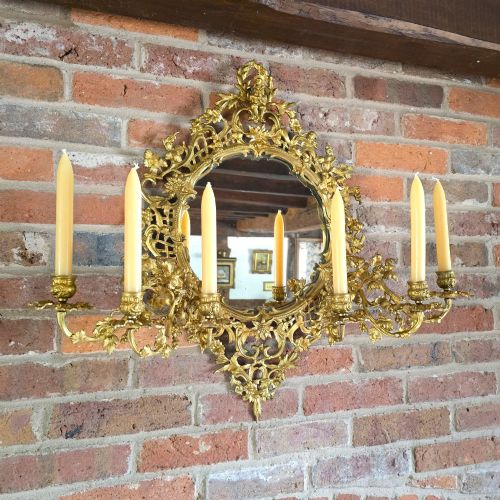
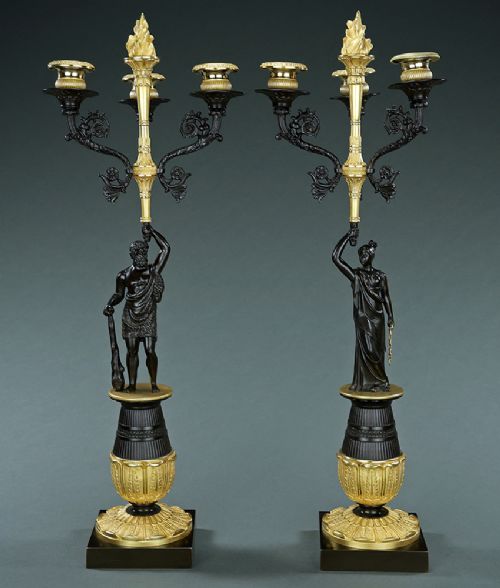
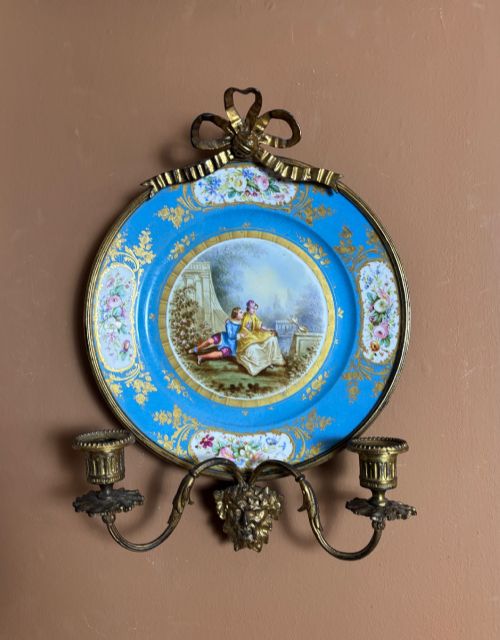
The selections here primarily consist of pairs featuring multiple candle branches attached to mirrored plates or central bronze figures. You also find single sconces and table mirrors equipped with candelabra arms spanning the nineteenth and early twentieth centuries.
How they were made
Metal components utilise cast bronze, ormolu, gilded brass and standard brass to form structural frames, cherubs and intricate scrollwork. These metal elements often receive mercury gilding or surface finishing to create contrasting bright and matte areas.
Reflective surfaces rely on bevelled glass and crystal pendants hung from the arms to catch and refract light. Marble elements occasionally serve as bases for table versions, adding weight and stability to the metalwork.
French Bronze Girandoles Retail Price Guide 2026
Typical asking prices for french bronze girandoles among the pieces listed under this phrase on Sellingantiques today, from the lower quarter to the upper quarter. They describe what is for sale here now, not the wider market.
The listings show materials spanning bronze, ormolu, marble, crystal and glass across styles including Rococo Revival, Second Empire and Neoclassical.
What varies in quality
The integration between the glass mirror plate and the metal mount also indicates the level of manufacture. Better pieces utilise heavy bevelled glass held securely within custom-fitted bronze bezels rather than simplified backing frames.
Thiebaut Freres·E.G - Paris
The French Bronze Girandoles Glossary
- Girandole
- A branched candleholder, often incorporating a mirrored backplate to reflect the light. In antique pieces, this term frequently describes wall sconces with integrated mirrors.
- Ormolu
- Gilded bronze, produced by applying a mixture of gold and mercury to a bronze base and heating it. This technique creates a durable golden finish seen on nineteenth-century French mounts.
- Candelabra
- A multi-branched candleholder designed to hold several candles at once. These range from two-branch wall lights to large table pieces.
- Second Empire
- A French design period spanning the mid-nineteenth century, characterised by eclectic revivals of historical styles. Pieces from this era often feature heavy ornamentation and classical motifs.
French Bronze Girandoles: Frequently Asked Questions
What are french bronze girandoles?
They are decorative lighting fixtures combining bronze or ormolu mounts with candle branches and mirrored glass backplates. Designed to hang on walls or stand on surfaces, they use reflective properties to brighten rooms.
The inventory here spans the nineteenth and early twentieth centuries, featuring styles from Rococo Revival to Neoclassical and Empire designs.
How were girandoles used originally?
They functioned as primary light sources in period interiors, placed strategically on walls or mantelpieces to maximise candle illumination. The mirrored backplates doubled the flickering light of the flames.
Beyond illumination, they served as prominent decorative ornaments that demonstrated the wealth and taste of the household through their material quality.
How do I live with them today?
Mount them securely to wall studs using appropriate hardware, as antique bronze and glass assemblies carry substantial weight. Position them at eye level in hallways, living rooms or dining spaces to utilise their reflective qualities.
Keep them away from direct moisture and clean the metal gently with a soft dry cloth to preserve the original surface finish without removing the gilding.
How can I tell the periods apart?
Nineteenth-century pieces often show distinct stylistic revivals, such as the asymmetric scrolls of Rococo or the strict symmetry of Empire and Neoclassical designs. Examining the casting technique and the nature of the mercury gilding or brass composition helps narrow down the decade of production.
Later pieces from around nineteen hundred often incorporate cleaner manufacturing methods while retaining traditional forms inspired by earlier chateau interiors.