

Bronze Wall Sconces
Bronze wall sconces bring layered illumination and architectural character to a room, offering enduring metalwork shaped in historic French and English designs.

Bronze Wall Sconces
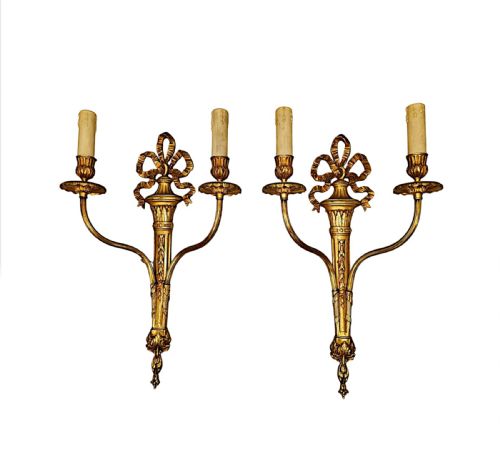
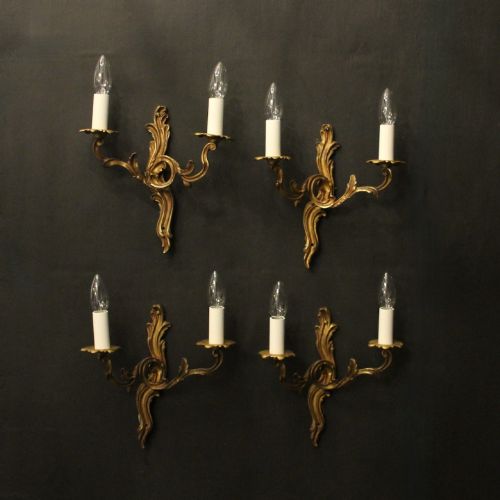
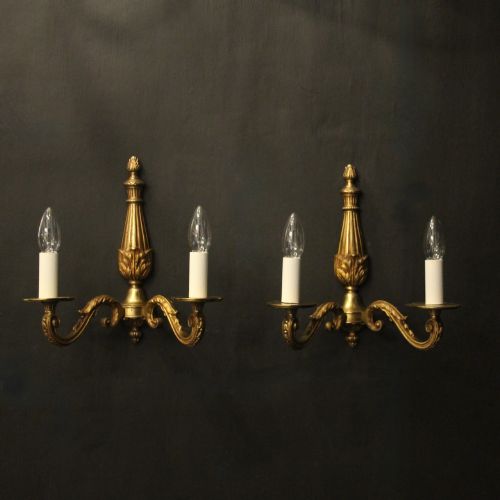
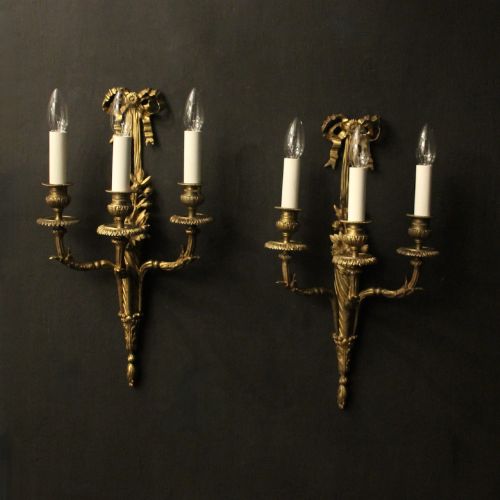
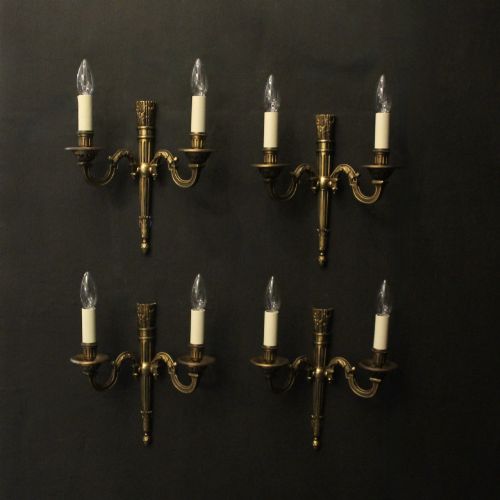
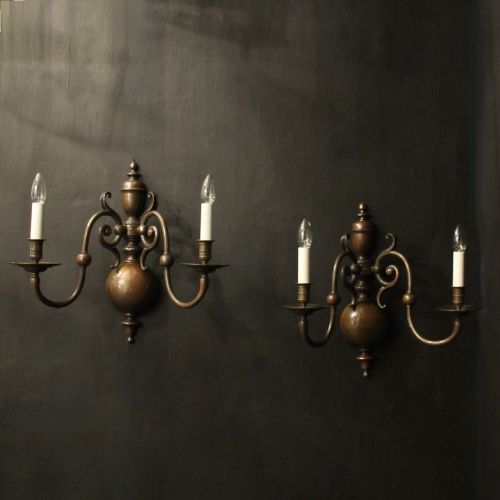
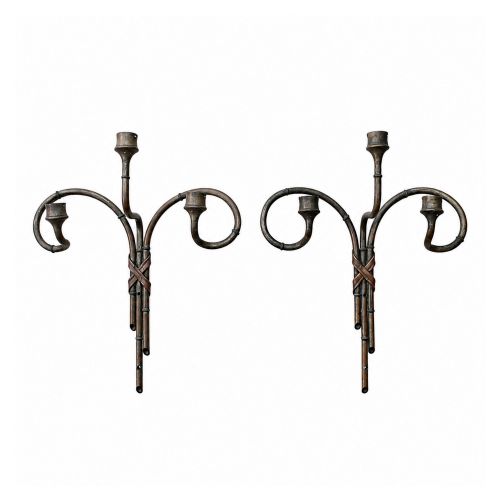
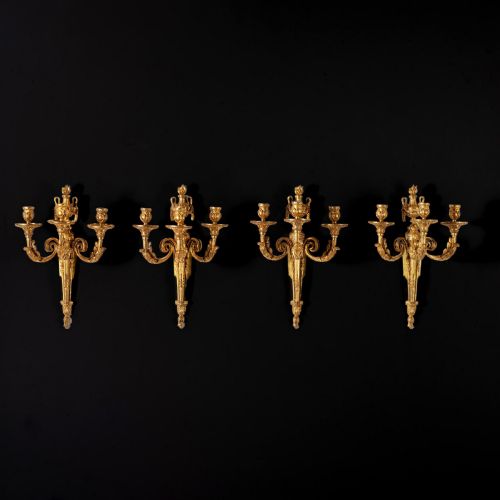
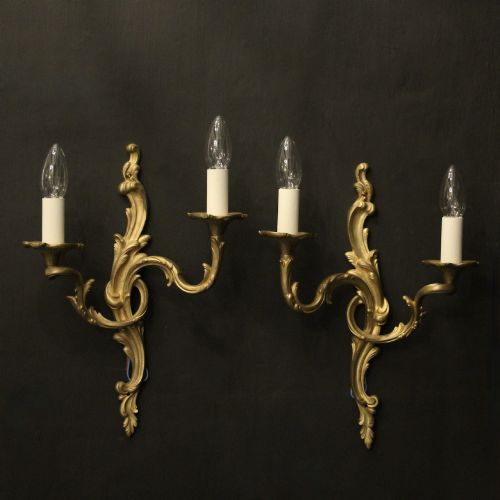
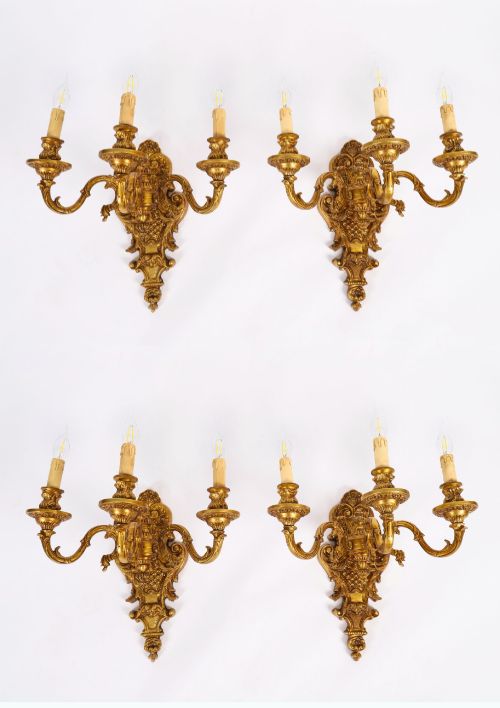
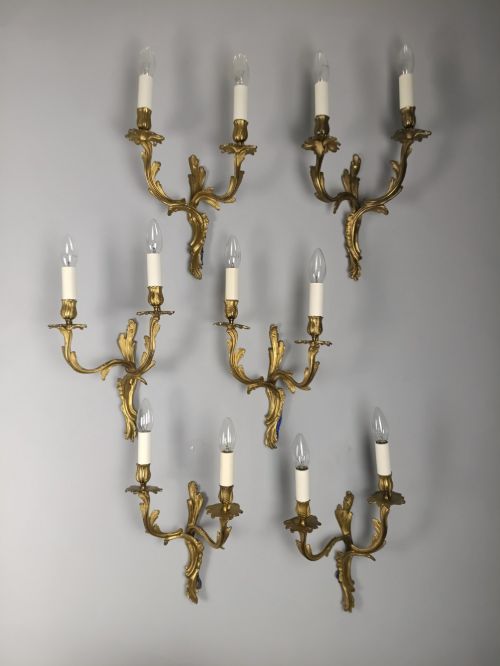
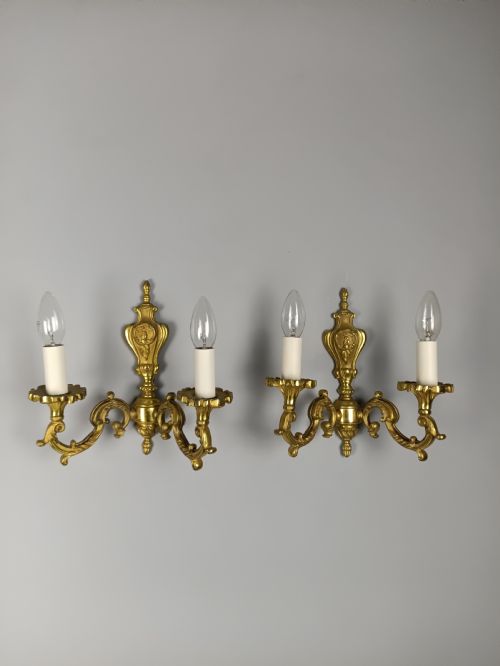
Bronze wall sconces serve as decorative lighting fixtures mounted directly to vertical surfaces, originating primarily from French and English workshops across the eighteenth, nineteenth, and early twentieth centuries. These pieces appear frequently as matched pairs, twin-arm formats, or larger sets of four designed to flank architectural elements such as mirrors and fireplaces.
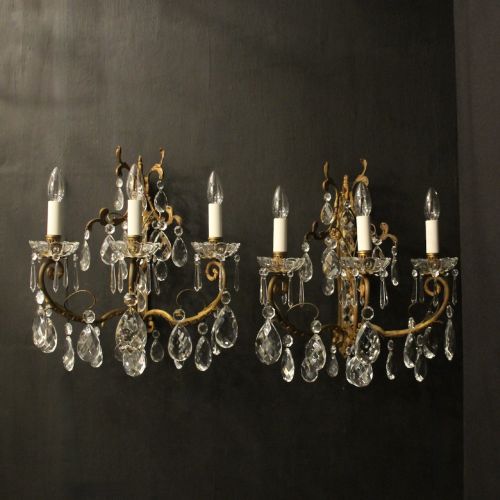
The selection ranges from restrained nineteenth-century English interpretations to ornate French Rococo and Empire styles, incorporating candle branches or electrified arms. Forms vary from simple single-arm brackets to elaborate multi-branch appliques adorned with crystal or porcelain elements.

Materials and construction
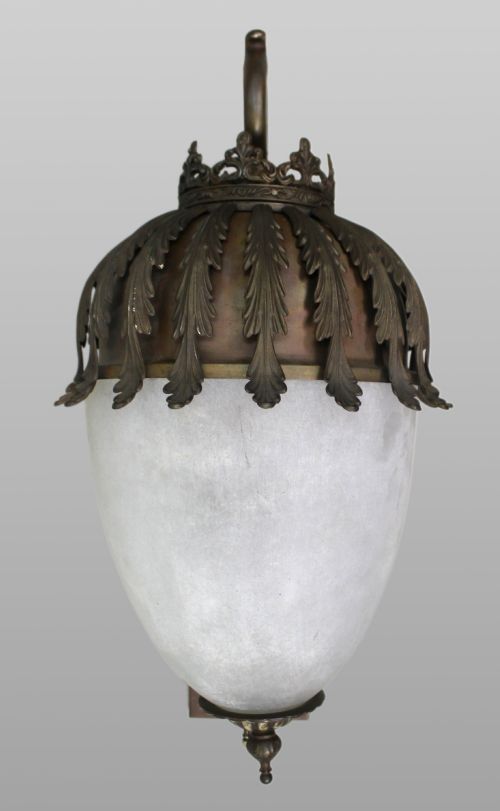
Foundries utilised cast bronze, brass, and ormolu, applying mercury gilding or surface finishing to achieve deep metallic lustres. Artisans shaped metal through casting and chasing, detailing acanthus leaves, ribbons, and figural motifs by hand.
Many examples integrate supplementary media such as cut glass crystals, Sevres porcelain, or mirrored backplates. Wiring updates appear on pieces adapted for modern electrical use while retaining their original structural metalwork.
Bronze Wall Sconces Retail Price Guide 2026
Typical asking prices for bronze wall sconces among the pieces listed under this phrase on Sellingantiques today, from the lower quarter to the upper quarter. They describe what is for sale here now, not the wider market.
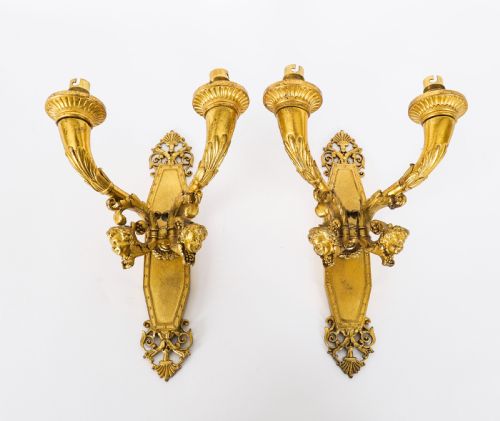
Watch for mischievous cherubs holding candle arms aloft, ready to illuminate the room.
Judging the work
The weight of the bronze and the structural integrity of the arm junctions distinguish finer production. Heavier, well-balanced frames indicate superior foundry work from established periods.
Casier
The Bronze Wall Sconces Glossary
- Ormolu
- Gilded bronze produced through the application of a mercury and gold amalgam to a bronze base, creating a durable golden surface. This technique was widely practiced in French workshops during the eighteenth and nineteenth centuries.
- Applique
- A wall-mounted lighting fixture or sconce designed to hold candles or electric lamps. The term is frequently used interchangeably with wall lights in French decorative arts.
- Girandole
- An ornamental branched wall light, often incorporating a mirrored backplate to reflect and amplify the candlelight. These fixtures typically feature multiple arms for illumination.
- Rococo
- A decorative style characterised by asymmetrical scrolls, C-curves, and naturalistic plant motifs. This aesthetic dominated French design during the mid-eighteenth century and saw significant revival periods later.
- Empire
- A neoclassical design style emerging from the Napoleonic era, defined by symmetry, military motifs, and classical architectural references. Sconces from this tradition often incorporate laurel wreaths and classical drapery.
Bronze Wall Sconces: Frequently Asked Questions
How do I wire antique wall sconces?
Most pieces require professional rewiring by a qualified electrician to meet modern safety standards. Many surviving examples have already been adapted for electrical use while preserving their original backplates and arms.
Installers can run contemporary flex through the hollow cast bronze channels or mount the fixture safely to standard wall junction boxes. Careful handling protects the fragile gilding and surface patina during the process.
Where should I hang these sconces?
Sconces perform best when positioned at eye level to flank mirrors, doorways, or large pieces of furniture. Their upward or outward casting arms distribute ambient light effectively across a wall surface.
Matching sets of four work well in larger reception rooms to maintain symmetrical balance. Pairs suit smaller spaces or specific architectural focal points such as chimney breasts.
How do I clean gilded bronze?
Dusting gently with a soft, dry cloth removes surface particles without risking the delicate finish. Avoid abrasive cloths, chemical dips, or metal polishes that strip historical gilding.
Preserving the accumulated patina maintains the visual depth expected of antique metalwork. Professional conservation is advisable for pieces requiring deeper intervention.
How do I date a bronze sconce?
Stylistic indicators such as Rococo asymmetry or Empire neoclassical motifs provide initial chronological markers. Construction methods, casting seams, and fixing screws offer further evidence of period manufacture.
Comparing the depth of the chasing and the composition of the bronze alloy against documented nineteenth and early twentieth-century examples helps confirm age.