
Bronze Urn Table Lamps
These bronze urn table lamps bring classical form and warm illumination into a room, blending sturdy metalwork with decorative porcelain, marble, and gilt finishes.
Bronze Urn Table Lamps
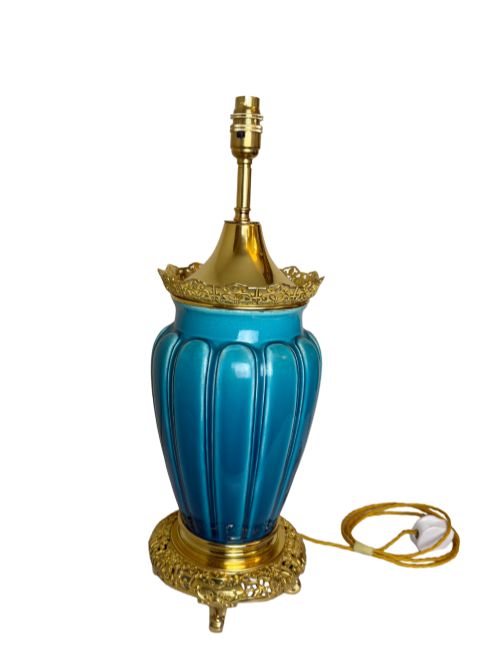
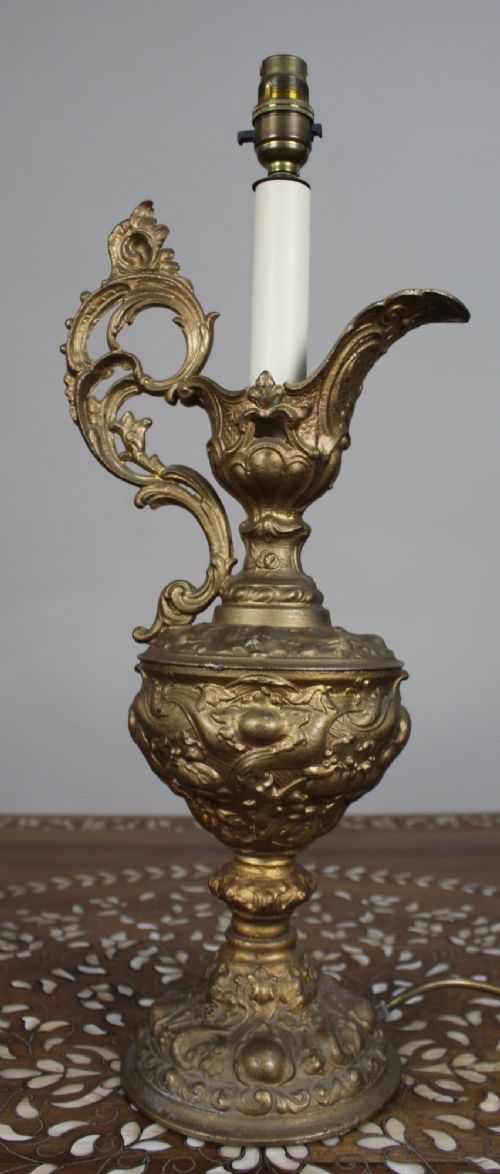
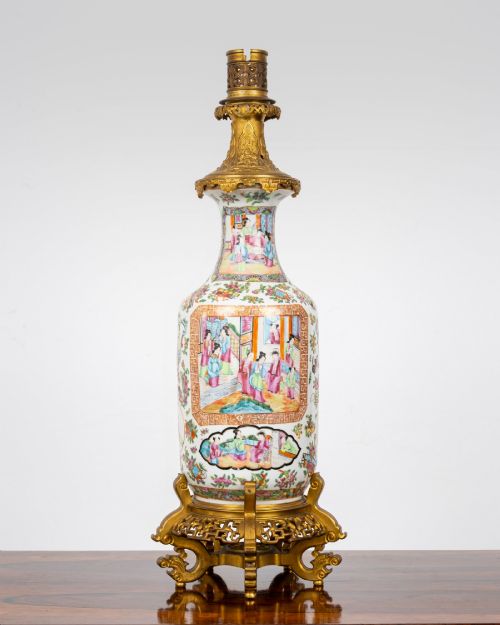
When you search for bronze urn table lamps, you encounter lighting fixtures fashioned from classical vessel bodies, often adapted from earlier decorative urns, cassolettes, and ewers. These pieces frequently date from the nineteenth century into the early twentieth century, reflecting enduring European and Asian design traditions.
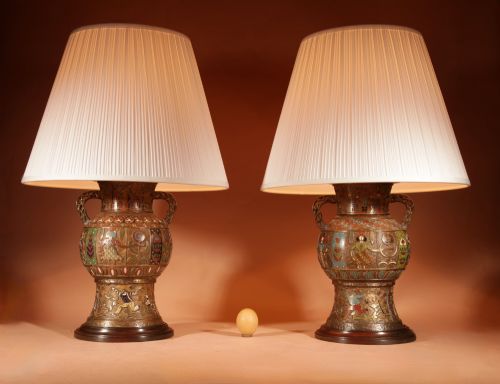
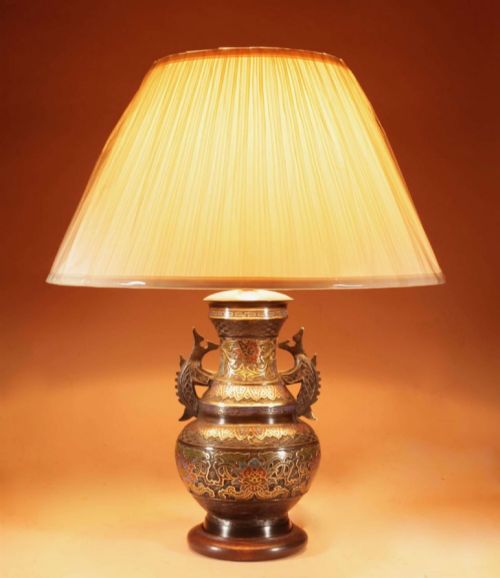
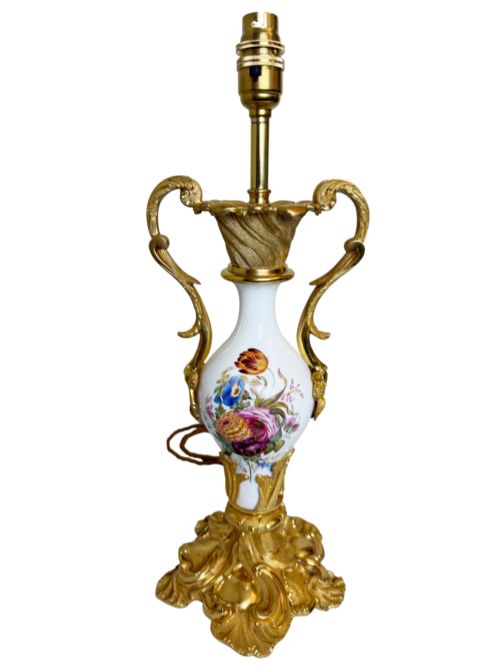
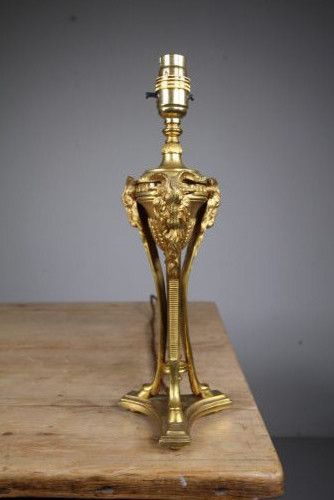
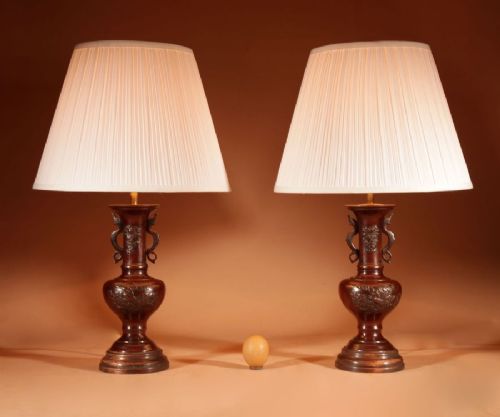
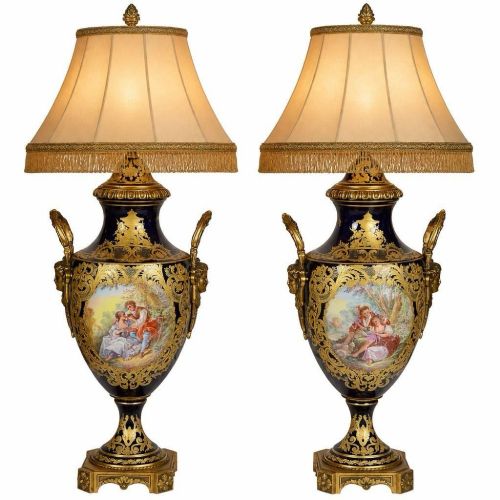
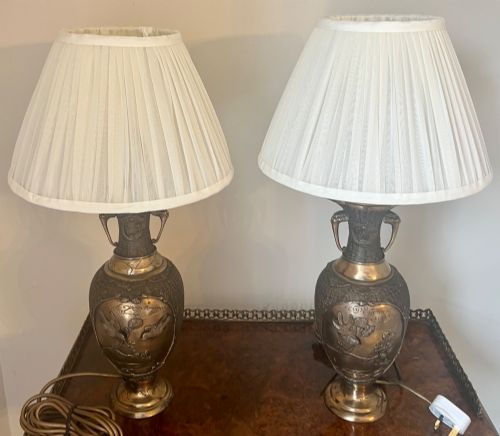
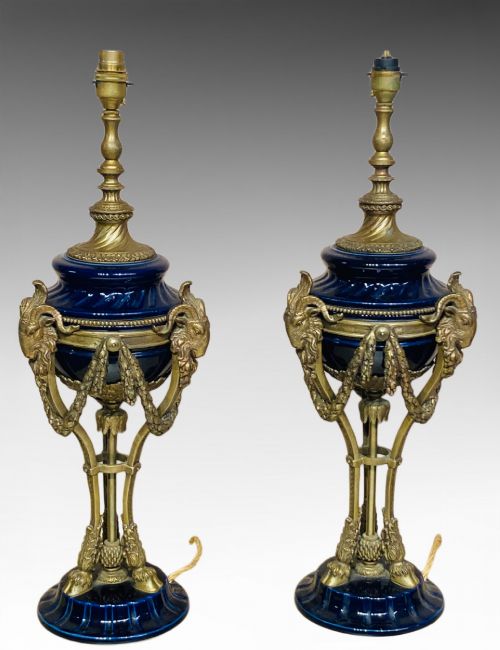
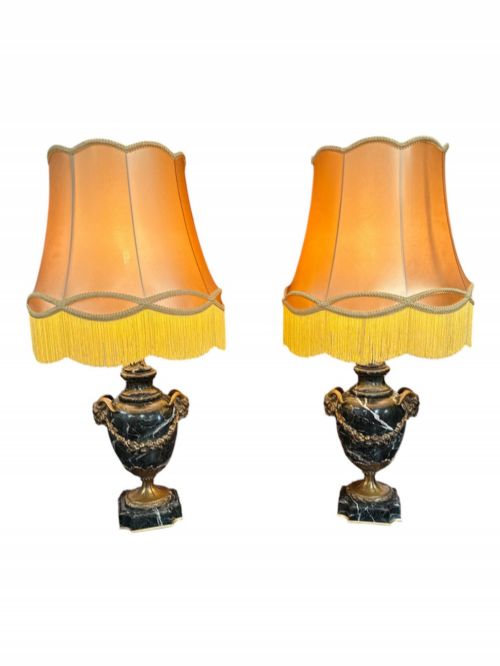
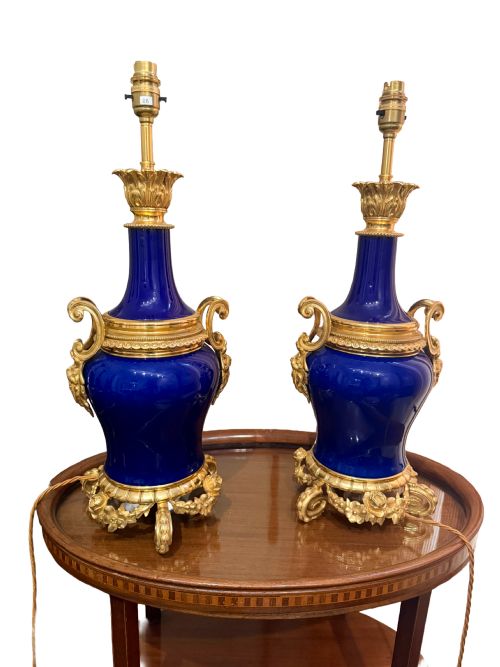
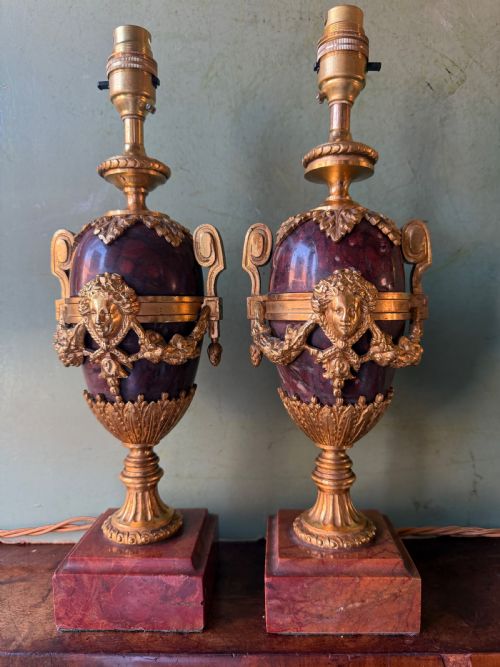
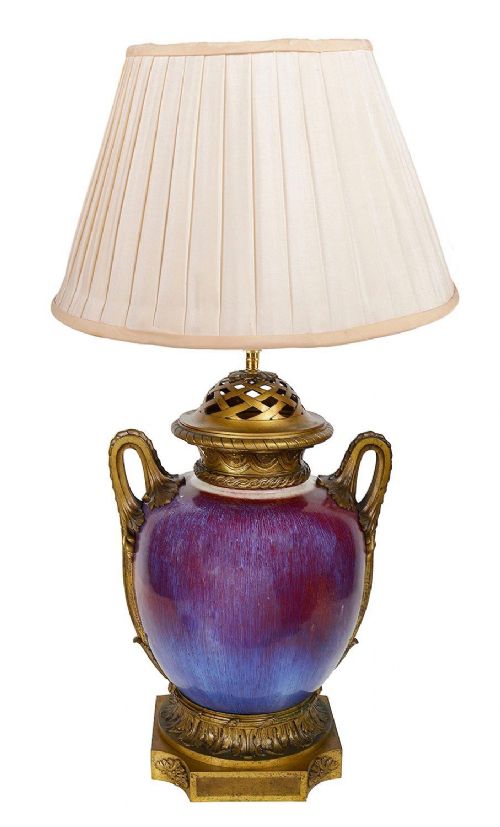
The most common versions met on this page are French Neoclassical and Louis XVI style creations pairing cast bronze or ormolu mounts with marble bodies or painted porcelain. Japanese Meiji period bronzes also appear regularly, alongside Chinese porcelain and bronze conversions.
Many examples originate as decorative mantel urns or lidded vases subsequently wired for electricity, retaining their twin handles, decorative mounts, and substantial stone or metal bases. Pairs are frequently encountered, offering symmetrical options for sideboard, mantel, or console placement.
Materials and Construction
Foundry work relied on traditional casting methods to produce the bronze, ormolu, and gilt metal components that frame these lamps, often finished with chiselling and gilding. Marble and rouge marble provided heavy, stable plinths and urn bodies, turned on lathes and fitted with cast metal collars and handles.
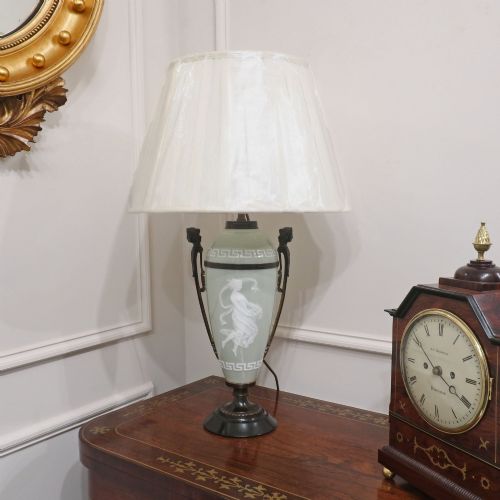
Porcelain elements incorporated hand-painted designs, cobalt blue glazes, champlevé enamelling, and pate sur pate decoration, secured with threaded metal rods and bolted mounts. Fabric shades complete the construction, casting a warm glow downward over the metallic patinas and glazed ceramic surfaces.
Listings feature eighteenth and nineteenth-century pieces alongside early twentieth-century examples, incorporating bronze, ormolu, marble, porcelain, and fabric materials.
Distinctions in Quality
The precision of the bronze casting and the crispness of the chased ormolu details set superior pieces apart from simpler foundry output. Heavier marble turning and finely integrated handles demonstrate superior craftsmanship during assembly.
The artistry of the painted porcelain panels or the complexity of cloisonné and champlevé work dictates the upper tier of the range, where individual hand-painted details elevate the decorative impact.
The Bronze Urn Table Lamps Glossary
- Ormolu
- Gilded bronze, typically produced by applying a mercury-gilding mixture to cast brass or bronze. It provides a bright, durable golden finish on mounts and decorative trim.
- Cassolette
- A decorative vase or urn with a reversible lid that functions as a burner or candle holder. In lighting, these vessels are converted to hold electrical fittings.
- Champlevé
- An enamelling technique where troughs are dug into the bronze surface and filled with vitreous enamel before firing. It creates patterned coloured designs across the metal body.
- Pate sur pate
- A ceramic decoration method where layers of liquid white porcelain slip are built up on a coloured clay body to create a low relief cameo effect.
- Neoclassical
- A style drawing inspiration from the classical art and architecture of ancient Greece and Rome. It emphasises symmetry, straight lines, and classical urn motifs.
Bronze Urn Table Lamps: Frequently Asked Questions
How do I clean these lamps?
Dust bronze and ormolu gently with a soft, dry cloth to preserve the patination. Avoid abrasive polishes that can strip the gilding from metal surfaces.
Clean marble and porcelain sections with a slightly damp cloth, drying them immediately to protect any vintage painted details or glazed finishes.
Can I replace the electrical wiring?
Modern rewiring is standard practice for vintage lighting to ensure safety and compliance with current electrical standards. A qualified electrician can replace old internal cords while retaining the original lamp body.
Retaining the original switch mechanisms and holders is possible during rewiring if they remain stable and safe for daily domestic use.
Where should I place an urn lamp?
These substantial pieces suit heavy sideboards, hall consoles, and large desks where their weight and height provide visual balance. Pair them on matching mantelpieces or side tables to create symmetry.
Ensure the surface supports the combined weight of the marble or bronze base, and position them near a wall socket to avoid trailing extension leads.
Are these lamps originally electric?
Most nineteenth-century examples began life as decorative ornaments, such as cassolettes, ewers, or lidded vases, before later conversion into lighting. Wiring holes were typically drilled through the base or internal fitting during the conversion process.
Converted vessels retain their original decorative function while serving as practical table illumination in modern interiors.