
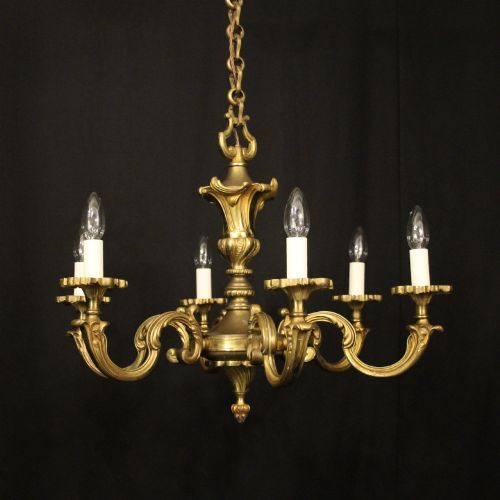
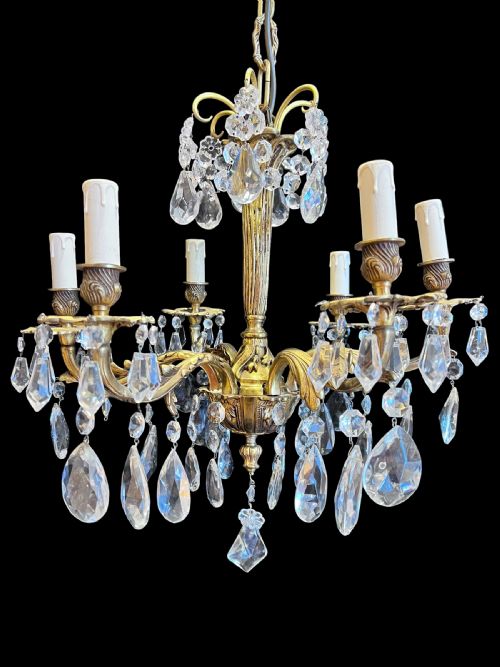
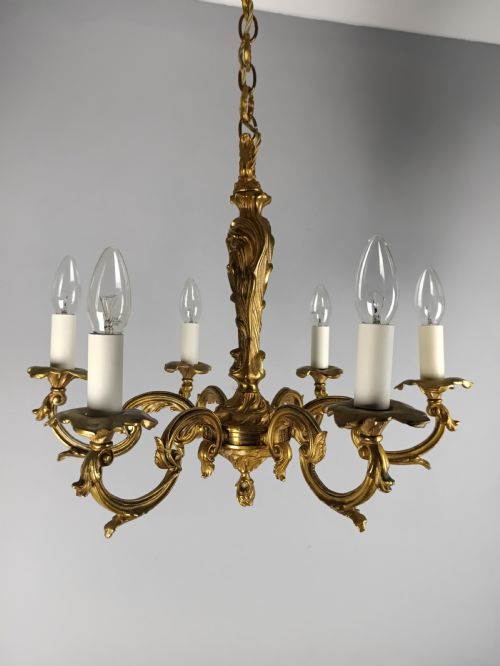
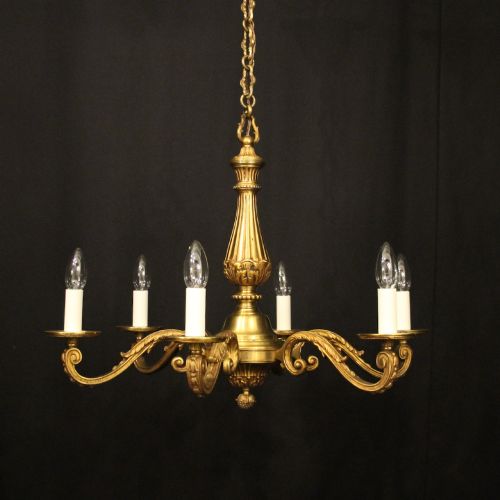
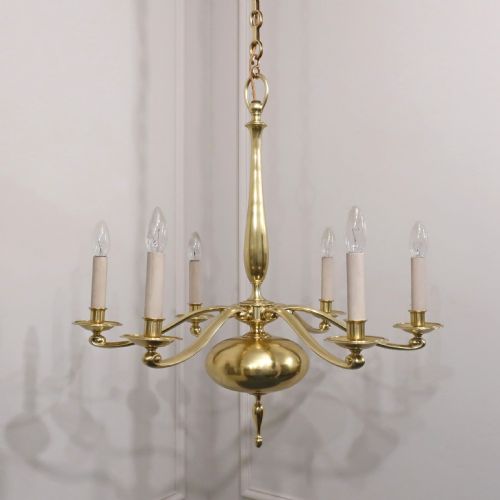
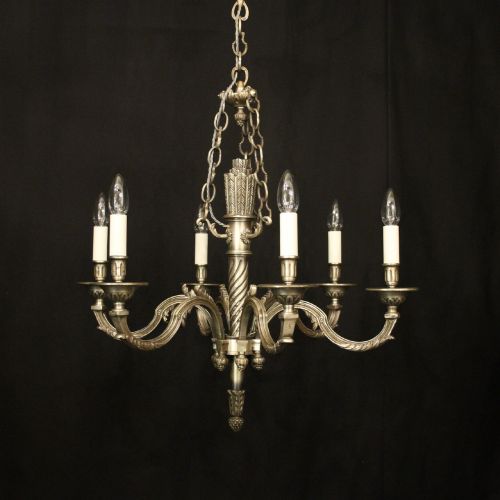
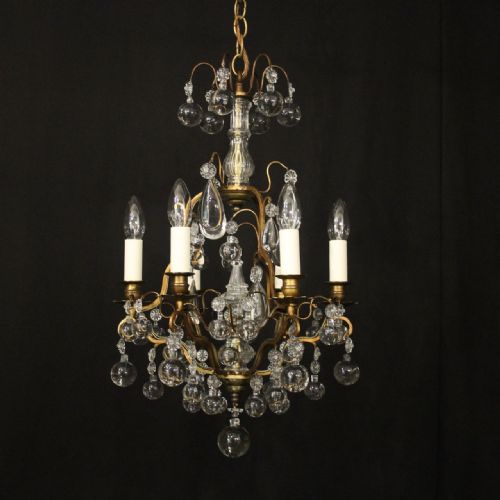

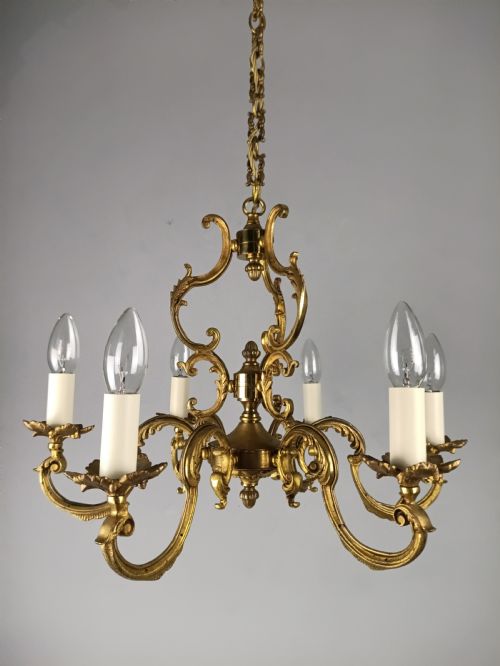


Bronze Six Arm Chandelier
A bronze six arm chandelier brings substantial weight and warm metal tones to a room, offering both history and presence.
Bronze Six Arm Chandelier
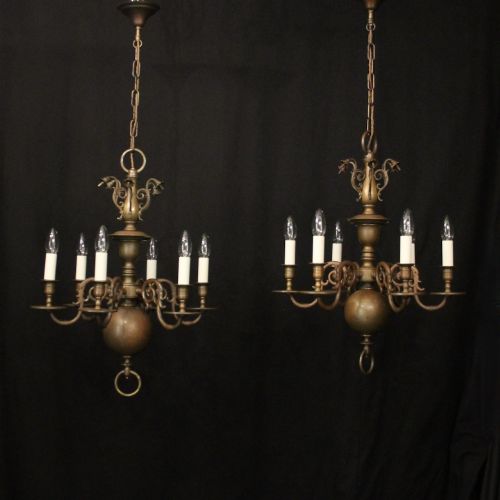
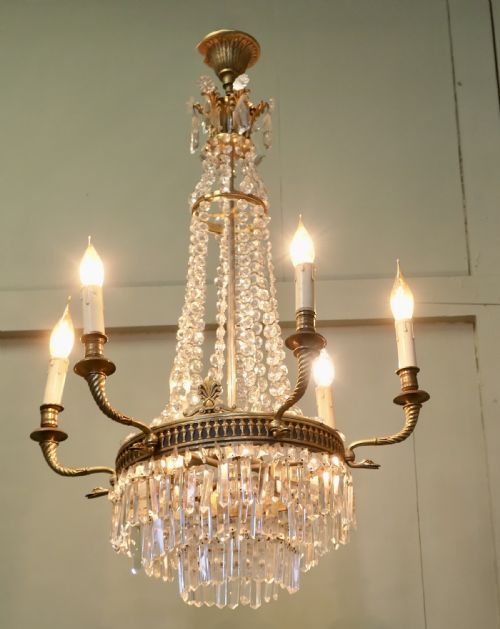
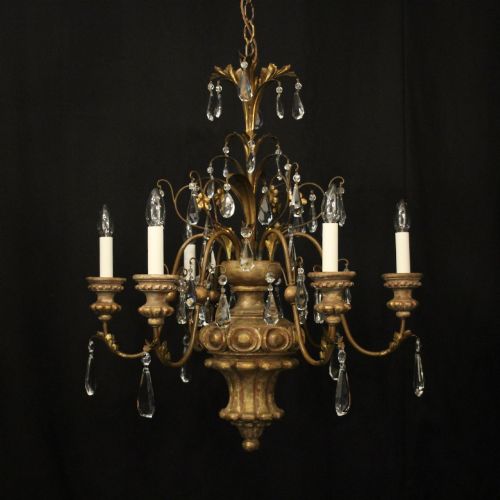
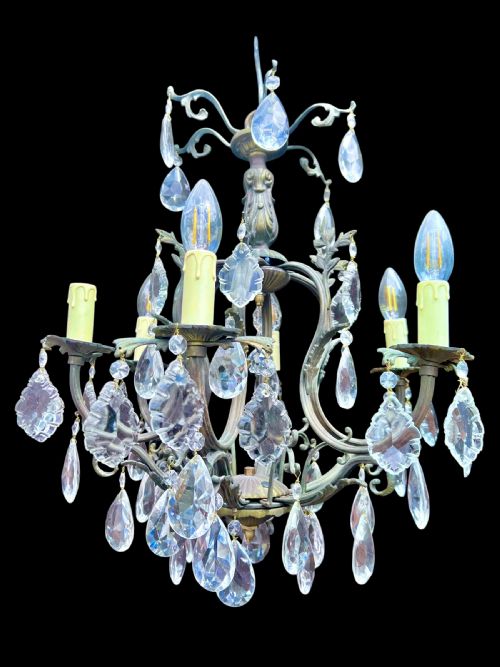
A bronze six arm chandelier provides a balanced distribution of light through six branching arms, typically configured for interior spaces requiring a strong focal point. These fixtures frequently appear in French styles, ranging from Neoclassical and Rococo to Empire, alongside Flemish Renaissance and Florentine Baroque iterations.
The options span the late nineteenth century into the 1930s, encompassing Edwardian interpretations and Art Nouveau designs. Buyers often encounter pieces utilising cast bronze, gilt bronze, and ormolu, frequently accompanied by glass or crystal components.
Materials and construction methods
Construction relies heavily on cast bronze, brass, and gilt metal, shaped into branching arms and detailed central stems. Surface treatments such as gilding, silver gilding, and ormolu finishes provide the characteristic metallic sheen seen across the period pieces.
Many examples incorporate glass, crystal, or gilded wood elements to enhance light reflection and visual complexity. The structural integrity depends upon heavy casting techniques typical of nineteenth and early twentieth-century workshops.
The listings demonstrate a strong presence of French aesthetic influences, alongside English and Italian origins spanning from the nineteenth century into the 1930s.
Distinctions in craftsmanship and finish
Quality separates fixtures by the crispness of the casting detail and the depth of the chased ornamentation on the bronze or gilt surfaces. Superior examples display refined proportions across the six arms and harmonious integration of crystal or glass elements.
The method of gilding and the preservation of the original surface finish heavily influence the character of the piece. Heavier cast components and sophisticated styling, such as complex tent and waterfall formations, denote more ambitious manufacturing standards.
G.E.C
The Bronze Six Arm Chandelier Glossary
- Ormolu
- A technique of applying finely ground high-carat gold to an object of bronze. This treatment creates a rich, durable golden finish characteristic of fine decorative metalwork.
- Tent and waterfall
- A lighting configuration where strings of crystal beads form an upper tent shape above a cascading waterfall effect of drops. It creates layered illumination and visual texture.
- Gilt bronze
- Bronze that has been coated with a thin layer of gold or gold-coloured leaf. The process protects the underlying metal while offering a bright appearance.
- Mazarin chandelier
- A specific form of hanging light fixture known from the period evidence. It relates to traditional multi-branched candle or light holders of substantial weight.
Bronze Six Arm Chandelier: Frequently Asked Questions
How do I clean a bronze six arm chandelier?
Dust the metal and glass components regularly using a soft, dry cloth to prevent buildup. Avoid harsh chemical cleaners that might strip the gilt or ormolu finishes.
For crystal or glass drops, gentle wiping with a mild soapy solution works best, provided each piece is dried thoroughly before reattachment.
Are these chandeliers wired for modern electricity?
Many period lighting fixtures have been adapted for contemporary electrical standards over time. It remains prudent to have a qualified electrician inspect the internal wiring prior to installation.
Checking the lamp holders and general electrical safety ensures the heavy bronze structure can be suspended and operated securely.
Which room sizes suit a six arm fixture?
A six-arm arrangement provides balanced illumination suitable for medium to large dining rooms, living spaces, or hallways. The spread of the arms helps distribute light evenly across the surrounding area.
Ceiling height and room proportions dictate the ideal hanging position, ensuring the fixture commands the space without obstructing movement.
How can I tell the period of the chandelier?
Stylistic indicators such as Art Nouveau curves, Empire symmetry, or Baroque casting heavy details point toward specific manufacturing eras. The choice of materials, including gilt bronze, brass, and crystal configurations, further narrows down the timeline.
Examining the casting methods and mounting hardware provides additional clues regarding whether a piece originates from the nineteenth century or the 1920s and 1930s.