

Gold Bronze Ceiling Light
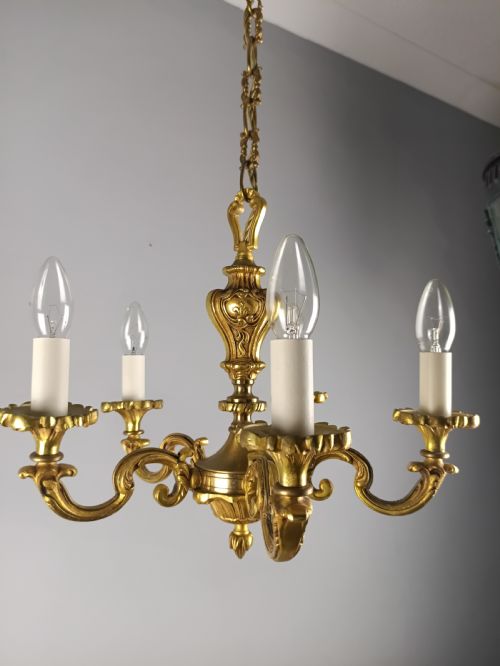
A gold bronze ceiling light brings warmth to a room through cast metal and glass, ranging from multi-armed chandeliers to hanging lanterns.
Gold Bronze Ceiling Light
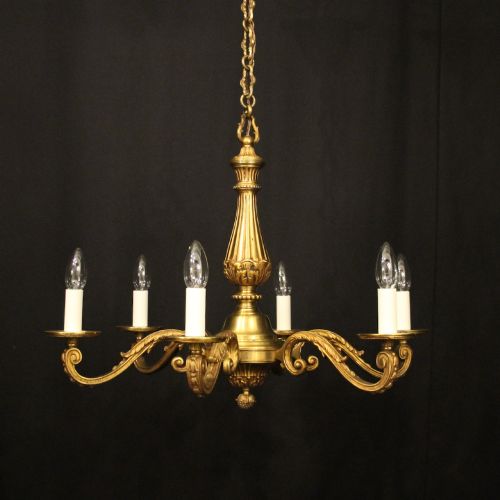
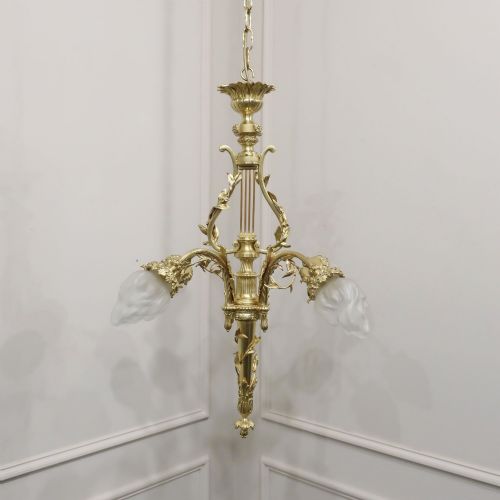
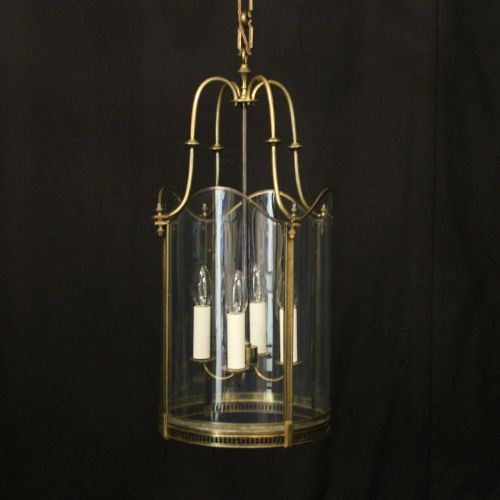
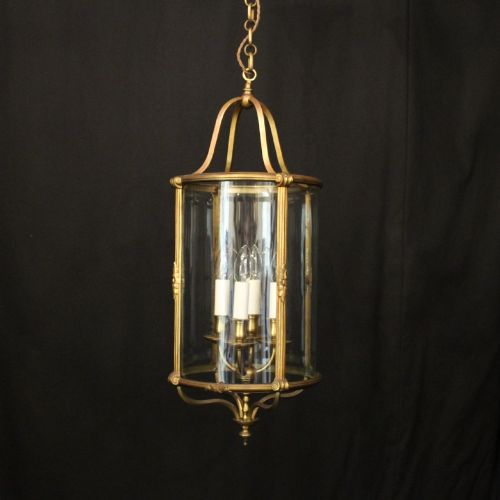
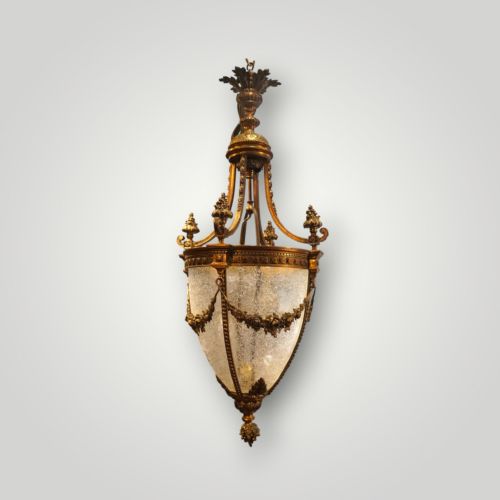
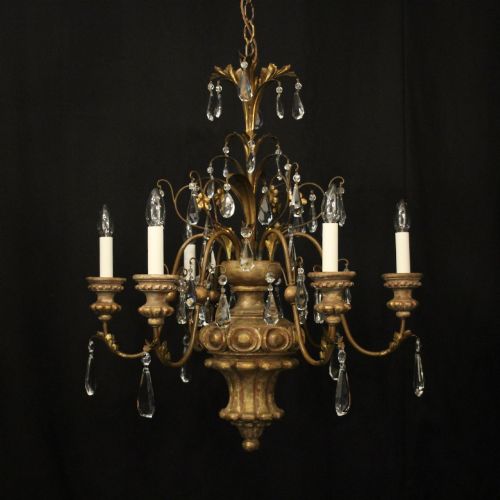
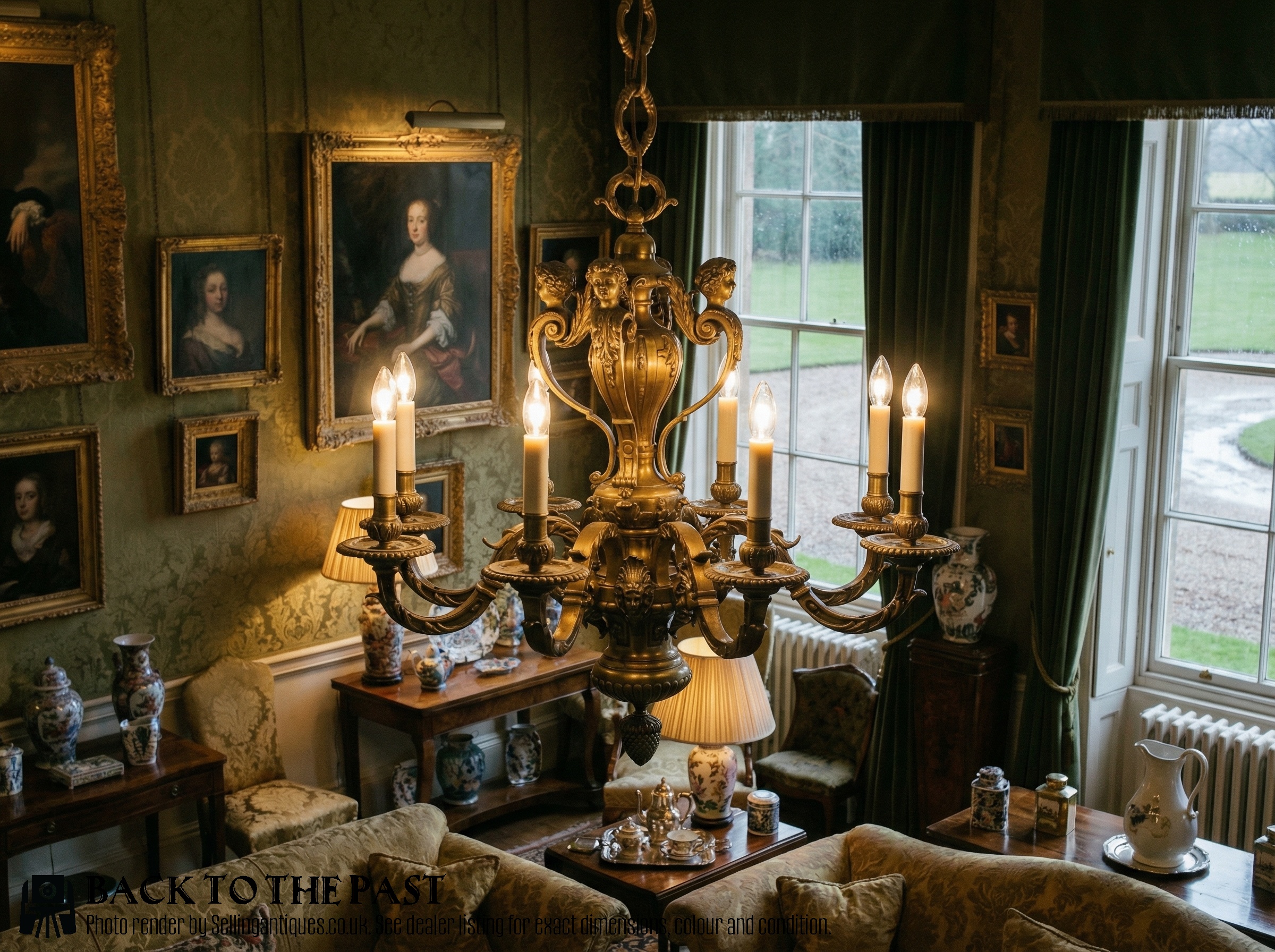
A gold bronze ceiling light encompasses antique chandeliers, hall lanterns, and pendant lights rooted mainly in French design traditions. The selection spans styles such as French Rococo, Empire, Neoclassical, and Florentine Baroque.
Most examples date from the late nineteenth century through the 1930s, featuring periods like Victorian and the early twentieth century. Buyers encounter multi-light chandeliers and convex lanterns shaped by French chateau aesthetics.
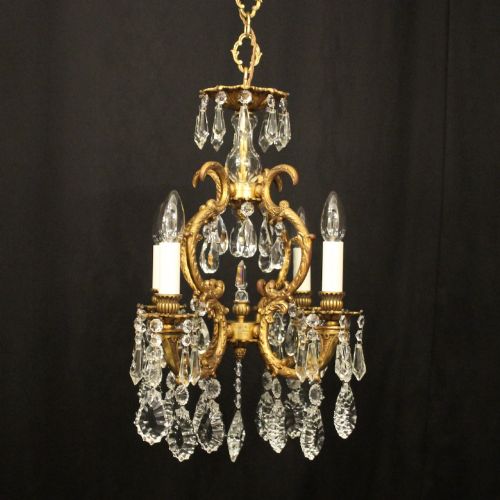
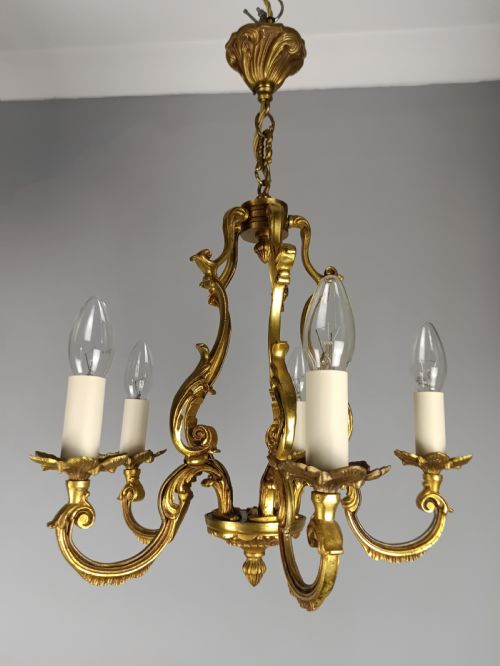
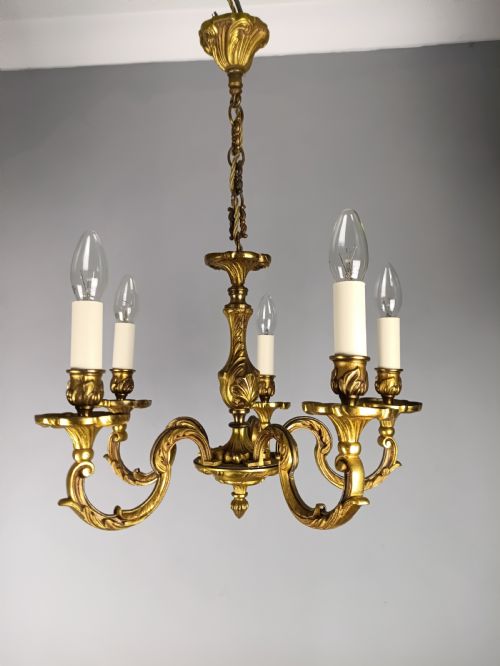
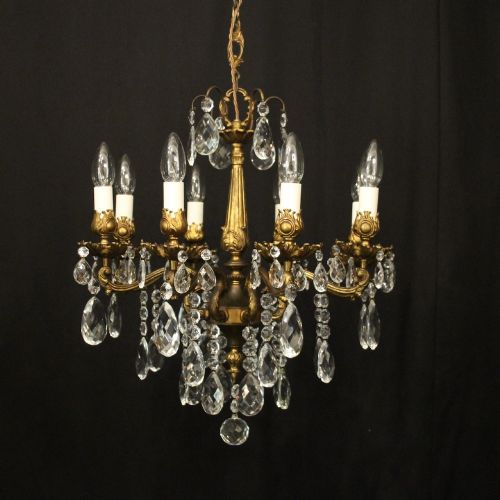
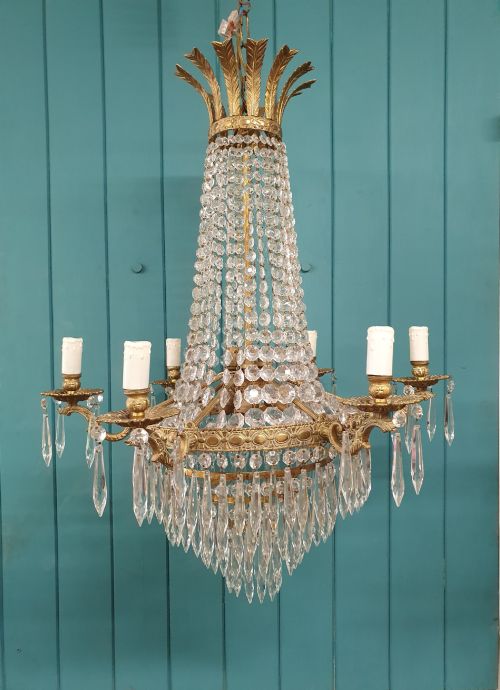
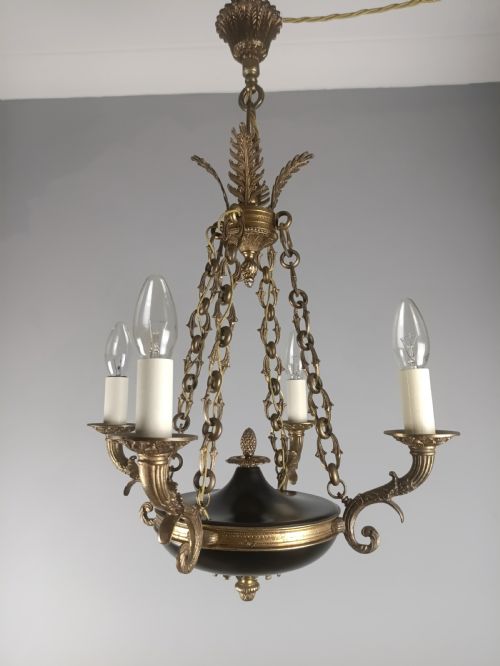
The primary forms include birdcage chandeliers, tent and waterfall Empire fixtures, and simple multi-arm lights. Metal frameworks carry glass drops, crystal spikes, and candle-style fittings designed for suspension from the ceiling.
How they were made
Construction relies on cast bronze, brass, and spelter finished with gilding to achieve a golden surface. These metallic frames are built to support the weight of numerous candle arms and suspension chains.
Glass and crystal elements complement the gilded metal through cut glass spikes, crystal drops, and convex glass panes in lanterns. Artisans wired these components together manually, securing glass drops to arms and incorporating leaf decorations.
Listings show materials including gilt bronze, brass, crystal, and glass across various ceiling fixtures.
What varies in quality
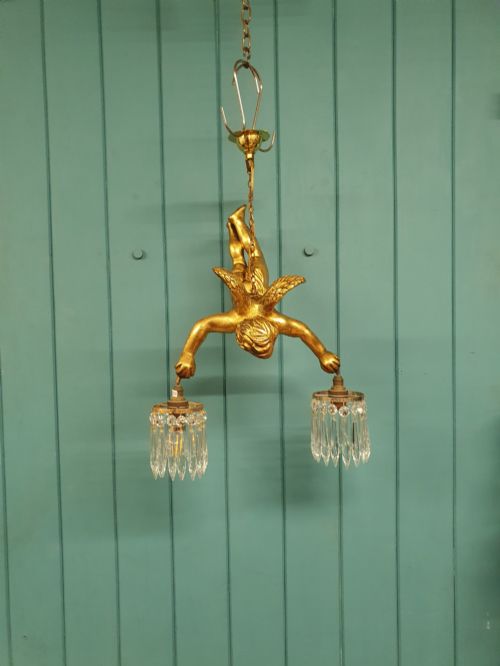
The refinement of the cast metal ornamentation dictates the visual weight of the piece, from simple moulded frames to elaborate lyre shapes and flying cherubs. Crisp detailing in the bronze work separates standard production from finer creations.
The integration of crystal and glass elements alters the character of the fixture, where abundant cut crystal drops and convex glass panels increase light refraction. Heavier arm counts and balanced proportions elevate the presence of a ceiling light.
The Gold Bronze Ceiling Light Glossary
- Gilt bronze
- Metal cast and coated with a layer of gold or gold-coloured finish. It provides the characteristic metallic sheen seen across French chandeliers.
- Empire
- A style originating from the French Empire period drawing on classical motifs. These fixtures often feature strict symmetry, wreaths, and classical proportions.
- Tent chandelier
- A lighting form where strings of beads form a tent shape above the main body. Crystal drops hang from this upper canopy down to the arms.
- Hall lantern
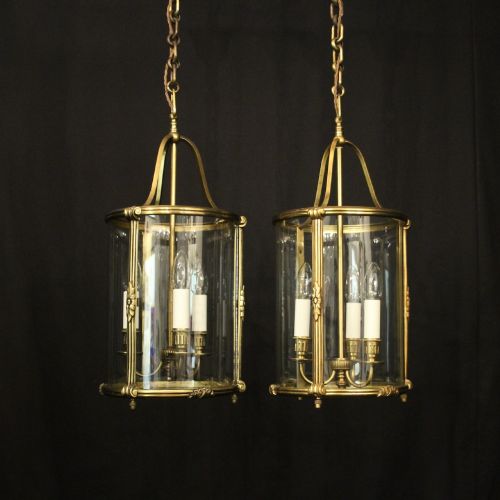
- A suspended light enclosed in glass panels held within a metal frame. They illuminate entryways and corridors.
- Spelter
- An alloy used as a cost-effective alternative to bronze in decorative castings. It accepts gilding well and appears in figurative mounts.
Gold Bronze Ceiling Light: Frequently Asked Questions
How do I hang a heavy bronze chandelier safely?
Suspension requires fixing directly into ceiling joists or using a substantial metal hook rated for the total weight of the metal and crystal. Professional installation ensures the electrical wiring supports the multi-bulb load.
Heavier fixtures demand reinforced ceiling boxes to prevent structural strain over time. Consulting an electrician protects both the antique metalwork and the ceiling.
What is the difference between gilt bronze and gilt brass?
Gilt bronze utilises a copper and tin alloy that accepts fine chasing and holds sharp cast details. Gilt brass uses a copper and zinc alloy that tends to feel lighter in weight.
Both materials receive a gold-toned finish, but bronze generally permits crisper ornamentation in antique lighting. Brass variants often appear in slightly later twentieth-century pieces.
How should I clean crystal drops on a ceiling light?
Cleaning requires removing individual crystal drops or wiping them carefully while attached using a mild soapy solution. Technicians support the fixture frame to prevent twisting the arms during maintenance.
Harsh chemical cleaners strip the gilt finish from the surrounding metal structure. Soft cloths preserve the reflective quality of both the crystal and the gilding.
Where do hall lanterns work best in a home?
Hall lanterns suit entrance hallways, stairwells, and high-ceilinged landings where vertical space allows downward suspension. Their enclosed glass panels protect the interior candles or bulbs from drafts.
Compact convex lanterns fit narrower corridors without obstructing movement. The directional downward light defines transitional spaces effectively.