




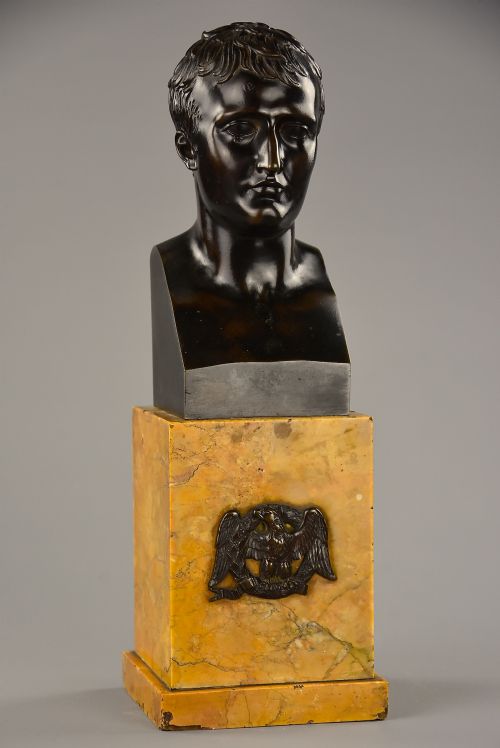


Bronze Portrait Head
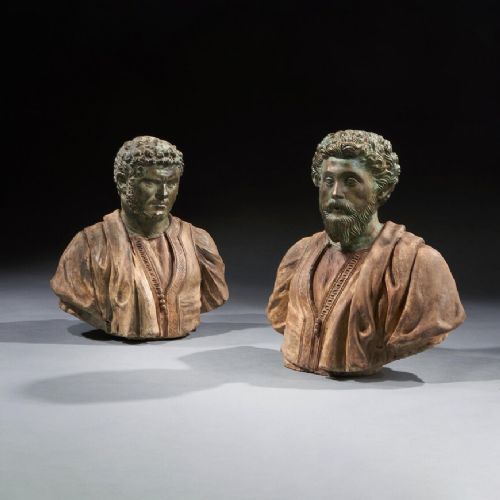
A bronze portrait head captures historic figures, literary heroes and classical emperors in metal, offering a commanding focal point for any interior.
Bronze Portrait Head
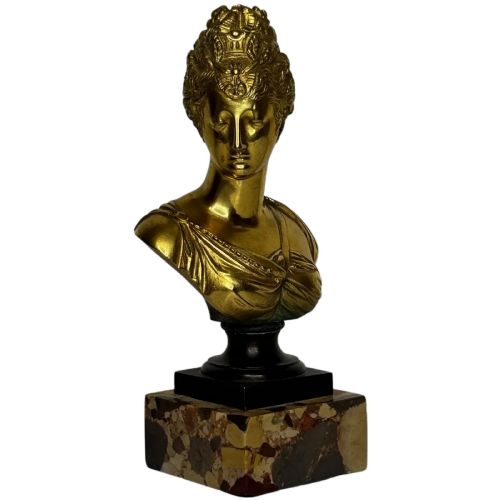
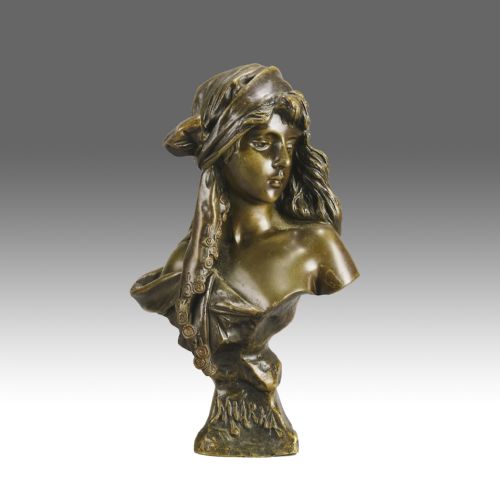
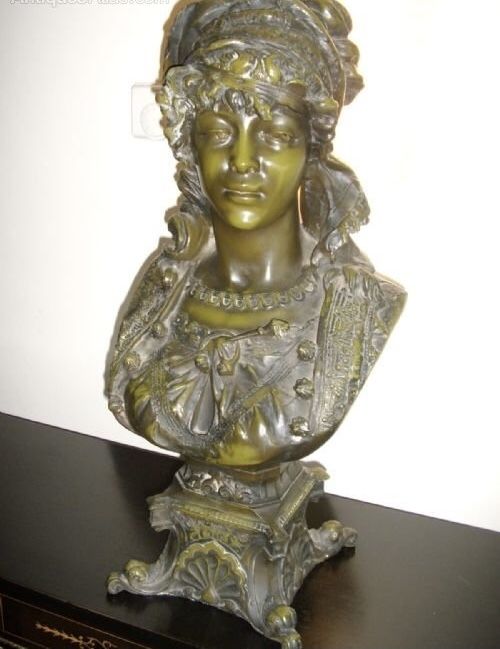
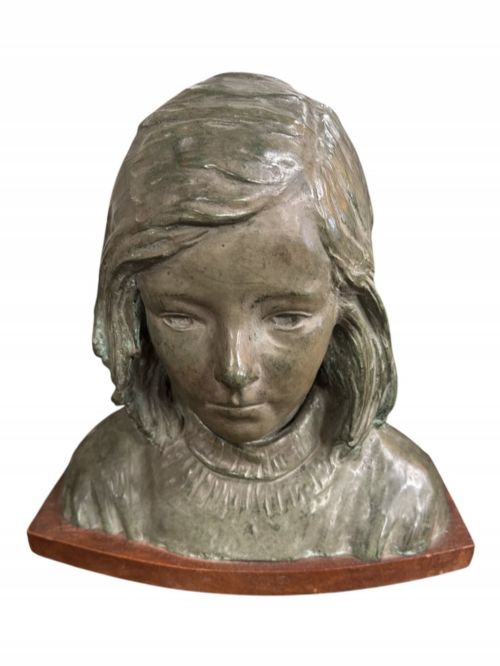
When you search for a bronze portrait head, you encounter sculptural depictions of human subjects ranging from classical Roman emperors and mythical figures to notable historical personalities and young girls. These works most commonly appear as nineteenth-century French productions, Art Nouveau interpretations, and Grand Tour souvenirs.
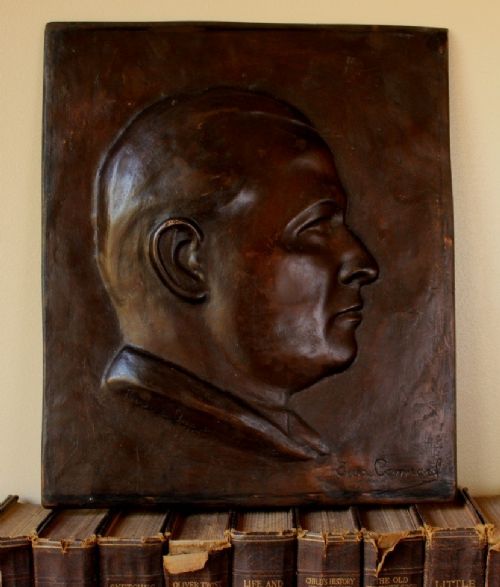
The objects take the form of portrait busts, wall sculptures, and shelf pieces mounted upon marble bases or plinths. Subjects span from mythological characters such as Diana de Poitiers to specific historical figures like Napoleon and Dante Alighieri.
Makers produced these pieces across various European centres, with French and Italian foundries dominating the selection. Alongside solid bronze, you will frequently find variations executed in patinated bronze, terracotta, plaster, and marble.
How they were made
Foundries primarily utilised the lost-wax casting method for solid bronze pieces, capturing minute facial details and hair textures before finishing the metal with patination acids. Sculptors also worked directly in materials like terracotta and plaster, applying paint surfaces to mimic denser metals.
Many heavy bronze castings were subsequently mounted onto contrasting black or veined marble bases, often secured with threaded metal pins. Ormolu mounts and wooden supports occasionally supplemented the primary sculpture to elevate the overall presentation.
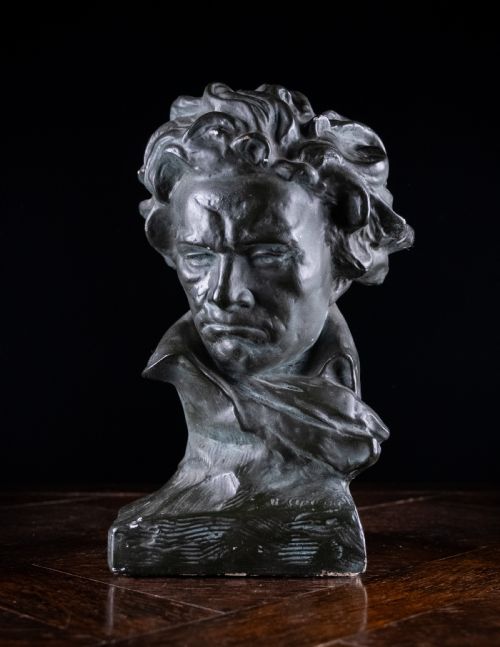
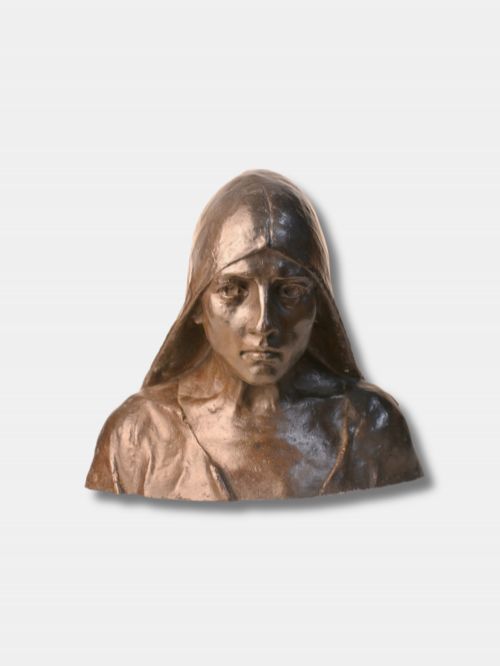
Several Roman emperors and a medieval woman share shelf space here with Beethoven and various Victorian gentlemen.
What varies in quality
The distinction between average castings and superior works rests in the crispness of the facial modelling and the depth of the metal patination. Master sculptors ensured that hair, drapery, and facial expressions retained sharp anatomical definition without losing organic fluidity.
Signatures of known artists or recognised foundry stamps elevate a piece, as does the integration of quality mounting materials like heavy turned marble plinths. Lesser examples often display softer cast details and uniform, flat surface treatments that obscure individual character.
Emmanuel Villanis·Mathurin Moreau·Alajos Strobl·Sir Thomas Brock·Ernest Eugene Hiolle
The Bronze Portrait Head Glossary
- Patination
- The chemical treatment applied to the surface of a metal sculpture to produce a specific colour or aged finish. This process protects the bronze while enhancing visual depth.
- Grand Tour
- A nineteenth-century tradition where wealthy travellers collected classical antiquities and small-scale bronze copies across Europe. These souvenir pieces frequently replicated famous ancient statues.
- Ormolu
- Gilded bronze ornamentation applied to furniture or sculpture bases. The technique involves fusing a mercury and gold amalgam onto a bronze substrate.
- Terracotta
- Fired unglazed clay utilised for sculptural modelling. This material allows for expressive hand-formed details before the drying and firing process.
- Bust
- A sculpted representation of a person's head, shoulders, and upper chest. This format concentrates attention purely on facial expression and likeness.
Bronze Portrait Head: Frequently Asked Questions
Where were bronze portrait heads displayed?
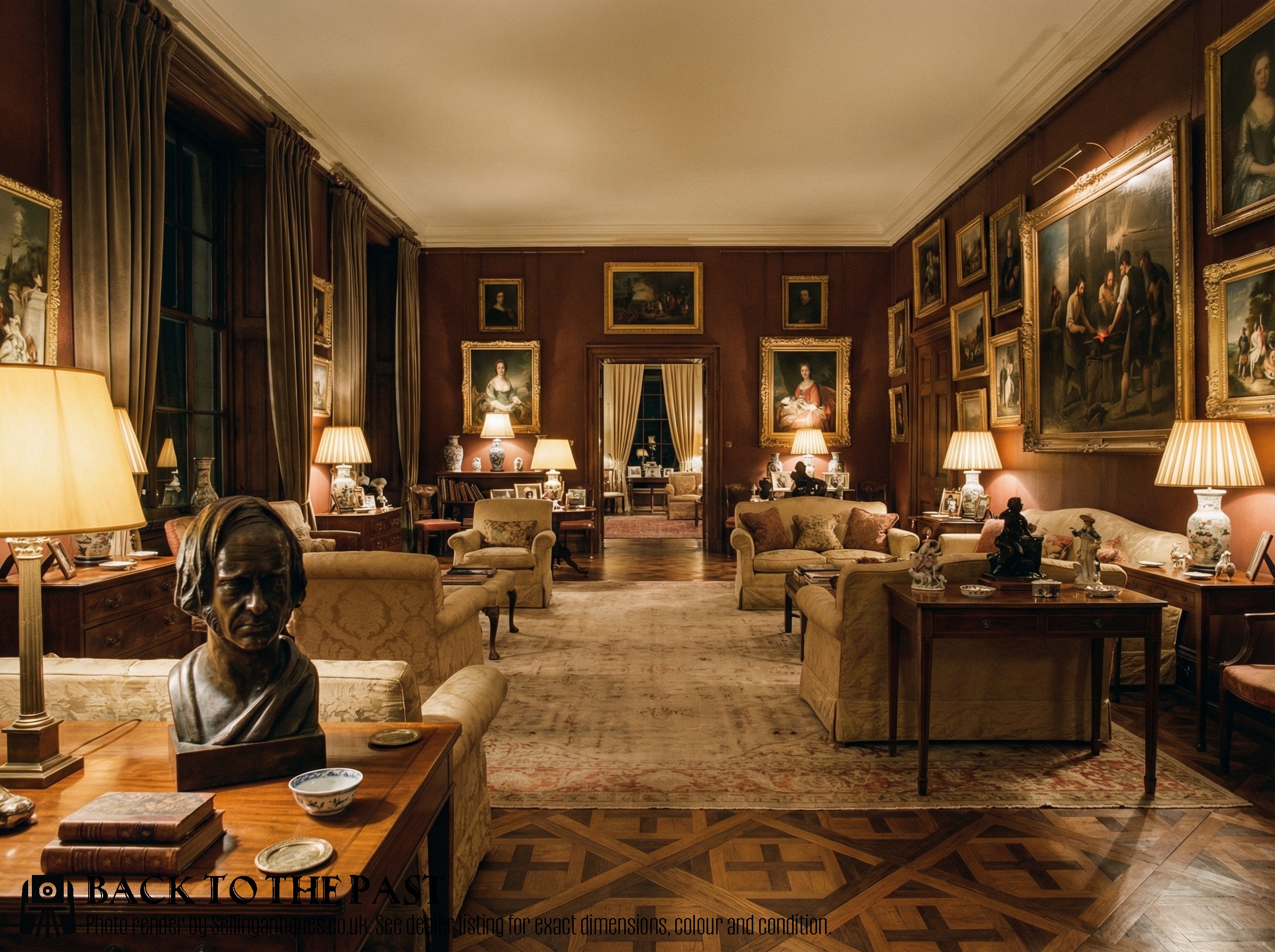
These sculptures typically stood on libraries, writing desks, and mantelpieces in nineteenth-century drawing rooms. Their presence signalled the owner's classical education and cultural interests.
Larger examples occupied hallways and antechambers upon dedicated pedestals, serving as focal points for formal interior schemes.
How do I distinguish bronze from painted plaster?
Bronze objects feel substantially heavier and retain a cool temperature to the touch compared to plaster or terracotta. Tapping the material yields a dull metallic ring rather than a hollow sound.
Close inspection around the base often reveals exposed metal beneath surface patination, whereas plaster shows a chalky white interior if chipped.
What is a Grand Tour bronze?
Grand Tour bronzes are small-scale reductions of famous antique sculptures produced in Italy and France during the nineteenth century. Travellers purchased them as mementoes of their continental journeys.
Subjects commonly include Roman emperors, philosophers, and Greek mythological figures cast to fit domestic display spaces.