


Bronze Panel Clock
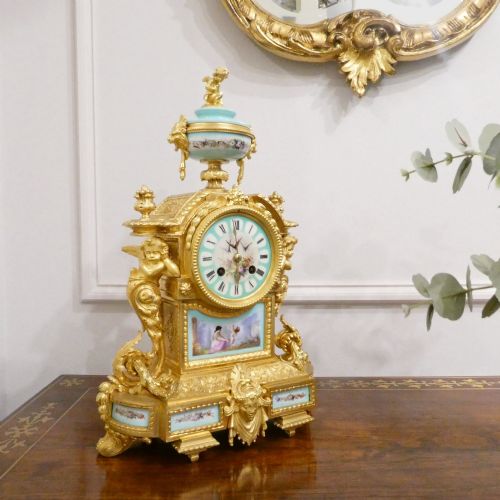
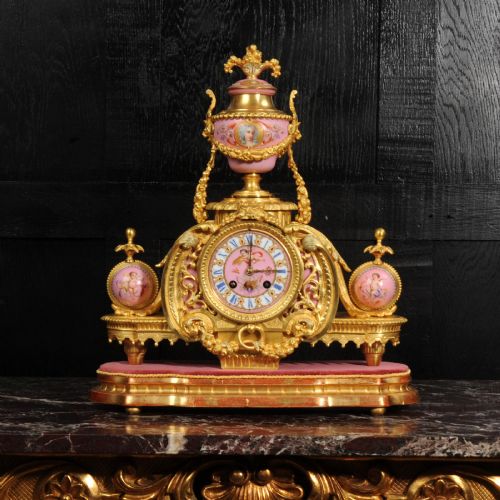
A bronze panel clock brings French nineteenth century weight and painted ceramic colour to the mantelpiece.
Bronze Panel Clock
A bronze panel clock is typically a nineteenth century French mantel clock featuring metal casing combined with painted ceramic inserts, glass, or enamel. The pieces on this page span the Victorian era, specifically the decades around eighteen seventy and eighteen ninety.
Most examples belong to the French Rococo Revival, Louis XVI Revival, or Napoleon III styles. Buyers encounter ornate mantel clocks and carriage clocks housed in gilt bronze, ormolu, and gilded metal.
What varies in quality
The refinement of the casting and the crispness of the gilt bronze or ormolu ornament define the upper tier of these clocks. Heavier architectural mountings and detailed chased decoration separate finer pieces from simpler items.
The artistry of the porcelain panels also dictates value. Hand-painted portrait plaques or intricate Sèvres style ceramic work elevate an ordinary brass or bronze case into a more substantial collector piece.
Several clocks include portrait plaques of historical figures like Molière, letting French playwrights supervise your living room time.
Achille Brocot·Japy Frères·Henri Jacot·JP Delettrez
The Bronze Panel Clock Glossary
- Ormolu
- Gilded bronze produced by applying a mercury and gold amalgam to a bronze base and heating it. This technique creates a durable golden finish characteristic of French decorative arts.
- Carriage clock
- A small, portable spring-driven timepiece designed for travel during the nineteenth century. Many feature glass panels that reveal the internal escapement.
- Crystal regulator
- A mantel clock featuring glass sides that expose the movement within the metal and porcelain frame. These pieces gained popularity towards the late nineteenth century.
- Strike repeat
- A mechanism that allows the clock to repeat the last struck hour or quarter-hour on demand when a lever or cord is pressed.
Bronze Panel Clock: Frequently Asked Questions
What is a bronze panel clock?
A bronze panel clock is a nineteenth century timepiece featuring a cast metal case decorated with porcelain, enamel, or glass panels. These objects originated primarily in France during the Victorian period and incorporate revival styles.
Such clocks served both practical timekeeping and decorative functions in formal rooms. They typically sit on mantelpieces or desks as centrepieces.
How do I wind my clock?
Most mechanical nineteenth century clocks utilise a key inserted into winding holes on the dial to tension the springs. Care must be taken not to overwind the movement.
Consulting a professional horologist for initial setup ensures the pendulum and strike train operate correctly. Regular maintenance preserves the internal brass gears.
Why do some clocks have glass domes?
Glass domes protected delicate gilt bronze surfaces and painted porcelain panels from dust and atmospheric grime in nineteenth century homes. They sat on wooden or velvet-lined bases alongside the clock.
Retaining the original glass dome adds context to how the clock was displayed and preserved historically.