





Bronze Mounted Marble Urns
Bronze mounted marble urns bring classical French elegance to a room, combining rich veined stone with warm metal work.
Bronze Mounted Marble Urns
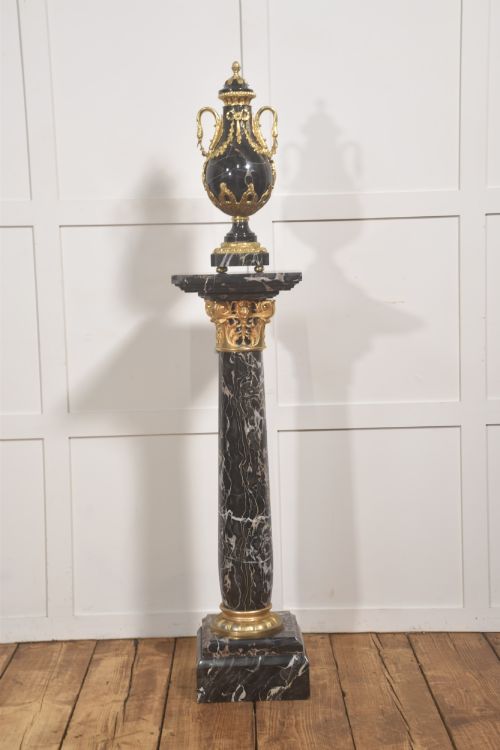
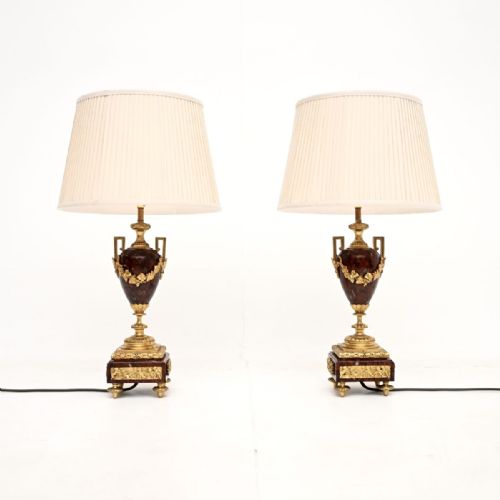
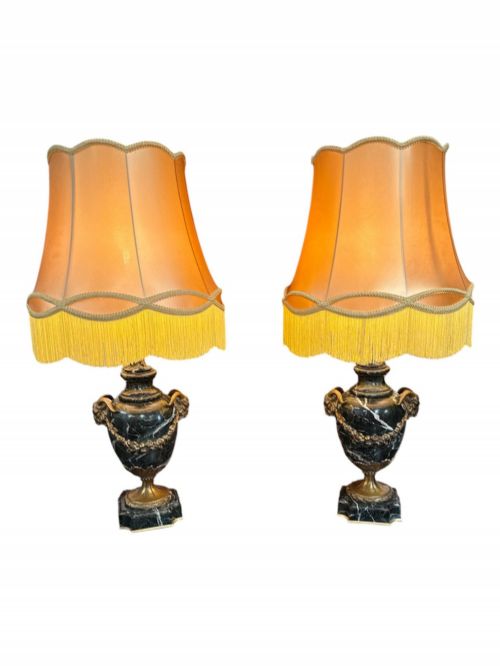
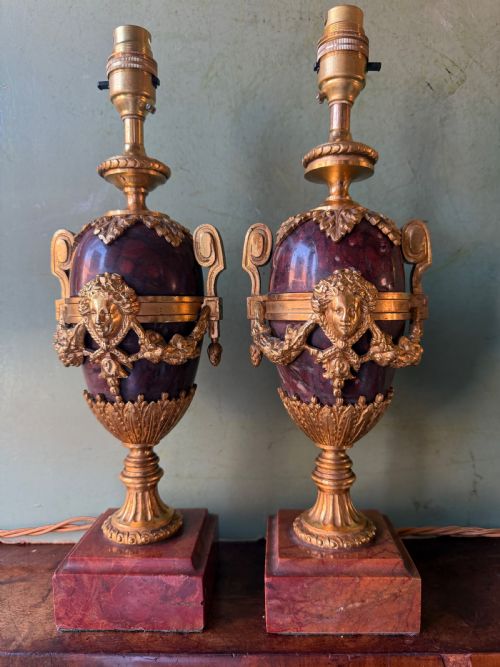
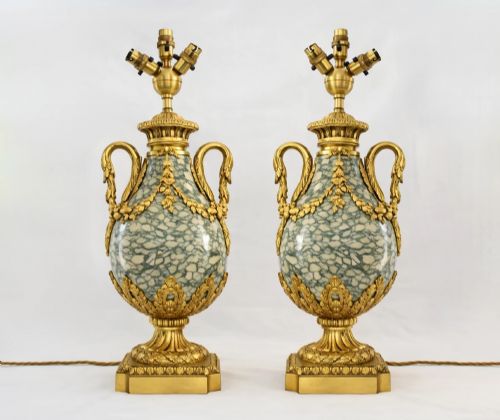
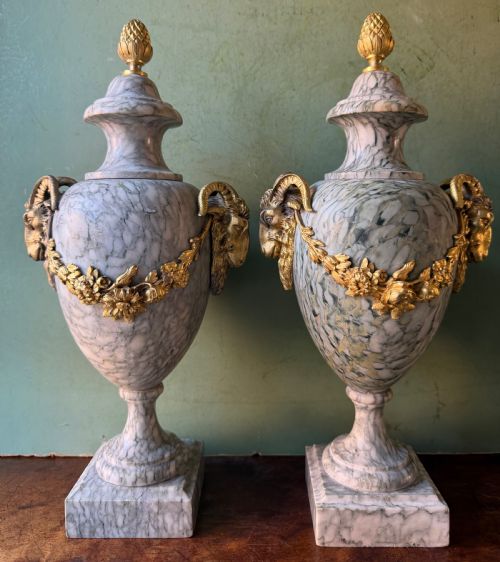
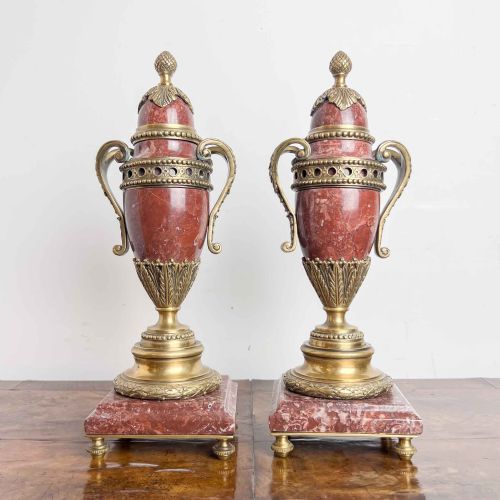
Bronze mounted marble urns are decorative vessels and utility pieces created mostly in the nineteenth century, drawing heavily on earlier Neoclassical and Louis XVI traditions. These objects combine natural stone bodies with cast metal mounts, often taking the form of table lamps, cassolettes with reversible lids, or traditional decorative vases.
Most examples found here originate from French workshops, with Grand Tour souvenirs also appearing alongside English or Scottish mantle clocks. The stone body commonly uses rouge marble, white marble, green marble, or Siena marble, paired with gilt bronze or ormolu mounts.
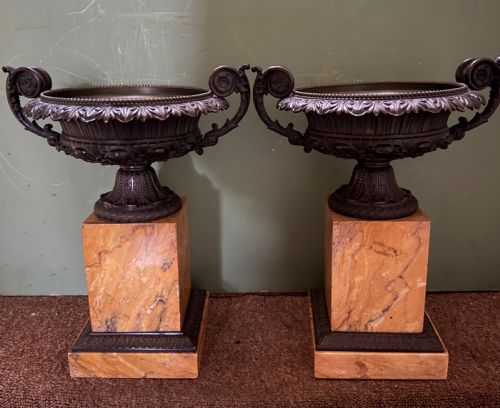
Buyers will encounter matched pairs frequently, designed originally as mantel garnitures or architectural ornaments for period interiors. Forms range from classical amphora shapes to pedestal-mounted vases and tazzas.
How they were made
Makers shaped the stone bodies on lathes or by hand, turning blocks of marble, alabaster, or slate into hollow vessels with smooth, polished surfaces. Natural variations in the stone mean each piece displays distinct veining and colouration.
The metal mounts rely on bronze or brass, cast using traditional techniques and frequently finished with mercury gilding or ormolu to achieve a bright, warm sheen. These mounts were hand-chiseled after casting to sharpen the leaf, scroll, or ribbon details before being secured to the stone with pins or screws.
Bronze Mounted Marble Urns Retail Price Guide 2026
Typical asking prices for bronze mounted marble urns among the pieces listed under this phrase on Sellingantiques today, from the lower quarter to the upper quarter. They describe what is for sale here now, not the wider market.
Materials recorded across the inventory include gilt bronze, ormolu, brass, alabaster, slate, and several varieties of marble.
What varies in quality
Quality rests heavily on the crispness of the bronze chasing and the depth of the gilding, where sharp, hand-finished details separate superior castings from softer, mass-produced work. The selection of the marble also dictates value, particularly stones with rich, uninterrupted figure and flawless turning.
The harmony between the metal mounts and the stone body defines the success of the piece, with better examples showing mounts that follow the exact contours of the vessel without gaps. Original matching components, such as reversible cassolette lids or balanced pairs, elevate the integrity of the object.
Louis Goret·Achille Brocot·James Ritchie and Son
The Bronze Mounted Marble Urns Glossary
- Cassolette
- A decorative vessel with a reversible lid that functions either as a closed urn or a holder for cut flowers or perfume. They are frequently found in pairs alongside other ornamental vases.
- Ormolu
- Finely ground high-carat gold applied to a bronze base using a mercury amalgamation technique, producing a rich golden lustre. The term also describes general gilt bronze mounts of the period.
- Grand Tour
- A cultural journey undertaken by wealthy Europeans in the eighteenth and nineteenth centuries, collecting classical souvenirs such as bronze and marble tazzas. These pieces often reproduce ancient Roman or Greek forms.
- Rouge marble
- A deep red ornamental limestone featuring white or grey calcite veins, widely used in French decorative arts. It provides a striking contrast against bright gilt bronze mounts.
- Neoclassical
- A style reviving classical Roman and Greek motifs, dominating French design through the Louis XVI period and later revivals. It emphasises symmetry, restraint, and classical architectural details.
Bronze Mounted Marble Urns: Frequently Asked Questions
What is a cassolette?
A cassolette is a dual-purpose decorative vessel featuring a lid that can be reversed to hold flowers or used closed as a standard urn. These pieces were central components of nineteenth-century mantel garnitures.
In many examples, the upper section lifts off or inverts to reveal a hidden nozzle or cup, blending utility with classical ornament.
How are these urns converted to lamps?
Many nineteenth-century marble urns and cassolettes were adapted into table lamps later in their history to suit modern domestic lighting needs. Electric wiring typically runs through the central core without damaging the original stone or bronze structure.
Collectors find both period conversions and later adaptations, with the best examples preserving the original mounts and stone bodies intact.
What is the Grand Tour connection?
The Grand Tour was an extended trip through France and Italy undertaken by elite travellers seeking cultural education and art. They brought home souvenirs including small bronzes, marble tazzas, and architectural models.
These objects often replicated ancient ruins or classical sculptures, manufactured specifically for the souvenir market in Florence, Rome, or Paris.
How do I identify Louis XVI style?
Louis XVI style draws on ancient Roman and Greek archaeology, favouring straight lines, symmetry, and classical restraint over the curves of the preceding Rococo period. Look for motifs like laurel wreaths, fluted columns, ribbons, and acanthus leaves.
This aesthetic experienced major revivals throughout the nineteenth century, particularly during the Victorian era when French decorative arts were highly fashionable.