


Bronze Mother and Children
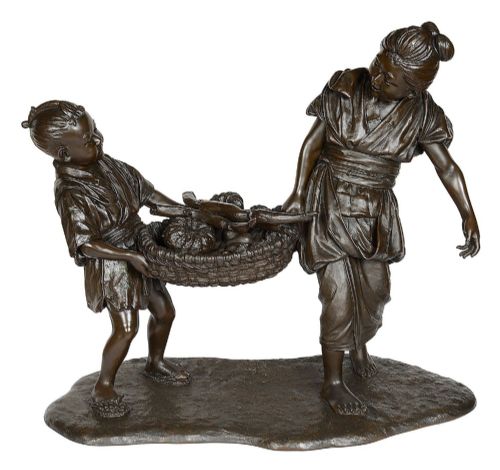
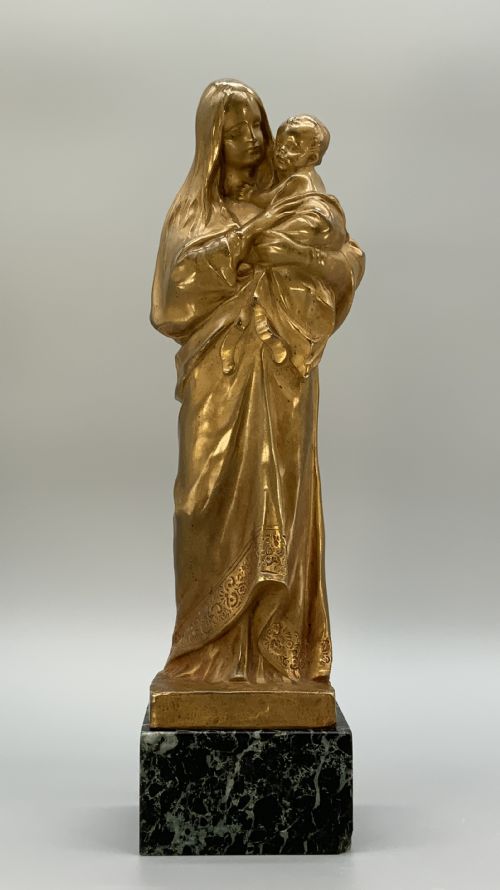
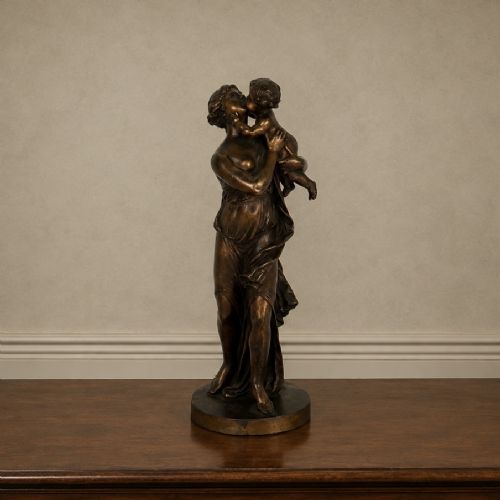
These bronze mother and children pieces capture domestic tenderness in cast metal, bringing warmth and enduring sculptural form to a room.
Bronze Mother and Children
When you search for bronze mother and children, you are looking at figurative sculptures and plaques depicting maternal figures with their offspring. These works range from classical and Victorian interpretations to Art Deco and African tribal creations.
The versions you are most likely to meet on this page span the nineteenth and twentieth centuries. They encompass Japanese nineteenth-century casts, European foundry works, and French mantel pieces.
Subjects vary from classical Grecian groupings and Madonna motifs to domestic scenes of mothers carrying fruit or dancing with their children. Forms include large-scale statuary, desk studies, and wall plaques.
How they were made
The pieces on this page are primarily produced through casting methods using bronze, gilt bronze, silvered bronze, and occasionally spelter or cast metal. Foundry workers poured molten metal into moulds to capture fine anatomical details and flowing drapery.
Many examples are finished with applied patination, ranging from dark patinas to polished highlights, while others incorporate bases of marble or onyx to support the weight of the metal group.
The aesthetic range includes Art Deco, Art Nouveau, Meiji Period, Neoclassical Revival, Realism, and African tribal traditions.
What varies in quality
The finish of the patina and the quality of the base materials also distinguish the work. Finer examples display subtle tonal variations in the metal surface and securely mounted stone plinths.
Hans Müller·Antonio Merente·P. Sega·Auguste Moreau·Lucien Madrassi·Xavier Raphanel·Coalbrookdale·Carrier
The Bronze Mother and Children Glossary
- Patina
- The surface coloration or sheen developed on bronze over time or applied chemically by the foundry. A rich patina adds depth to the sculptural form.
- Spelter
- An alloy of zinc and lead often used as a less expensive substitute for bronze in decorative figures. It is softer and lighter than genuine bronze.
- Gilt bronze
- Bronze that has been coated with a thin layer of gold or gold leaf. This technique enhances decorative richness and protects the metal beneath.
- Grand Tour
- A cultural journey undertaken by nineteenth-century Europeans visiting classical sites, often bringing home small bronzes. These souvenir pieces frequently replicated ancient sculptures.
- Art Deco
- A design style popular in the 1920s and 1930s characterised by sleek lines and stylised geometric forms. Sculptures from this period often use simplified contours.
Bronze Mother and Children: Frequently Asked Questions
How do I clean a bronze sculpture?
Dust the surface gently with a soft, dry brush to remove settled particles.
Avoid using water, soap, or chemical polishes, as these can strip the original patina and damage the metal.
Are these pieces solid bronze?
Most are cast bronze, though some figures may be hollow to reduce weight and material cost.
A few listings feature alternative metals such as spelter or cast metal rather than traditional bronze.
What is the difference between bronze and spelter?
Bronze is a durable copper alloy that takes a deep, stable patina and holds fine casting details well.
Spelter is a softer zinc alloy that feels lighter and often shows different surface ageing characteristics.
Where should I display a bronze figure?
Place the sculpture on a sturdy surface away from direct moisture and extreme temperature fluctuations.
Heavier pieces with marble or onyx bases require stable tabletops or pedestals to support their weight safely.