




Bronze Male Statuette
A bronze male statuette brings classical mythology, athletic power and nineteenth-century foundry skill directly to a mantelpiece or desk.
Bronze Male Statuette
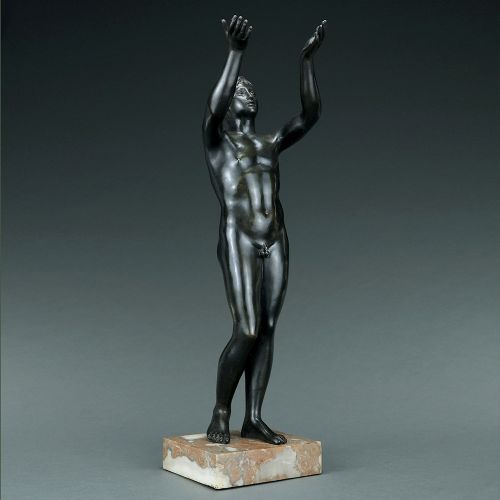
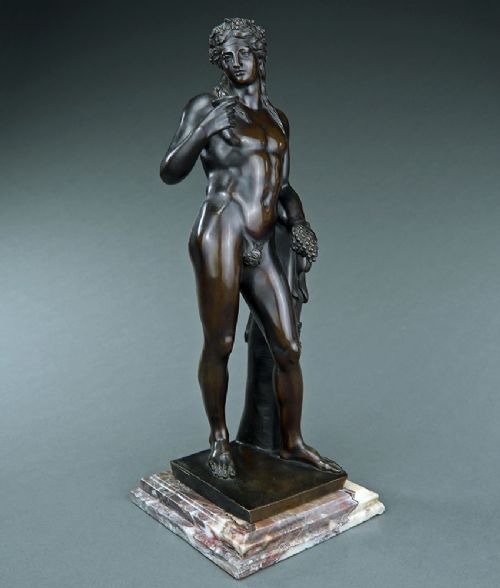
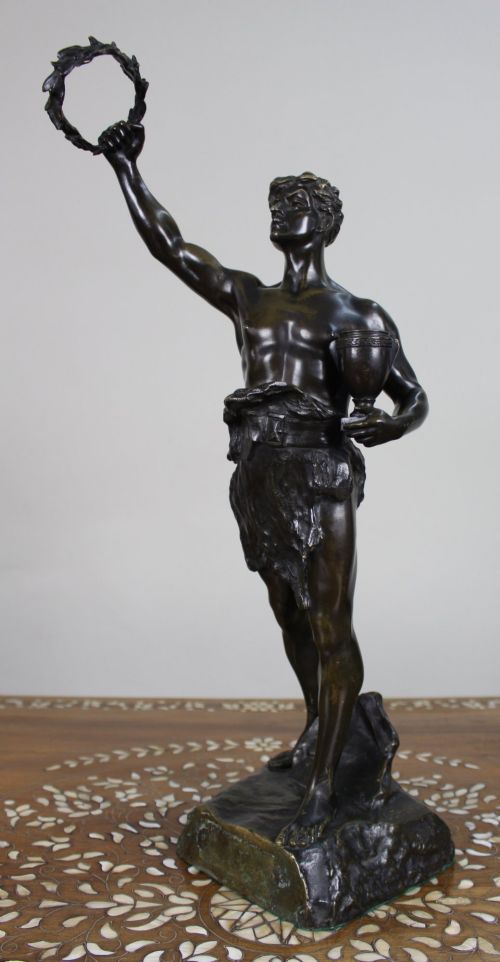
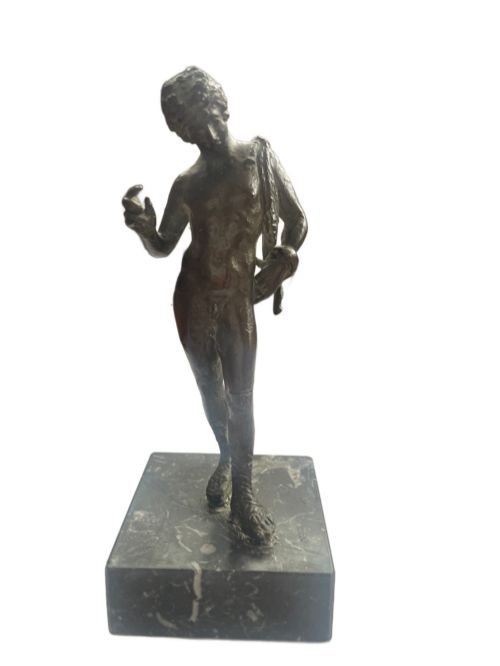
A bronze male statuette represents figures ranging from classical mythological subjects like Narcissus and Bacchus to nineteenth-century athletes, harvesters and duelists. These sculptures span the Victorian period, the late nineteenth century and the early twentieth century, drawing heavily on Grand Tour traditions and French Realism.
Collectors encounter works cast in patinated bronze, gilt bronze and gilt metal, frequently mounted on marble, stone, fossil marble or ebonised wood bases. The forms include single standing figures, dynamic pairs and sculptural groups executed in styles including Art Nouveau, French Rococo Revival and Egyptian Revival.
Most examples originate from nineteenth-century European foundries and studios, encompassing Grand Tour souvenir pieces alongside signed works by named sculptors. They serve primarily as cabinet bronzes designed for close appreciation on desks, tables and pedestals.
Materials and casting methods
Foundries utilised traditional bronze casting techniques to capture musculature, drapery and fine facial expressions, frequently finishing the metal with dark green or brown patination. Gilt-bronze and gilt-metal variants received applied gold finishes to highlight specific details of costume and ornamentation.
Sculptors integrated heavy natural supports into their designs by mounting finished figures onto bases of marble, stone, fossil marble or ebonised wood. These plinths provided stability for slender statuettes while introducing contrasting mineral textures and colours to the composition.
Bronze Male Statuette Retail Price Guide 2026
Typical asking prices for bronze male statuette among the pieces listed under this phrase on Sellingantiques today, from the lower quarter to the upper quarter. They describe what is for sale here now, not the wider market.
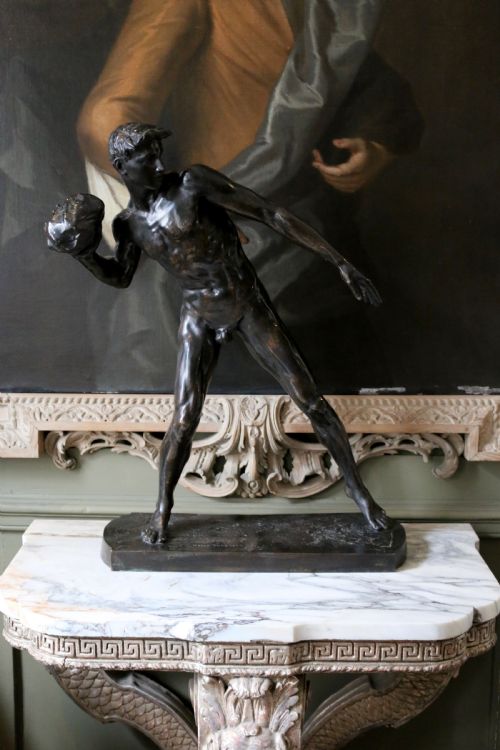
Several bronze athletes maintain permanent athletic focus while stationed permanently upon nineteenth-century fossil marble.
Distinctions in quality
The precision of the chasing work following the cast determines how sharply muscle definition, hair texture and drapery folds are rendered. Crisp tool marks and careful surface finishing separate superior cabinet bronzes from softer, less detailed productions.
The quality of the base material and its integration with the bronze figure indicate the original ambition of the piece. Well-fitted mounts of fossil marble, dense stone or polished wood complement the patinated metal without obscuring the silhouette.
Lemoyne·Hamo Thornycroft·Jules Dalou·Julien Lorieux·Emile-Coriolan Guillemin·Rudolf Küchler·Salmson·Michele Amodio·Eden Antony Paul Noel·Louis Auguste Moreau
The Bronze Male Statuette Glossary
- Grand Tour
- A nineteenth-century tradition of travelling through continental Europe, where collectors acquired bronze statuettes depicting classical antiquities.
- Patinated bronze
- Metal treated with chemical solutions to produce a controlled surface colour, commonly deep green or dark brown.
- Cabinet bronze
- A small-scale sculpture intended for display within a domestic interior rather than a public monument.
- Fossil marble
- A limestone matrix containing visible ancient organic remains, frequently utilised as a decorative mounting plinth.
Bronze Male Statuette: Frequently Asked Questions
What subjects do these statuettes depict?
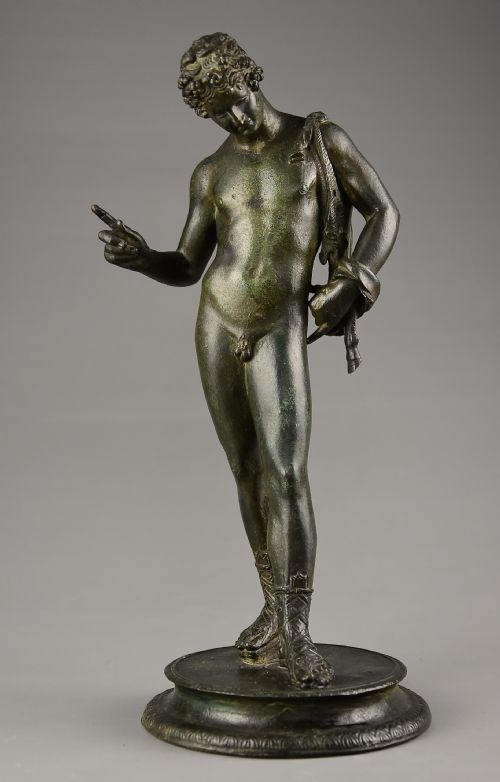
The subjects divide between classical mythological figures such as Narcissus, Bacchus and Neptune, alongside nineteenth-century athletes, fencers, dancers and soldiers. Many derive from antique sculptures encountered by travellers on the Grand Tour.
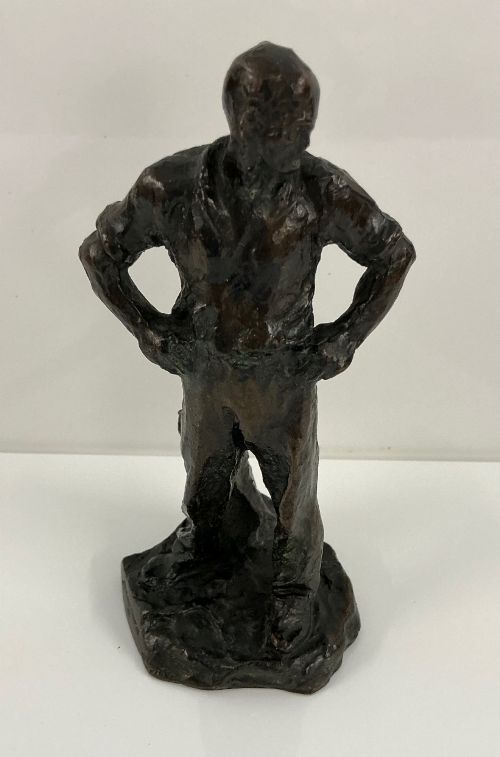
Other pieces portray realistic contemporary figures, including harvesters and peasants, reflecting the artistic interests of French Realism and the Victorian New Sculpture movement.
How should I display a bronze statuette?
These pieces function best as cabinet bronzes placed on stable surfaces where viewers can examine them closely at eye level. Desks, bookcases and mantelpieces provide suitable settings for sculptures mounted on marble or wooden plinths.
Keep the metal away from direct moisture and sources of excessive heat to preserve the original patination and the integrity of any stone or wood base.
Are these figures signed by sculptors?
Several pieces bear signatures or foundry marks inscribed directly into the bronze base during the casting process. These signatures identify the artist responsible for the original model.
Unsigned examples remain common, particularly among Grand Tour souvenirs and decorative foundry productions intended for the nineteenth-century export market.
What materials support the bronze figures?
Many statuettes incorporate integral or attached bases fashioned from marble, stone, fossil marble or ebonised wood. These plinths provide necessary physical balance to tall or cantilevered figures.
The choice of base material frequently reflects the period of production, with fossil marble and turned ebonised wood appearing widely in nineteenth-century cabinet pieces.