

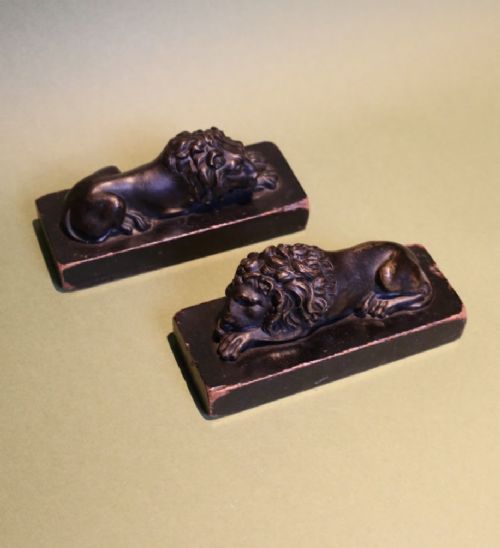
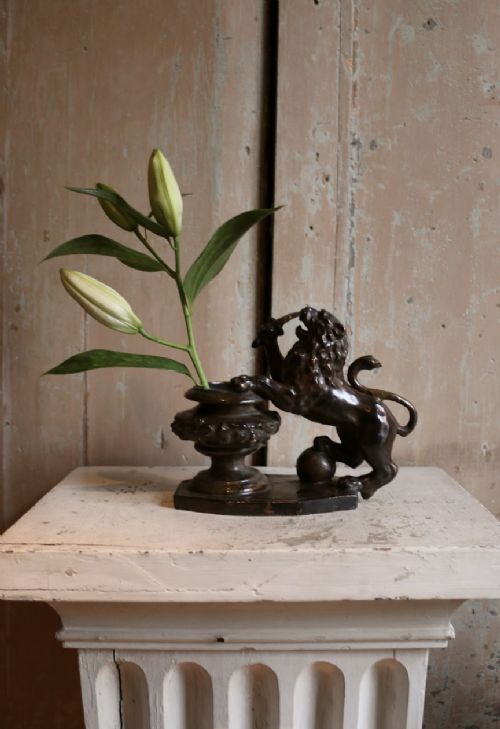


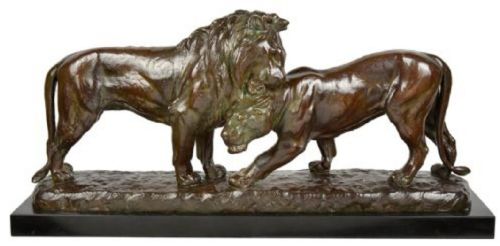

Bronze Lion Ornament
A bronze lion ornament brings sculptural weight and classic feline power to a room, ranging from grand tour souvenirs to animalier desk pieces.
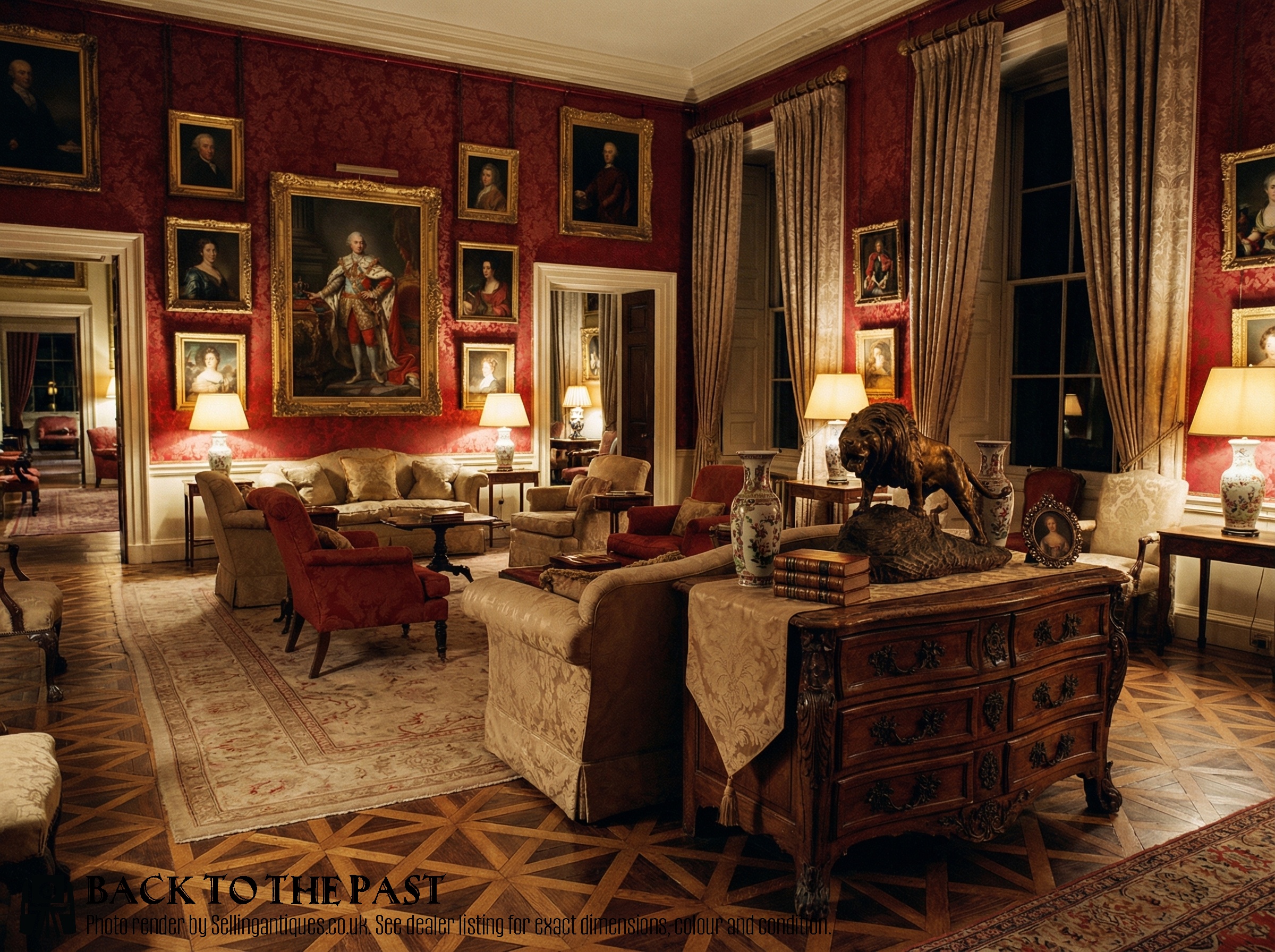
Bronze Lion Ornament
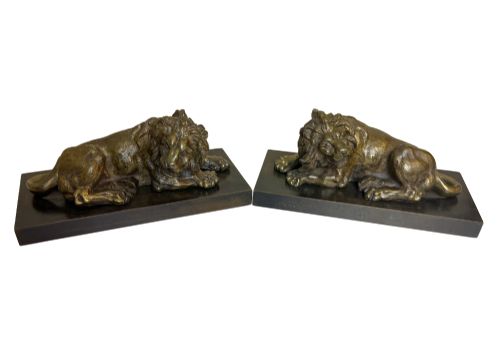
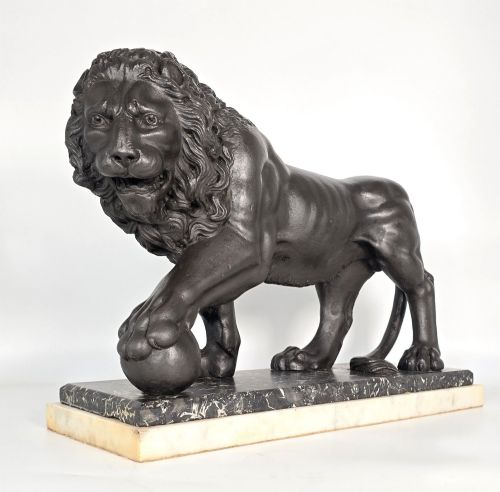
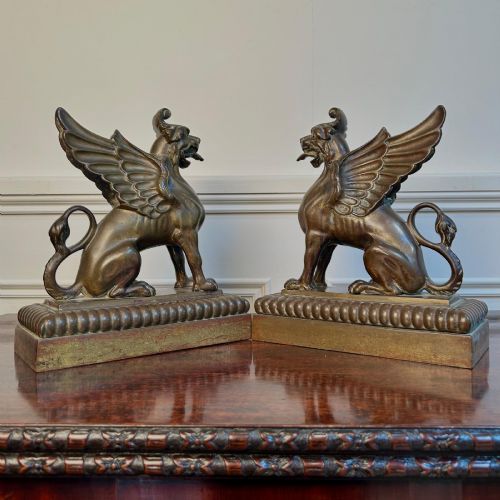
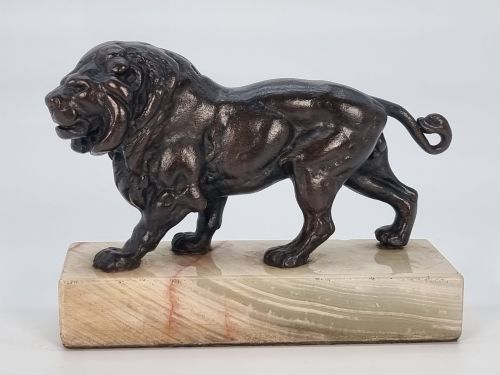
A bronze lion ornament is a sculptural metal figure depicting the animal in various postures, including resting, prowling, roaring, and seated forms. These pieces often serve decorative purposes or functional roles such as inkwells, door stops, and andirons.
The selections span multiple periods, most frequently originating from the nineteenth century, alongside examples from the seventeenth century, the Georgian era, and the nineteen-twenties. Styles reflect neoclassical tastes, French animalier sculpture, grand tour souvenirs, and Victorian gothic revival designs.
Many items incorporate bases of marble, onyx, or wood to elevate the metalwork, while others stand independently as cast figures. Pair formats, such as matching resting lions or Canova models, frequently appear among these works.
How They Were Made
These objects are primarily produced in bronze, patinated bronze, and patinated metal, sometimes enhanced with cold-painted detailing or iron casting. The finishing involves patination to create deep tonal variations on the metal surface.
The listings show nineteenth-century pieces alongside rarer seventeenth-century examples and twentieth-century interpretations.
What Varies in Quality
The standard of a casting is determined by the crispness of the detail in the fur, muscle structure, and facial expression. Superior examples display careful hand-chasing after the cast is removed from the mould, bringing out fine textures.
The quality of the secondary materials, such as the grain of the wooden plinth or the purity and polish of the marble and onyx bases, distinguishes standard production pieces from important signed works.
Franz Bergman·Paul-Édouard Delabrièrre·Unno Shomin·Louis Riche·Al Barye·Barbedienne·Le Courtier
The Bronze Lion Ornament Glossary
- Animalier
- A nineteenth-century artistic movement focused on the realistic depiction of animals, particularly predators in motion or repose. French sculptors excelled in this genre.
- Grand Tour
- A traditional trip through Europe undertaken by upper-class young men in the eighteenth and nineteenth centuries, resulting in the collection of classical souvenirs such as bronze lion models.
- Patination
- The process of treating the metal surface chemically or naturally to produce a specific colour and finish. Older pieces show patinas developed through age and handling.
- Neoclassical
- A style inspired by the classical art and architecture of ancient Greece and Rome. This aesthetic heavily influenced nineteenth-century interpretations of historical monuments.
- Okimono
- A Japanese decorative freestanding figurine intended for display in a household alcove or on a shelf. These metal or ivory pieces demonstrate exceptional metallurgical skill.
Bronze Lion Ornament: Frequently Asked Questions
Where should I place a bronze lion ornament?
These figures suit tabletops, mantelpieces, and desks, particularly when paired with a heavy marble or onyx base to anchor them in the room.
Functional variations like inkwells or door stops also work well on side tables or library shelves where their dual purpose can be appreciated.
How do I care for antique bronze?
Dust the surface gently with a soft dry cloth to prevent particulate buildup without disturbing the underlying patina.
Avoid using abrasive metal polishes or harsh chemical cleaners, as these can strip away the historical finish that gives the metal its character.
What is an animalier sculpture?
Animalier sculpture refers to nineteenth-century works that captured animals with anatomical precision and lifelike energy. Artists in this tradition studied live specimens closely in menageries.
These pieces range from small cabinet bronzes to large roaring cats set upon naturalistic or architectural bases.
Are grand tour bronzes authentic?
Grand tour pieces were produced in the nineteenth century as high-quality souvenirs for travellers visiting classical sites in Italy. They replicate famous monuments, such as the Canova lions or the Medici lions.
Their authenticity lies in the period casting techniques and the natural wear on the patinated metal surface.