


Bronze Flower Vessels
Bronze flower vessels range from Meiji period Japanese vases to Victorian jardinieres, shaped for stems, posies and displays.
Bronze Flower Vessels
Bronze flower vessels include vases, jardinieres, planters and urns originating from Japanese Meiji, Chinese, Indian Raj and Victorian periods. Buyers encounter forms designed for single stems, large bouquets and low display bowls.
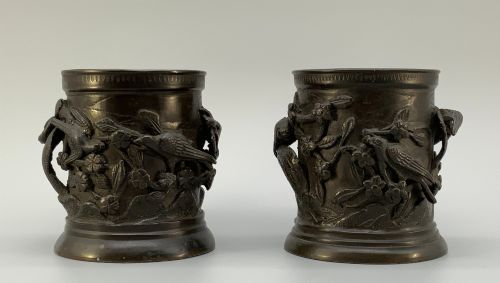
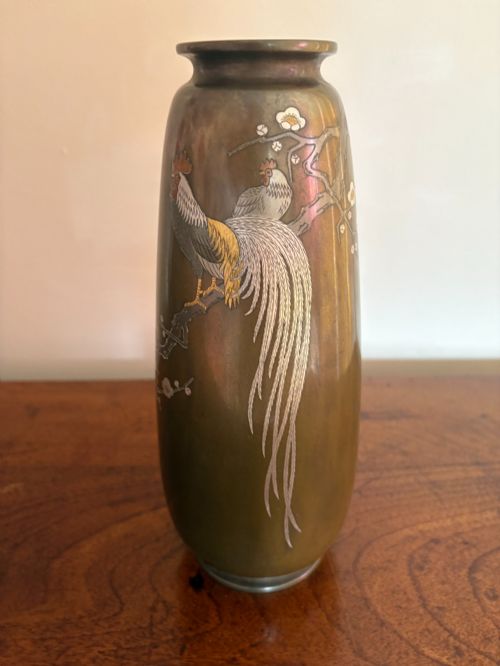
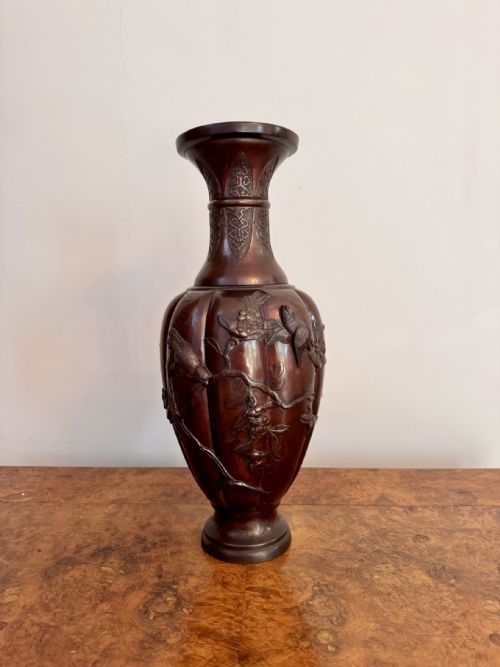
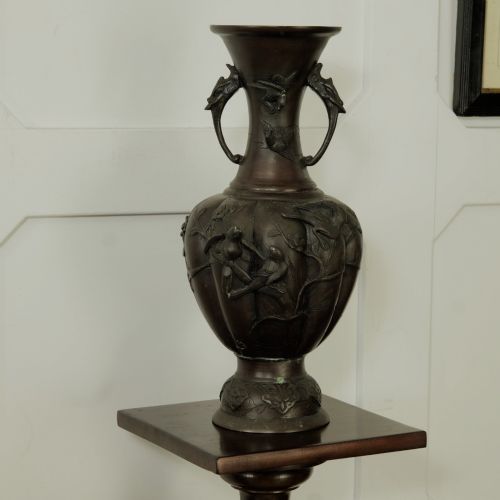
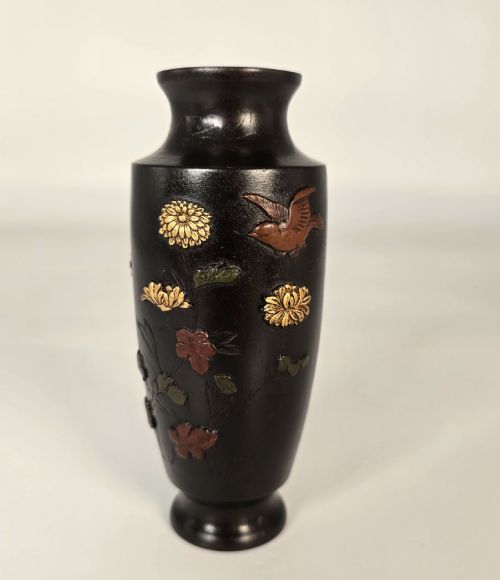
The Japanese Meiji period examples dominate the selection, featuring baluster shapes, birds, blossom and mixed metal details. Chinese bronze vessels appear alongside Indian Raj pieces with deeply hand carved and chased decoration.
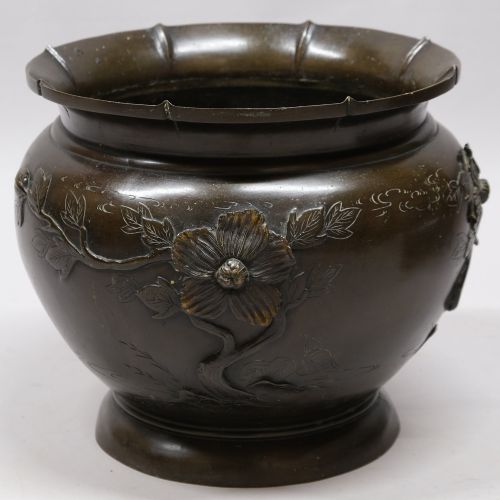
Jardinieres and planters provide larger capacities for heavier displays, while stem vases and posy vessels hold smaller arrangements. Victorian descriptions often apply to pieces imported or styled during the nineteenth century.
Materials and technique
Foundries utilised bronze, patinated bronze, brass and copper, often combining metals to create mixed metal surface effects. Artisans applied patination treatments to achieve varied surface tones on the metal body.
Decoration relied on deep hand carving, chasing, raised detail and inlaid elements depicting birds, floral motifs and natural scenes. Enamel, cloisonne, silver and gold accents appear across Japanese and Chinese works.
Certain vessels incorporate cast figural elements or integrated handles such as mimikuchi forms. Workers finished the cast bodies through precise metalworking techniques suited to holding water and floral displays.
Listings feature bronze flower vessels created across the nineteenth and early twentieth centuries, spanning Victorian, Meiji and Art Nouveau styles.
Quality variations
Fineness of surface detail and depth of hand carving distinguish superior vessels from simpler production pieces. Crisp definition in birds, blossom and mixed metal inlay indicates skilled foundry work.
Substantial weight and balanced proportions mark larger jardinieres and baluster urns. Original patination and signed maker details add distinction to individual pieces within the range.
KANASAWA·Jean Dunand·Charles Korschann
The Bronze Flower Vessels Glossary
- Jardiniere
- A large decorative pot or planter used for holding flowering plants. These vessels often sit on furniture or stands to display substantial foliage.
- Meiji Period
- The era in Japanese history spanning from 1868 to 1912. Metalwork from this time is noted for intricate bronze casting and mixed metal decoration.
- Cloisonne
- An ancient technique for decorating metal object surfaces using enamel held within raised metal wires. Cells are filled with paste and fired.
- Mimikuchi
- A style of Japanese vase featuring distinctive ear-like handles or rim formations. These shapes derive from traditional bronze vessel designs.
- Suiban
- A shallow Japanese basin used for displaying cut flowers or miniature landscapes in water. They often accommodate ikebana flower arrangement styles.
Bronze Flower Vessels: Frequently Asked Questions
How do I use a bronze jardiniere?
Jardinieres accommodate potted plants or large floral displays rather than single stems. Placing a protective liner inside helps protect the historic metal surface from moisture.
Larger vessels work well on low tables, pedestals or hearths where their weight and form remain stable. Smaller versions suit sideboards and display cabinets.
What is the Meiji period?
The Meiji period spans the late nineteenth and early twentieth centuries in Japan. Metalworkers during this era produced highly detailed bronze vases and vessels.
Artisans utilised mixed metal inlays, patination and raised motifs depicting birds and floral scenes. Signed pieces from this timeframe are particularly sought after by collectors.
How do I care for bronze vessels?
Keep the metal dry and dust it gently with a soft cloth to preserve the original patination. Avoid harsh chemical cleaners that strip away historic surface finishes.
When using vessels for fresh flowers, insert a glass or ceramic container inside rather than pouring water directly into the bronze. This prevents mineral deposits and corrosion on the interior.
What are baluster urns?
Baluster urns feature a rounded lower body that tapers towards a narrow neck and flaring rim. This classic silhouette provides balance for tall floral arrangements.
Victorian and Meiji period makers frequently used this shape for decorative stem vases and display pieces. The form highlights surface carvings and mixed metal details.