




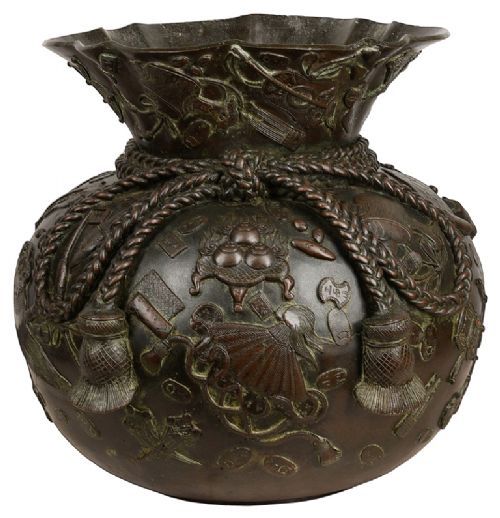
Bronze Flower Planter
These bronze flower planter examples combine heavy metal casting with intricate plant housing, offering both functional horticulture and decorative display.
Bronze Flower Planter
A bronze flower planter is a heavy vessel designed to hold plants, appearing across nineteenth-century Victorian and Meiji period origins. When exploring bronze flower planter pieces, buyers encounter forms ranging from Japanese jardinieres and suiban to French style decorative vessels and mounted coolers.
The selection on this page relies heavily on nineteenth-century Japanese Meiji examples alongside European pieces featuring gilt mounts and wood surrounds. These vessels function as jardinieres, vases, and display urns, accommodating botanical arrangements inside domestic interiors.
Materials and construction methods
Metal fabrication underpins these items, utilising cast bronze, brass, zinc, and ormolu alongside patinated and gilt surfaces. Artisans shaped these heavy metals into bowls, vases, and jardiniere forms, occasionally combining them with timber frames like satinwood, mahogany, kingwood, and rosewood.
Decorative detailing relies on surface work and applied metal mounts, incorporating techniques seen in Japanese Meiji craftsmanship and European period styling. The physical weight of these pieces reflects substantial metal casting paired with durable internal construction.
Several heavy vessels double as wine coolers, proving that nineteenth-century plants and nineteenth-century bottles shared very similar tastes in architecture.
Factors influencing quality
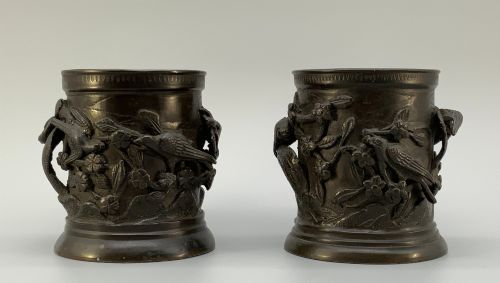
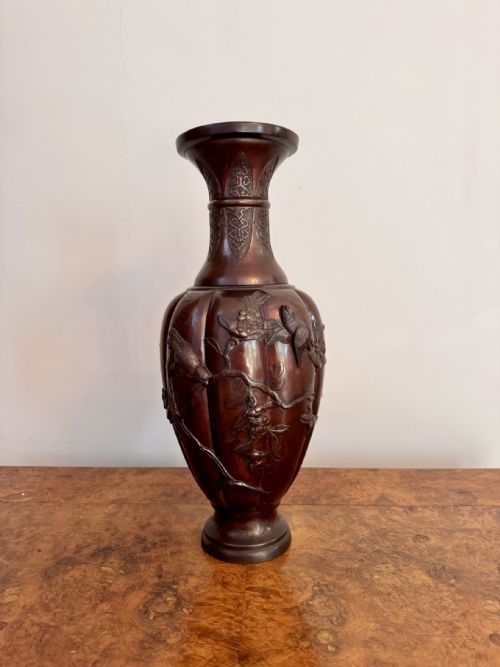
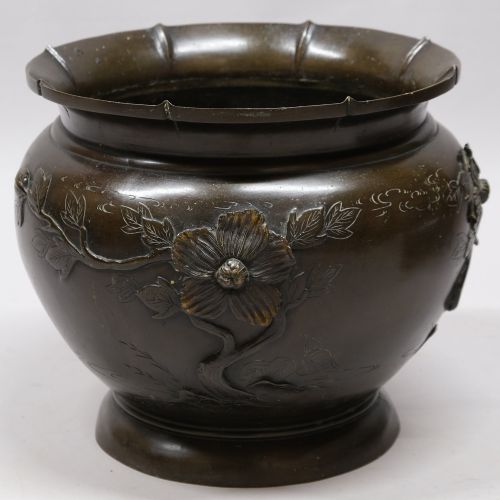
Quality rests upon the crispness of the metal casting, the depth of the patination, and the integrity of any applied ornamentation. Superior examples display refined surface detail, such as birds and blossom motifs, executed with clear definition across the body of the vessel.
The integration of mixed materials also dictates standard, where fine timber surrounds or secure gilt mounts complement the primary metal body without distraction. Pieces exhibiting harmonious proportions and substantial weight stand apart from simpler utilitarian vessels.
The Bronze Flower Planter Glossary
- Jardiniere
- An ornamental pot or stand for holding plants or flowers. These vessels often take large bowl forms suited for interior display.
- Suiban
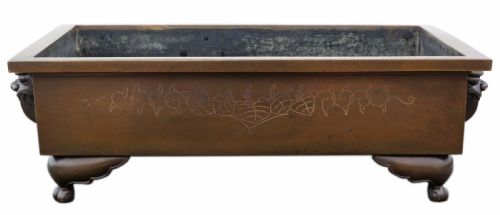
- A shallow Japanese basin traditionally used for arranging cut flowers or miniature landscapes. They provide a wide opening for water and stems.
- Ormolu
- Gilded bronze applied to furniture, clocks, and decorative objects. This technique adds a bright metallic finish to period pieces.
- Cloisonne
- Enamelling work where wire compartments are soldered to a metal base and filled with paste. It creates colourful patterned surfaces on metal vessels.
Bronze Flower Planter: Frequently Asked Questions
What is a bronze flower planter used for?
These vessels serve primarily as decorative containers for indoor plants, floral arrangements, or display displays within domestic rooms.
They accommodate potted greenery or water-based arrangements, functioning as both practical horticulture holders and ornamental centrepieces.
How do I identify a Meiji period piece?
Meiji period items originate from late nineteenth to early twentieth-century Japan, often featuring distinct motifs like birds and blossom.
They typically show traditional casting techniques and surface patination characteristic of Japanese metalwork from that specific era.
Where should I place a heavy jardiniere?
Heavy metal vessels require sturdy surfaces such as low tables, plant stands, or heavy furniture capable of supporting considerable weight.
Positioning them away from high-traffic edges prevents accidental knocks, while placing them near natural light highlights the metal patination.