


Bronze Female Head
A bronze female head brings neoclassical grace or fluid art nouveau lines into a room, capturing classical heroines, literary figures and youthful maidens in metal.
Bronze Female Head
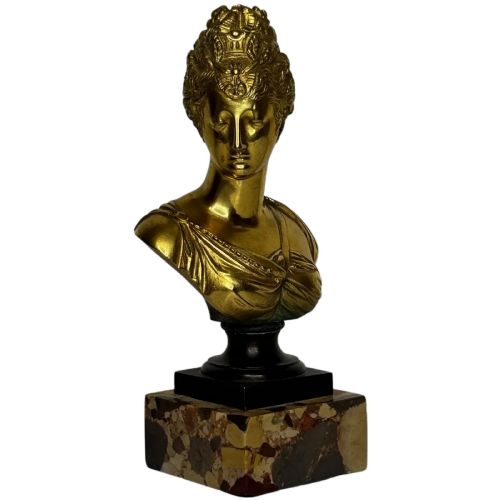
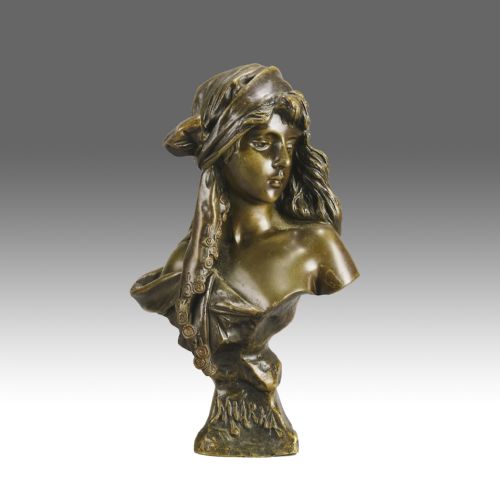
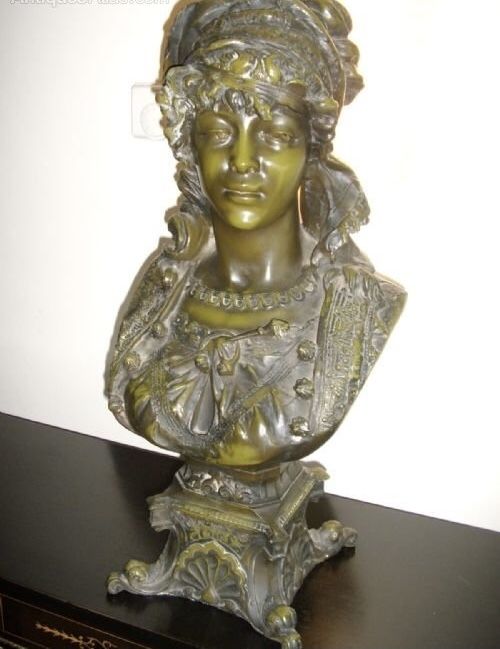
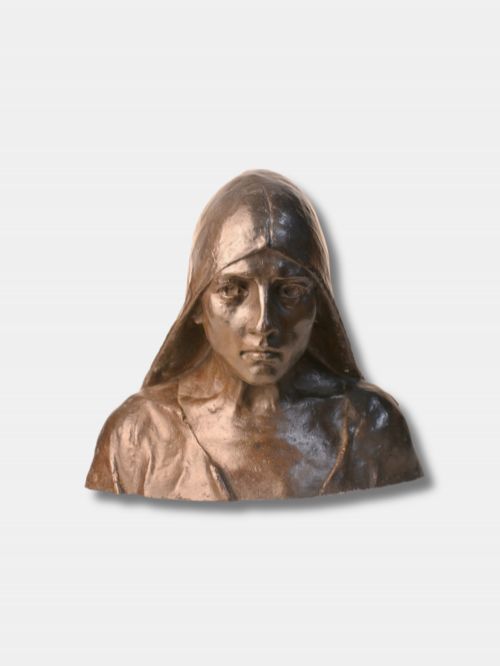
A bronze female head typically takes the form of a portrait bust, depicting mythological figures, historical subjects or idealised young women from various eras. When searching for a bronze female head, buyers encounter works ranging from severe classical interpretations to flowing fin-de-siècle designs.
The pieces appearing here span the nineteenth century through the Edwardian period and into the nineteen twenties. French foundry work dominates the selection, alongside English and continental European sculpture representing classical, medieval and modern aesthetics.
Portraits of named figures such as Diana de Poitiers, Sappho and characters like Miarka and Thaïs sit alongside anonymous maidens and classical studies. These sculptures function primarily as mantel or desk ornaments, designed to project dignity and artistic refinement.
Materials and casting methods
Foundries utilised traditional lost-wax or sand-casting techniques to produce these metal sculptures, often finishing the surface with rich patination ranging from deep brown to golden tones. Gilt bronze and ormolu details frequently highlight garments and hair.
Sculptors combined cast metal with carved marble plinths, wooden socles and terracotta or plaster variants to add structural contrast and visual weight. Painted accents and mixed media elements occasionally appear on specific nineteenth and early twentieth century works.
Several ladies immortalised in these metals carry nineteenth century literary names that instantly transport any room to a Parisian salon.
Markers of sculptural quality
Quality rests in the crispness of the metal chasing, the subtlety of the facial expression and the depth of the patination applied to the surface. Master founders achieved delicate textures in hair and drapery that lesser workshops flattened or lost.
The integration of the bust with its stone or wooden base often distinguishes finer studio output from commercial production. Signed works by established artisans demonstrate superior anatomy and proportion compared to unsigned or derivative castings.
Emmanuel Villanis·Emile Jespers·Eutrope Bouret·H L Blasche·Reps and Trinte
The Bronze Female Head Glossary
- Patina
- The surface coloration and chemical sheen developed naturally over time or applied intentionally by the foundry. This finish protects the metal and defines the visual mood of the sculpture.
- Ormolu
- Finely ground high-carat gold applied to bronze objects through a mercury amalgamation process or via electroplating. It provides a bright, durable golden finish popular in decorative mounts.
- Lost-wax casting
- A meticulous method where a wax model is melted out of a mould and replaced with molten metal. This technique allows for intricate detail and undercut forms.
- Socle
- A short plinth or pedestal supporting a bust. It elevates the sculpture and provides visual stability to the composition.
- Chasing
- The process of hand-finishing a raw metal casting using hammers and punches. Artisans use this step to refine surface details and remove casting flaws.
Bronze Female Head: Frequently Asked Questions
How are bronze female heads cleaned?
Dusting with a soft dry brush preserves the patinated surface without removing historic layers of finish. Avoid harsh chemical cleaners or abrasive cloths that strip the metal.
Applying a very light coat of microcrystalline wax periodically helps protect the bronze from atmospheric moisture and handling wear.
Where should I display a bust?
These sculptures suit stable tabletops, mantelpieces and dedicated pedestals where adequate lighting highlights the facial contours. Ensure the supporting surface can bear the considerable weight of metal and stone.
Keep pieces away from direct heat sources and strong dampness to protect both the bronze patina and any integral marble or wooden bases.
How do I identify the period?
Stylistic cues offer the clearest indication of date, with flowing organic lines pointing to the turn of the twentieth century and stricter symmetry suggesting neoclassical influences. Foundry marks, signatures and the composition of the base material provide further clues.
Examining the casting technique and the wear patterns on the underside helps distinguish nineteenth century production from later revivals.
What is a portrait bust?
A portrait bust is a sculpted representation of a person from the chest or shoulders up, focusing attention entirely on the head and facial expression. This format has ancient roots and experienced major revivals during the nineteenth century.
Artists used the form to commemorate historical personages, literary heroines and idealised contemporary types.