




Bronze Female Figural Lamp
These bronze female figural lamp designs combine sculptural figures with functional illumination, offering atmospheric light and classical or modernist form.
Bronze Female Figural Lamp
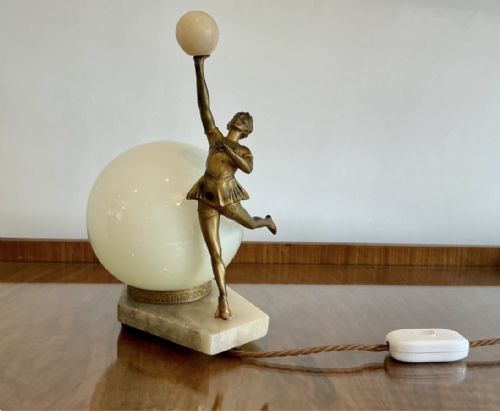
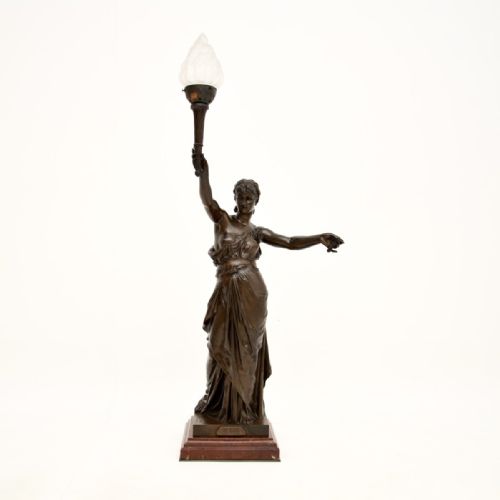
A bronze female figural lamp presents sculpted human forms integrated into lighting, spanning table lamps, floor lamps, and tall torcheres. The selections here range from Victorian oil variants to dramatic Art Deco nudes.
The most common examples on this page date from the Art Deco period of the 1930s, featuring stylised female figures supporting or accompanying light sources. Alongside these sit 19th-century French Neoclassical and Art Nouveau pieces.
Makers and sculptors emerge across the centuries, from Humphrey Hopper in the Regency era to Ivan Zaiec, Jean-Jules Cambos, Henri Honore Ple, and Auguste Moreau in later periods.
Materials and construction methods
Foundries utilised cast bronze, patinated metal, and speler for the sculptural figures, often finishing the surfaces with cold painting, gilding, or silvering. These metals provide the structural weight necessary to support tall torcheres and lamp bases.
Glass elements such as frosted and opaline glass form the shades and diffusers, pairing with the metallic figures to soften the light output. Marble frequently provides a stable plinth or base for the heavier floor and table pieces.
Cleopatra occasionally holds court alongside the art deco ladies, reminding us that ancient drama makes a fine reading companion.
Distinguishing quality in figural lighting
The choice of base materials dictates durability and presence, with solid bronze and heavy marble mounts sitting above lighter spelter and mixed metal constructions. Original pairings of shade material with the figural base preserve the integrity of the design.
F. De Luca·Humphrey Hopper·Ivan Zaiec·Jean-Jules Cambos·Coutan·Henri Honore Ple·Auguste Moreau
The Bronze Female Figural Lamp Glossary
- Torchere
- A tall stand or floor lamp designed to hold a light source directed upwards towards the ceiling. These pieces often feature prominent figural columns.
- Spelter
- A zinc alloy used as a cost-effective substitute for bronze in decorative metalwork. It frequently appears with bronze-coloured or silvered surface finishes.
- Patinated metal
- Metal treated with chemical solutions to produce a coloured surface film or ageing effect. This finish protects the underlying material while defining the shadows of the sculpture.
- Cold painted
- A method of applying non-fired paint to a metal sculpture after casting. This technique allows for detailed polychrome decoration on bronze and spelter figures.
- Opaline glass
- A pale, translucent glass type used for lamp shades to diffuse illumination evenly. It provides a milky appearance that softens the electrical light.
Bronze Female Figural Lamp: Frequently Asked Questions
What is a bronze female figural lamp?
A bronze female figural lamp is a lighting fixture where the base or stem is formed by a sculpted female figure. These objects combine decorative sculpture with functional illumination for tables or floors.
They appear across various historical periods, incorporating styles from Victorian and Regency designs to Art Nouveau and Art Deco forms.
How do I date a figural lamp?
Dating relies on stylistic markers, materials, and signatures associated with specific artistic movements. Art Deco pieces show geometric simplification, whereas Art Nouveau examples feature organic, flowing lines.
Foundry marks, artist signatures, and the type of glass used for shades also help establish the period of manufacture.
What is the difference between bronze and spelter?
Bronze is an alloy of copper and tin known for its strength, weight, and ability to take fine foundry details. Spelter is a softer, lighter zinc-based metal that was frequently patinated to resemble bronze.
Pieces cast in bronze generally command higher regard due to the durability and quality of the material.