





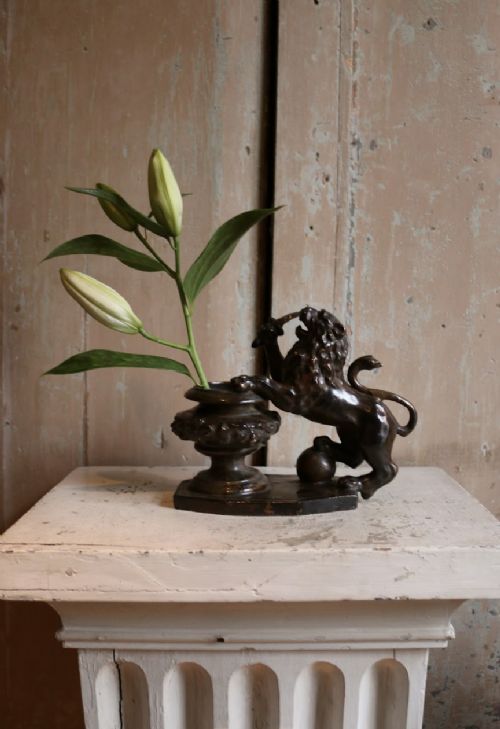


Bronze Desk Inkwell
A bronze desk inkwell sits heavy on the writing table, holding the ink for the morning correspondence.
Bronze Desk Inkwell
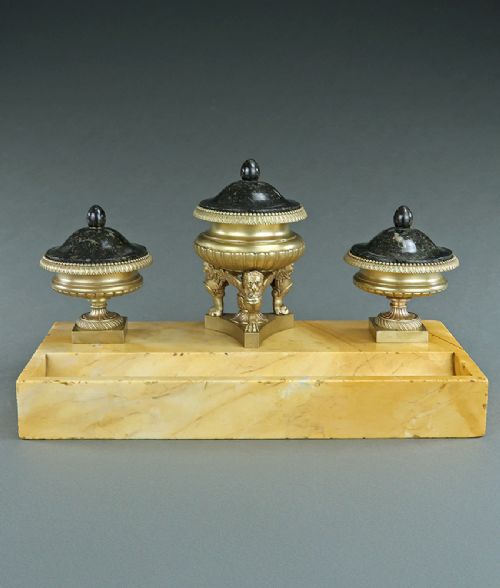
A bronze desk inkwell is a desk accessory designed to hold liquid ink for writing, often mounted on a stand or combined with pen rests and stamp boxes. These pieces range from simple patinated metal containers to elaborate French empire and Victorian desk stands incorporating marble bases.
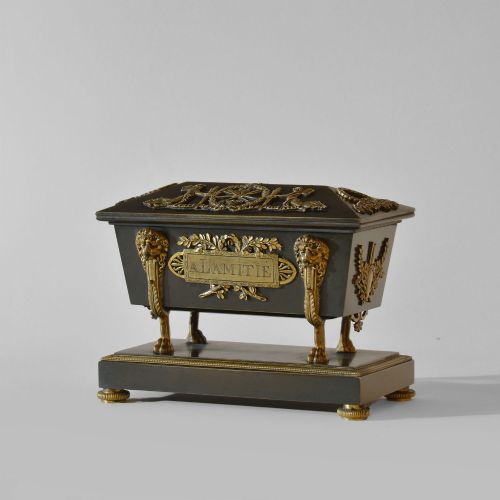
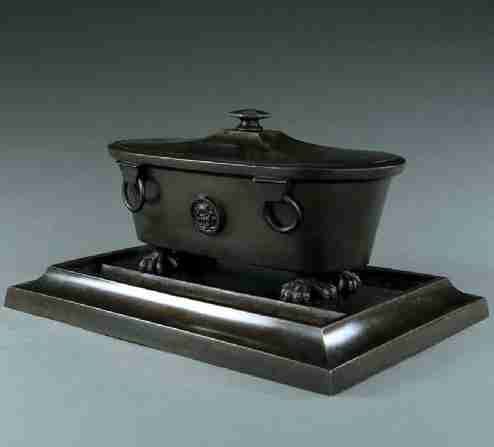
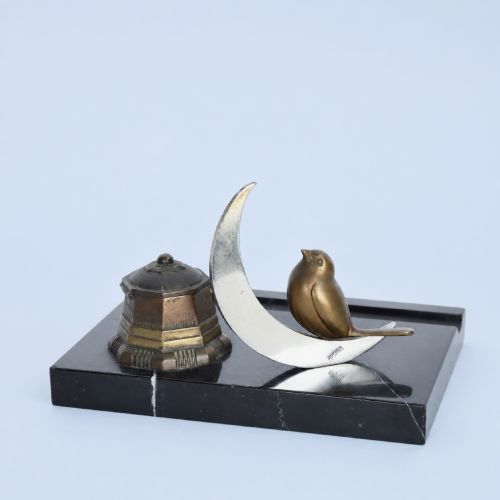
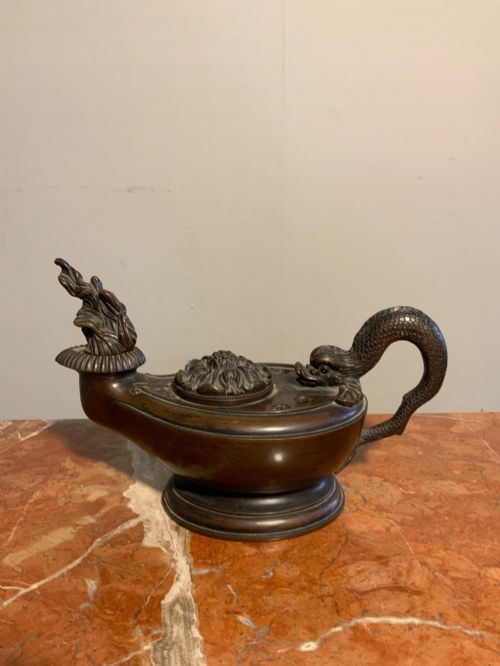
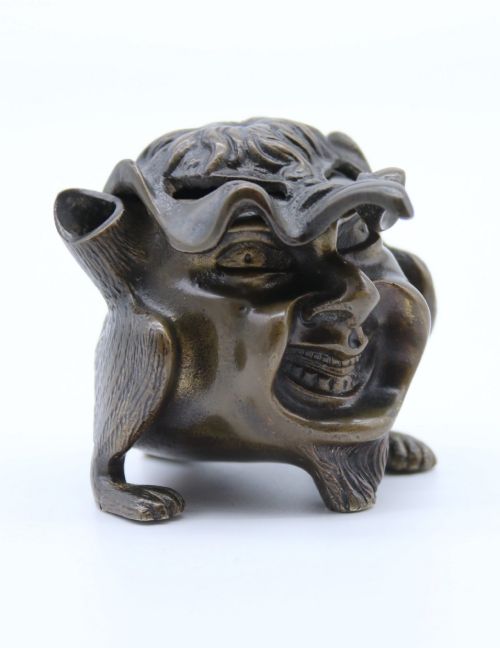
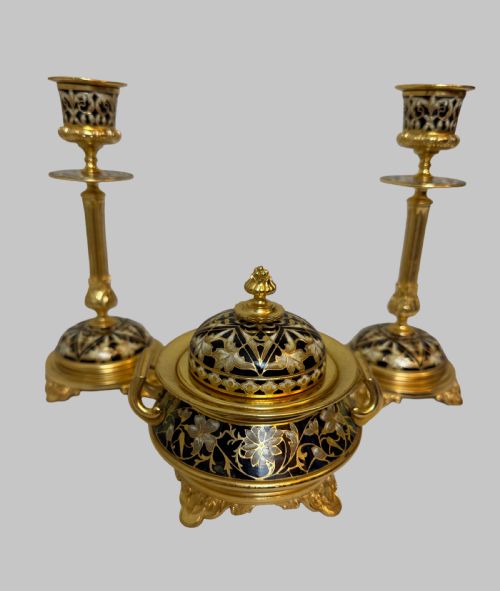
The most common examples encountered on this page belong to the nineteenth century, spanning Victorian, Art Nouveau and Grand Tour styles. They appear in forms as varied as plain architectural models, champleve enamel sets and figural animal studies depicting birds, dogs and monkeys.
How They Were Made
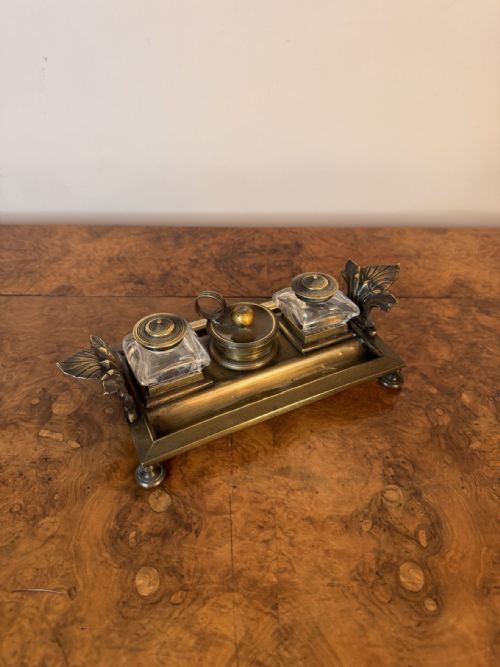
These items are cast in bronze, brass or ormolu, often utilising mercury gilding or cold-painted polychrome finishes on the metal surface. Makers combined the cast metal with contrasting natural materials such as vert marble, Sienna marble, black marble, glass inserts and occasionally exotic woods like coromandel and mahogany.
Detailing was achieved through chasing, engraving and applied champleve enamel work, with glass ink inserts fitted into the metal housings to hold the fluid safely. Novelty models frequently incorporated hinged lids and hand-painted cold-painted surfaces to bring animals and grotesque creatures to life.
Bronze Desk Inkwell Retail Price Guide 2026
Typical asking prices for bronze desk inkwell among the pieces listed under this phrase on Sellingantiques today, from the lower quarter to the upper quarter. They describe what is for sale here now, not the wider market.
Mr Fox takes his correspondence in a nightgown, immortalised in gilt bronze.
What Varies in Quality
Quality rests in the crispness of the bronze casting and the depth of the subsequent hand-chasing, which separates sharp sculptural forms from soft, mass-produced copies. Heavy, dense mounts and well-finished patination indicate superior craftsmanship.
The choice of supporting materials dictates the overall grade of the piece, with solid marbles, original glass ink inserts and intricate enamel work marking out the finer workshops of Paris, Vienna and London.
Franz Bergmann·Albert Marionnet·Lefebvre of Belgium·Jules Dalou·Maurice Dufrene
The Bronze Desk Inkwell Glossary
- Ormolu
- Gilded bronze, typically produced by applying a finely ground gold-mercury amalgam to a bronze base and heating it to drive off the mercury. This technique creates a rich golden surface characteristic of French decorative metalwork.
- Encrier
- A French term for an inkstand or inkwell, frequently encountered on portable or desk accessories from the nineteenth century. It denotes the complete housing for writing fluids and accessories.
- Grand Tour
- A nineteenth-century practice where wealthy travellers collected classical souvenirs, such as miniature bronze architectural models or antique-style inkwells, during their travels through Italy and France.
- Champleve
- An enamelling technique where troughs or cells are hollowed out of the metal surface and filled with vitreous enamel powder before firing. The resulting coloured patterns sit flush with the surrounding metal borders.
- Cold-painted bronze
- A method where the bronze object is painted with oil or enamel colours without being fired in a kiln, common in Austrian animal figures from the late nineteenth and early twentieth centuries.
Bronze Desk Inkwell: Frequently Asked Questions
What is a bronze desk inkwell?
A bronze desk inkwell is a heavy metal container built to hold writing ink on a desk or table. They were essential desk accessories in eras before ballpoint pens.
Many examples include fitted glass inserts to hold the liquid and attached trays for resting dip pens or storing stamps.
How do I date an antique inkwell?
Dating relies on the decorative style, manufacturing materials and hallmarks or signatures found on the metal. Pieces from the early nineteenth century often show Neoclassical or Empire influences, while later items embrace Art Nouveau curves.
The presence of specific marble bases and casting techniques also helps narrow down the decade of production.
Were these items used for daily writing?
Yes, these stands were standard equipment in offices, libraries and drawing rooms for dipping steel-nib or quill pens. They kept ink accessible and protected from dust and premature drying.
Figural and novelty models were popular decorative items that doubled as functional stationery equipment.
What are figural inkwells?
Figural inkwells incorporate sculptural animals, human figures or architectural models into the design of the desk stand. Common subjects include birds, dogs, monkeys and classical buildings from the Grand Tour.
The ink pot is typically concealed within the body or base of the sculpture.