
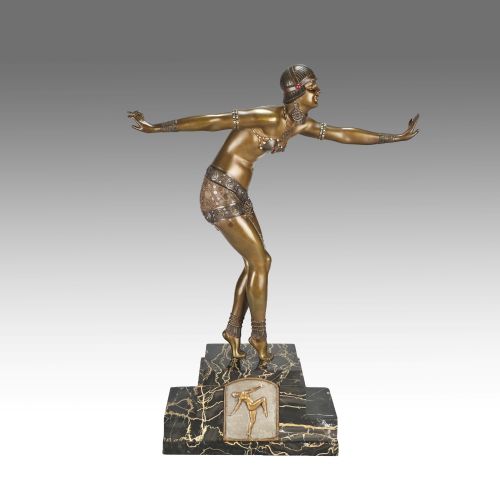
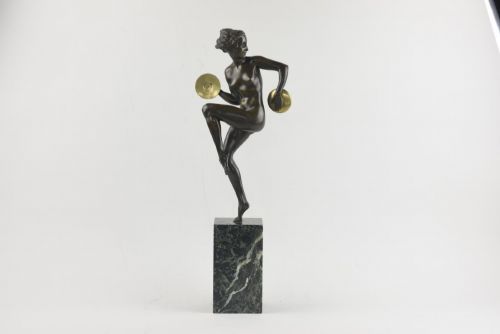


Bronze Dancer on Marble
A bronze dancer on marble brings the motion of the dance into metal and stone, most often caught in the geometry of the Art Deco period.
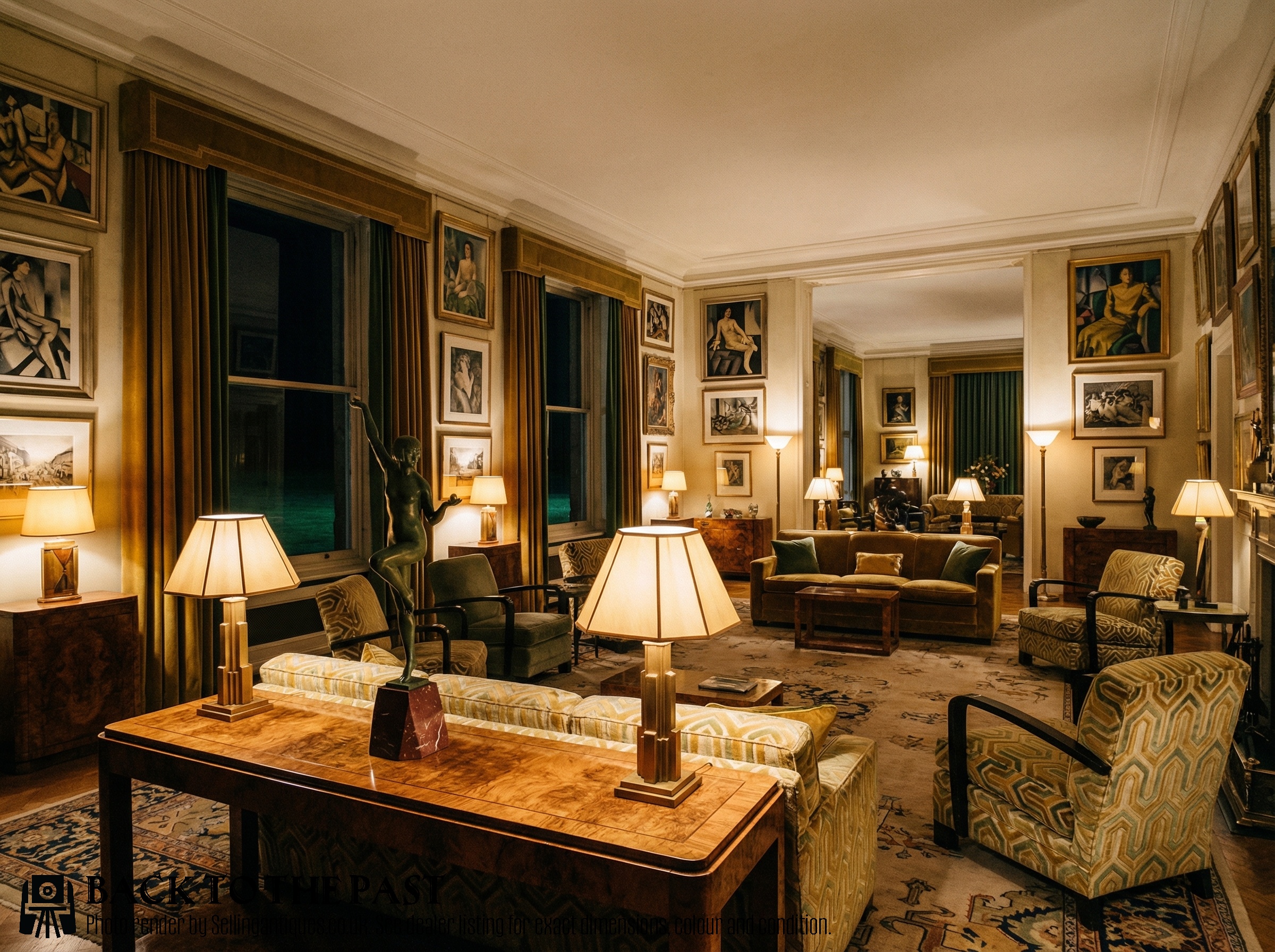
Bronze Dancer on Marble
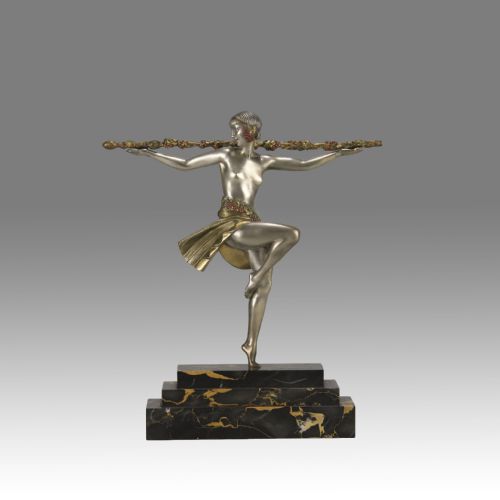
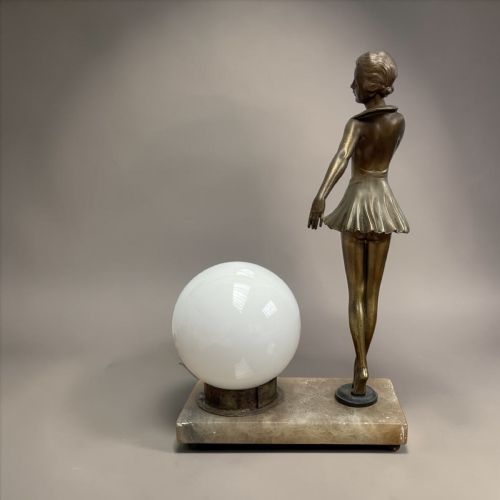
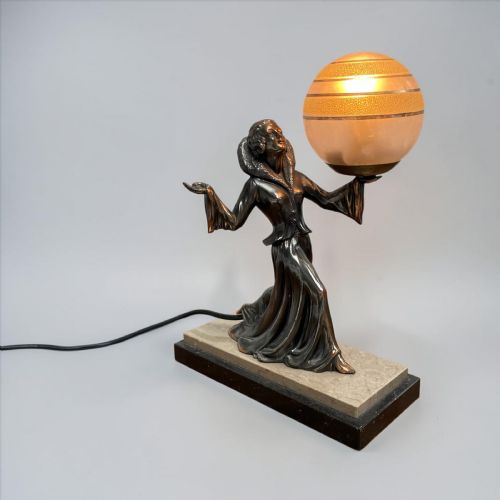
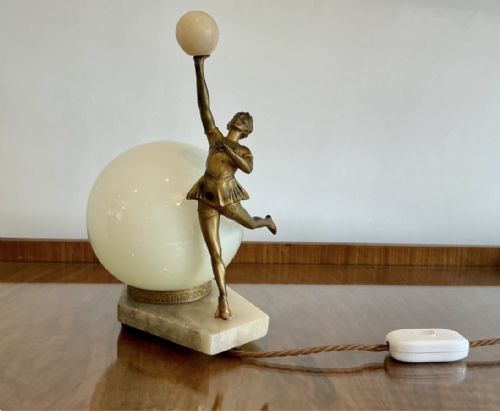
When you search for a bronze dancer on marble, you look at sculptural figures depicting female dancers mounted on stone plinths. The forms range from small mantel figures to table lamps, capturing poses from the high kick to scarf dances.
The majority of these pieces originate from the Art Deco period, though examples extend into Art Nouveau and the nineteenth century. Figures appear as solo dancers or occasionally paired with instruments, reflecting the stage and cabaret culture of their time.
How they were made
Foundries produced these sculptures primarily using bronze, sometimes finished with silvering, gilding, or cold painting to add colour to the garments and skin. Spelter and patinated metal appear as alternative metallic mediums for casting the figures.
The heavy bases are carved from marble or onyx, providing a stable plinth for the metal sculpture to be bolted or secured. Glass components occasionally integrate into the designs, particularly in pieces that function as table lamps.
Materials unite heavy stone plinths with metal castings in bronze, silvered bronze, and spelter, often enhanced by cold painting.
What varies in quality
Quality rests heavily on the crispness of the casting and the nuance of the hand-applied patina or cold-painted surface. Finer works display intricate detail in the face, fingers, and drapery of the costume, whereas lesser pieces lose definition in the limbs and clothing.
The selection of the marble base also distinguishes the work, with dense, variegated stone plinths providing a heavier and more balanced mount than simpler alternatives. The fidelity of the signature and the weight of the metal casting further separate standard production from master foundry output.
Pierre le Faguays·Demetre Chiparus·Claire Jeanne Roberte Colinet·Josef Lorenzl·Bruno Zach
The Bronze Dancer on Marble Glossary
- Cold painted
- A method where paint is applied to cold bronze without heat firing. This technique allowed makers to add vivid costume colours to the metal surface.
- Spelter
- A zinc alloy used as a substitute for bronze. It is lighter and softer than true bronze, often found in period utility pieces.
- Patinated metal
- A chemically treated metallic surface that creates an aged or darkened finish. It protects the metal while defining the contours of the figure.
- Gilt bronze
- Bronze coated with a thin layer of gold. The finish gives the dancer a bright, reflective sheen that catches interior light.
Bronze Dancer on Marble: Frequently Asked Questions
How do I clean the marble base?
Wipe the stone gently with a soft, damp cloth using plain water. Avoid abrasive cleaners or harsh chemicals that can strip the natural polish from the marble surface.
Dry the stone thoroughly afterwards with a lint-free cloth to prevent water spots from forming on the plinth.
Are these pieces original or reproductions?
Authentic period examples date primarily from the early twentieth century, carrying the patination and wear consistent with that era. Examining the foundry marks, the type of casting, and the age of the marble helps establish period origin.
Signatures inscribed in the metal should match the known working methods of the artist rather than appearing as modern stamped additions.
How do I care for the bronze figure?
Dust the metal surface regularly with a soft brush or a dry microfiber cloth. Keep the sculpture away from direct sunlight and high moisture areas to preserve the integrity of the patina.
Applying wax is generally unnecessary unless recommended by a professional conservator for specific metal finishes.
Why are some figures mounted on onyx?
Onyx and marble served interchangeably as heavy, decorative bases that anchored the slender metal figures. The banded appearance of onyx added visual texture to the plinth beneath the dancing subject.
Both stones provided the necessary ballast to support the dynamic, leaning postures typical of these sculptures.