
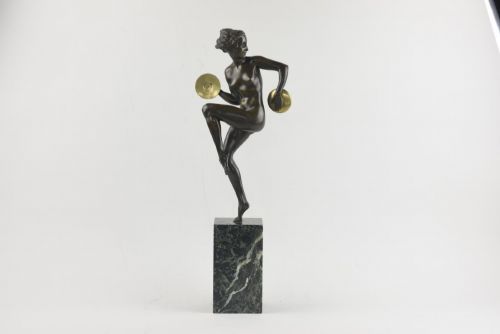
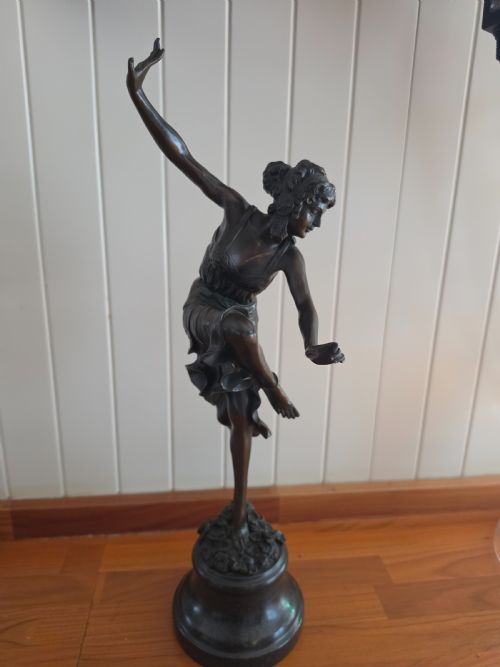


1920s Dancer Sculpture
A 1920s dancer sculpture captures the dynamic energy and streamlined elegance of the Art Deco era.

1920s Dancer Sculpture
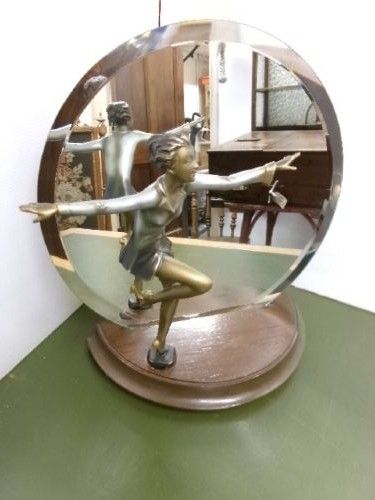
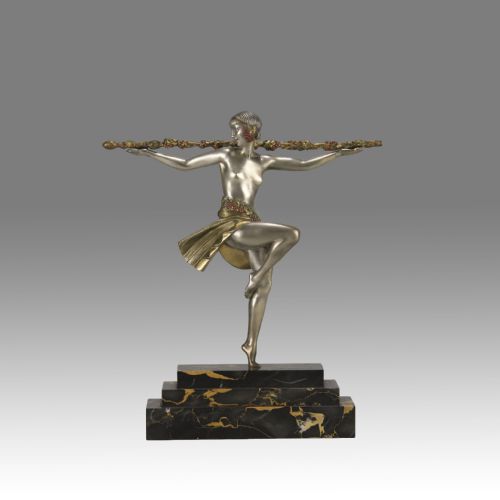
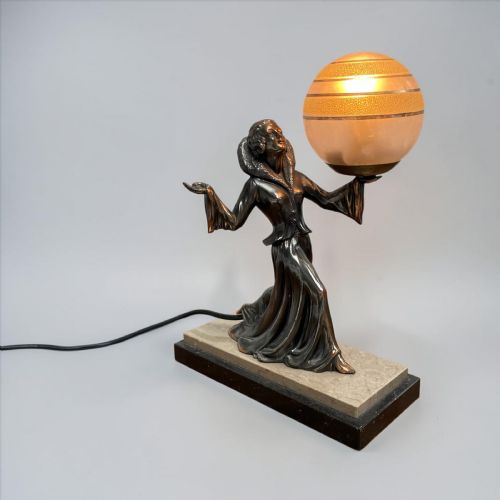
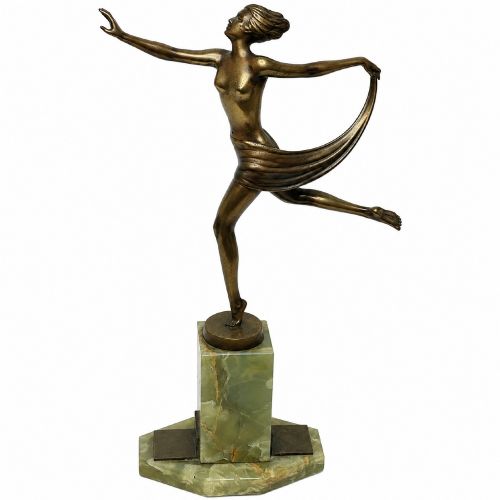
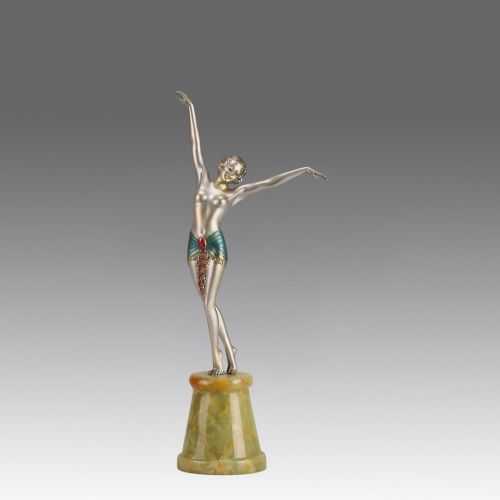
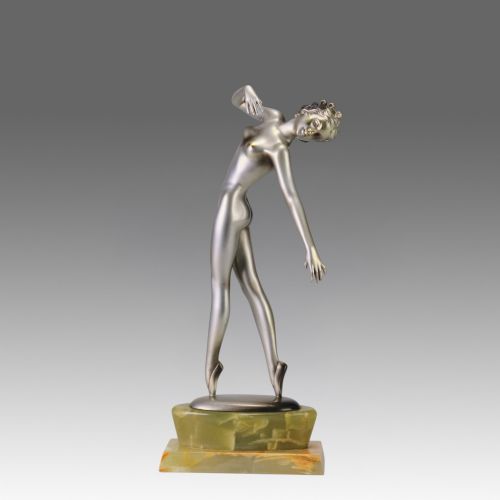
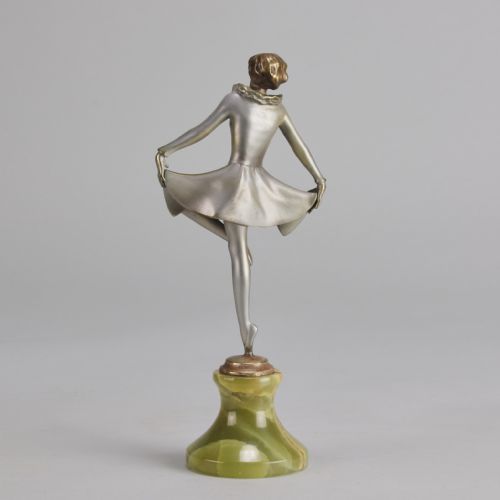
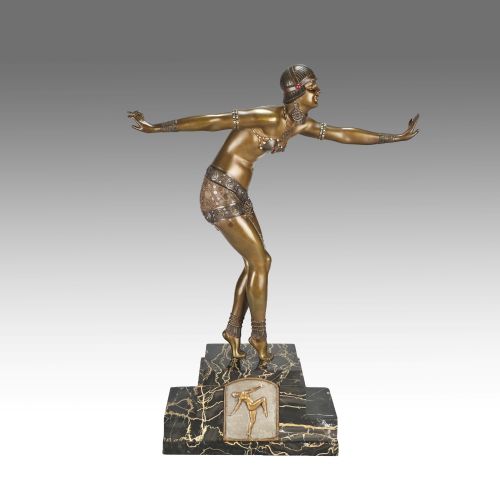
A 1920s dancer sculpture typically portrays female figures in motion, ranging from ballet dancers to exotic performers inspired by the theatre and ballet of the period. These pieces appear as standalone statuettes, sculptural lamp bases, and wall plaques designed in the prevailing Art Deco style.
The most common examples on this page are cast in bronze or spelter and mounted upon heavy bases of marble or onyx. Figures frequently display outstretched arms, high kicks, or draped scarves that emphasise the kinetic posture of the dancer.
Assessing Craftsmanship
The choice and execution of the stone base also distinguish the work, as dense, well-polished marbles and onyx slabs provide a more substantial foundation than simpler substitutes. Signed pieces associated with known sculptors demonstrate higher standards of artistic modeling.
Listings feature cold-painted bronze, silvered bronze, and gilt bronze paired with marble and onyx bases.
Pierre le Faguays·Josef Lorenzl·Demetre Chiparus·Claire Jeanne Roberte Colinet·Bruno Zach
The 1920s Dancer Sculpture Glossary
- Art Deco
- A design style dominant in the 1920s and 1930s characterised by sleek lines, geometric shapes, and stylised representations of the human form.
- Cold-painted
- A method where bronze figures were painted by hand using oil or other paints that were not fired in a kiln, making the pigment susceptible to flaking over time.
- Spelter
- An alloy of zinc and lead used as an economical alternative to bronze for casting decorative figures during the early twentieth century.
- Chryselephantine
- A sculpture combining metal, typically bronze, with carved ivory sections representing flesh or faces.
- Onyx
- A banded variety of chalcedony frequently used as a decorative base material for modernist table sculptures.
1920s Dancer Sculpture: Frequently Asked Questions
What is the difference between bronze and spelter?
Bronze is a durable copper and tin alloy that accepts fine casting detail and patination well. Spelter is a softer, zinc-based metal that was used for more affordable decorative figures.
Spelter figures are lighter in weight and often feel cooler or less dense than solid bronze casts. Over time, spelter is more prone to surface fatigue and cracking.
Are these figures signed by the artist?
Many sculptures feature the artist's signature cast directly into the bronze or engraved onto the metal surface. Signatures often appear near the feet of the dancer or along the edge of the base.
Some pieces also include foundry marks or title stamps. Unsigned examples remain common, particularly among anonymous works and spelter productions.
Why are most figures mounted on marble?
Marble and onyx bases provided necessary weight and counterbalance for slender figures with outstretched arms. The dense stone anchors the sculpture securely when displayed on a table or mantelpiece.
Additionally, contrasting dark or multi-coloured stone plinths complemented the metallic finishes of the figures. This pairing defined the visual aesthetic of sculptures from the period.