

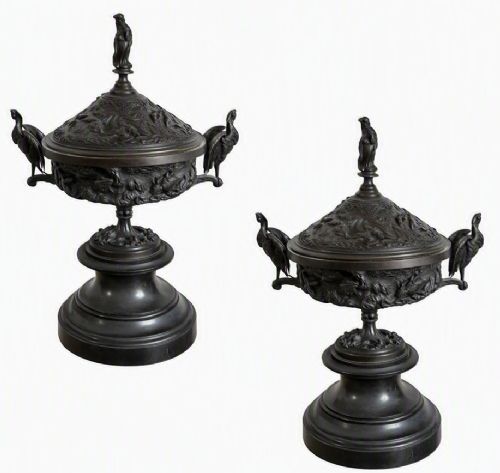


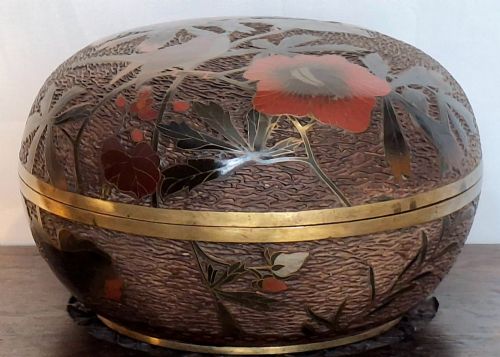
Bronze Covered Vessel
These bronze covered vessel examples span centuries of master metalwork, bringing sculptural presence and refined utility to any room.
Bronze Covered Vessel
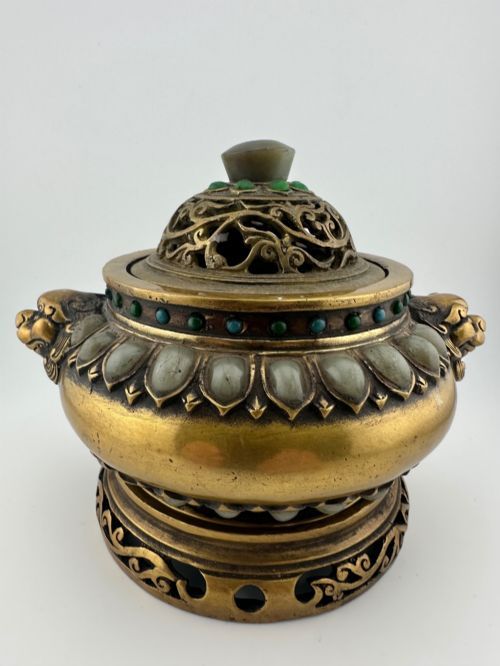
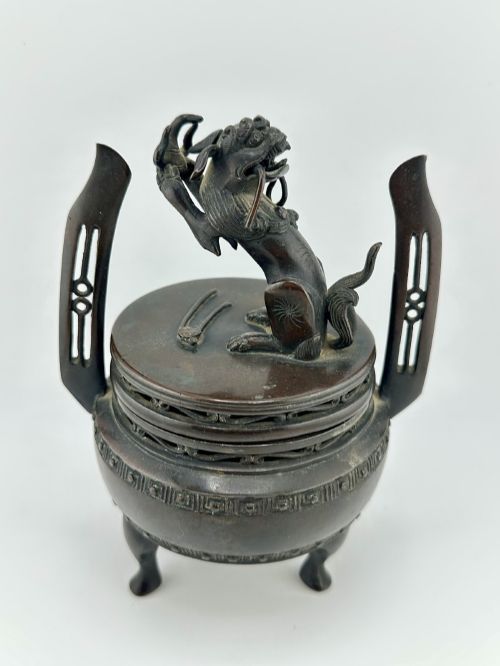
A bronze covered vessel serves both decorative and functional purposes, appearing in forms ranging from traditional tripod censers to lidded urns and ginger jars. When exploring this selection, buyers frequently encounter pieces drawing on the Qing Dynasty, Meiji Period, and various European revivals.
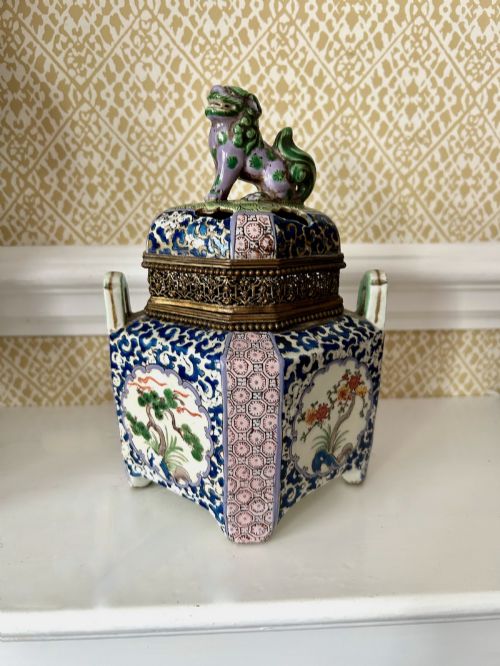
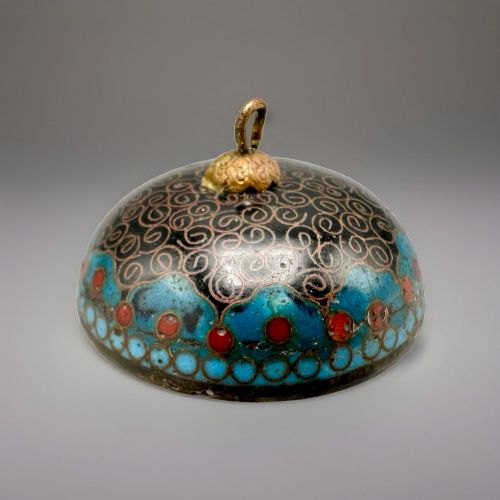
Originating across distinct global traditions, these objects include Japanese cloisonne enamel works, Chinese hardstone-inlaid censers, and French animalier lidded urns. Each piece combines a metal body with a matching lid, often resting upon a dedicated stand or marble base.
The objects function as incense burners, tobacco ashtrays, potpourri containers, and decorative tazzas. Their forms reflect both Eastern ritual contexts and Western neoclassical or rococo tastes.
Materials and construction methods
Metalworking techniques form the core of these pieces, utilising cast bronze, copper, and ormolu alongside applied gold gilt. Many items incorporate intricate cloisonne enamel work or feature surface treatments like gilt-splash effects.
Composite construction is common, bringing together bronze with hardstone inlays, porcelain bodies, or rouge griotte marble bases. Sculptural elements, such as qilin finials or stork motifs, demonstrate advanced casting and chasing skills.
Bronze Covered Vessel Retail Price Guide 2026
Typical asking prices for bronze covered vessel among the pieces listed under this phrase on Sellingantiques today, from the lower quarter to the upper quarter. They describe what is for sale here now, not the wider market.
Storks keep watch from the lids of French animalier urns while mythical qilin beasts guard ancient incense burners.
Assessing quality in metalwork
Quality reveals itself in the crispness of the casting and the precision of the chasing, particularly where animal or mythical figures form the handles and finials. Superior examples display balanced proportions between the vessel body, the cover, and any accompanying stand.
The integration of secondary materials, such as inlaid hardstones, detailed cloisonne cells, or gilt-splash patterns, marks the distinction between standard production and exceptional craftsmanship. The weight of the metal and the secure fit of the lid further indicate the standard of the piece.
Jules Moigniez·Auguste Cain·Kizan
The Bronze Covered Vessel Glossary
- Censer
- A vessel designed for burning incense, frequently featuring a pierced cover to allow smoke to escape. These often stand on three or more feet.
- Cloisonne
- An enamelwork technique where metal wire is soldered to a metal body to create compartments that are filled with coloured paste and fired. This method produces vibrant, patterned surfaces.
- Ormolu
- Gilded bronze mounted onto decorative objects or furniture, popular in European decorative arts. The finish provides a bright, gold-like appearance on cast metal.
- Finial
- A decorative ornament fixed to the top of a lid or cover. On these pieces, they frequently take the form of animals or mythical beasts.
- Grand Tour
- A cultural journey undertaken by wealthy Europeans in the nineteenth century, resulting in the acquisition of souvenir bronzes and antiquities. These items often replicate classical forms.
Bronze Covered Vessel: Frequently Asked Questions
What were bronze covered vessels used for?
These vessels served diverse functions depending on their cultural origin, ranging from burning incense in Eastern traditions to holding potpourri or tobacco in European settings.
Many pieces were created purely for decorative display, acting as mantelpiece urns or architectural ornaments in period interiors.
How do I care for antique bronze?
Maintenance requires gentle dusting with a soft, dry cloth to protect the metal surface and any applied gilding or enamel work.
Avoid using chemical polishes or water, as these substances can damage patination, delicate enamel cells, and inlaid hardstones.
How do I distinguish Japanese works?
Japanese pieces from the Meiji and Edo periods often utilise distinct techniques such as cloisonne enamel or feature specific motifs like Satsuma earthenware and Shimazu crests.
Forming distinct counterparts to European revival styles, these items frequently display signature plaques from known artists.
What is a gilt-splash finish?
A gilt-splash technique involves applying gold highlights across a dark bronze surface to create a mottled or scattered metallic pattern.
This method enhances the visual texture of the bronze body, catching the light across the contours of the vessel.