




Bronze Child Figure
A bronze child figure captures innocence and human form, ranging from intimate Victorian tabletop castings to striking Art Deco works.
Bronze Child Figure
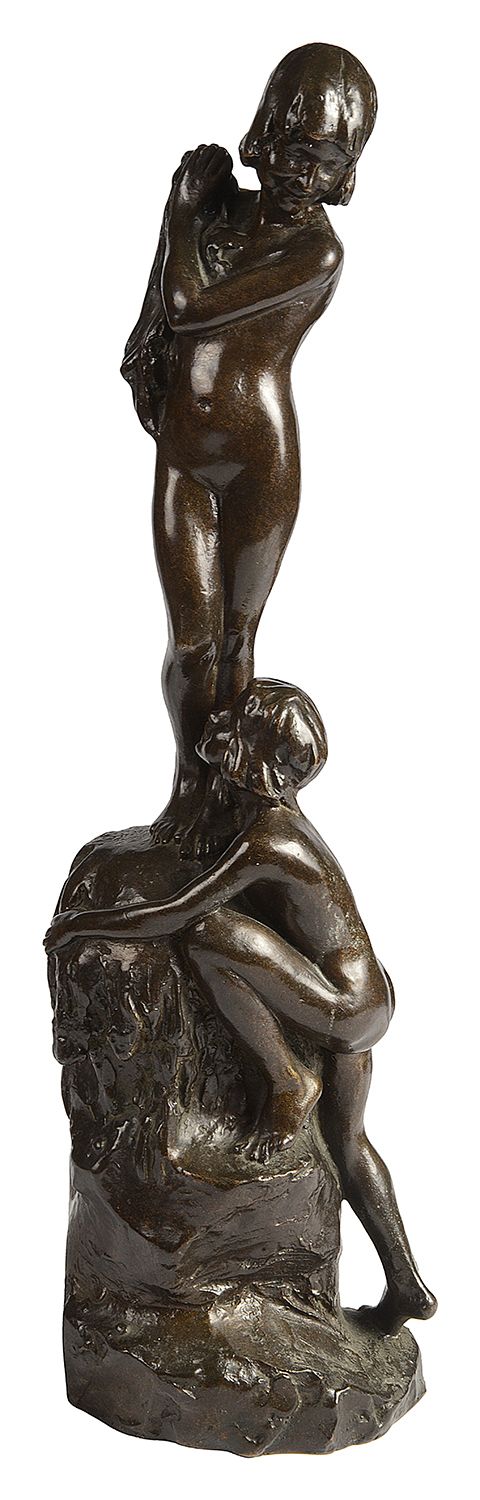
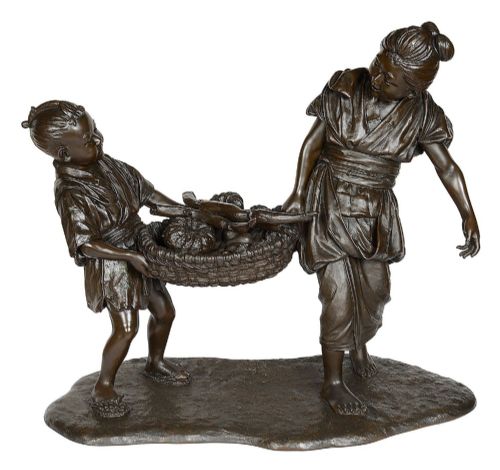
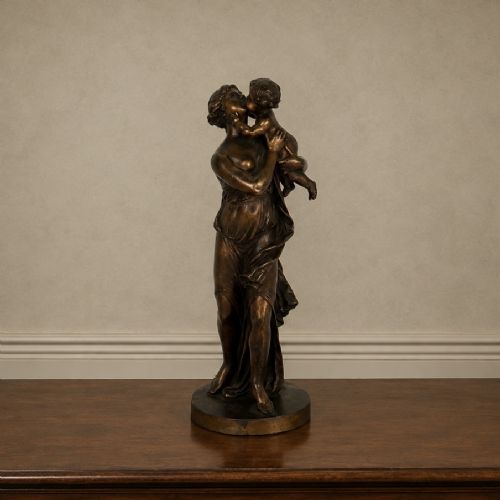
When you search for a bronze child figure, you encounter a diverse array of sculptures, busts, and groups spanning the Georgian period through the 1930s. The selection includes domestic scenes of bathing children, classical mother and child groupings, and playful studies of youths with animals or fruit.
The most common pieces on this page originate from nineteenth-century French workshops and early twentieth-century Art Deco studios. Alongside solid bronze, you will find related figures cast in spelter and bronzed metal, often mounted on marble, onyx, or alabaster bases.
How They Were Made
Foundries produced these pieces primarily through the lost-wax method or sand casting, capturing intricate details in molten metal before applying finishes like brown patination, silvering, or gilding. Sculptors frequently collaborated with specialised metalworkers to achieve the varied surface textures seen on hair, drapery, and skin.
Heavier compositions incorporate stone elements such as marble, alabaster, or onyx to provide stable plinths for standing or seated figures. Base materials and mounts varied according to period taste, shifting from ornate classical plinths to geometric Art Deco pedestals.
Listings feature works spanning from the Georgian era through the 1940s, executed in bronze, spelter, terracotta, and marble.
What Varies in Quality
The distinction between average commercial castings and superior works lies in the crispness of the chasing and the subtlety of the surface patina. Master sculptors ensured that facial expressions, hands, and hair retained anatomical precision, whereas lower-tier production pieces often display softened details and heavy, uniform patination.
The quality of the mount significantly influences the overall piece, with dense veined marble or custom-fitted alabaster bases indicating higher production standards than plain wooden blocks or later replacements. Signed works by recognised modellers demonstrate a superior standard of artistry compared to anonymous factory editions.
E.A.Clapp·Masaaki·P. Sega·H. Chiparus·Auguste Moreau·Carl Kauba·Alexandre Kelety·Dumond·Marion Willis Stanfield·Carrier·Pigale·Denys Puech
The Bronze Child Figure Glossary
- Patina
- The surface coloration and sheen developed naturally over time or applied chemically by the founder. It protects the metal and defines the sculptural contours.
- Okimono
- A Japanese freestanding ornamental carving or casting designed for display on a shelf or tabletop. These pieces often depict genre scenes with remarkable naturalistic detail.
- Spelter
- A zinc alloy used as a less expensive substitute for bronze, frequently painted or electroplated to imitate true metal patinas. It is softer and lighter than genuine bronze.
- Chasing
- The manual finishing process where a metalworker refines the raw casting using chisels and punches. This step restores fine lines and textures lost during the mould removal.
- Grand Tour
- The nineteenth-century practice of affluent travellers collecting classical antiquities and bronze reductions in Europe. These souvenirs often replicated famous statues of children and mythological figures.
Bronze Child Figure: Frequently Asked Questions
How do I clean a bronze child figure?
Dust the sculpture gently with a soft, dry brush to prevent dirt accumulation in the recessed details. Avoid using commercial metal polishes, water, or harsh solvents, as these substances strip away the original historical patina.
Apply a very thin coat of microcrystalline wax occasionally if the surface appears dry. Buff the wax off gently with a clean cloth to maintain a stable protective barrier against atmospheric moisture.
Are these figures solid bronze?
Many examples are cast as hollow forms to reduce weight and conserve metal, while smaller studies and decorative elements are cast solid. Foundry practices varied widely across the nineteenth and twentieth centuries depending on the workshop and the intended display format.
Alternative materials such as spelter and bronzed metal appear frequently alongside genuine copper-alloy castings. Checking the weight, magnetism, and underside reveals the exact construction method of each individual piece.
Why do some figures have marble bases?
Foundries mounted sculptures on stone bases to provide structural stability and a clean visual transition for tabletop display. Heavier materials like marble, onyx, and alabaster anchor the composition and protect the underlying surface from scratches.
Art Deco and late Victorian pieces utilised contrasting coloured stones to complement the metallic tones of the figures. These mounts were typically integrated during the original manufacturing process rather than added later.
How do I date an antique bronze?
Examine the casting quality, the composition style, and the nature of the patination to determine the period of origin. Art Deco pieces display stylised geometric forms from the 1920s and 1930s, whereas Victorian and Georgian works favour classical or sentimental realism.
Signatures, foundry marks, and base construction offer definitive clues regarding the date of manufacture. Comparing the piece with documented works by known sculptors helps narrow down the timeframe.