
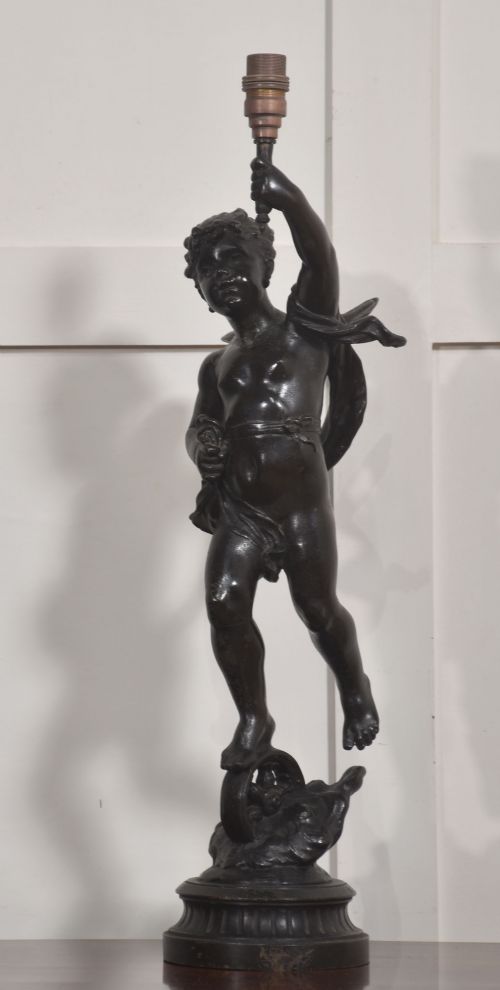


Bronze Cherub Table Lamp
A bronze cherub table lamp brings nineteenth-century figurative sculpture and warm illumination together, offering a striking centrepiece for a traditional interior.
Bronze Cherub Table Lamp
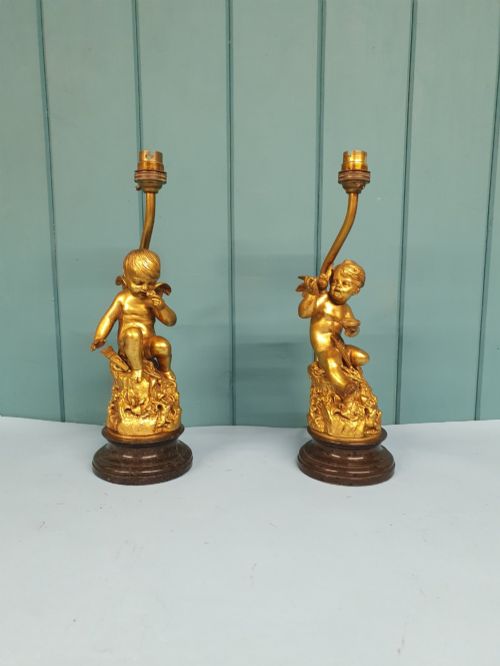
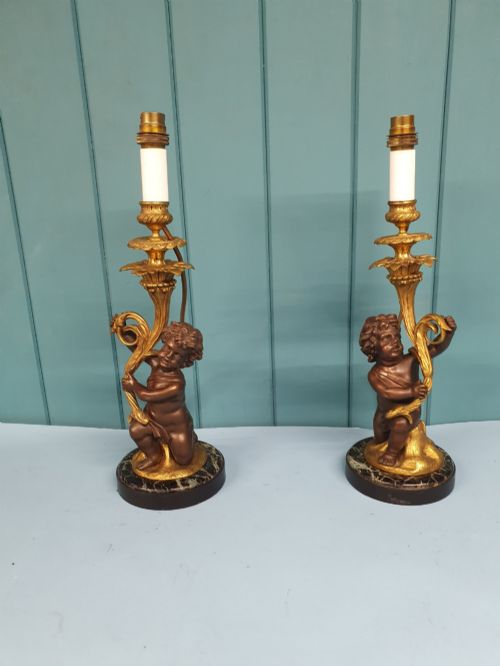
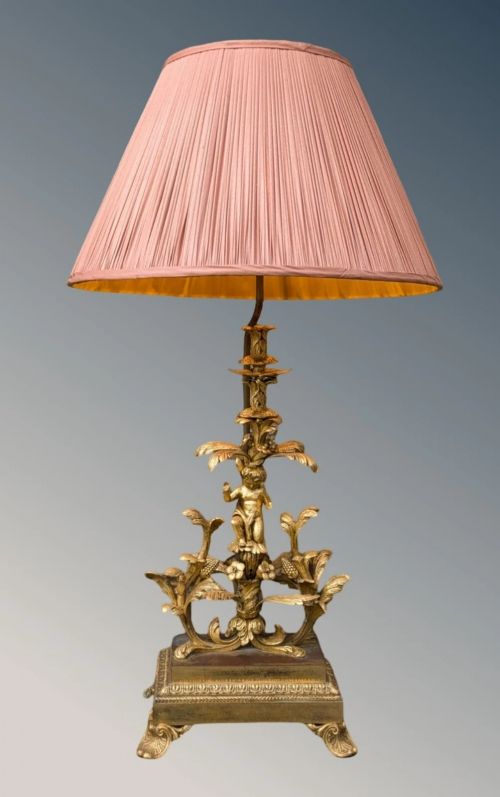
A bronze cherub table lamp combines cast metal figural work with domestic lighting, often taking the form of putti holding torches, dolphins or foliage. These pieces emerge predominantly from nineteenth-century French workshops, spanning Victorian productions and later twentieth-century interpretations.
Buyers will encounter French Rococo Revival and Louis XVI styles frequently, where the playful energy of winged cherubs defines the cast bronze and gilt surface ornamentation. Formats range from modest boudoir lights to monumental torchère lamps designed for commanding side tables.
How they were made
Foundry workers cast the primary figures in bronze, brass, spelter or ormolu, applying patination or mercury gilding to achieve deep colour variations and lustrous metallic sheens. Many figures are paired with contrasting natural marble or onyx plinths to provide structural stability and visual weight.
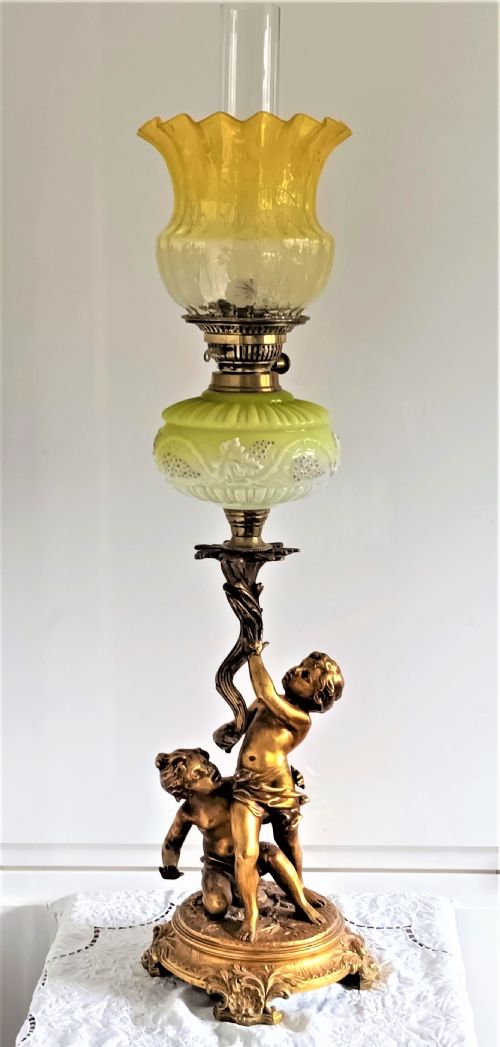
Lighting components integrate glass, porcelain and fabric elements, combining hand-painted Sevres bodies or cranberry glass fonts with intricate metalwork mountings. Converted oil lamps retain their original burners and reservoirs while housing modern electrical wiring inside historical frames.
Certain cherubs swap their traditional wings for dolphins, proving that eighteenth-century fantasy creatures make surprisingly enthusiastic interior designers.
What varies in quality
The crispness of the metal chasing separates ordinary castings from exceptional sculptural works, as master founders spent hours hand-finishing feather details, facial expressions and hair. A superior piece reveals deep, nuanced patination and heavy mountings where every screw, thread and base plate is integrated with precision.
Material combination dictates the overall hierarchy, with fire-gilded ormolu and heavy patinated bronze commanding greater presence than later painted spelter alternatives. The harmony between the figurative bronze casting and its marble or porcelain base determines whether the design feels unified or assembled from disparate elements.
Aug. Moreau
The Bronze Cherub Table Lamp Glossary
- Ormolu
- Gilded bronze produced by applying a mercury and gold amalgam to a bronze base and heating it until the mercury vaporised. This historic technique leaves a warm, durable golden finish characteristic of fine French pieces.
- Putto
- A plump, naked male child figure frequently depicted with wings in classical and Renaissance art. In these lamps, putti act as cherubs holding lights, dolphins or floral garlands.
- Torchère
- A tall ornamental stand or lamp modelled after a torch-holder. These pieces often feature a cherub raising a light source aloft.
- Spelter
- A zinc alloy used as a less expensive substitute for bronze in decorative metalwork. It frequently mimics bronze through applied patination.
- Tole peinte
- Painted sheet metal used for decorative lamp bodies and shades. It provides vibrant colour accents alongside cast metal elements.
Bronze Cherub Table Lamp: Frequently Asked Questions
Are these lamps converted from old oil lamps?
Several pieces originate as nineteenth-century oil lamps or statuettes that have subsequently received modern electrical fittings.
This conversion allows historic bronze figures to function safely as practical table lamps while retaining their original patination and structure.
How do I distinguish ormolu from gilt bronze?
Ormolu strictly denotes objects finished with historic mercury gilding, yielding a distinctive matte and burnished golden depth.
Later gilt bronze often displays a more uniform, electroplated shine across the metal surface.
What styles are most common for these lamps?
French Rococo Revival and Louis XVI designs dominate the selection, celebrating asymmetrical curves and classical motifs.
Victorian English productions and later Art Deco interpretations also appear among the listed pieces.
How should I clean a bronze and marble lamp?
Dust the bronze figures gently with a soft dry cloth and avoid harsh chemical polishes that strip historic patination.
Marble bases require simple wiping with a damp cloth, keeping moisture away from electrical components.