
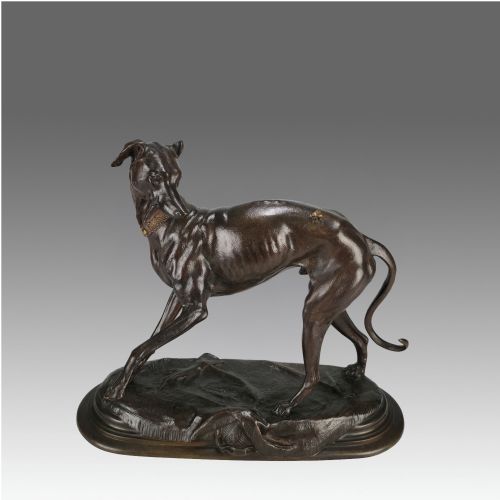
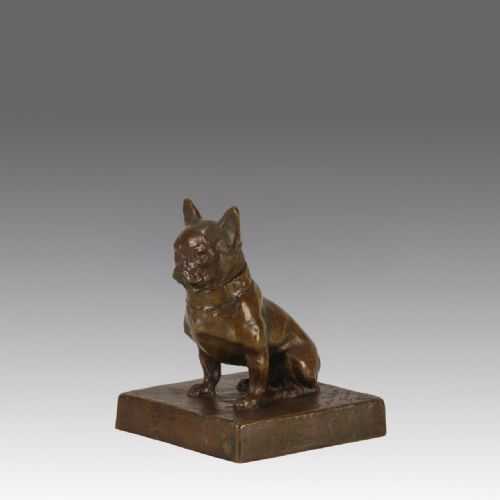


Bronze Canine Ornament
These bronze canine ornament pieces capture dogs in metal with real character, offering collectors a solid slice of animalier sculpture from the nineteenth and early twentieth centuries.
Bronze Canine Ornament
When you search for a bronze canine ornament, you encounter cast metal dog figures that range from small desk inkwells and car mascots to substantial animalier sculptures. The pieces gathered here span the nineteenth century through to the Edwardian and Art Deco periods, covering styles such as French animalier and Austrian or Vienna bronze.
You are most likely to meet subjects like greyhounds, bulldogs, pugs, and terriers cast in realistic poses, whether sitting, begging, or in pursuit. These works originate from European and Japanese workshops, including Meiji period examples alongside British, French, and Austrian pieces.
The objects function primarily as decorative figurines and desk accessories, showing dogs captured with distinct personality. They offer a tangible connection to historical foundry work and canine portraiture from eras past.
How they were made
These pieces rely on bronze casting, often enhanced with cold-painted enamel, paint, or a deliberate patina to bring out the details of the dog's coat and expression. Some examples are mounted on marble or wood bases to give the sculpture weight and stability.
Foundries utilised traditional casting methods to capture the texture of fur and the musculature of hounds and bulldogs. Artisans then finished the surfaces manually, applying cold paint or achieving patination through chemical treatment.
What varies in quality
Quality rests in the crispness of the casting and the sensitivity of the modelling, separating mass production from works by recognised sculptors. A superior piece retains sharp anatomical details in the paws, muzzle, and fur without losing the natural posture of the animal.
The application of cold-painted enamel or the richness of the bronze patina dictates the visual depth of the object. Base materials also influence the standard, with heavy marble mounts and signed foundry markings indicating higher craftsmanship.
Alfred Barye·Dora Heber·Pierre Jules Mene·Edith Parsons·Arthur Waagen·P.de Soete·Joseph Francois Victor Chemin·Franze Bergman·Louis Riche·Barbedienne·L.Bureau
The Bronze Canine Ornament Glossary
- Animalier
- A nineteenth-century artistic movement focused on the realistic depiction of animals. Sculptors in this tradition studied anatomy closely to render beasts in motion or repose.
- Cold-Painted Bronze
- A technique where bronze figures are painted with cold enamel rather than fired in a kiln. This method allowed for vibrant colouration on small decorative bronzes.
- Car Mascot
- An ornamental figurine mounted on the radiator cap of a motor vehicle. These practical yet decorative metal pieces were popular during the early twentieth century.
- Patina
- The surface sheen or colour change developed on bronze over time through age or chemical treatment. It protects the metal and highlights fine sculptural details.
- Meiji Period
- The era in Japanese history spanning from eighteen sixty-eight to nineteen twelve. Bronzes from this time often display meticulous attention to surface texture.
Bronze Canine Ornament: Frequently Asked Questions
What is an animalier bronze?
An animalier bronze is a nineteenth-century sculpture focused on realistic animal subjects, created by artists who studied anatomy closely.
These pieces capture dogs and other creatures in natural poses, often finished with detailed patination.
How do I identify a Vienna bronze?
Vienna bronzes typically feature small, intricately detailed figures finished with cold-painted enamel colours.
Originating in Austrian workshops around nineteen hundred, they often depict dogs in whimsical or realistic poses.
Were these dogs used for desks?
Many canine bronzes served practical purposes as desk accessories, such as heavy triple inkwells featuring bullmastiffs.
Owners placed them in studies and offices to hold ink while doubling as decorative sculptures.
What is a car mascot bronze?
A car mascot is a small metal sculpture mounted onto the radiator cap of early motor vehicles.
Dog figures were popular choices for motorists wanting to display their favourite breeds on the road.
How do I care for cold painted bronze?
Cold painted bronze requires gentle dusting with a soft, dry cloth to protect the delicate enamel surface.
Keep these pieces away from direct sunlight and moisture to prevent the painted finish from fading or flaking.