
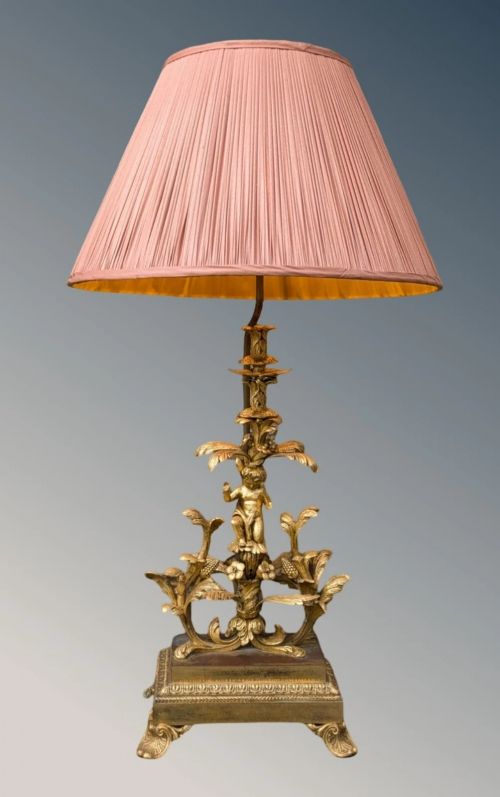
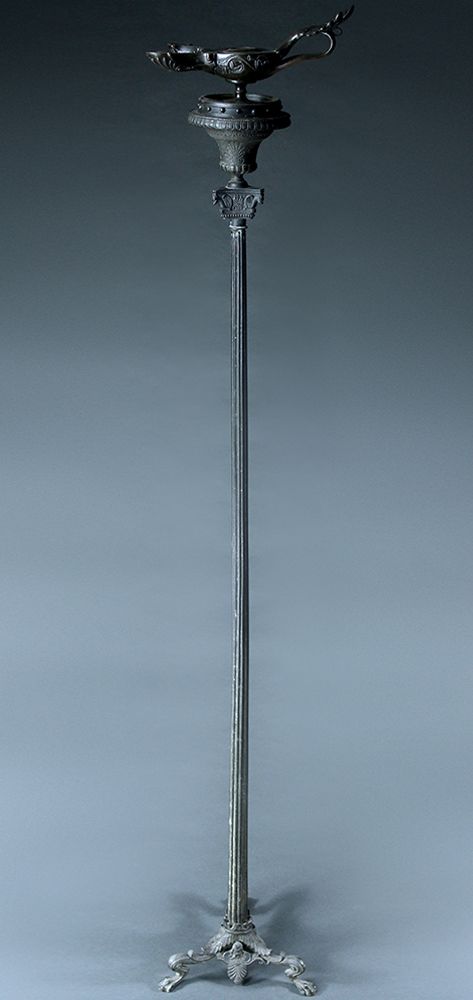


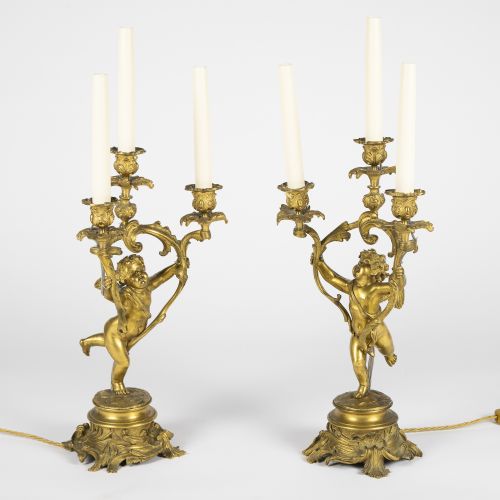

Bronze Candelabrum Lamps
These bronze candelabrum lamps combine cast metalwork with functional illumination, offering buyers heavy decorative presence rooted in nineteenth-century craftsmanship.
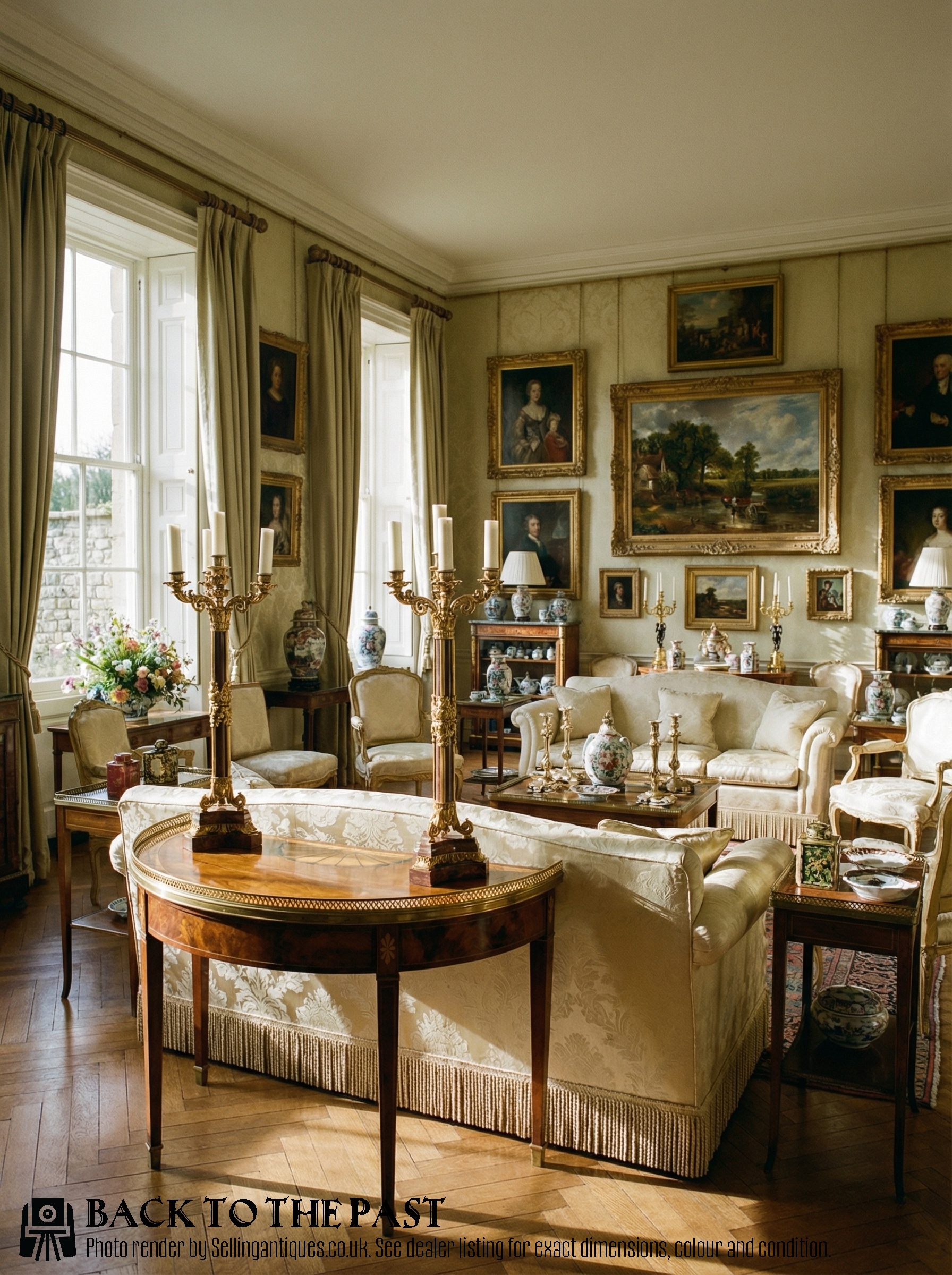
Bronze Candelabrum Lamps
When you search for bronze candelabrum lamps, you encounter heavy lighting fixtures adapted from earlier multi-branch candle holders, most commonly originating from nineteenth-century France. The selection here leans heavily towards table lamps, floor standing torchères, and converted candelabra featuring figural motifs like cherubs, mermans, and putti.
The periods represented span from the Regency era through to the early twentieth century, taking in Neo-Classical, French Empire, and Rococo Revival styles. Buyers typically find paired sets alongside monumental single table lamps, often displaying the influence of the Grand Tour or French chateau decoration.
Many of these pieces began life as traditional candelabra or candlesticks before undergoing conversion into electric lamps at a later date. This adaptation preserves the sculptural metalwork of the base while integrating modern wiring to suit contemporary interiors.
Materials and construction methods
The primary material is cast bronze, which appears either with a dark patinated finish or treated with gilt, ormolu, and gold bronze coatings. Brass and crystal frequently supplement the main bronze structure, adding reflective contrast to the heavy metal casting.
Craftsmen utilised lost-wax or sand-casting techniques to achieve intricate figural details, such as cherubs, putti, and neoclassical foliage. Subsequent fire-gilding or applied patination brought out the textures of the drapery, wings, and architectural mounts before final assembly.
Listings feature items from the 19th century, Regency period, and the 1920s, constructed in bronze, ormolu, and fabric.
Judging the quality of execution
The weight and stability of the base, alongside the integrity of any applied crystal or marble elements, distinguish superior workshop output. The sophistication of the figural modeling and the proportion of the branches relative to the central stem dictate the overall visual balance.
Humphrey Hopper·François-Christophe-Armand Toussaint
The Bronze Candelabrum Lamps Glossary
- Ormolu
- Finely ground high-carat gold applied to a bronze base using a mercury amalgamation process. This technique creates a durable, warm metallic lustre typical of French decorative arts.
- Torchère
- A tall ornamental stand or floor lamp designed to hold lights high above the floor. They frequently feature classical figures supporting the main shaft.
- Patinated bronze
- Bronze treated with chemical solutions to produce a darkened, weathered, or antique surface coloration. This finish contrasts with the bright reflection of gilded sections.
- Chasing
- The manual refinement of a cast metal surface using small chisels and punches. This detailed work restores crispness to lines and textures after the casting process.
- Regency
- An English design period spanning the early nineteenth century characterised by Greco-Roman revival motifs. Pieces from this era often incorporate dark patinated bronze paired with bright ormolu mounts.
Bronze Candelabrum Lamps: Frequently Asked Questions
Were these originally electric lamps?
Most of these pieces started life as multi-branch candelabra or candlesticks designed for wax candles rather than electricity. Workshops or later owners subsequently converted them into lamps by running internal wiring through the central shaft and adding lamp holders.
This conversion process generally respects the original metalwork, allowing the sculptural base and arms to function as domestic lighting without losing their antique character.
How do I clean gilt bronze?
Gilt bronze requires gentle dusting with a soft, dry brush to prevent the accumulation of dirt in recessed chased areas. Avoid using harsh chemical polishes or abrasive cloths, which can strip away the delicate gold layer.
If deeper cleaning is necessary, a damp cloth with mild soap followed by immediate drying is usually sufficient. Protecting the surface from direct moisture preserves the underlying metal and finish.
Can I replace the fabric shades safely?
Fabric shades on these lamps can be replaced provided the fitter matches the gallery or harp dimensions of the existing setup. Selecting a shade proportioned to the weight and height of the bronze base ensures visual balance.
When changing shades, check that the bulb wattage remains compatible with vintage wiring and lamp holders. Consulting a professional electrician is advisable if the internal fittings require updating.
How do I identify French Empire style?
French Empire pieces draw heavily on classical Roman, Greek, and Egyptian motifs popularized during the early nineteenth century. Look for strict symmetry, military trophies, sphinxes, and patinated bronze contrasting with bright ormolu mounts.
The overall silhouette tends to be architectural and imposing, reflecting the neoclassical tastes of the Napoleonic era.