
Bronze and Gold Candlesticks
When you handle bronze and gold candlesticks, you touch the heavy, gilded metalwork of centuries past that once lit formal rooms.

Bronze and Gold Candlesticks
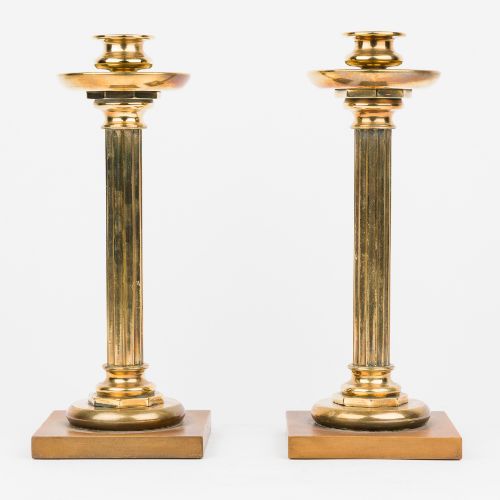
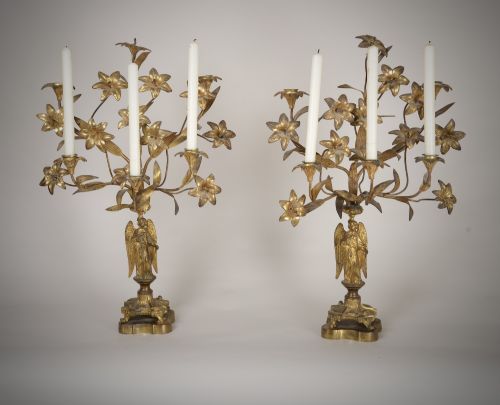
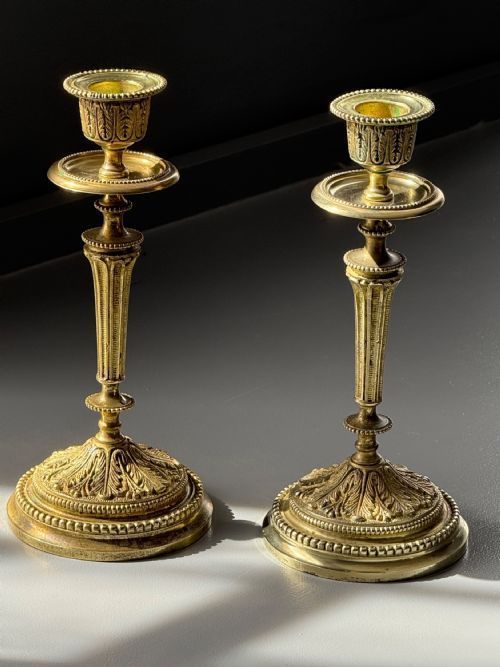
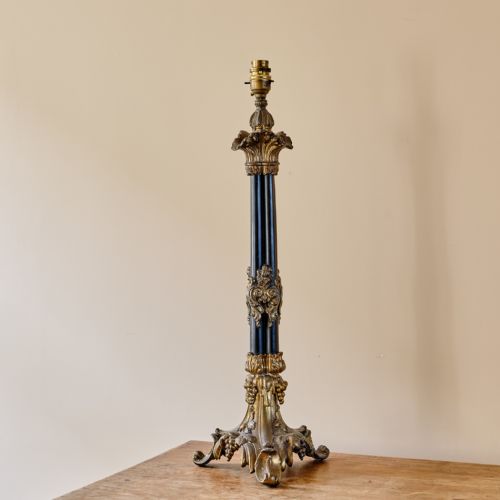
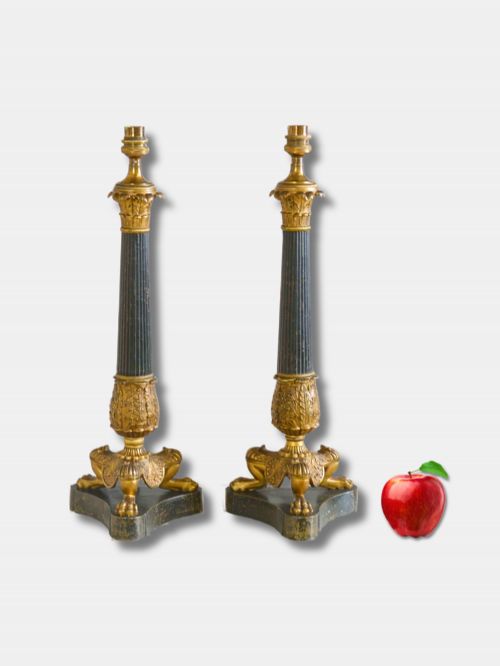
These pieces are lighting accessories and ornamental objects formed primarily from bronze, brass, patinated bronze, and ormolu, often paired with white marble bases or fabric elements. When you search for bronze and gold candlesticks, you encounter pairs of sturdy domestic holders alongside multi-branch candelabra and converted table lamps.
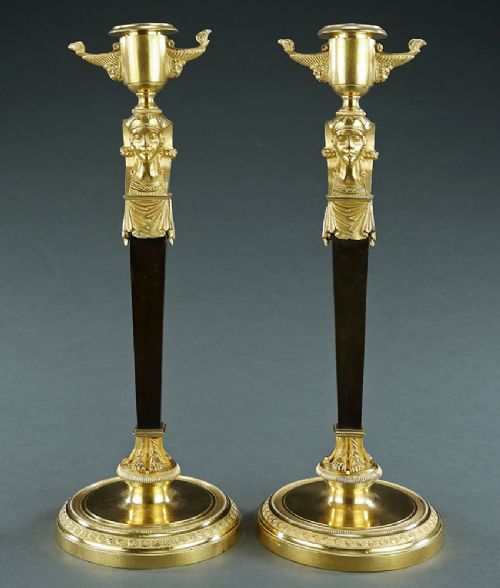
The items span the eighteenth, nineteenth, and early twentieth centuries, reflecting classical revival movements including French Empire, Louis XVI, Neoclassical, and Rococo styles. You will frequently find French workshop creations, alongside English and Swedish examples dating from the 1800s onward.
Makers and designers referenced in these pieces range from classical designers like Dugourc and François Redmond to Art Nouveau artists such as Abel Landry, showing a lineage of sculptural casting.
Markers of quality and craftsmanship
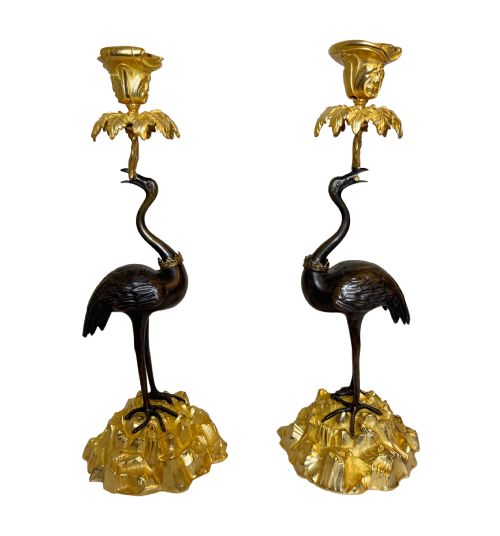
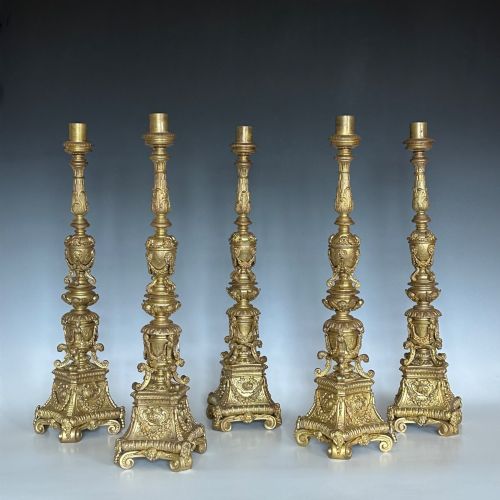
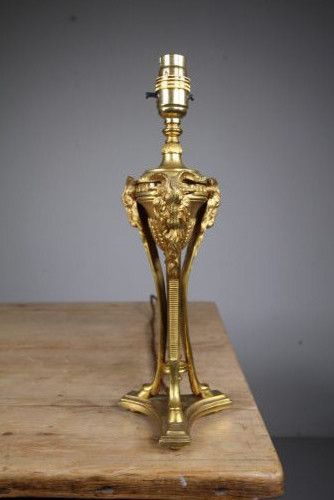
The definition and depth of the casting separate superior examples from simpler productions, with finer pieces exhibiting crisp chiselling on feathers, hair, and acanthus leaves after the mould has set. Heavier weight and secure joints between the base, stem, and candle sconce indicate substantial metal use rather than hollow assembly.
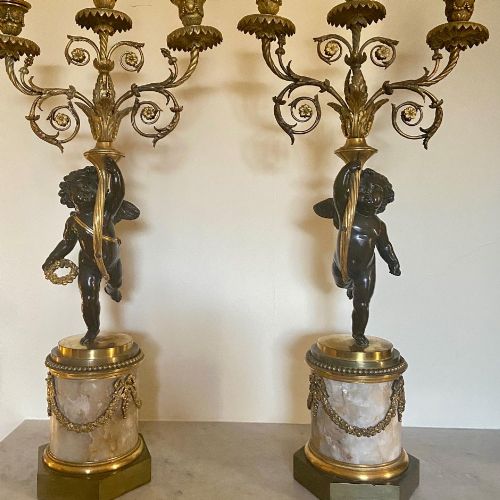
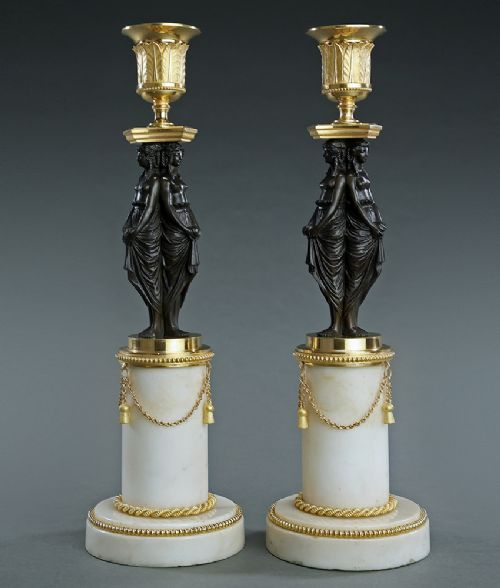
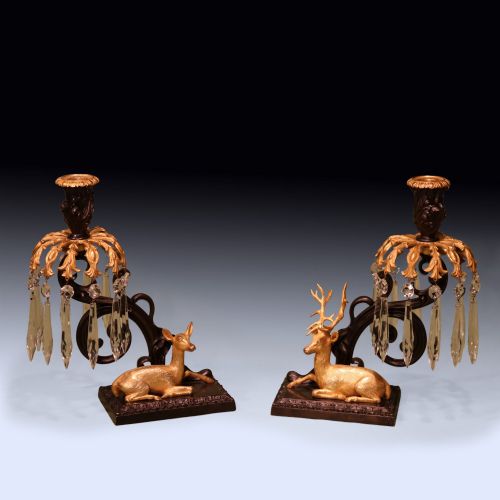
The preservation of the original mercury gilding or ormolu surface dictates much of the visual impact, where soft, matte gold tones contrast purposefully against dark patinated bronze. Integrated design elements, such as matched marble bases and complete sets of hanging lustres, maintain the integrity of the original period manufacture.
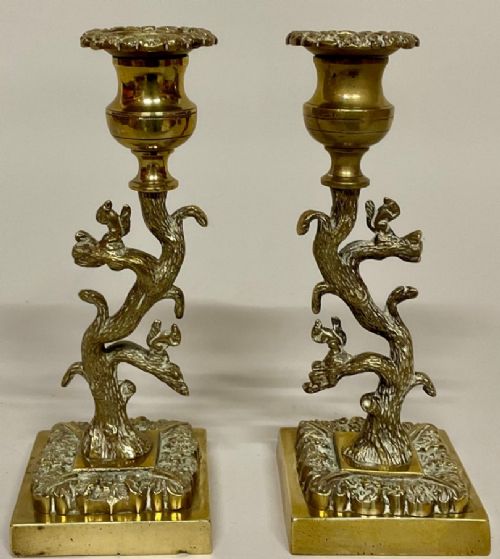
Squirrels clamber among cast bronze branches on Regency candlesticks, bringing woodland life straight to the drawing-room table.
Abel Landry·Thomas Hope·Dugourc
The Bronze and Gold Candlesticks Glossary
- Ormolu
- Finely ground high-carat gold mercury-gilded to a bronze object. This technique imparts a rich, durable golden sheen characteristic of French decorative metalwork.
- Patinated bronze
- Bronze that has been chemically treated to darken its surface. It provides a moody contrast against bright ormolu mountings.
- Candelabra
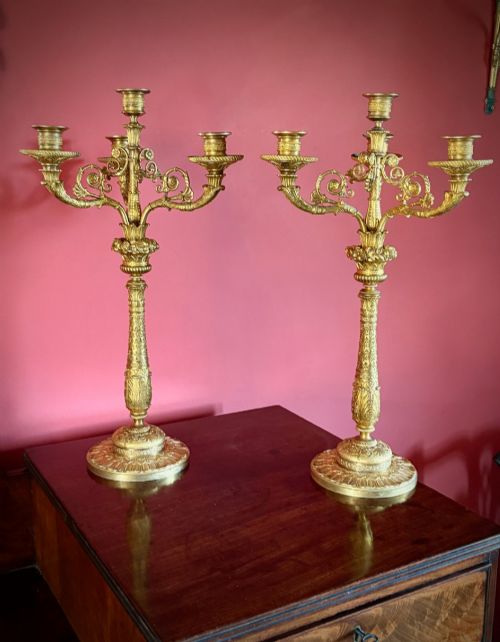
- A branched candlestick holding multiple taper candles. These multi-arm fixtures often form centrepieces for dining tables or sideboards.
- Campana sconce
- A candle cup shaped inverted like a classical bell or krater. You see this flared form frequently on Regency and Empire lighting.
- Champlevé
- An enamelling technique where troughs are dug into a metal surface and filled with vitreous paste before firing. This adds colourful geometric or floral patterns to the bronze body.
- Grand Tour
- Souvenirs bought by wealthy travellers touring European cultural sites during the eighteenth and nineteenth centuries. These classical antiquities emulate ancient Roman and Greek sculpture.
Bronze and Gold Candlesticks: Frequently Asked Questions
What is the difference between a candlestick and a candelabra?
A candlestick is a single-socket holder designed to support one taper candle at a time. They usually feature a distinct base, a vertical stem, and a top sconce.
By contrast, a candelabra branches out from a central stem to hold multiple candles simultaneously. These larger fixtures often serve more decorative functions in formal reception rooms.
How do I identify French Empire style metalwork?
French Empire style pieces rely heavily on classical antiquity, drawing inspiration from ancient Roman, Greek, and Egyptian motifs. Look for strict symmetry, military trophies, sphinxes, and palm leaves.
The metals typically combine dark patinated bronze with bright, highly polished ormolu highlights to create sharp visual contrast.
Were these items originally wired for electricity?
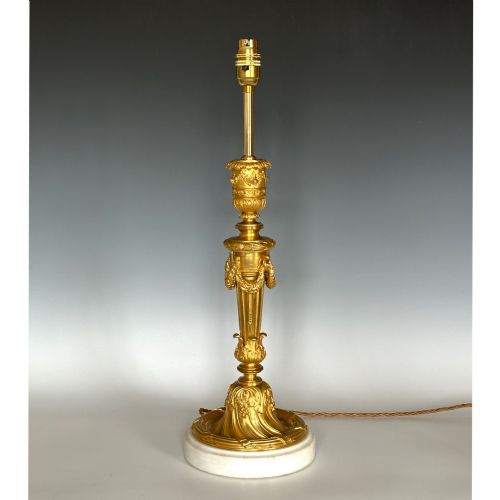
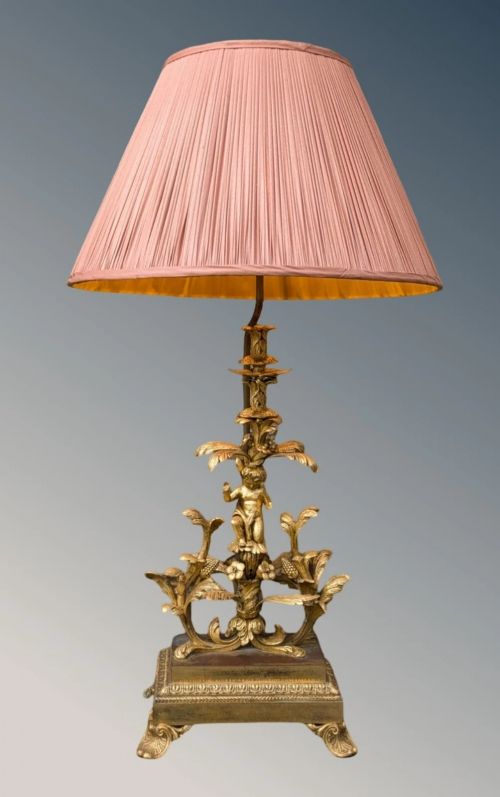
Original nineteenth-century examples were manufactured exclusively for wax candles or oil combustion. Many surviving pieces were adapted for electricity during the twentieth century to function as table lamps.
Converting them back or maintaining the wiring depends entirely on personal preference for utility versus historical lighting.
How should I clean antique ormolu and bronze?
Antique ormolu and patinated bronze require gentle maintenance using a soft, dry microfibre cloth to remove dust. Avoid chemical polishes, abrasive cloths, or water, as harsh substances strip away the fragile historic gold surface.
Professional conservation is recommended if deeper cleaning is required.