

British Rural Landscape Art
British rural landscape art captures fields, rivers, and cottages through oil and watercolour from the nineteenth and twentieth centuries.
British Rural Landscape Art
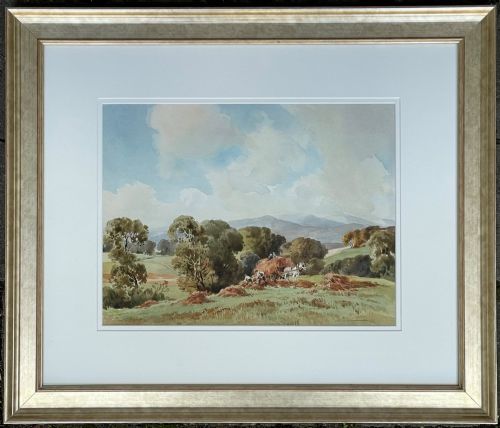
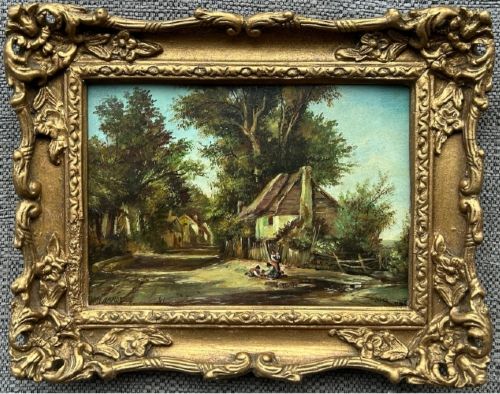
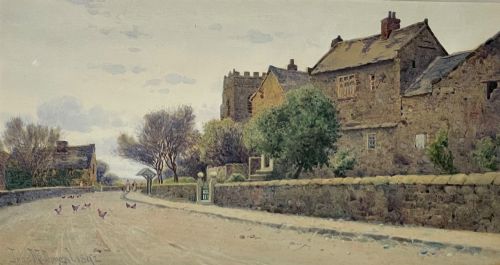
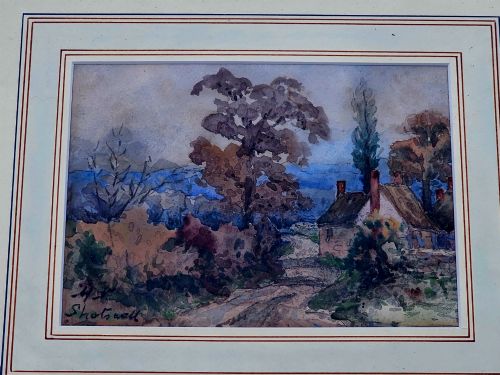
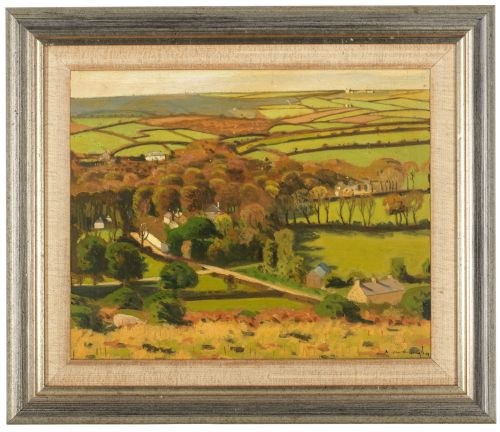
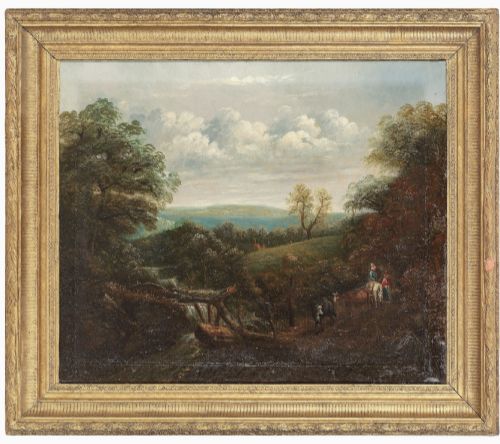
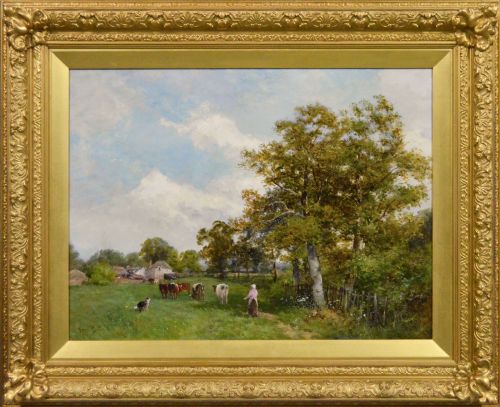
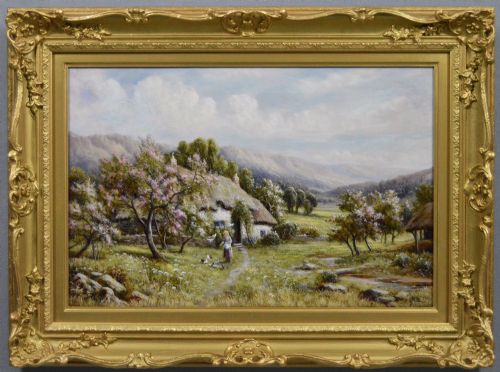
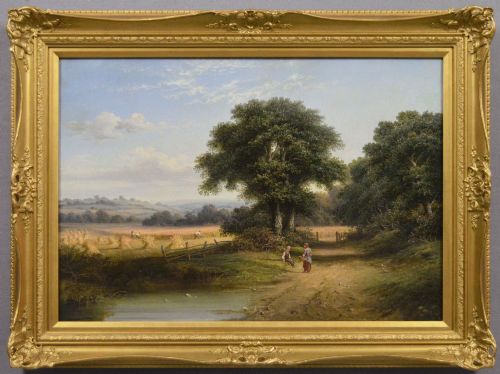
British rural landscape art encompasses oil paintings, watercolours, and etchings depicting the countryside, villages, and agricultural scenes. These works record rural life, agricultural labour, and regional topography across England, Scotland, and Wales from the nineteenth century into the mid-twentieth century.
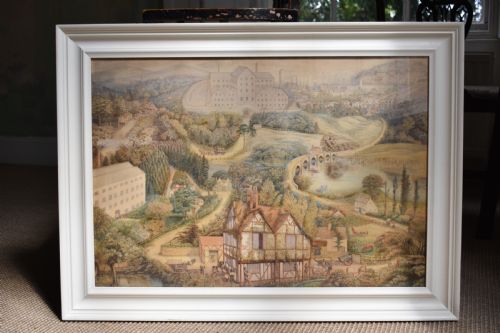
The most common examples on this page date from the Victorian and Edwardian eras through to the 1930s. Works range in scale from intimate watercolours on paper to substantial oil paintings on canvas and wooden panels.
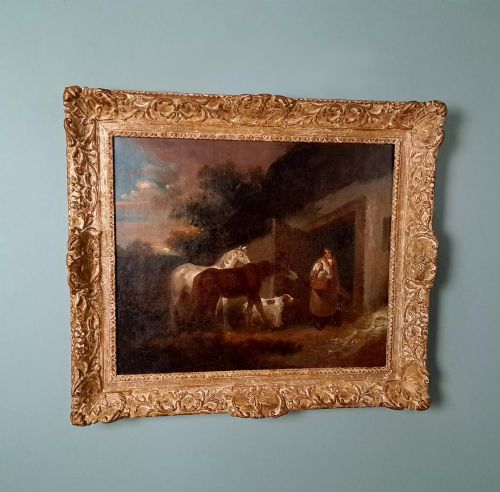
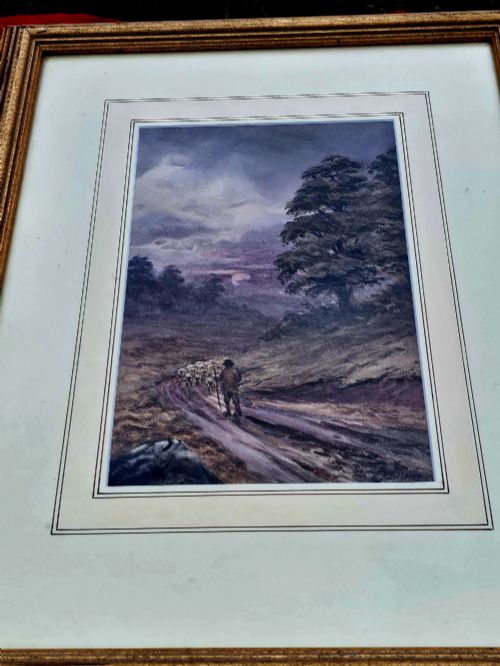
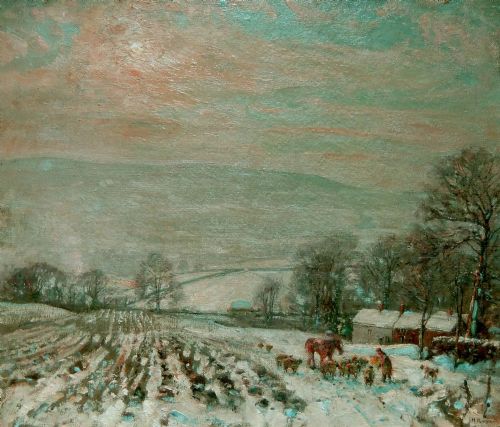
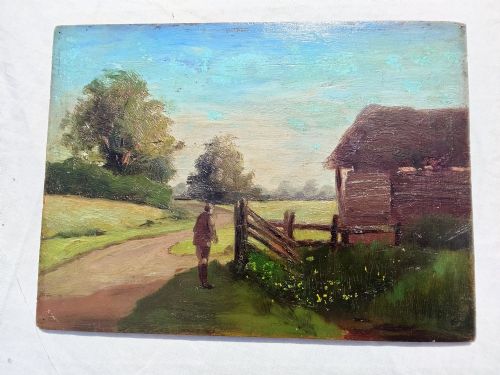
Subjects frequently include figures harvesting, herding livestock, or working near cottages and rivers. These pieces reflect stylistic shifts from traditional pastoralism towards British Impressionism and regional realism.
How they were made
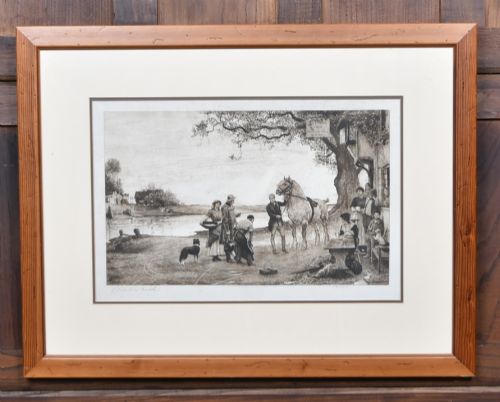
Artists painted primarily with oil on canvas, wooden board, or panel, alongside extensive use of watercolour on paper. Etchings also appear, created through the incision of metal plates.
Substrates include traditional woven canvas stretched over wooden frames, sturdy wooden boards, and heavy rag paper. Frames are frequently constructed from wood with applied gilt decoration.
British Rural Landscape Art Retail Price Guide 2026
Typical asking prices for british rural landscape art among the pieces listed under this phrase on Sellingantiques today, from the lower quarter to the upper quarter. They describe what is for sale here now, not the wider market.
Several canvases record specific local happenings, from sheep driven down lanes to gypsy caravans resting near round houses.
What varies in quality
Quality rests upon the artist's handling of light, atmosphere, and naturalistic detail within the composition. Stronger works demonstrate confident brushwork, a coherent palette, and accurate observation of rural subjects.
The distinction between standard decorative pieces and superior works lies in the depth of provenance and the artist's standing within regional schools such as the Norwich School.
George Graham·Percy Lancaster·William Howard Hardy·William Joseph Shayer Senior·John McDougal·EJ Letheren·Herbert Royle·Robert Morson Hughes·David Bates·Robert John Hammond·Walter Heath Williams·Robert W Macbeth·John Horace Hooper·Raymond Booth·Eric Brown·Ernest Higgins Rigg·George Oyston·Frederick James Kerr·John Bond·William Greaves·Frederick Hines·Sydney Yates Johnson·Owen Bowen·Herbert Dicksee·Edgar Woollatt
The British Rural Landscape Art Glossary
- Watercolour
- A painting method where fine pigment is suspended in a water-based, transparent solution applied to paper.
- Oil on Canvas
- Pigment bound in a drying oil, traditionally linseed, applied to a stretched woven fabric support.
- Etching
- A printmaking process where acid cuts into unprotected parts of a metal plate to hold the ink.
- Pastoral
- A style of art that idealises rural life, agricultural labour, and rustic scenery.
- Panel
- A rigid wooden surface used as a support for oil paintings before canvas became standard.
British Rural Landscape Art: Frequently Asked Questions
What periods do these artworks span?
The pieces range from the late eighteenth century through the Victorian and Edwardian periods into the mid-twentieth century.
Works from the 1890s and early 1900s feature prominently alongside interwar creations.
What materials were used by the artists?
Artists utilised oil paint on canvas, wooden boards, and panels, alongside watercolours on paper.
Printmakers also produced original etchings and limited edition lithographs.
Where were these rural scenes set?
Locations include regional English landscapes such as Yorkshire, Cornwall, Dorset, and Cheshire villages.
Specific settings like Bidston Village and the Yorkshire dales appear frequently in the titles.
How do I identify different artistic styles?
Styles include traditional British pastoralism, 19th-century realism, and early twentieth-century British Impressionism.
Brushwork and tonal choices indicate whether a work aligns with academic recording or looser impressionistic observation.