

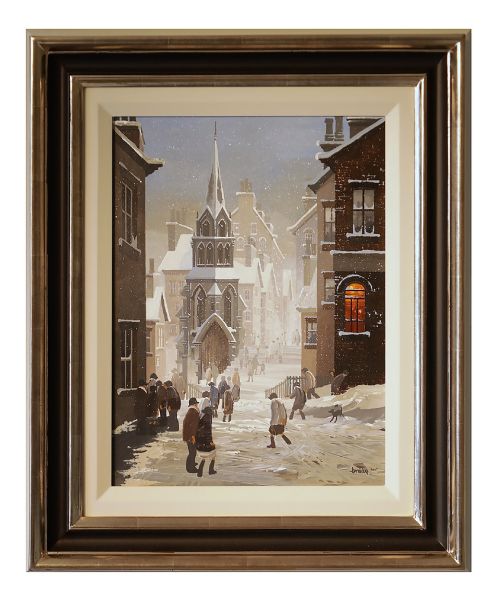
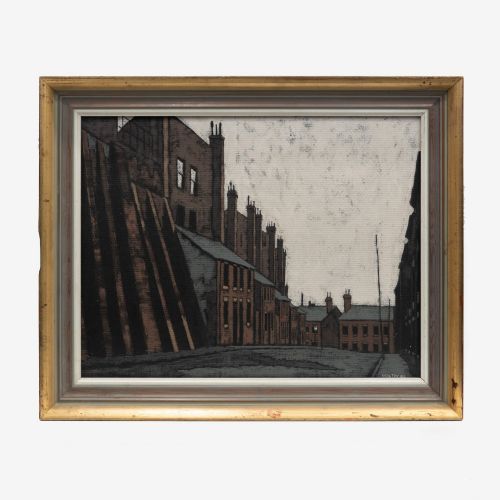
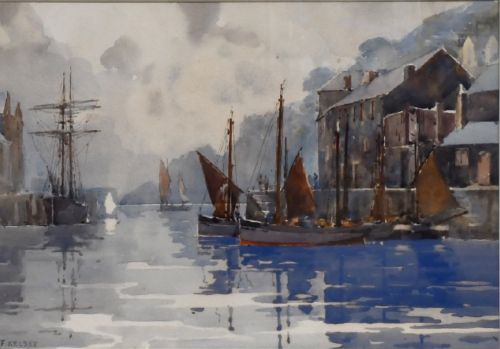
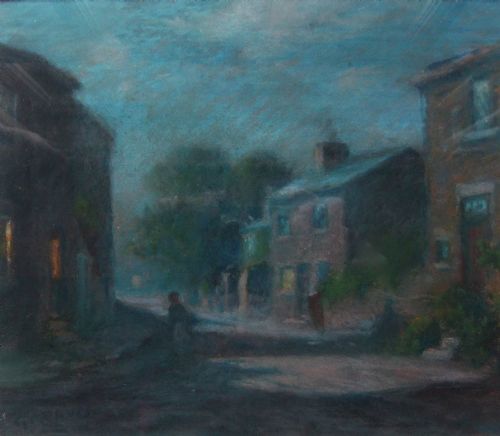





British Landscape Artist
When you search for a british landscape artist, you are looking at paintings and drawings that record the fields, rivers, and streets of Britain through different eras.
British Landscape Artist
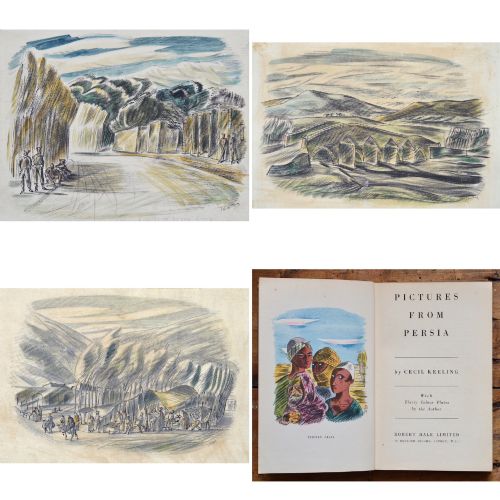
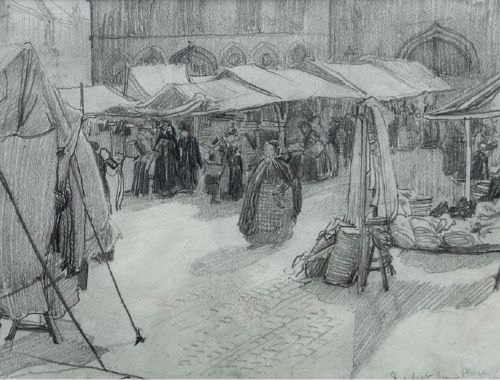
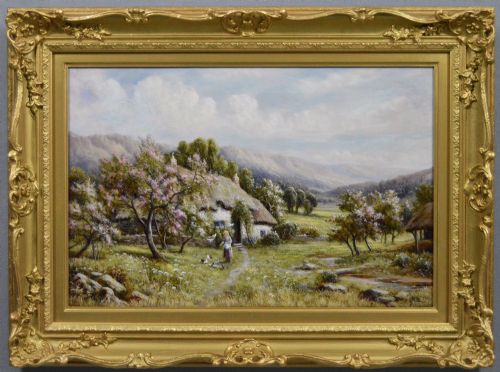
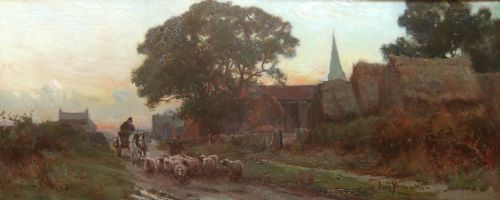
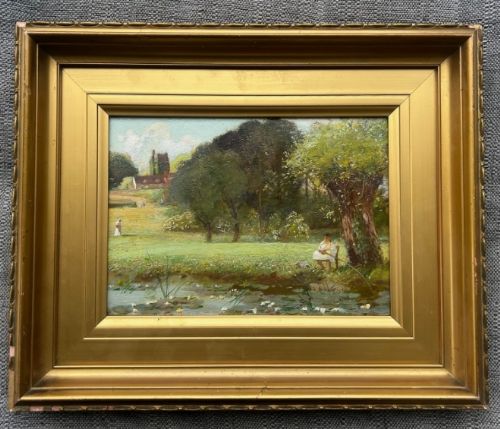
A british landscape artist captures the topography and rural life of the British Isles through various mediums. These works range from late Victorian watercolours of coastal scenes to mid-century oil paintings of Yorkshire farmyards.
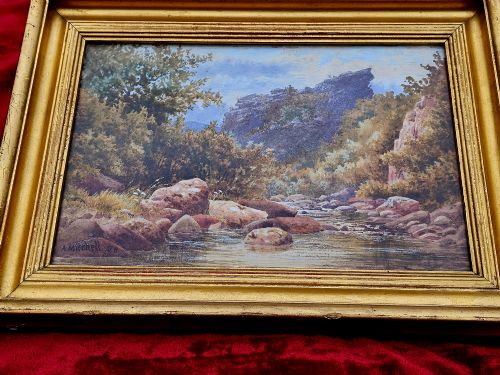
You will most commonly meet pieces dated from the nineteenth century through to the mid-twentieth century on this page. These include watercolours on paper, oil paintings on canvas or wood panel, and pastel works depicting specific locations from Cornwall to the Isle of Man.
The subjects span quiet village streets, riverbanks, and agricultural views created by regional painters as well as members of artistic societies and the Royal Academy.
Materials and Methods
Artists on these pages primarily utilised watercolour on paper or oil paint applied to canvas, wood panels, or boards. Pastel and ink also appear in specific regional works and preparatory drawings.
Supports range from traditional stretched canvas and heavyweight watercolour paper to timber panels prepared for oil painting. Frames often reflect the period of creation, from ornate Victorian gilt mouldings to simpler twentieth-century wooden surrounds.
Listings feature works created across the nineteenth and twentieth centuries using oil, watercolour, and pastel on paper, canvas, and wood panel.
Quality and Execution
Quality rests in the handling of light, atmospheric depth, and brushwork control rather than the mere age of the piece. Superior examples display confident command of medium, whether capturing the luminosity of a watercolour wash or the rich texture of impasto in an oil painting.
Provenance and documentation also separate works, with signed pieces, artist studio sales, and exhibition histories offering clearer attribution to specific named painters.
Cecil Keeling·Henry Percy Huggill·Thomas Ellison·Robert John Hammond·Brian Shields·Stuart Walton·Frank Kelsey·William Greaves·Hubert Wellington·Owen Bowen·Joan Gillchrest·Arthur Wardle·David Murray·William JB Jenkins·William Manners·Fred Lawson·William Hoggatt·John Hobson Nicholson·George Vicat Cole·F J Aldridge·Henry Bailey·James Watson·Frederick W Jackson·Benjamin Williams Leader·Florence Hess
The British Landscape Artist Glossary
- Watercolour
- A paint consisting of pigment suspended in a water-based solution, typically applied to paper to create translucent washes of colour.
- Impasto
- Paint applied thickly to a canvas or panel, standing out in relief from the surface and showing the physical marks of the brush or palette knife.
- Provenance
- The chronological history of the ownership of a painting, establishing its authenticity and origins from the artist's studio onwards.
- Wood Panel
- A rigid flat piece of timber used as a support for oil paintings before canvas became the dominant material.
British Landscape Artist: Frequently Asked Questions
What periods do these paintings cover?
The works span from the nineteenth century through the Edwardian era and into the mid-twentieth century. Painters working in these periods recorded both traditional rural scenes and changing industrial landscapes.
Styles shift from Victorian fine art and British impressionism toward mid-century modern interpretations as time progresses through the twentieth century.
Are these works signed by the artist?
Many of the listed paintings and drawings bear signatures, monograms, or studio stamps from the original creators. Signed pieces often provide a direct link to the artist's working life and known exhibition records.
Unsigned works still appear, occasionally identified through exhibition labels, framing details, or direct provenance from studio sales.
How should I care for a watercolour painting?
Watercolour paintings require protection from direct sunlight to prevent the pigments and paper from fading over time. Glazing with conservation-grade glass helps shield the delicate paper and pigments from atmospheric moisture and dust.
Displaying these works in rooms with stable humidity levels preserves both the paper support and the original framing materials.
Where were these landscape scenes painted?
The locations stretch across the British Isles, including specific views in Yorkshire, Cornwall, London, Wales, and the Isle of Man. Artists frequently travelled to rural villages, coastal harbours, and riverbanks to paint en plein air or gather studies.
Titling on the reverse or on the mount often records the exact village, market, or geographic feature depicted.