





British Country Landscape Painting
When you search for a british country landscape painting, you enter a visual record of fields, rivers, and rural life painted across the nineteenth and twentieth centuries.
British Country Landscape Painting
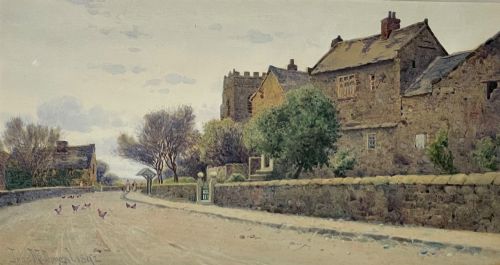
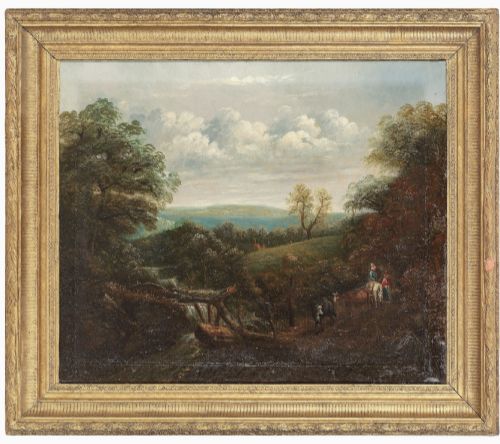
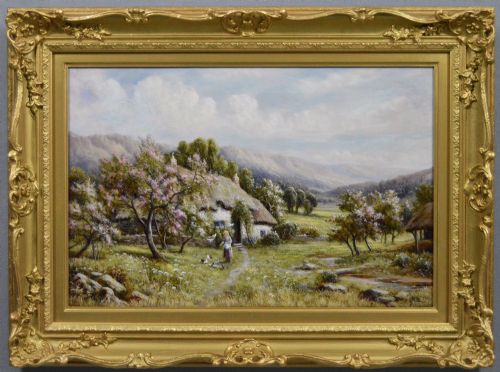
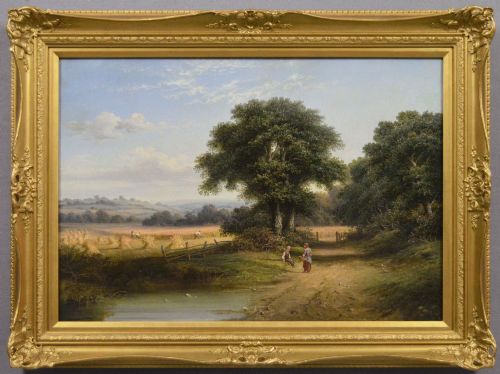
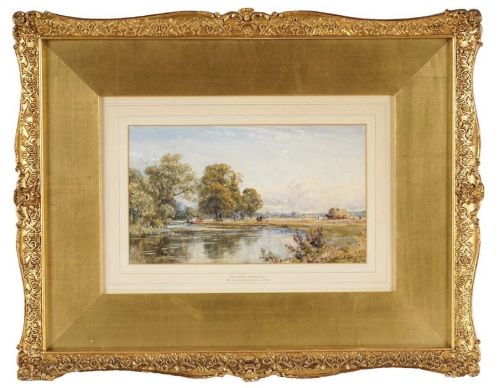
A british country landscape painting captures rural scenes from across England, Scotland, and Wales, ranging from quiet riverbanks to harvested fields and moorland farms. These works preserve historical views of rural life through the eyes of artists working during the Victorian, Edwardian, and twentieth-century periods.
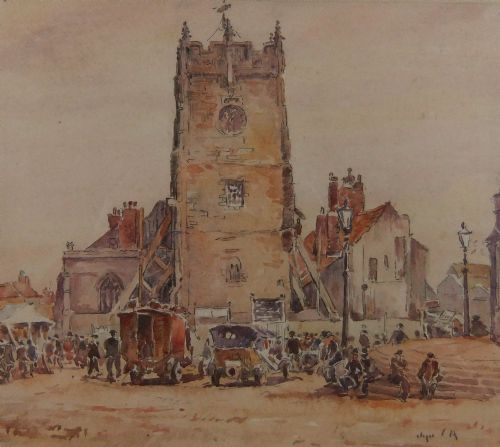
The selection includes watercolours on paper alongside oil paintings on canvas, wood panels, and boards. Many pieces record specific named locations, from Yorkshire and Derbyshire to Cornwall and Devon.
Surviving examples span from modest topographical watercolours to larger, ambitious oils by named regional artists and members of various British schools.
How they were made
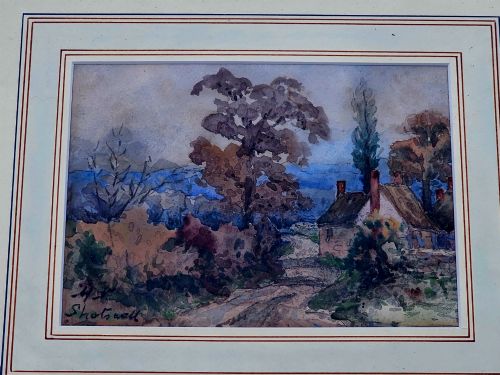
Artists painted primarily in oil or watercolour, selecting supports that suited their working method. Watercolours were typically applied to heavy rag paper, often recording outdoor views swiftly before being mounted and framed behind glass.
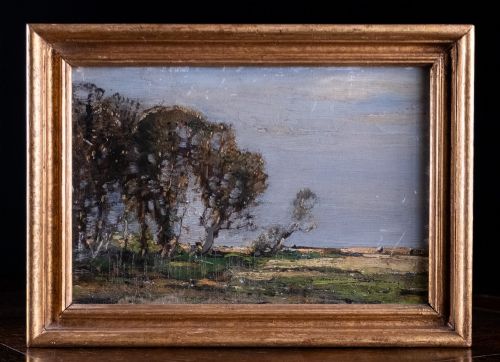
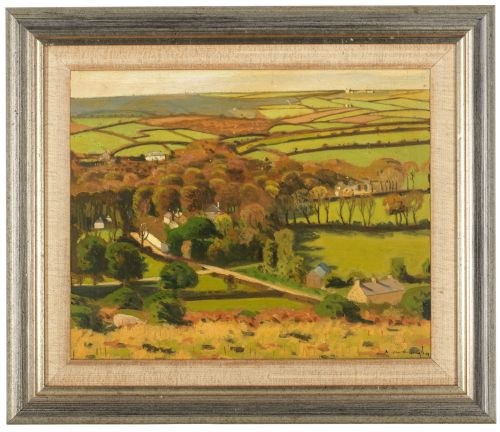
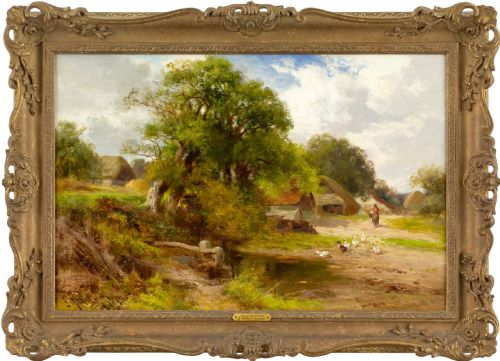
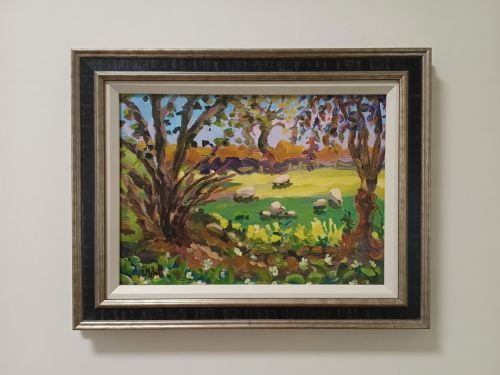
Oils were painted on primed canvas stretched over wooden frames, or directly onto rigid surfaces such as wooden panels and prepared boards. These varied grounds allowed painters to build up textured brushwork or smooth, luminous glazes.
Frames played an essential role in finishing each work, ranging from simple contemporary wood mouldings to elaborate gilt plaster frames suited to nineteenth-century exhibition standards.
Several canvases record local livestock, including prized shorthorn bulls and working ponies in their everyday farmyards.
What varies in quality
Quality rests upon the confidence of the brushwork and the artist's ability to render light, atmosphere, and spatial depth. Stronger works capture the specific qualities of British weather and terrain rather than relying on formulaic compositions.
The degree of finish and the clarity of provenance also distinguish works. Signed paintings with documented exhibition histories or traceable regional school connections command greater attention than anonymous student copies.
Percy Lancaster·William Howard Hardy·John Horace Hooper·John McDougal·Kershaw Schofield·Robert Morson Hughes·Robert John Hammond·Walter Heath Williams·Robert Thorne Waite·John Smith Atherton·Lucy Pratt·Frederick James Kerr·George Wright·Herbert Royle·Henry H Parker·Joseph Knight·Sydney Yates Johnson·F J Snell·A M Gauci·Hubert Wellington·Owen Bowen·Edgar Woollatt·Charles Walter Simpson·Harry Freckleton·Robert Little
The British Country Landscape Painting Glossary
- Watercolour
- A painting method using water-soluble pigments suspended in a gum binder, applied to paper. It allows for transparent washes and delicate atmospheric effects.
- Oil on Canvas
- Pigments mixed with a drying oil, such as linseed, applied to a woven fabric stretched across a wooden frame. This combination provides durability and rich colour depth.
- Panel
- A rigid wooden board used as a support for oil painting before stretched canvas became standard. Panels offer a firm, smooth surface for detailed brushwork.
- British School
- A loose classification used to describe artists trained or working within Britain. It groups works sharing national stylistic traits across specific centuries.
- Provenance
- The documented history of ownership of an artwork, establishing its authenticity and past exhibitions. A clear provenance links the piece directly to the artist or studio.
British Country Landscape Painting: Frequently Asked Questions
How do I date a landscape painting?
Dating relies on stylistic clues, framing methods, and the materials used by the artist. Canvas types and stretcher construction also provide reliable chronological markers.
Signatures, artist dates, and exhibition labels on the reverse offer the most precise confirmation of a painting's period.
Are watercolours as durable as oils?
Watercolours require protection from direct sunlight and moisture behind glass to prevent fading and paper degradation. When properly conserved, they remain stable over centuries.
Oils on canvas or panel tolerate ambient conditions better but still benefit from stable indoor humidity and avoidance of extreme heat.
What is the Norwich School?
The Norwich School was the first provincial art movement in Britain, founded in the early nineteenth century by artists inspired by local Norfolk scenery. Members painted direct observations of rural life and landscape.
Works from this tradition reflect a shared interest in naturalism and atmospheric lighting specific to East Anglia.
How should I hang an antique painting?
Hang paintings away from direct sunlight, heating vents, and damp exterior walls to protect the paint surface and wooden frames. Secure picture wire to sturdy D-rings fixed directly into the frame or stretcher.
Use appropriate wall fixings matched to the weight of the framed artwork and the type of wall construction.