




British Clock
When you search for a british antique clock, you are looking at centuries of domestic timekeeping, railway regulation and industrial enterprise.
British Clock
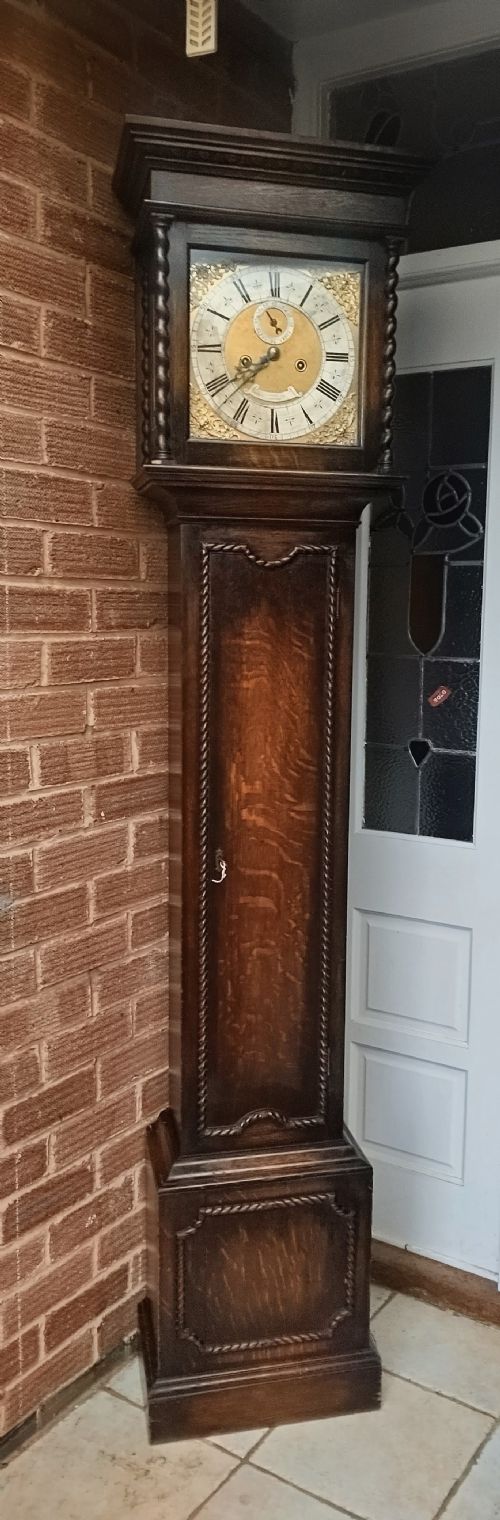
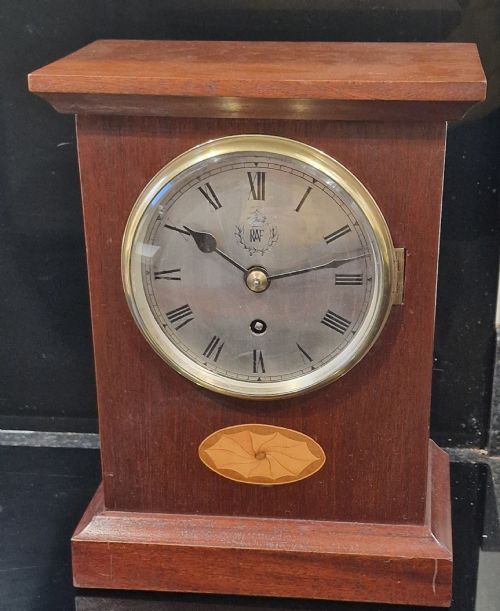
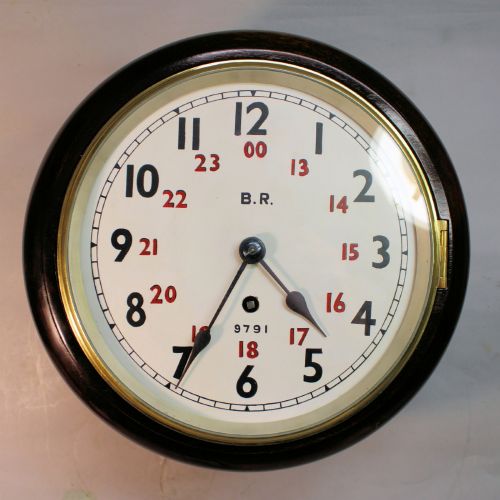
A british antique clock encompasses a varied selection of timepieces, spanning from Georgian longcase clocks in oak and mahogany to mid-century railway wall clocks and Art Deco desk pieces. Buyers most frequently encounter railway dials, fusee wall clocks, and mantel timepieces originating from domestic, municipal, and transport settings.
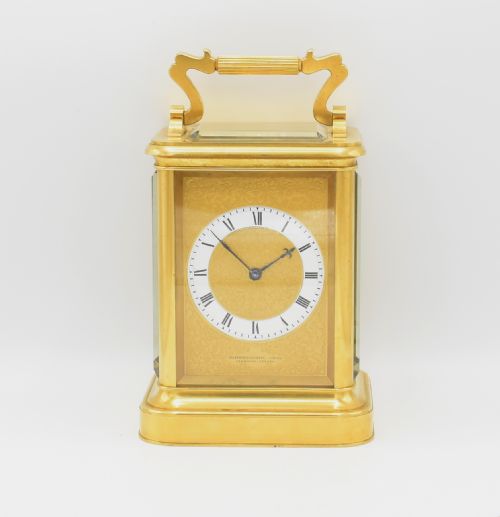
The selection ranges across several periods, incorporating Victorian carriage clocks, Edwardian banjo barometers, and 1930s electric models by makers such as Smiths. Formats include longcase clocks, wall-mounted station dials, bracket clocks, and desk pieces utilising glass, brass, wood, and metal.
How they were made
Cases utilise traditional cabinet timbers including oak, mahogany, and beech, alongside later industrial materials like bakelite, chrome, and painted metal. Movements rely on brass gear trains, fusee mechanisms designed to maintain even tension, and later electric or synchronous systems.
Dials feature painted wood, metal, or enamel surfaces, frequently protected by bevelled glass bezels and housed within sturdy maritime, office, or domestic enclosures.
Object types range from tall longcase clocks and wall-mounted station dials to desk pieces, mantel clocks, and barometers.
What varies in quality
Quality separates through the precision of the movement, the integrity of the original dial markings, and the selection of cabinet timbers. Examples bearing maker signatures from established London firms or verifiable railway and government departments often display superior mechanical execution and finishing.
The degree of original components remaining within the case and movement influences the standing of a piece, alongside the crispness of carved details on wooden surrounds and the clarity of enamel or painted dials.
Goldsmiths Alliance Ltd·Maple London·Bush of London·John Walker·Smiths Clockmakers·Parkinson and Frodsham·Camerer Cuss and Co·Gents of Leicester
The British Clock Glossary
- Fusee
- A conical pulley used in spring-driven clocks to maintain constant torque on the gear train as the mainspring unwinds. This mechanism helps the clock maintain accurate time over its running period.
- Longcase clock
- A tall pendulum clock housed in a wooden case with a base, trunk, and hood enclosing the dial. Also known colloquially as a grandfather clock.
- Dial
- The face of the clock where the hours and minutes are displayed. Railway and office versions often feature bold Arabic or Roman numerals for quick reading.
- Bracket clock
- A portable table or shelf clock originally designed to sit on a bracket. Many examples feature striking mechanisms and carrying handles.
British Clock: Frequently Asked Questions
What is a fusee railway clock?
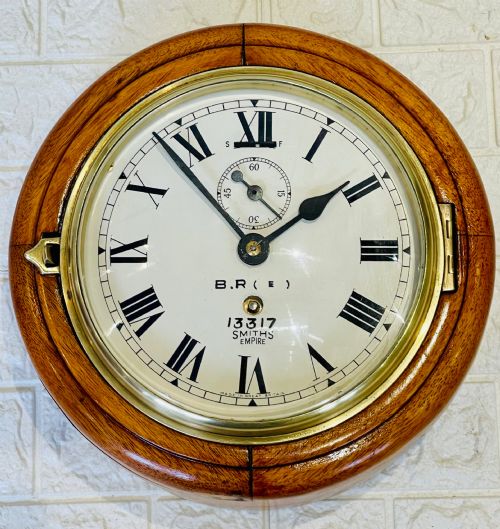
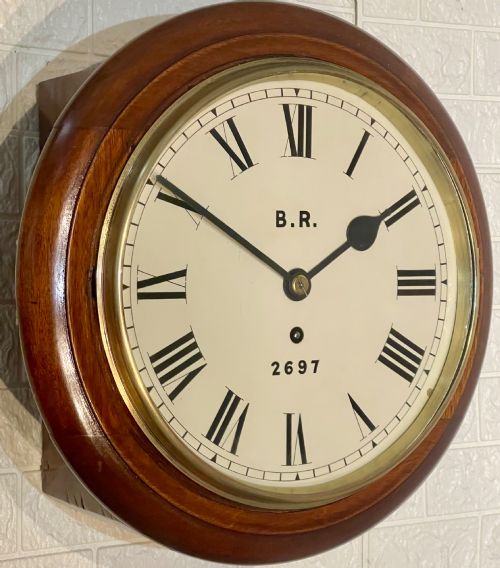
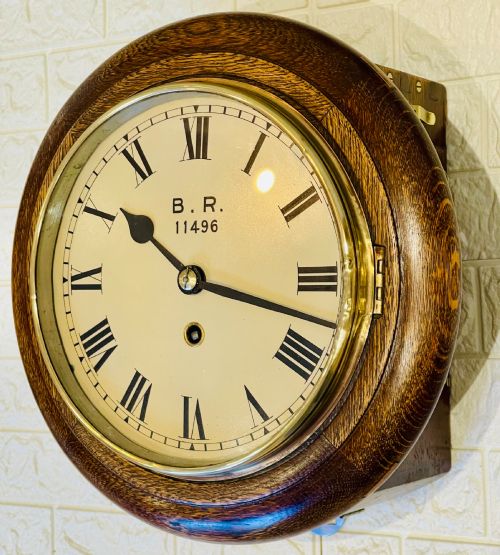
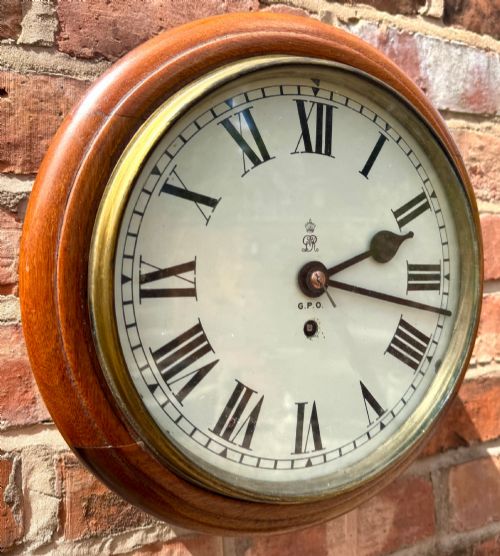
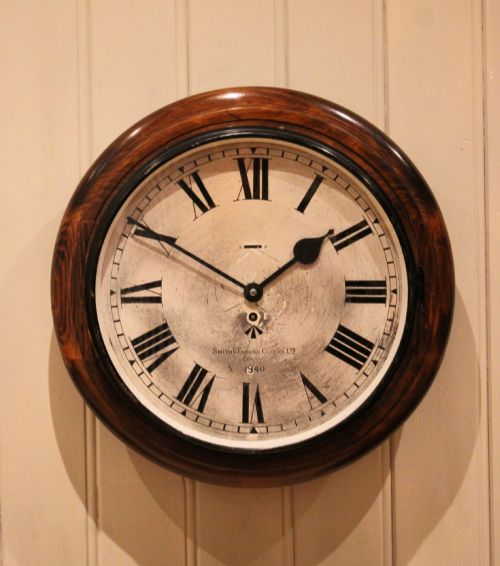
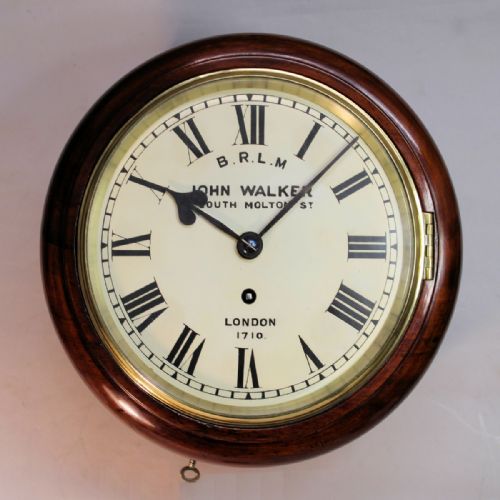
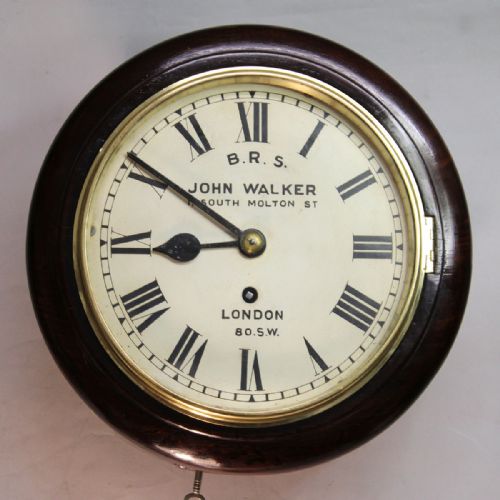
A fusee railway clock is a wall-mounted timepiece utilised by train operators and postal services to regulate timetables accurately. These clocks employ a fusee movement to ensure steady power delivery to the escapement.
They typically feature sturdy wooden cases in oak or mahogany with clear painted dials for visibility across busy station platforms and offices.
How do I wind an antique clock?
Winding requires a matching key inserted into the winding holes on the dial face, turning gently until resistance is felt. Care should be taken not to overwind the mainspring.
Most eight-day movements require attention once a week, while fusee timepieces should be handled according to their specific weight or spring configuration.
Where were wall clocks used?
Wall clocks served in railway stations, signal boxes, post offices, government mess rooms, and factories across Britain. They provided reliable time synchronisation for staff and the public.
Domestic hallways and libraries also housed smaller dial clocks and banjo barometers for everyday household scheduling.
How do I identify the period?
Period identification relies on case styles, materials, dial signatures, and movement construction methods. Georgian and Victorian examples frequently feature hand-carved wood and brass fusee movements.
Twentieth-century pieces introduce materials like bakelite and chrome, alongside electric movements from manufacturers active in the 1920s and 1930s.