
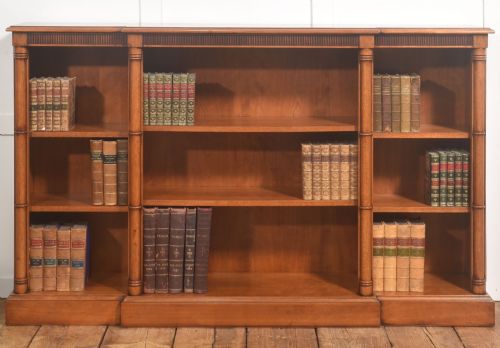
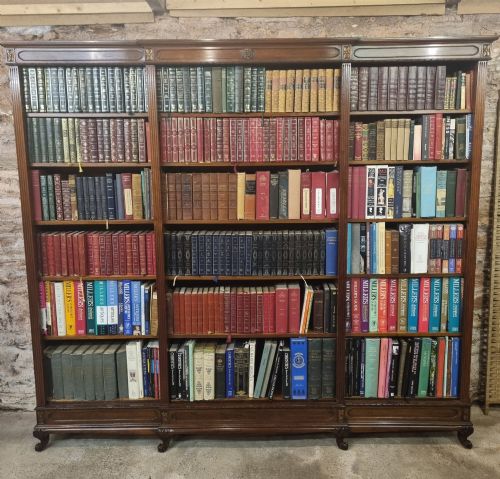
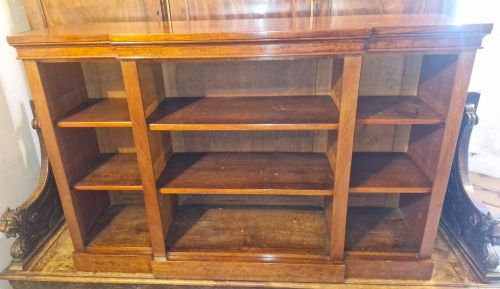
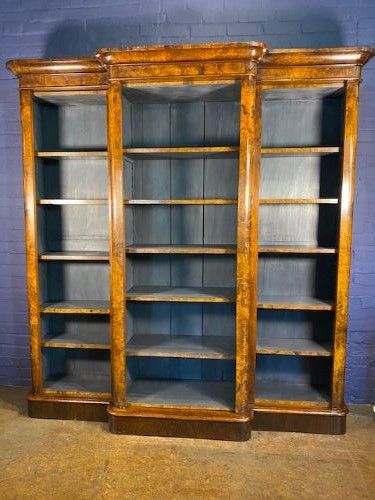
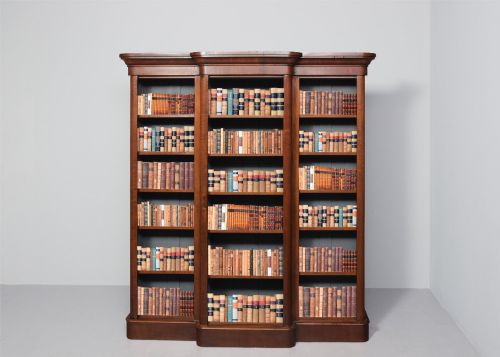
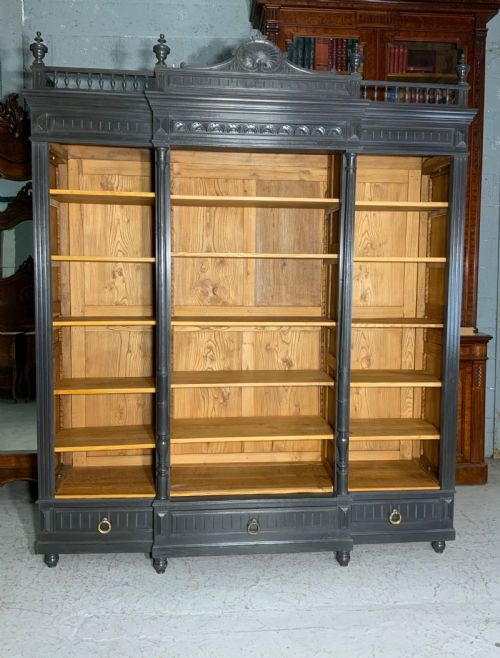
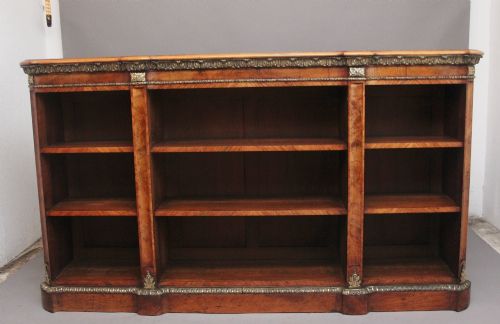
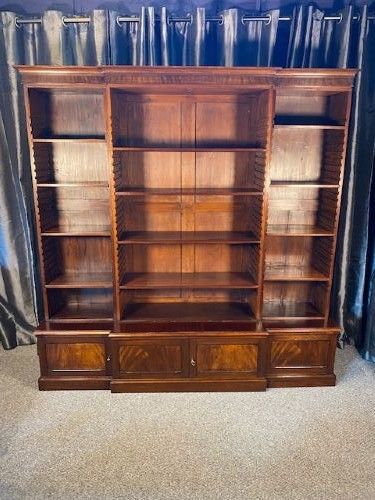
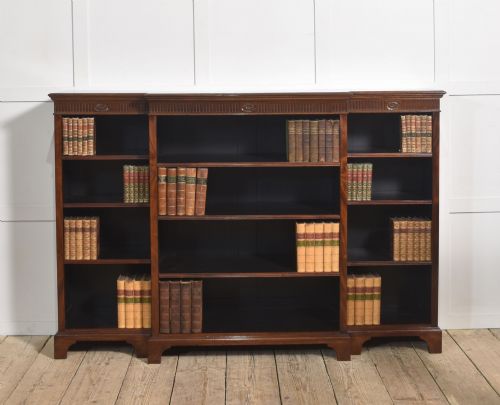
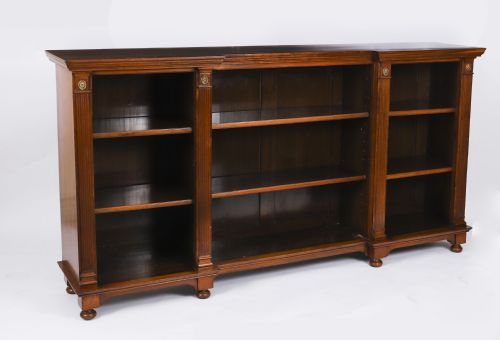
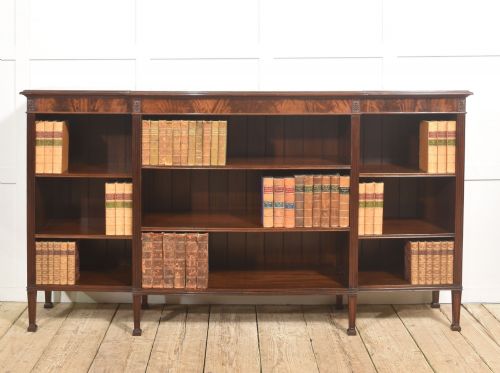
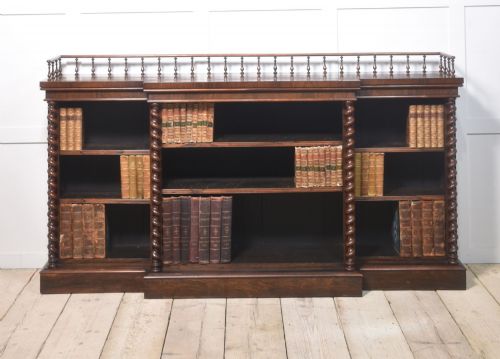
Breakfront Open Shelving
Breakfront open shelving brings commanding scale and structured display to a room, offering immediate architectural presence and accessible storage for large libraries.
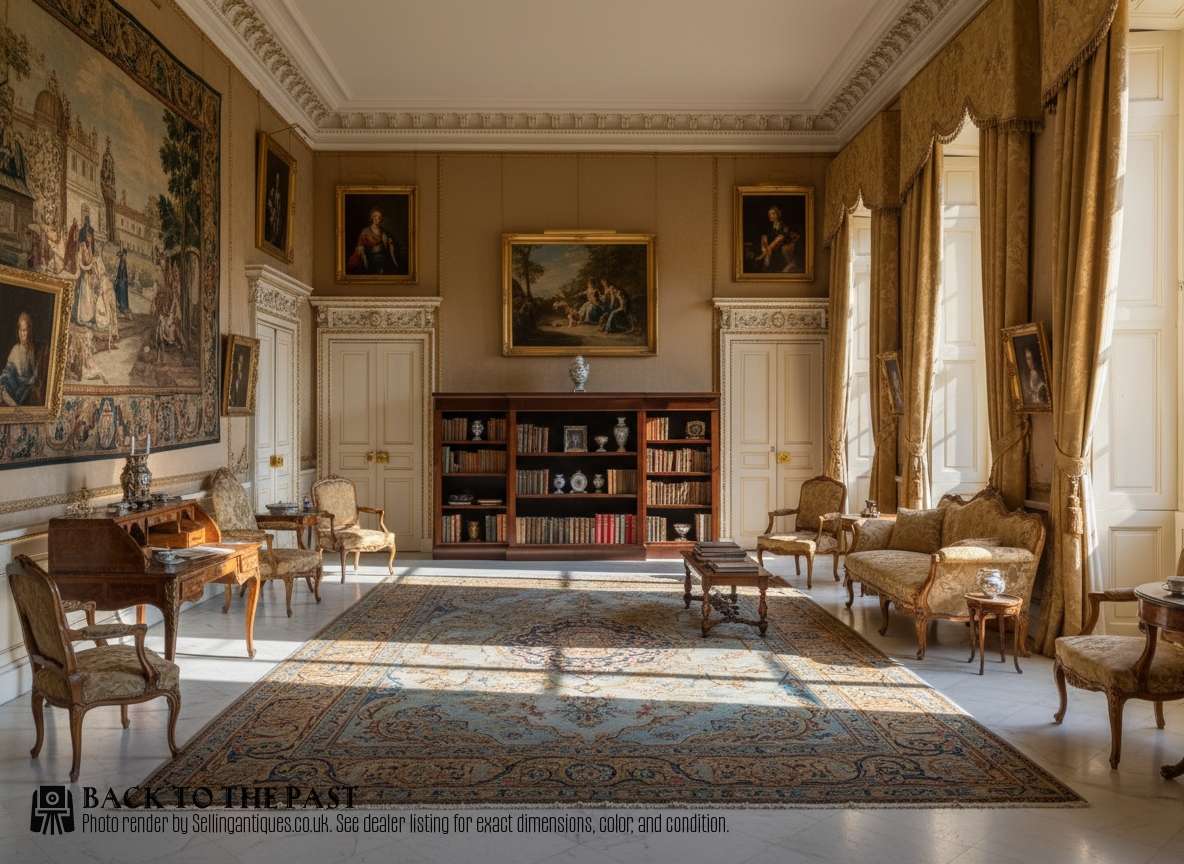
Breakfront Open Shelving
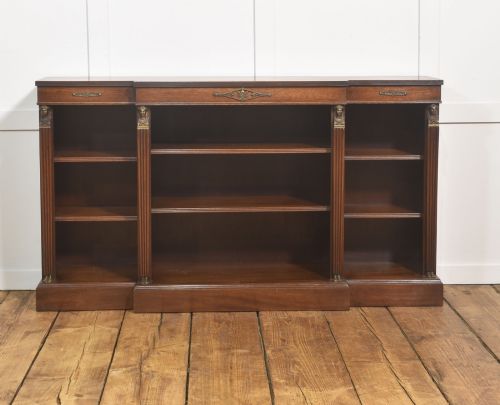
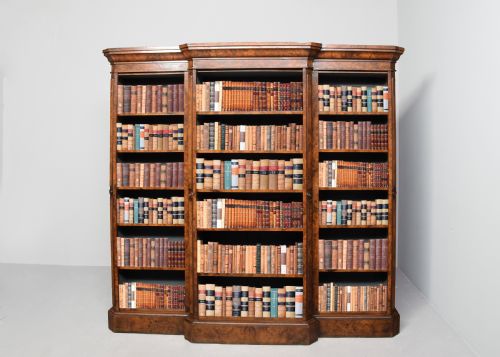
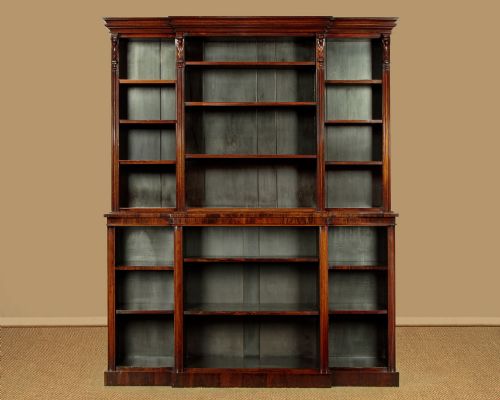
Breakfront open shelving comprises bookcases and cabinets featuring a central section that projects forward from the flanking wings, creating a pronounced architectural rhythm. When searching for breakfront open shelving, buyers encounter substantial pieces designed to anchor a substantial room or library.
The prevailing forms on this page span the nineteenth century through the Edwardian period, manifesting primarily as mahogany, walnut, and rosewood bookcases. These pieces often incorporate adjustable shelves, accommodating varied collections while maintaining the signature tiered facade.
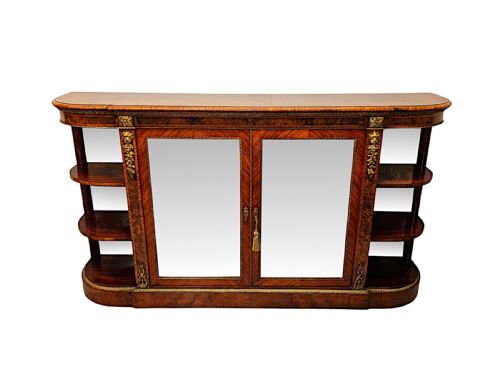
Origins stretch from Regency and Victorian iterations to later Edwardian and revival interpretations, showing how cabinetmakers adapted the recessed and projecting frontal planes across generations. Buyers meet both large library bookcases and lower credenzas built with open fronts rather than glazed doors.
Markers of Quality
Quality rests upon the selection and matching of timber veneers, where highly figured burr walnut or flame mahogany creates a coherent visual movement across the projecting central section and the recessed wings. Finer examples display meticulous grain continuity rather than mismatched timber segments.
The integration of cast ormolu mounts and brass details indicates higher workshops, showing crisp chasing and secure placement without clumsy fixings. Adjustability mechanisms for the shelves and the precision of the tripartite breakfront carcass define the standard of manufacture.
Bookcases with adjustable shelves quietly endure centuries of changing reading habits.
JOHNSTONE AND JEANES·Gillows·Robert Strahan
The Breakfront Open Shelving Glossary
- Breakfront
- A cabinet design where the central section projects forward from the recessed left and right wings. This architectural layout creates depth and shadow on a wall.
- Ormolu
- Gilt bronze mounts applied to furniture for decorative contrast. It adds metallic lustre to timber surfaces.
- Burr Walnut
- Timber taken from a walnut tree growth, yielding highly swirled and circular grain patterns. Cabinetmakers prize this wood for formal veneer work.
- Crossbanding
- A border strip of veneer laid perpendicular to the surrounding grain. It frames panels and shelves with a contrasting wooden band.
Breakfront Open Shelving: Frequently Asked Questions
How do I style open shelving?
Open shelving allows for the prominent display of large book collections and decorative objects without the visual barrier of glass doors. Group books by height and colour to maintain order.
Leave small pockets of space around objects to prevent the shelves from looking cluttered, letting the mahogany or walnut timber frames remain visible.
How do I date these bookcases?
Dating relies on timber selection, hardware, and stylistic traits aligned with periods like Regency, Victorian, and Edwardian. Regency pieces lean toward classical mahogany and rosewood forms.
Victorian and Edwardian examples frequently utilise burr walnut veneers, brass ormolu mounts, and adjustable shelving systems characteristic of nineteenth-century manufacturing.
Are the shelves adjustable?
Many examples on this page are explicitly noted as having adjustable shelves, offering flexibility for volumes of varying heights. This feature accommodates tall folios alongside standard octavos.
Traditional ratchets or wooden support strips inside the carcass allow owners to reposition shelves without altering the primary structure.