

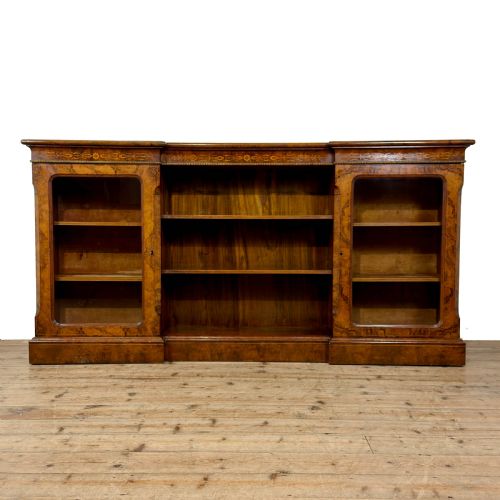
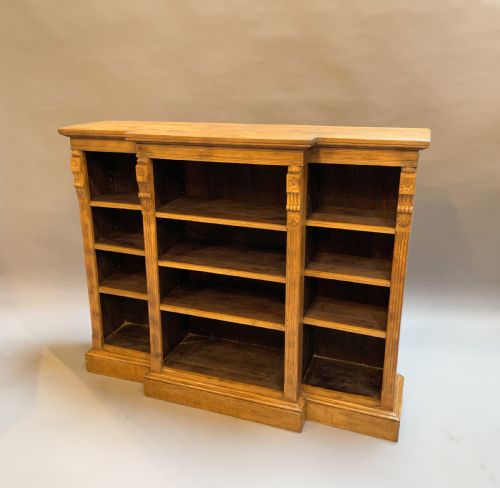
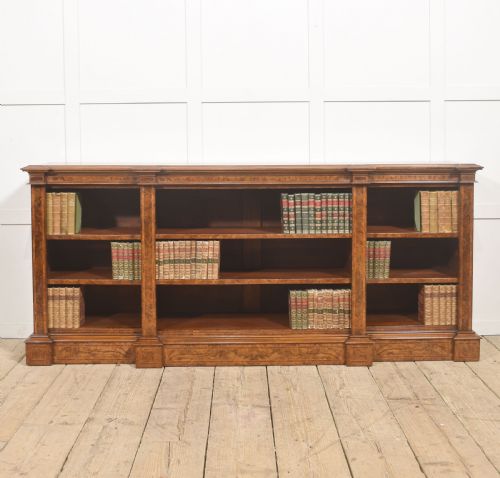
Breakfront Open Bookcase
A breakfront open bookcase delivers architectural presence and immediate shelf access, framing a room's library with confident proportion.
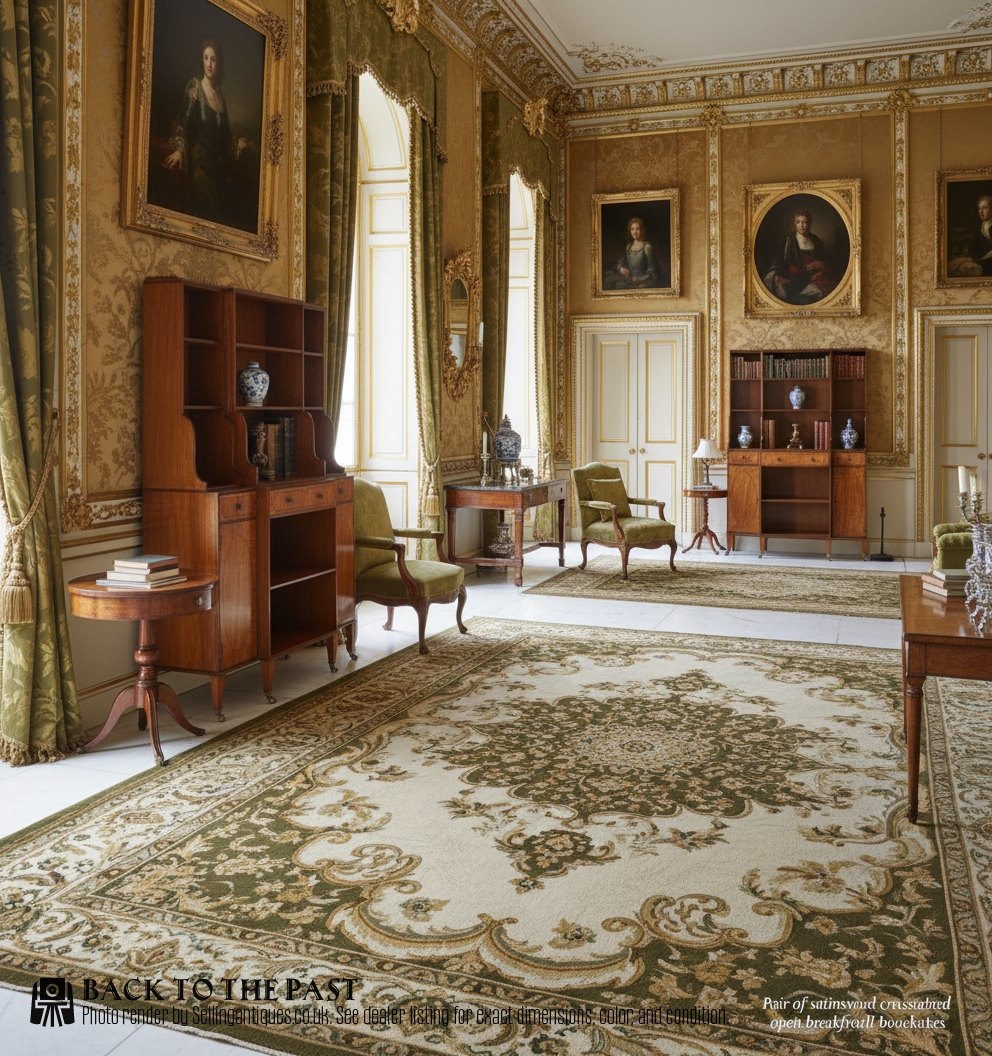
Defining the Breakfront Open Bookcase
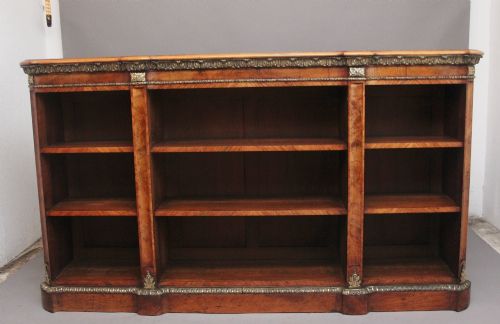
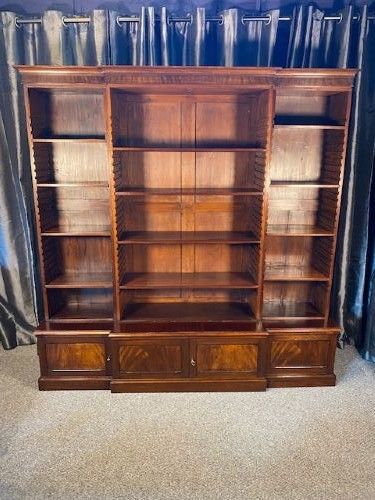
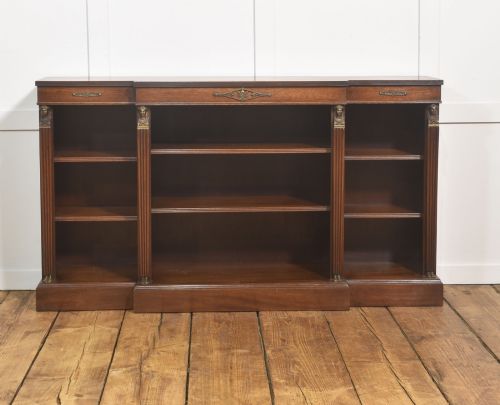
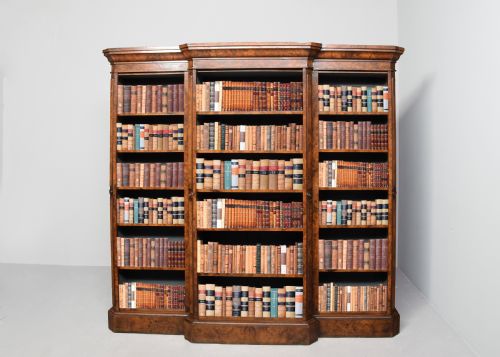
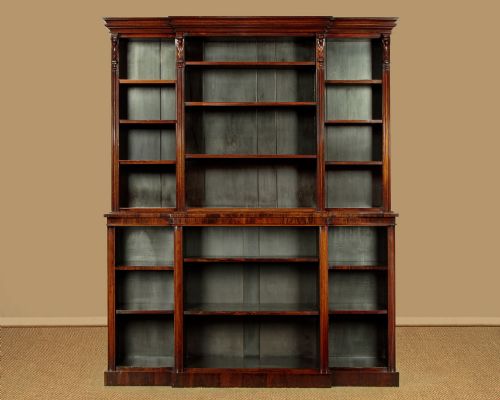
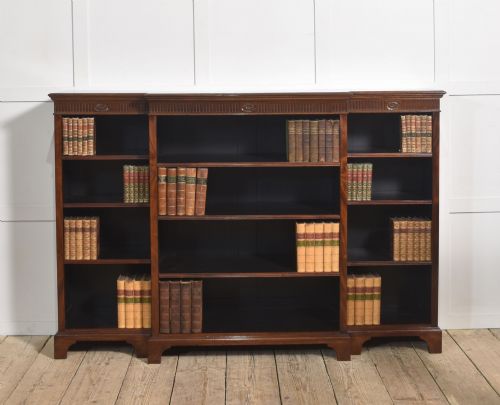
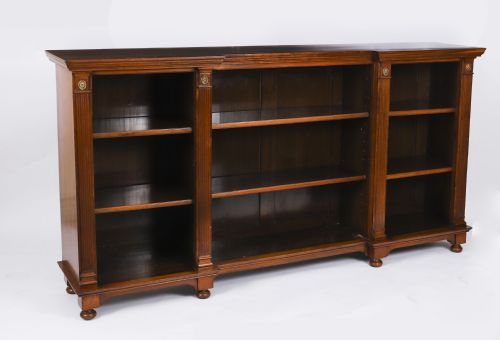
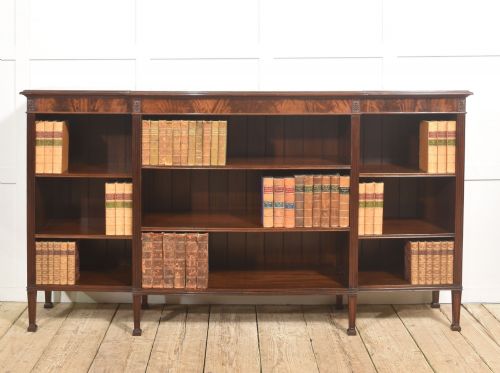
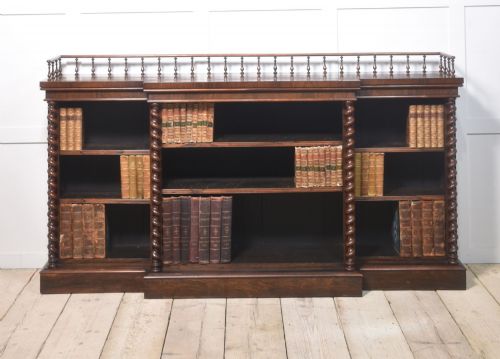
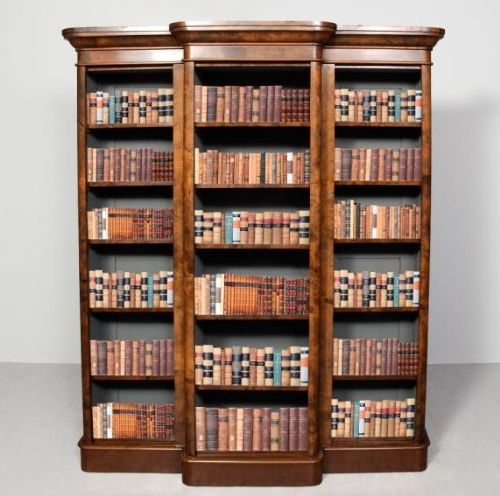
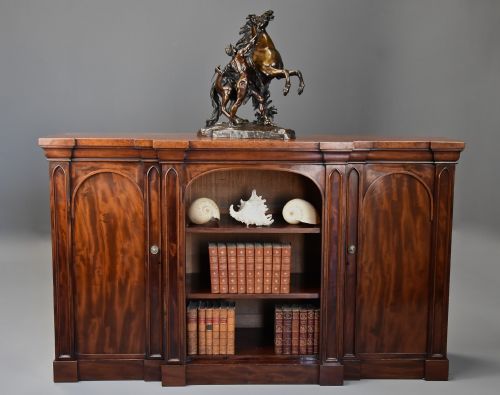
A breakfront open bookcase stands as a commanding piece of furniture defined by its projecting central section, which creates depth and visual rhythm against a wall. When you search for a breakfront open bookcase, you encounter pieces primarily from the nineteenth century and the Victorian era, alongside early twentieth-century examples.
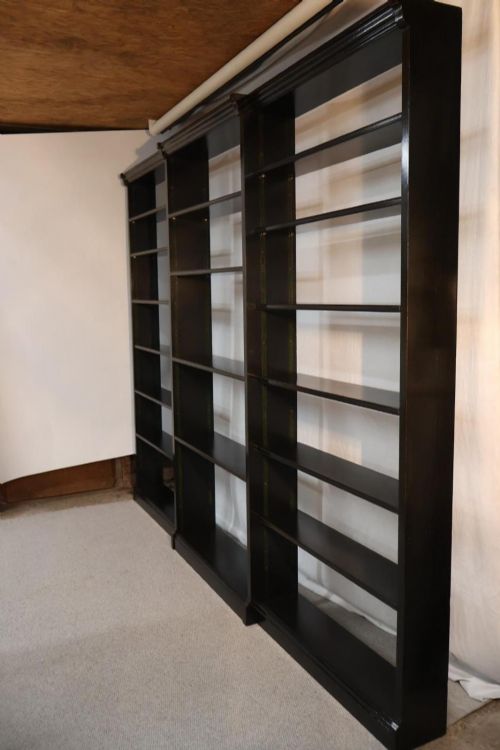
The layout typically divides into three distinct sections, often housing adjustable shelves to accommodate volumes of varying heights. Mahogany forms the backbone of these listings, though substantial numbers appear in burr walnut, rosewood, oak, and satinwood.
Most examples lean towards the grand scale, designed originally for substantial libraries, drawing rooms, and studies. Dwarf or low versions also surface, offering surface display space alongside open shelf storage.
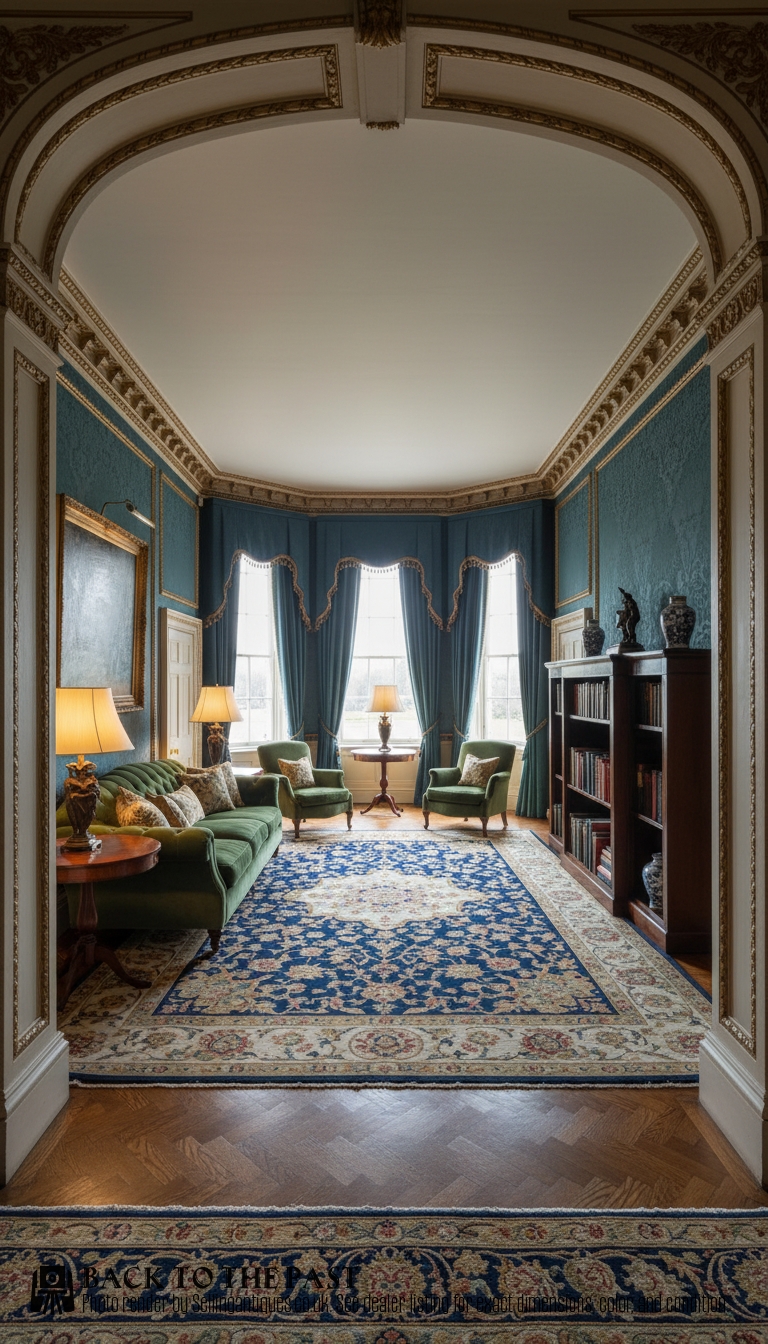
Distinctions in Quality
The hierarchy of quality rests primarily on timber selection and the ambition of the architectural detailing. Pieces featuring meticulously matched burr walnut veneers, intricate boxwood marquetry, and substantial cast ormolu mounts sit firmly at the upper end of the scale.
Proportion and the handling of the three-section breakfront profile dictate visual success, separating standard utilitarian library shelving from pieces commissioned for principal reception rooms. Refined touches like fine satinwood banding and crisply moulded cornices elevate the execution of the design.
Retail Price Guide 2026
Typical UK retail prices for breakfront open bookcase, calculated from the Sellingantiques database of over a million retail prices indexed since 2003. This retail price guide relies exclusively on Sellingantiques data; no external sources or auction records are used, so the figures do not describe the wider market.
Periods represented range from the grand Regency era through mid and late Victorian up to Edwardian times.
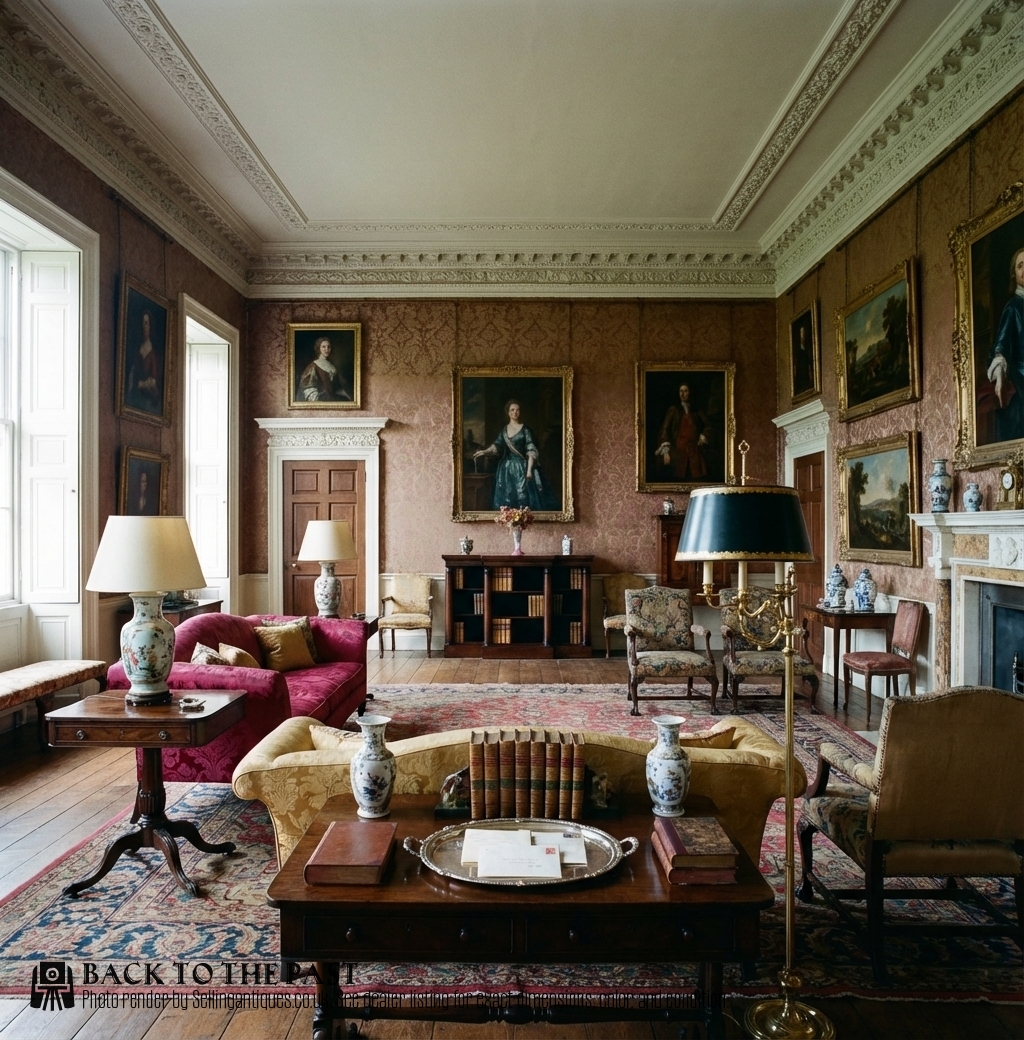
Johnstone and Jeanes
The Breakfront Open Bookcase Glossary
- Breakfront
- An architectural facade where the central section projects forward from the flanking wings. This configuration breaks up a long flat wall and adds depth to large case furniture.
- Burr Walnut
- A highly prized wood taken from the wart-like growths on walnut trees, yielding swirling, organic patterns. It was favoured by nineteenth-century cabinet makers for luxury veneers.
- Ormolu
- Gilt bronze ornamentation applied to furniture, popular in high-end nineteenth-century pieces. It provides bright metallic contrast against dark woods like walnut and rosewood.
- Crossbanding
- A decorative border technique where strips of veneer are laid perpendicular to the grain of the main surface. It frames panels and shelves with a clean, linear edge.
- Dwarf Bookcase
- A low bookcase designed to sit below window height, leaving wall space above for pictures. These versions often incorporate marble tops or serve secondary sideboard functions.
Frequently Asked Questions
What is a breakfront open bookcase?
It is a large bookcase featuring a central section that projects forward from the side wings, with open shelves rather than glazed doors. This design creates architectural depth and allows immediate access to book collections.
The form gained immense popularity during the Victorian period, serving as a focal point in substantial libraries and reception rooms where ease of book retrieval mattered.
How do I date a Victorian bookcase?
Dating relies on identifying timber choices, construction methods, and stylistic markers such as the presence of burr walnut, marquetry inlay, or heavy architectural cornices. Mid-nineteenth century pieces often show dense mahogany or rosewood, whilst later decades leaned towards walnut with boxwood stringing.
Examining the secondary woods inside and the style of the adjustable shelf mechanisms also helps narrow the manufacturing window.
Are the shelves adjustable?
Most traditional examples incorporate adjustable shelving systems to accommodate books of varying heights. Early mechanisms often utilised traditional wooden bearer strips or brass notches.
This adaptability makes these pieces practical for modern libraries, allowing you to reconfigure shelf heights for oversized volumes or display objects.
Where should I place a large bookcase?
These grand pieces require substantial wall space and benefit from placement in high-ceilinged rooms where their architectural proportions can breathe. Avoid positioning them in direct sunlight to protect sensitive timber veneers like rosewood and burr walnut.
Pairing them with low seating creates a traditional library atmosphere suitable for studies and drawing rooms.