

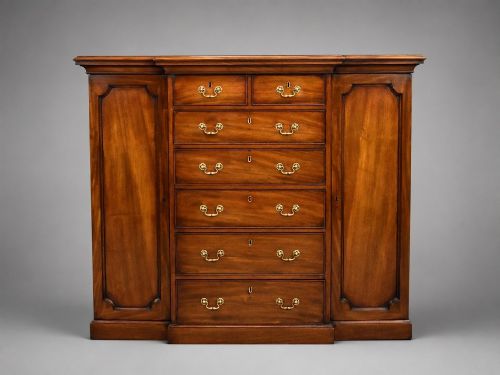


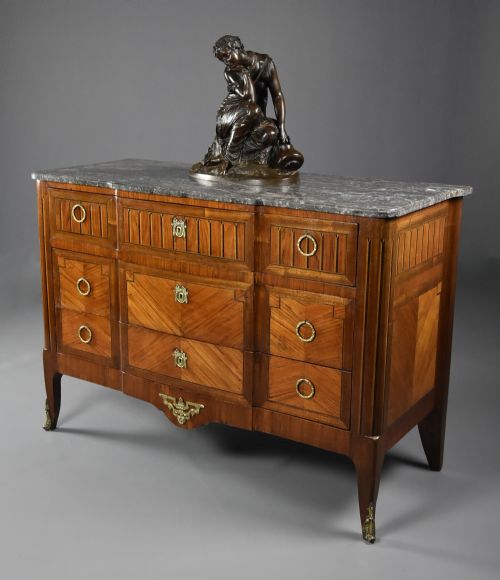


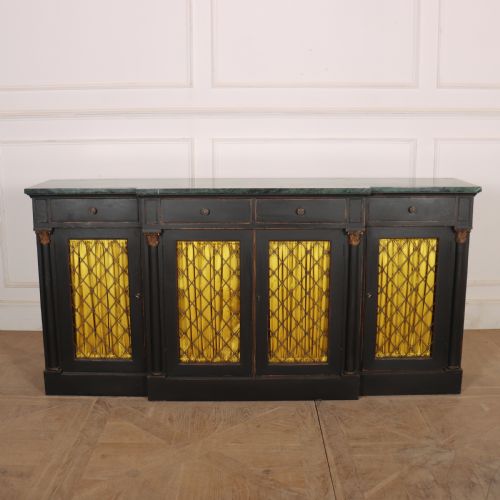


Breakfront Dresser Sideboard
A breakfront dresser sideboard brings architectural presence to a room, offering deep storage and a forward-projecting centre.
Breakfront Dresser Sideboard
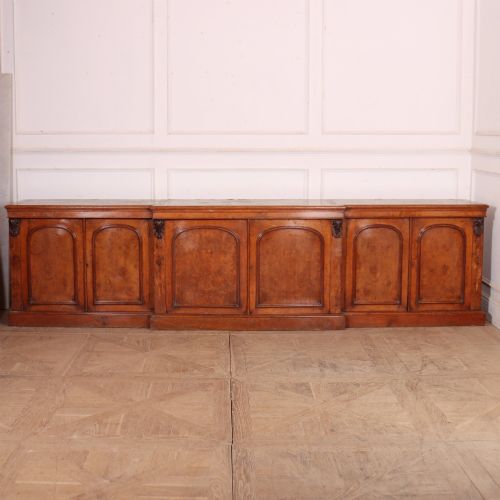
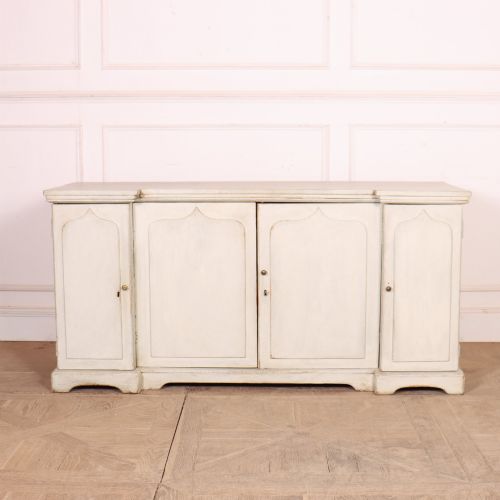
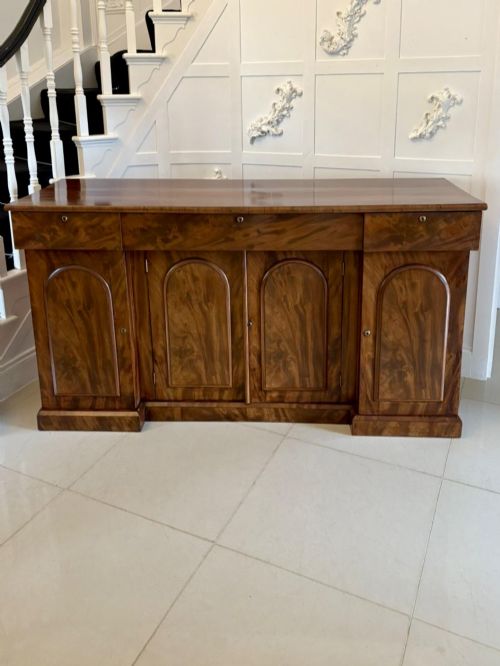
A breakfront dresser sideboard combines the extended surface of a large storage unit with a stepped, projecting central section that breaks the linear run. These substantial items serve dining rooms and hallways, drawing the eye through their prominent proportions and rhythmic front elevation.
The pieces appearing in this category span the eighteenth century, the Victorian era, and the early twentieth century, taking forms such as oak dresser bases, mahogany sideboards, and walnut commodes. Regional Welsh variants and continental pieces sit alongside English country and revival styles, bringing varied depths and cupboard arrangements to the search phrase.
How they were made
Cabinet makers constructed these units predominantly from timbers like oak, mahogany, walnut, and tulipwood, frequently employing figured veneers to accentuate the primary surfaces. Solid oak and mahogany form the carcasses of earlier Welsh and English examples, while later iterations incorporate burr walnut and exotic woods.
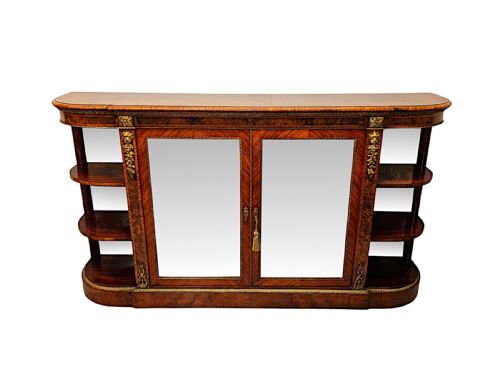
Secondary materials provide structural contrast and functional detail, ranging from brass mounts and ormolu to marble tops and glass panels. Joinery techniques unite the projecting central breakfront sections with flanking cabinets and drawers, supported by panelled doors and fitted interiors.
Housekeepers once relied on these deep drawers to store table linens without folding them into awkward creases.
What varies in quality
The refinement of timber selection largely dictates the standing of an individual piece, visible in the grain matching of figured mahogany, burr walnut, or tulipwood. Superior examples display carefully chosen veneers that wrap coherently across the stepped facade without awkward interruptions.
Execution of secondary elements, such as ormolu mounts, brass hardware, and original marble tops, separates standard production from exceptional cabinet work. Maker attribution, through stamps or distinct workshop characteristics, further distinguishes notable pieces within the category.
Gillows·Liberty of London·Howard and Sons·Maple and Co
The Breakfront Dresser Sideboard Glossary
- Breakfront
- A cabinet design where the central section projects forward from the flanking wings. This architectural arrangement creates depth and shadow along the front facade.
- Dresser base
- The lower portion of a dresser, comprising cupboards and drawers without the upper plate rack. These surfaces function independently as sideboards or serving tables.
- Commode
- A low cabinet or chest of drawers, often applied to continental European forms. They frequently feature marble tops and decorative veneer work.
- Credenza
- A sideboard or buffet cabinet typically lacking legs, sitting close to the floor. The term often denotes continental or revival pieces with rich decorative mounts.
- Ormolu
- Gilded bronze applied as decorative mounts on furniture. It accents corners, panels, and framing elements on finer nineteenth-century pieces.
Breakfront Dresser Sideboard: Frequently Asked Questions
What is a breakfront sideboard?
A breakfront sideboard is a large storage unit featuring a central section that steps forward from the flanking cupboard sections. This construction breaks the long horizontal line of the furniture to create architectural depth.
Cabinet makers utilised this stepped form across eighteenth-century Georgian designs and Victorian revival pieces to create impressive focal points in dining rooms.
Where were these dressers made?
These pieces originate from English workshops, Welsh rural areas, and continental European centres including France and Austria. Welsh examples often utilise local oak, whilst Parisian and continental pieces favour walnut, tulipwood, and marble tops.
Regional variations appear in the drawer arrangements and timber choices, reflecting local vernacular traditions and changing international tastes across the eighteenth and nineteenth centuries.
How do I style a sideboard?
A sideboard provides a substantial surface that suits placement against a dining room or hallway wall. The deep top surface accommodates lamps, serving items, or decorative displays while the internal cupboards conceal tableware.
Pairing these large wooden units with contrasting walls allows the figured mahogany, oak, or walnut grain to stand out within the interior space.
How do I date a sideboard?
Dating relies on observing the primary timbers, construction methods, and stylistic revival markers present in the piece. Georgian and early nineteenth-century examples often feature solid oak or flame mahogany with hand-cut dovetails, while Victorian and later pieces introduce heavier mouldings or exotic veneers.
Stamped signatures from makers like Gillows or Maple and Co provide precise attribution when present on the timber framework.