

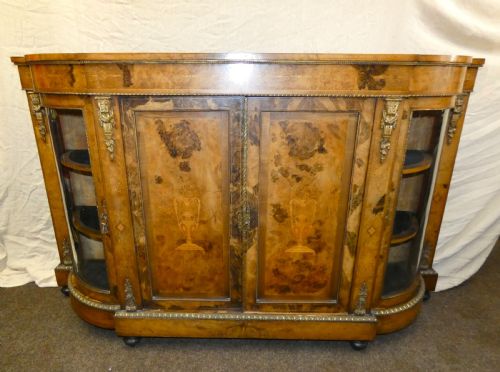


Breakfront Display Shelving
Breakfront display shelving brings architectural dignity to a room, offering generous proportions and distinct recessed central sections designed for serious book collections.
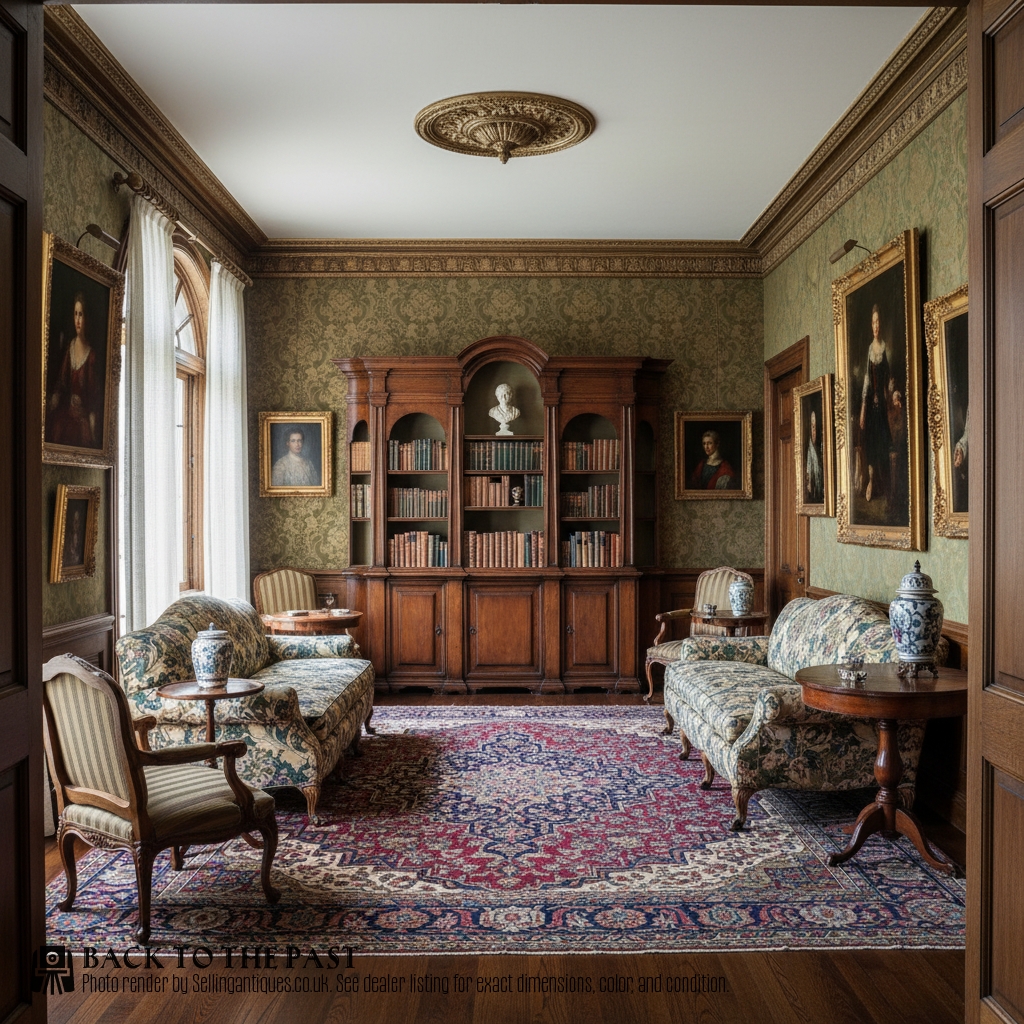
Breakfront Display Shelving
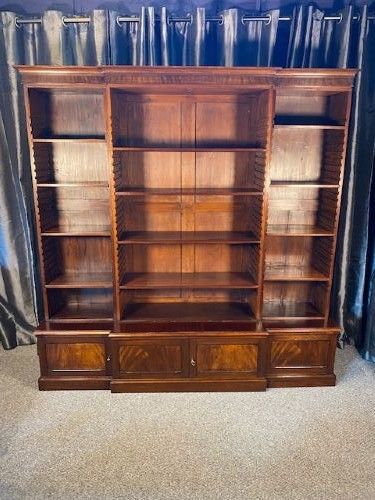
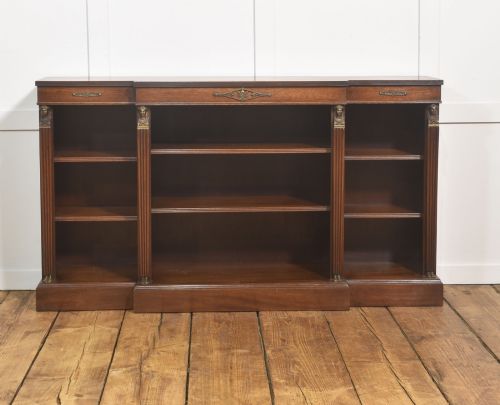
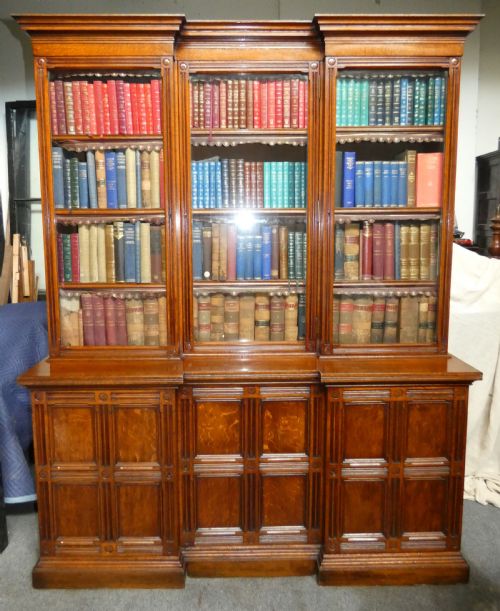
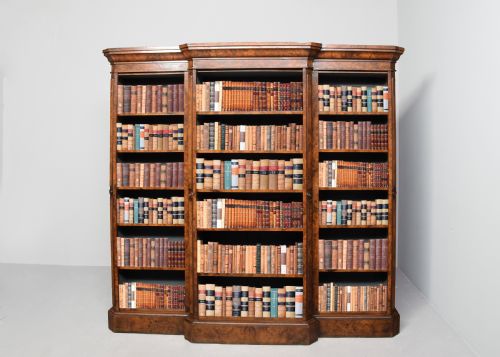
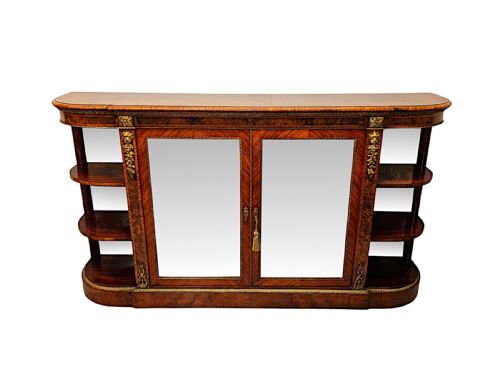
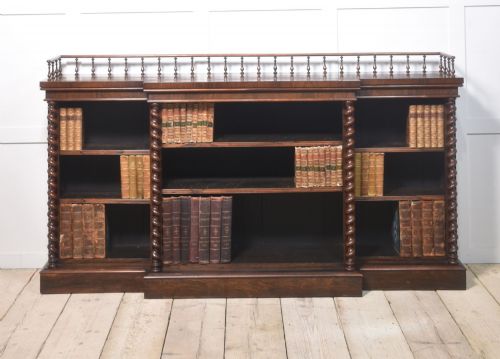
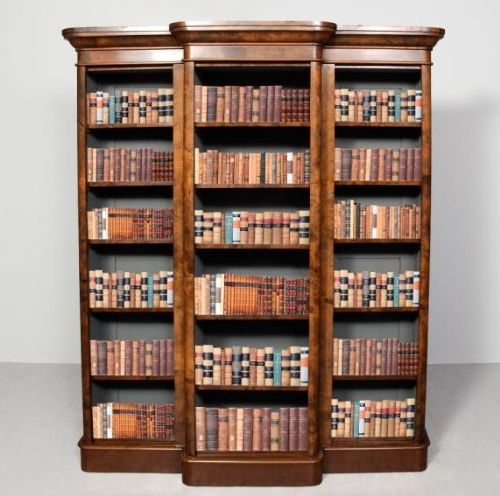
Breakfront display shelving comprises large bookcases and credenzas featuring a central section that projects forward from the flanking wings. These pieces span several centuries of design, with the selection dominated by nineteenth century and Victorian examples alongside Regency and Edwardian interpretations.
How these pieces were constructed
Cabinetmakers utilised rich timber veneers including mahogany, burr walnut, rosewood and oak over substantial carcases. Decorative enrichment was achieved through inlaid marquetry, brass mounts, gilt metal and ormolu details.
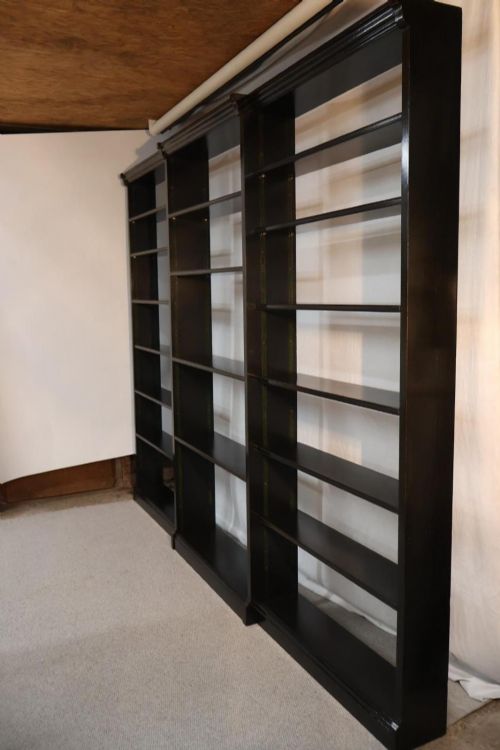
Interior functionality relied on adjustable wooden shelving systems housed within multi-section configurations, while structural prominence came from the stepped forward-facing central section characteristic of the breakfront format.
The listings span periods from the eighteenth century through to the nineteen twenties, featuring oak, mahogany, walnut and rosewood.
Distinctions in quality
Quality rests upon the choice of primary timber and the selection of figured veneers such as burr walnut or rosewood. Finer pieces demonstrate precision in the brass or ormolu mounts and subtlety in the carved wooden detailing.
Internal engineering marks the superior examples, particularly the smooth adjustment mechanisms of shelves and the integrity of multi-section carcase construction designed to support heavy volumes.
Gillows·Robert Strahan
The Breakfront Display Shelving Glossary
- Breakfront
- A cabinet design where the central section projects forward from the flanking end sections. This architectural arrangement creates visual depth and rhythmic division across large library walls.
- Credenza
- A low cabinet form frequently fitted with doors or open display space. In these listings, they appear alongside bookcases with similar timber and mount detailing.
- Ormolu
- Gilded bronze ornamentation applied to furniture carcases. It provides metallic contrast against dark timbers like mahogany and rosewood.
- Burr walnut
- Timber harvested from walnut tree growths, valued for its swirling, highly figured grain pattern. Cabinetmakers utilised it on primary display surfaces for decorative impact.
Breakfront Display Shelving: Frequently Asked Questions
How do I style breakfront shelving?
These large bookcases anchor a principal reception room or library, requiring substantial wall space to display their architectural lines.
Arrange books and decorative objects across the adjustable shelves, balancing dense rows of volumes with decorative ornaments.
Are the shelves adjustable?
Many of the nineteenth century and Victorian library bookcases feature functional adjustable shelving systems. This allows the internal height to accommodate volumes of varied dimensions.
Check individual listings for specific shelf configurations and section counts.
What woods were used?
Cabinetmakers constructed these pieces primarily in mahogany, walnut, rosewood and oak. Decorative surfaces often showcase figured burr walnut veneers.
Metal mounts in brass, gilt metal and ormolu frequently accent the timber frames.
How do I identify a Regency piece?
Regency and Regency style pieces draw on classical architectural motifs, typically executed in rich mahogany or rosewood. They display clean structural lines and restrained ornamentation.
Look for proportion and timber selection typical of the early nineteenth century.