
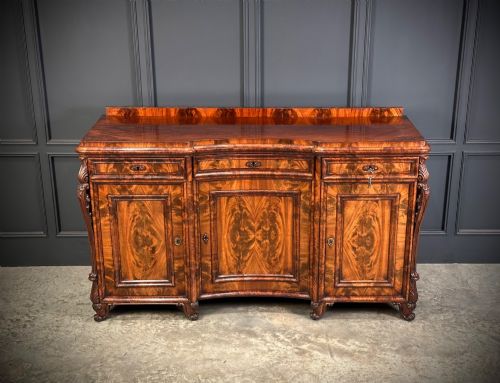
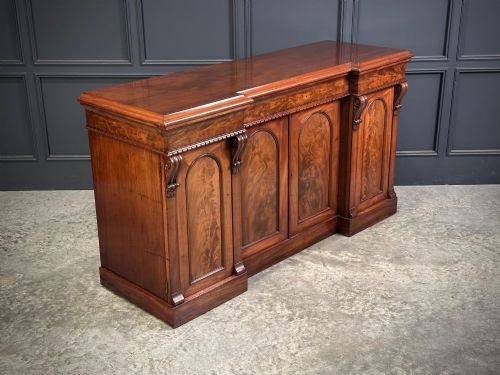
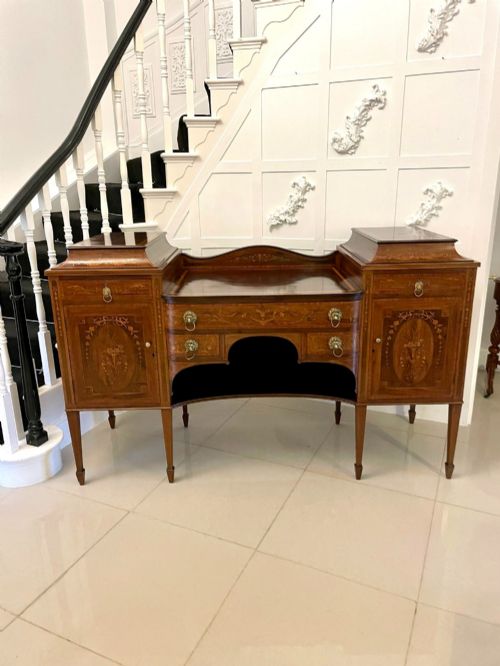
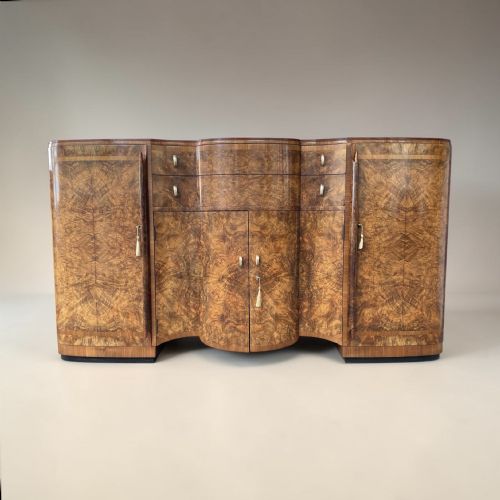
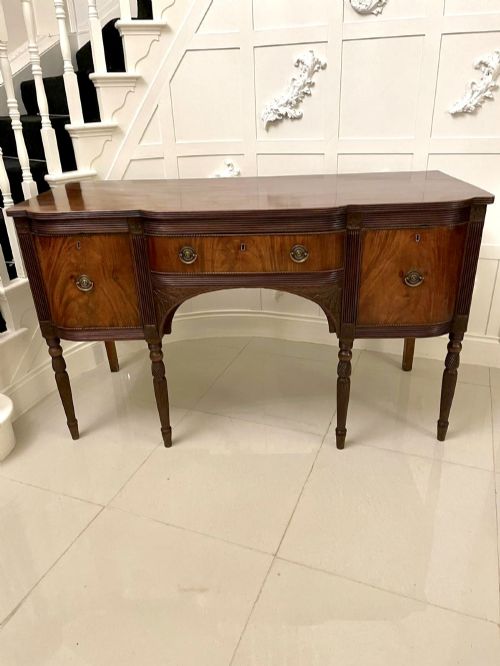
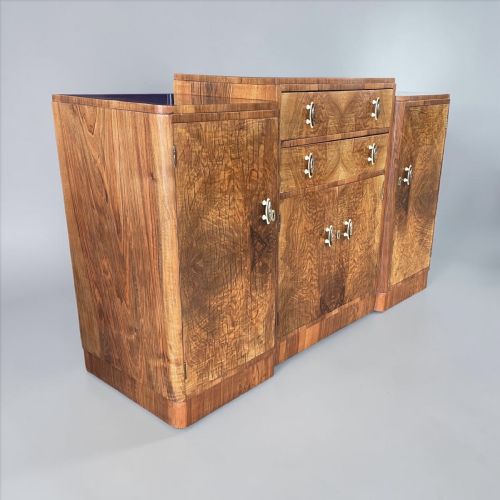
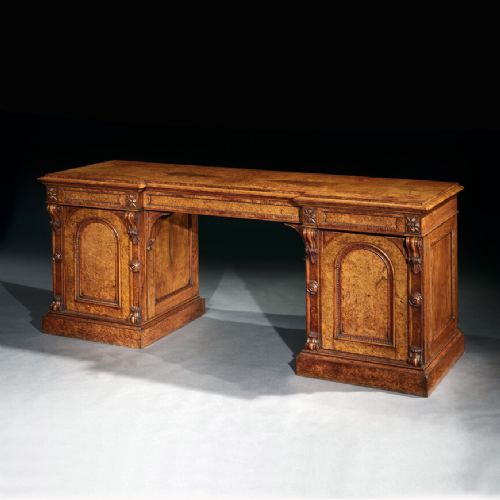
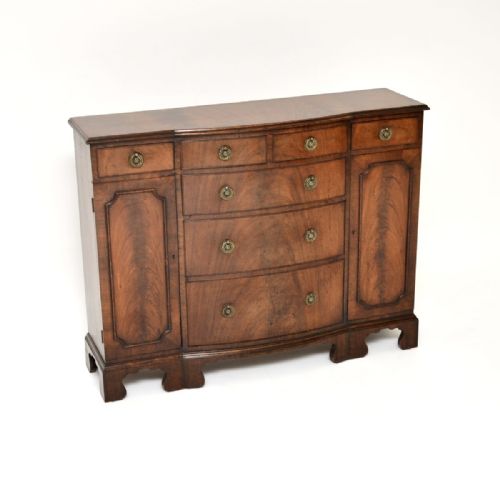
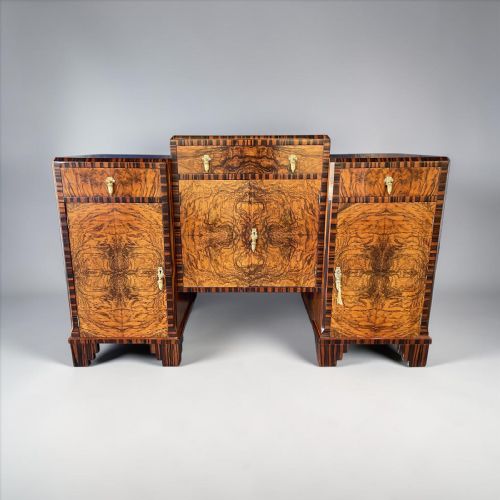
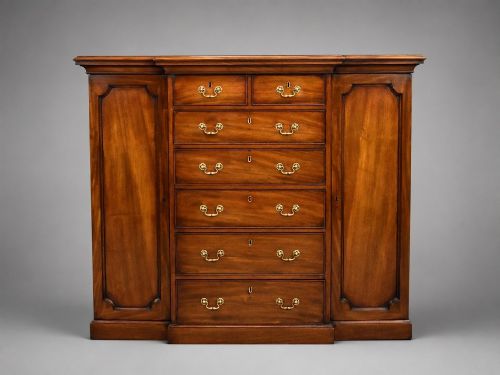
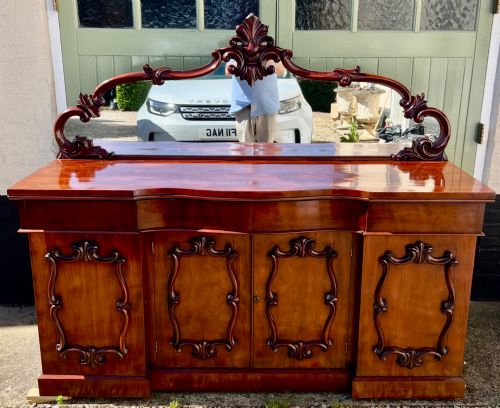
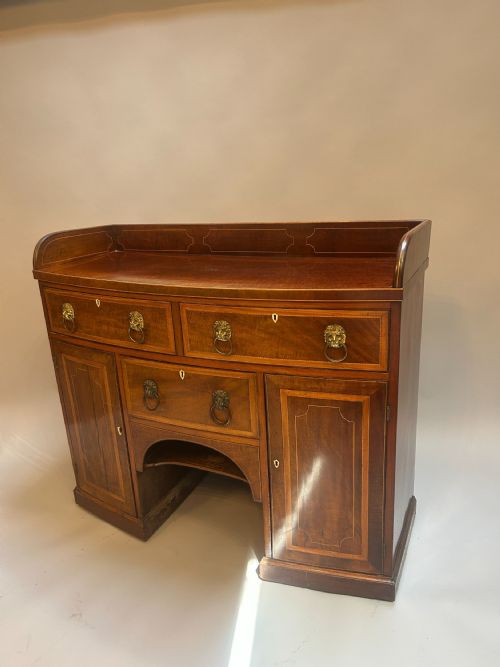
Breakfront Dining Sideboard
A breakfront dining sideboard is a substantial timber cabinet designed for the dining room, offering commanding presence and generous storage.
Breakfront Dining Sideboard
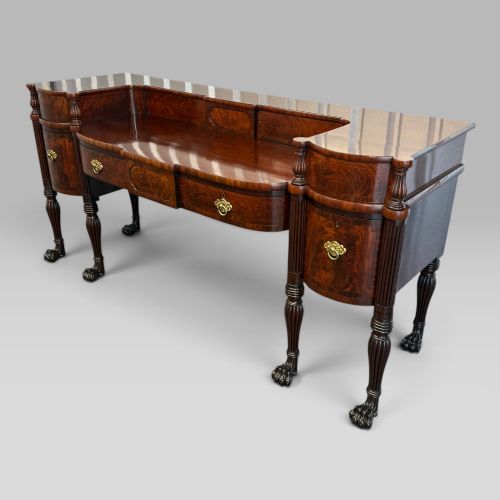
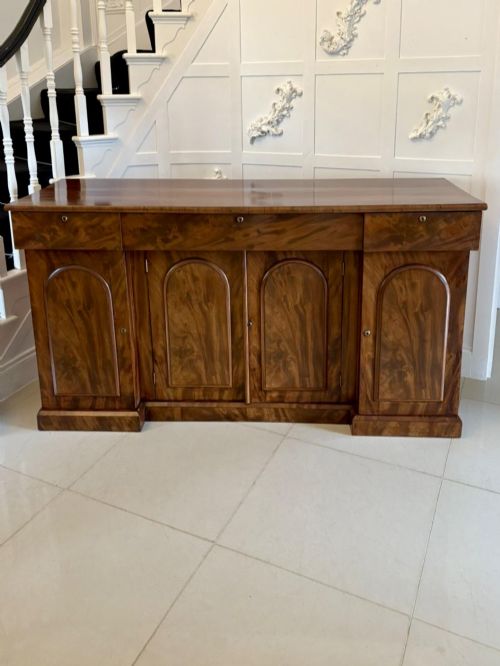
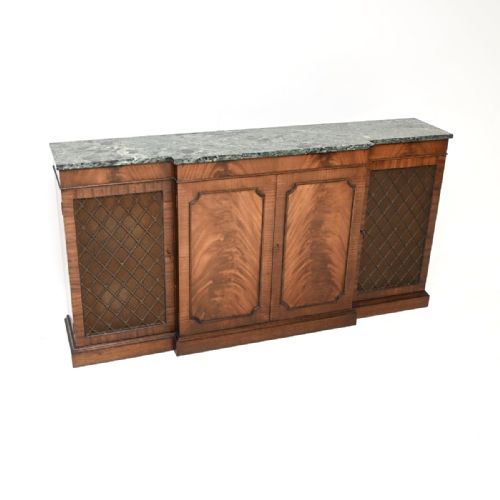
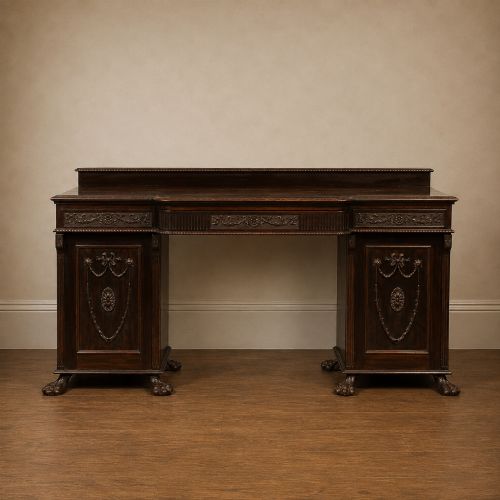
A breakfront dining sideboard projects forward in its central section, creating a stepped facade that breaks the long line of the cabinet. These pieces emerge in Georgian, Regency, and Victorian periods, extending through to Edwardian and Art Deco revivals.
Makers construct these sideboards in mahogany, flame mahogany veneer, walnut, burr walnut, rosewood, and oak, often incorporating multiple doors, brass mounts, and inlaid marquetry.
The selections span from strict George III and Regency designs to ornate Victorian interpretations and streamlined Art Deco variations, providing numerous configurations for modern dining spaces.
Judging execution
Quality rests in the selection of timber veneers and the precision of the cabinetmaker's joinery, where matched grain patterns across multiple doors indicate careful planning.
Superior examples exhibit crisp carving on details such as paw feet and mouldings, alongside well-fitted internal drawers and substantial brass hardware that complements the timber tone.
Listings feature mahogany, burr walnut, rosewood, and oak, spanning periods from George III through to Art Deco.
Hewetsons London·Maurice Adams·Liberty of London
The Breakfront Dining Sideboard Glossary
- Breakfront
- A cabinet design where the central section projects forward from the flanking outer sections. This architectural feature creates depth and shadow across the front of the sideboard.
- Flame mahogany veneer
- A thin slice of timber cut from mahogany where the grain resembles flickering flames. Cabinetmakers apply this to drawer fronts and doors for decorative effect.
- Marquetry
- Elaborate patterns created by fitting together small pieces of coloured wood veneer onto a solid ground. This technique decorates the surfaces of period sideboards.
- Credenza
- A low dining cabinet or sideboard originating in Italy, often featuring glazed or panelled doors. In later British periods, the term overlaps with sideboard and chiffonier designs.
- Chiffonier
- A compact sideboard or cabinet equipped with shelving or a mirror top. These pieces provide additional display space above the main storage surface.
Breakfront Dining Sideboard: Frequently Asked Questions
What is a breakfront dining sideboard?
A breakfront dining sideboard is a large storage cabinet featuring a central section that projects further forward than the sides. It stands in dining rooms to hold tableware and linens.
These pieces range from Georgian mahogany designs to Victorian and Art Deco variations, offering various door configurations and internal drawer arrangements.
How do I date a sideboard?
Dating depends on observing timber choices, hardware styles, and structural characteristics. Georgian and Regency pieces favour solid mahogany and clean lines, whilst Victorian examples often display heavier carving and figured veneers.
Art Deco versions introduce streamlined geometric forms and modernist woods, distinguishing them clearly from earlier nineteenth-century production.
What timber was used?
Mahogany serves as the predominant timber across these sideboards, frequently enhanced by flame mahogany veneer for dramatic grain patterns. Other common woods include walnut, burr walnut, rosewood, and oak.
Inlays incorporate lighter satinwood and ebony details, whilst decorative mounts utilise cast brass.
Where should I place it?
These cabinets suit dining rooms, large hallways, or living spaces where their length and storage capacity function effectively against a principal wall. Ensure adequate clearance for doors and drawers to open fully.
Keep timber furniture away from direct heat sources and strong sunlight to protect the polished surface and natural veneers.