
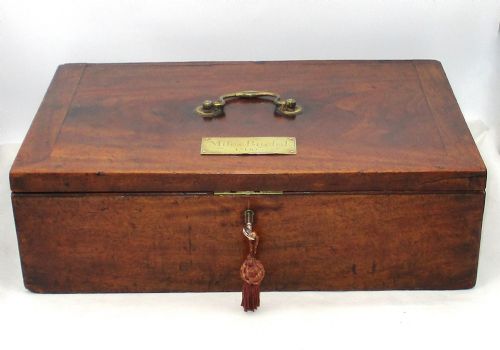
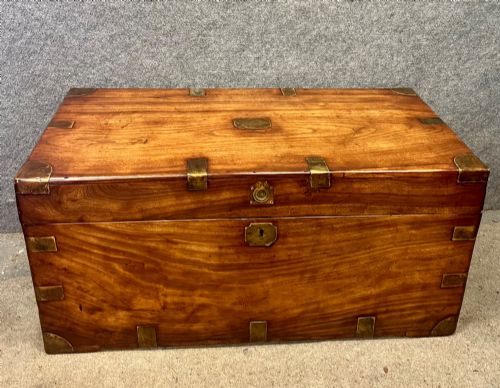
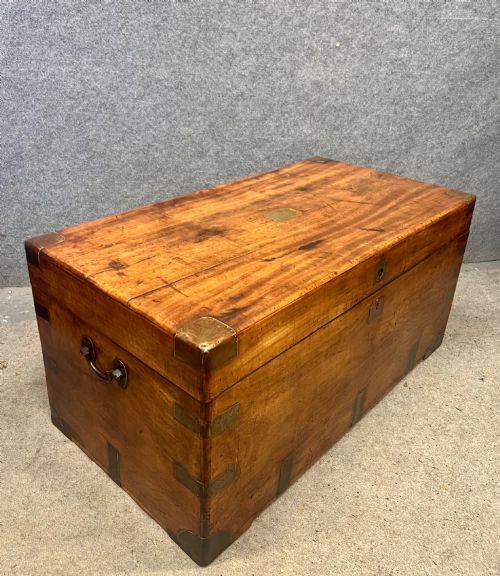
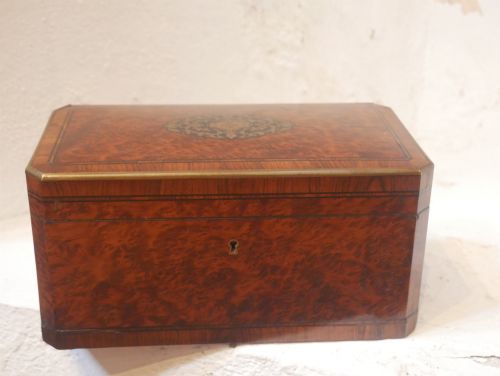


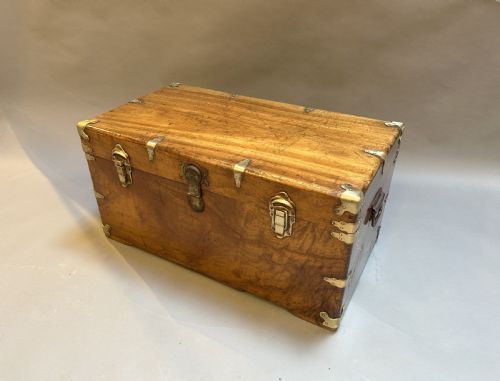
Brass Wooden Box
These brass wooden box examples combine timber and metal into practical containers from the eighteenth, nineteenth, and twentieth centuries.
Brass Wooden Box
When searching for a brass wooden box, a buyer encounters a diverse range of containers built for utility, travel, and domestic storage. These objects span periods from the seventeenth century through the Victorian era and into the early twentieth century, reflecting varied functions across households and journeys.
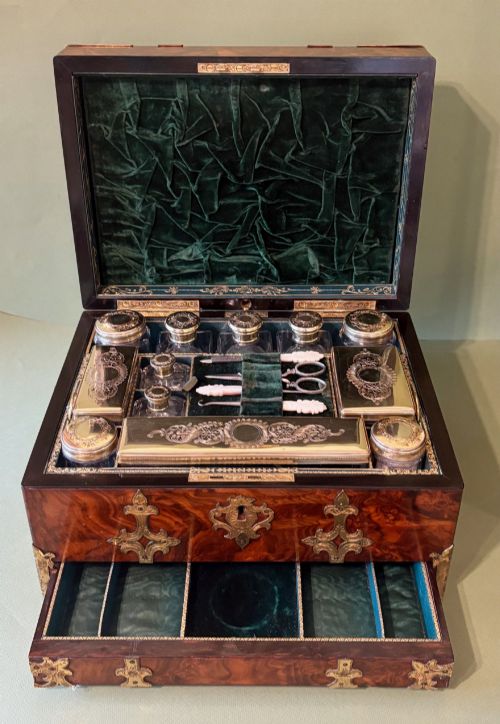
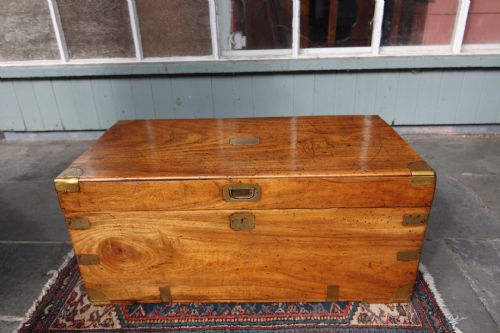
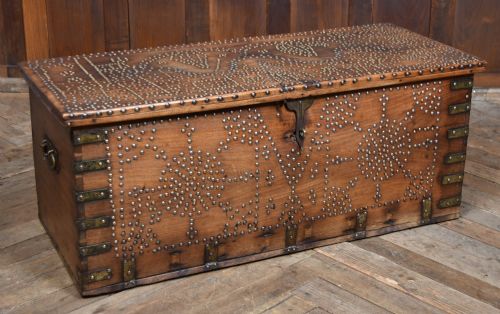
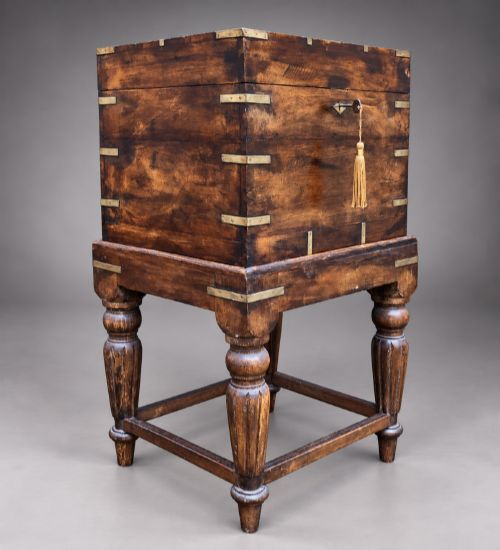
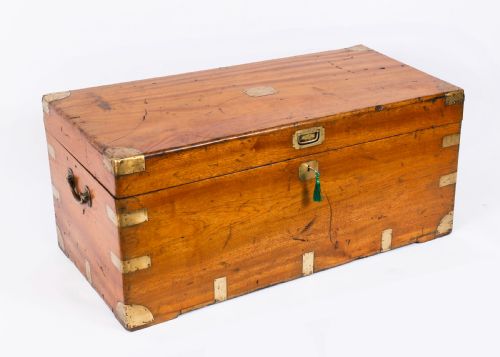
The most common versions met on this page are campaign trunks, writing slopes, and storage chests made from timbers like mahogany, camphor wood, and walnut, reinforced with brass corners and straps. Such pieces were designed to withstand heavy use, whether carried on military campaigns or kept in country houses.
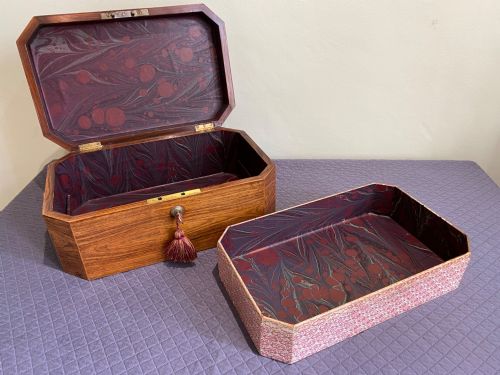
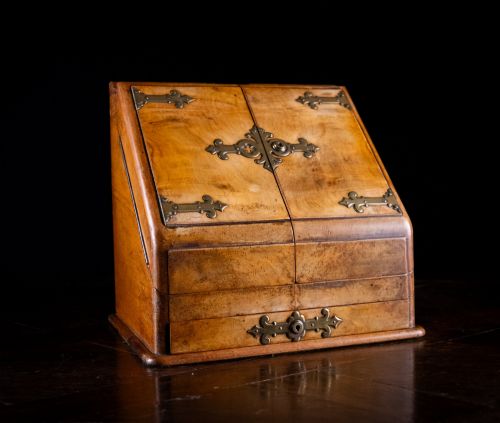
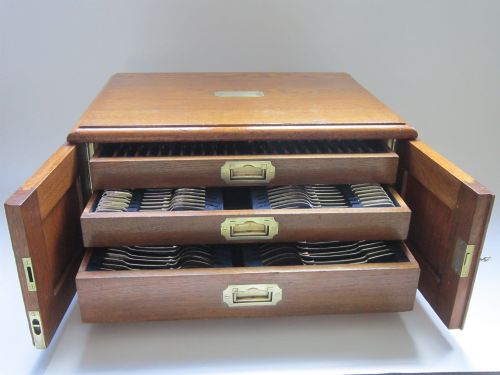
Other forms appearing in this category include stationery cabinets, tea caddies, correspondence boxes, and scientific instruments. Each object demonstrates the practical fusion of durable wood and protective brass elements characteristic of period craftsmanship.
Materials and construction
The construction of these pieces relies on sturdy hardwoods such as mahogany, oak, walnut, camphor wood, and padouk, selected for their stability and grain. Cabinetmakers and carpenters joined these timbers using traditional methods to build frames capable of enduring travel and daily handling.
Brass serves a dual purpose as both structural reinforcement and decorative inlay. Corner brackets, straps, flush handles, and hinges are fastened with screws to protect vulnerable edges and secure lids on trunks, writing slopes, and strong boxes.
Listings feature items spanning the seventeenth to the twentieth centuries, utilising woods from mahogany and oak to camphor wood and padouk.
Factors determining quality
Quality in these containers is determined by the selection of timber and the precision of the metalwork. Finely figured veneers, dense tropical hardwoods, and tightly fitted dovetail joints distinguish superior examples from simpler utilitarian items.
The integration of the brass hardware indicates the standard of manufacture. Hand-beaten or cast brass components that sit flush with the wooden surface and retain original locks and escutcheons demonstrate a higher level of workshop skill.
Tahan Paris·De Grave Short and Co·G Davis of Leeds·Jaques and Hamleys Gossima
The Brass Wooden Box Glossary
- Campaign trunk
- A sturdy chest built in sections with recessed brass handles and corner pieces for military transport.
- Writing slope
- A portable box with a hinged slanted lid that opens to reveal a writing surface and compartments for stationery.
- Tea caddy
- A small container designed to store tea leaves safely, often featuring internal compartments and a lock.
- Escutcheon
- A protective brass plate surrounding a keyhole that prevents the surrounding wood from splintering.
- Dovetail joint
- An interlocking corner joint formed by triangular pins and tails that provides exceptional strength for wooden boxes.
Brass Wooden Box: Frequently Asked Questions
What were brass wooden boxes used for?
These containers served specific practical roles in travel, commerce, and the home. Many functioned as portable desks, storage chests for officers on military campaigns, or secure repositories for documents and valuables.
Smaller examples were built to hold tea, stationery, or jewellery. Their robust construction allowed them to endure frequent movement without damaging their contents.
How do I identify a campaign box?
Campaign boxes typically feature exposed brass corners, straps, and flush-fitting drop handles designed to prevent snagging during transport. They are frequently constructed from durable timbers like camphor wood or mahogany.
Many of these pieces are built in two sections or feature folding mechanisms intended for easy packing by travellers and military personnel.
What woods were commonly used?
Makers utilised a variety of dense and figured timbers depending on the origin and purpose of the piece. Mahogany, walnut, and oak appear frequently in domestic items from the Georgian and Victorian periods.
For transport and colonial items, camphor wood, padouk, and teak provided natural resistance to insects and humidity during long sea voyages.
How should I care for a wooden box with brass?
Maintenance requires balancing the needs of two distinct materials. The wooden surfaces benefit from occasional light waxing to nourish the grain and prevent the timber from drying out.
Brass elements can be left with their natural aged patina or polished gently, taking care not to let cleaning compounds stain the surrounding wood.