


Brass Winding Clock
A brass winding clock brings mechanical precision and solid metal weight to a room, ranging from small travel timepieces to heavy mantel clocks.

Brass Winding Clock
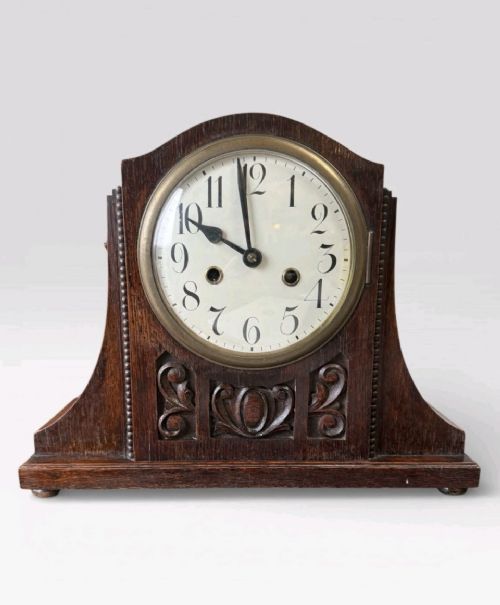
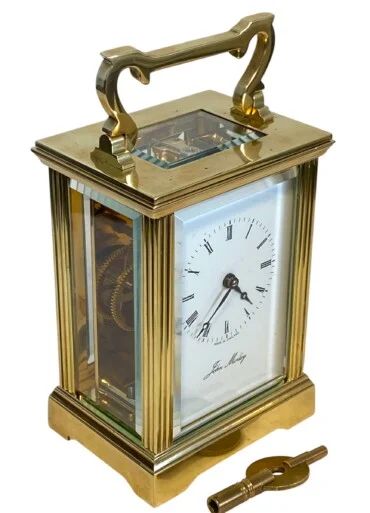
A brass winding clock covers a diverse group of mechanical timepieces spanning the nineteenth and twentieth centuries. The selection on this page relies heavily on carriage clocks, bracket clocks, and desk clocks housed in metal and wooden cases.
Makers from various periods utilised brass alongside glass, enamel, mahogany, and gilt bronze. Buyers encounter Victorian and Edwardian examples alongside French nineteenth-century pieces and mid-century designs.
How they were made
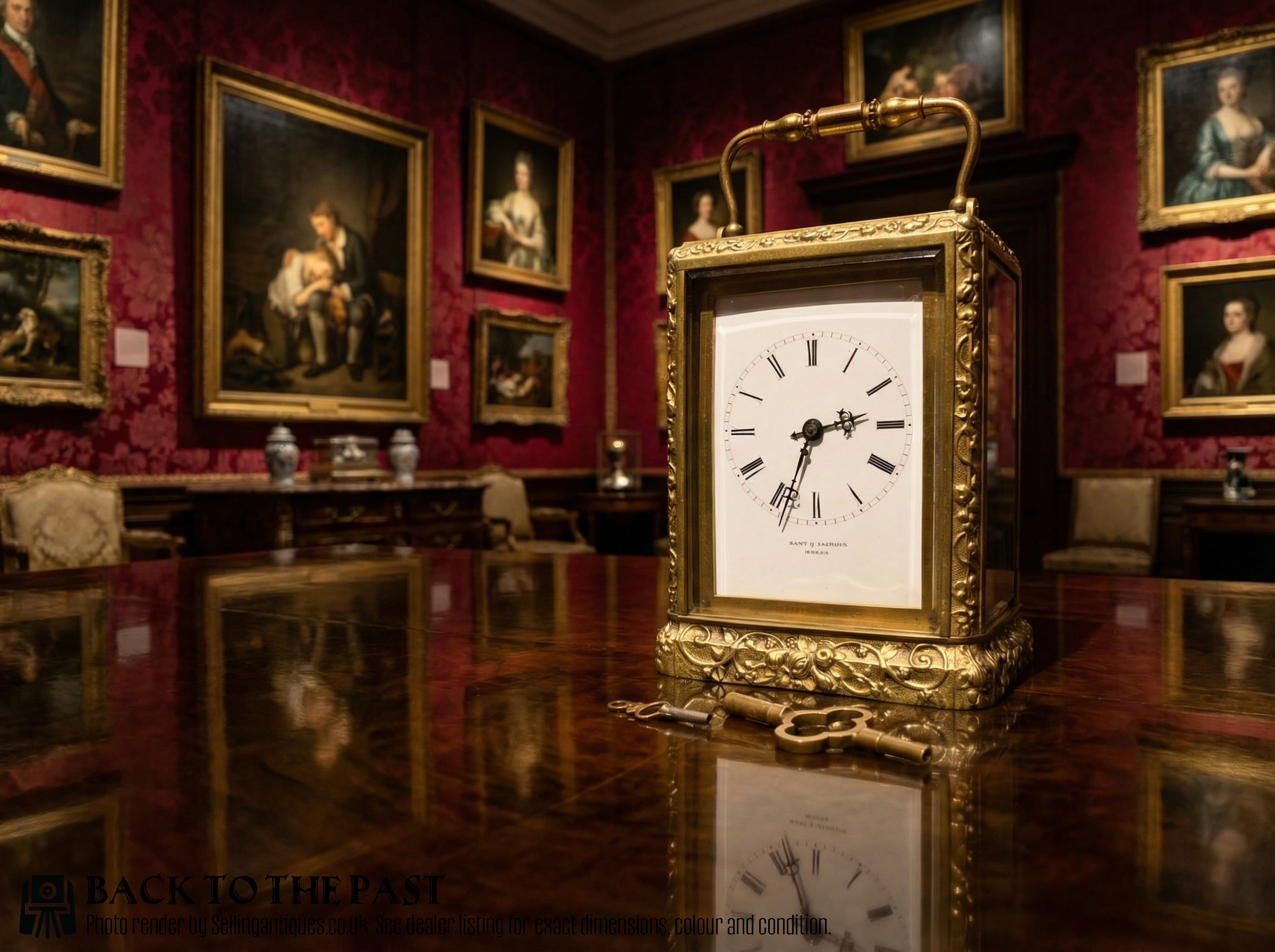
Cases combine polished brass, gilt bronze, or silver-plated metal with glass panels that reveal the internal escapement and gear trains. Wooden counterparts utilise mahogany, oak, and walnut, often accented with marquetry or satinwood inlay.
Enamel dials feature distinct Roman or Arabic numerals, paired with fine metal hands. Mechanical movements rely on precise brass gear assemblies, mainsprings, and escapements driven by a key or manual wind.
Brass Winding Clock Retail Price Guide 2026
Typical asking prices for brass winding clock among the pieces listed under this phrase on Sellingantiques today, from the lower quarter to the upper quarter. They describe what is for sale here now, not the wider market.
Some heavy carriage clocks were originally built heavy enough to survive bumpy roads in horse-drawn carriages without missing a beat.
What varies in quality
The standard of a brass winding clock depends on the heft of the case, the crispness of the cast brass details, and the complexity of the movement. Examples with striking mechanisms, repeaters, or alarm complications represent higher tiers of craftsmanship.
Signatures from notable makers or retailers elevate a piece, alongside undamaged enamel dials and thick bevelled glass panels. The integration of high-grade materials like gilt bronze or finely grained mahogany distinguishes superior production.
John Morley·Mappin and Webb·Bourdin Paris·Maple of London·Jaeger LeCoultre·J.B. Delettrez·Joseph Soldano·Kienzle
The Brass Winding Clock Glossary
- Carriage clock
- A portable timekeeper originally designed for travel in horse-drawn carriages. These pieces typically feature a rectangular brass case with glass panels and a handle on top.
- Fusee
- A conical pulley mechanism used in clocks to maintain even tension on the gear train as the mainspring unwinds. This device improves timekeeping accuracy across the power reserve.
- Repeater
- A mechanism that sounds the hours and quarters when a lever or button is pressed. Such complications required skilled watchmaking and appear in higher-tier French and English pieces.
- Bracket clock
- A portable table clock designed to sit on a bracket or shelf. Nineteenth-century versions often feature wooden cases in mahogany or oak with brass carrying handles.
- Gorge case
- A distinct rectangular brass carriage clock case style characterised by stepped mouldings at the top and base. This form is common in nineteenth-century French production.
Brass Winding Clock: Frequently Asked Questions
How do I wind a brass winding clock?
Insert the appropriate key into the winding square on the dial or backplate and turn it gently until resistance is felt. Care must be taken not to overwind the mainspring.
Most mechanical movements require a weekly or eight-day wind to maintain continuous operation. Consult the specific movement type before applying tension.
Where should I place a heavy brass carriage clock?
Select a stable, level surface away from direct sunlight, moisture, and temperature fluctuations. Heavy pieces require sturdy mantelpieces or desks.
Placing the clock away from high-traffic vibrations ensures the pendulum or balance wheel maintains steady beats.
How do I identify a French carriage clock?
Look for bevelled glass panels held within a heavy brass frame, often featuring a platform escapement visible through the top glass. Many examples include a folding handle.
Nineteenth-century French pieces frequently house quality cylinder or lever movements, occasionally bearing maker stamps on the backplate.
What is the difference between a fusee and a standard movement?
A fusee movement incorporates a conical drum and chain to equalise the force of the mainspring as it runs down. Standard movements drive the gear train directly from the barrel.
Fusee mechanisms are typically found in better quality English bracket and mantel clocks from the nineteenth century.