


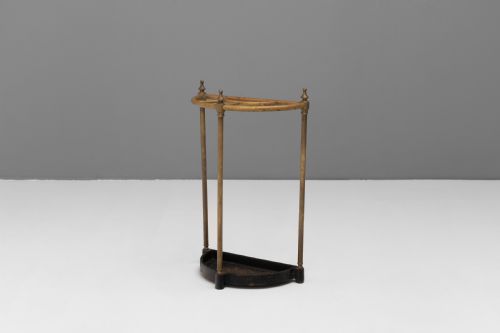


Brass Walking Stick Rack
A brass walking stick rack brings orderly charm to the hallway, holding canes and umbrellas with period character.
Brass Walking Stick Rack
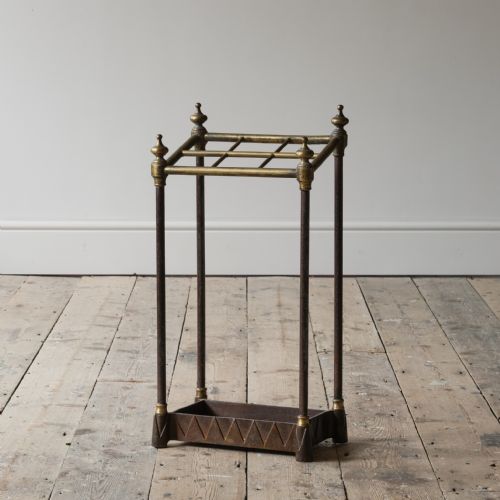
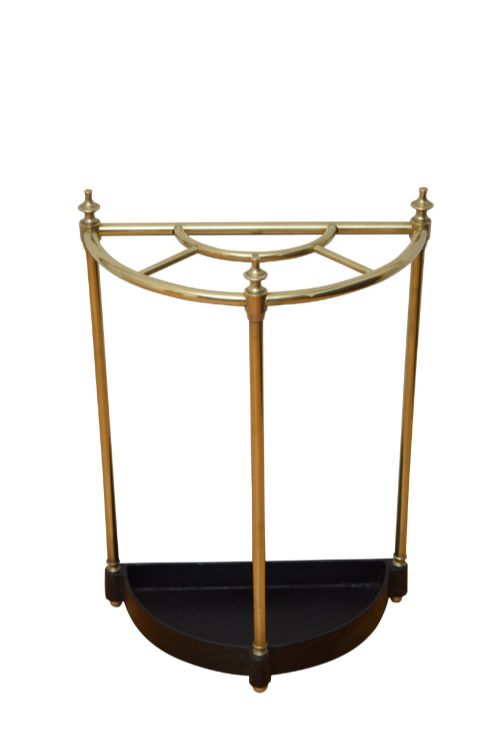
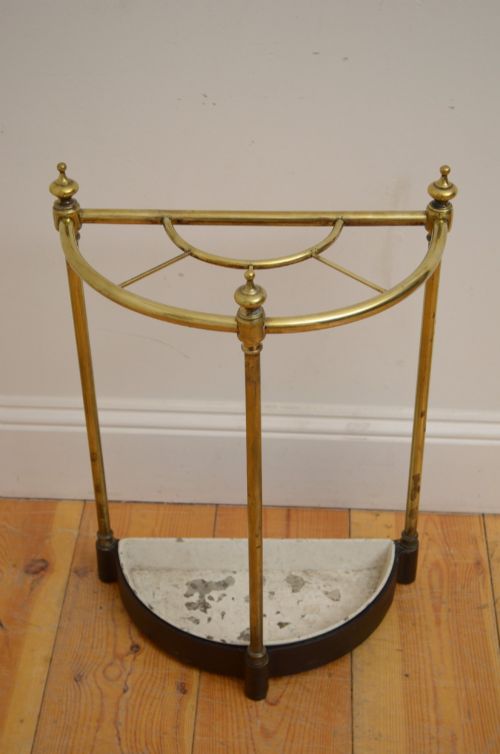
A brass walking stick rack provides a dedicated hallway vessel for canes, walking sticks and umbrellas, appearing in circular, demi-lune, and corner configurations. These functional pieces organise narrow entryways while adding a metallic gleam to the interior.
The versions most commonly met on this page date from the Victorian and Edwardian eras, combining bright metalwork with heavy bases. Makers often shaped these items to fit snugly against a wall or into a corner.
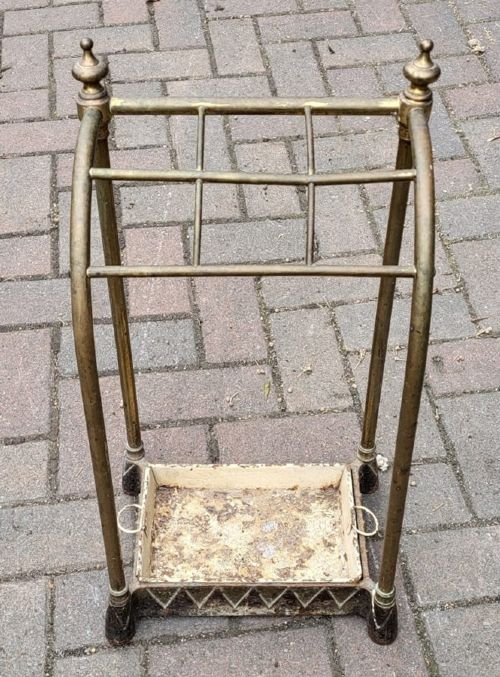
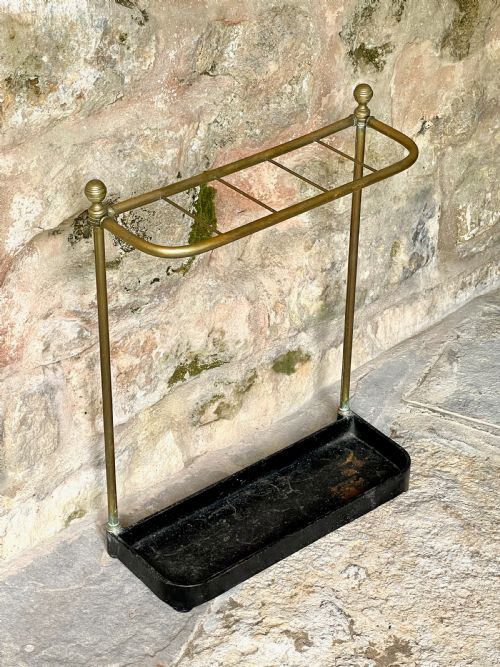
Form meets function through divisions and loops designed to keep multiple walking sticks upright and separated. Many examples incorporate heavy iron bases to prevent tipping when loaded with heavy wooden canes.
Materials and construction methods
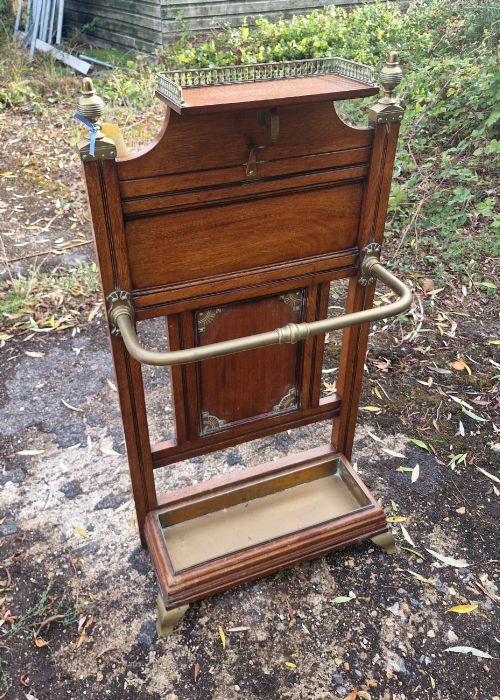
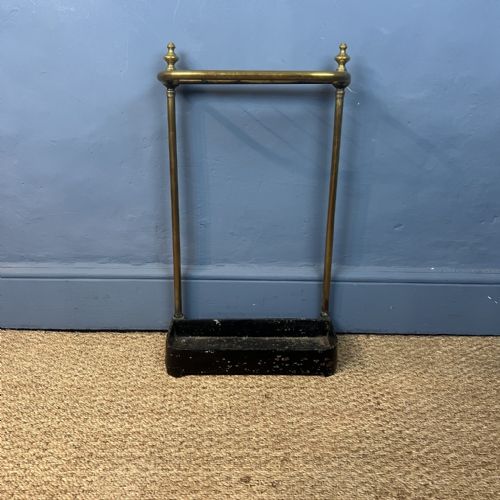
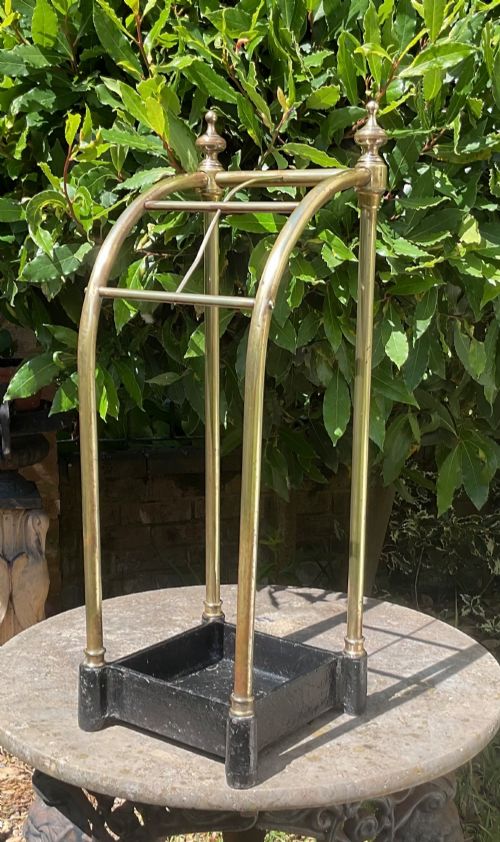
Foundries paired spun or sheet brass frames with heavy cast iron bases to ensure stability, using iron for weight and brass for the visible upper structure. Some iterations integrated wooden elements such as oak or mahogany alongside the metal framework.
Makers utilised structural casting and joining techniques to assemble the looped dividers and drip pans that catch residual rainwater. These construction choices dictated the durability and overall heft of the hall stand.
Design styles span the Victorian, Edwardian, Gothic Revival, and Art Nouveau periods.
Factors that distinguish quality
The distinction between standard utility items and finer examples rests on the complexity of the casting and the presence of decorative styling like Gothic Revival or Art Nouveau motifs. Heavier gauge brass and more intricate frame designs elevate the visual presence of the piece.
The integrity of the structural joints and the original pairing of the metal frame with its heavy base determine the daily utility and longevity of the stand. Clean lines and well-preserved surface patination indicate superior original manufacture.
Shoolbred·R.A. Lister
The Brass Walking Stick Rack Glossary
- Demi-lune
- A half-moon shape designed to sit flush against a hallway wall. This profile allows the stand to occupy minimal floor space while accommodating numerous sticks.
- Cast iron
- A heavy, durable iron alloy used for the weighted bases of these stands. It provides the necessary ballast to keep tall, slender racks from toppling.
- Gothic Revival
- An architectural and decorative style drawing inspiration from medieval forms. Pieces bearing this label often feature pointed arches and quatrefoil motifs.
- Art Nouveau
- A decorative movement characterised by sinuous, organic lines and floral motifs. Stands from this period show fluid curves in the brass framework.
- Drip pan
- A shallow metal tray positioned at the base to catch water from wet umbrellas. It protects hallway flooring from moisture damage.
Brass Walking Stick Rack: Frequently Asked Questions
Why are cast iron bases used?
Cast iron provides heavy ballast at the bottom of a tall metal frame. This weight stops the stand from tipping over when loaded with heavy wooden walking canes.
Combined with brass uppers, the iron base ensures stability and everyday utility in busy hallways.
How do I care for brass?
Brass surfaces respond best to gentle dusting and occasional cleaning with appropriate metal care products. Preserving the natural patina often appeals more to collectors than high-shine polishing.
Keep the drip pan dry to prevent corrosion and maintain the underlying metal integrity over time.
Where were these stands placed?
Victorian and Edwardian households positioned these racks in entrance halls and vestibules. They offered guests a convenient spot to deposit wet umbrellas upon arrival.
This placement also kept walking sticks organised and ready for outdoor excursions.