
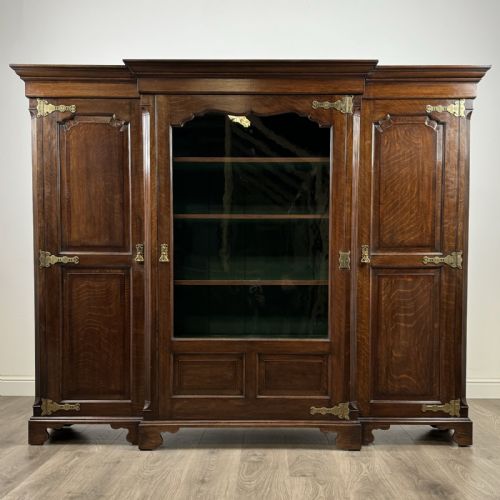
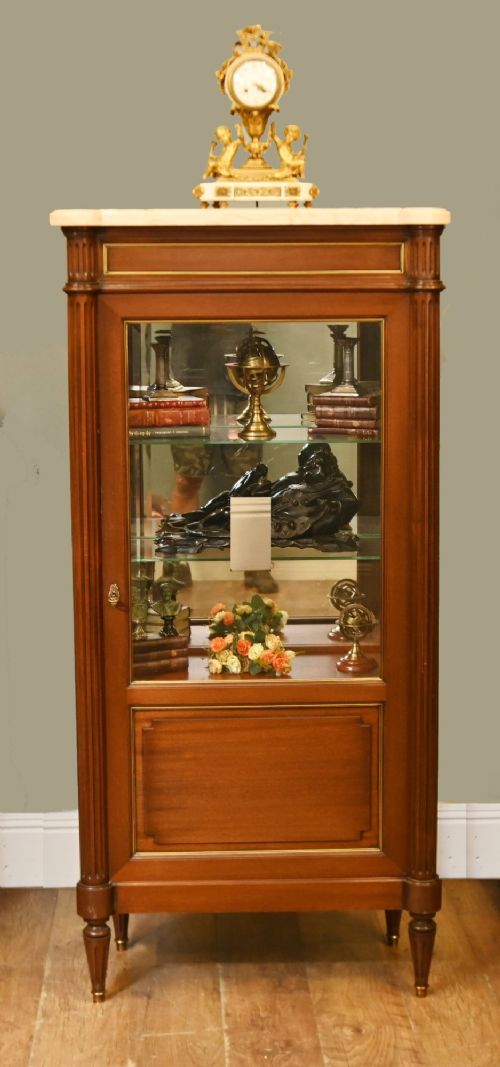
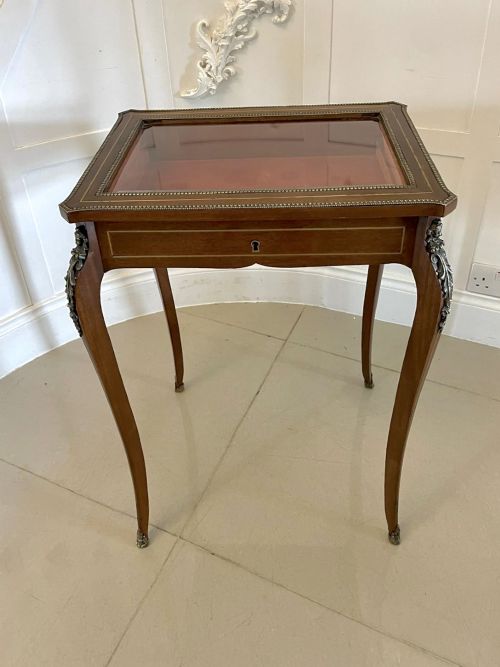
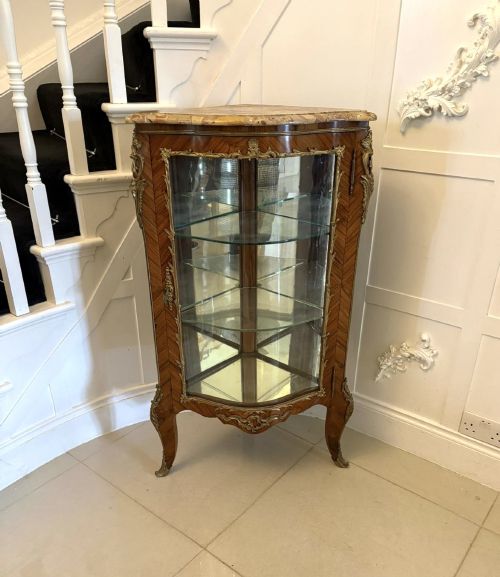




Brass Vitrine Cabinet
A brass vitrine cabinet brings together glass and metal framing to showcase treasured objects, originating primarily in French and English parlours and shops across the nineteenth and twentieth centuries.
Brass Vitrine Cabinet
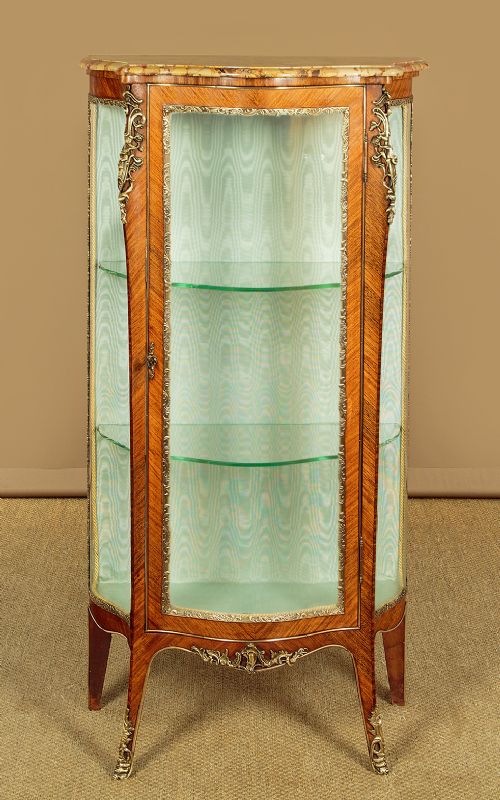
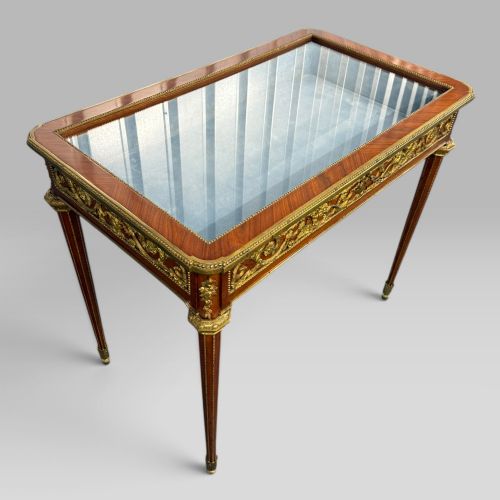
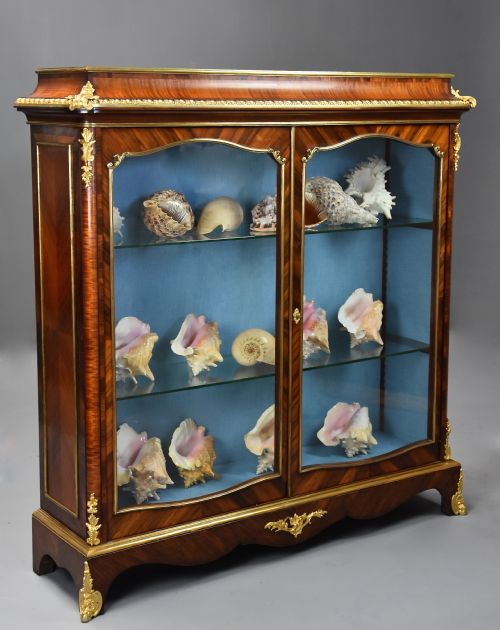
A brass vitrine cabinet functions essentially as a display enclosure, designed to protect and present small collections, books, or decorative items behind glass panels. These pieces appear in forms ranging from freestanding corner units and pier cabinets to tabletop bijouterie cases and shop counters.
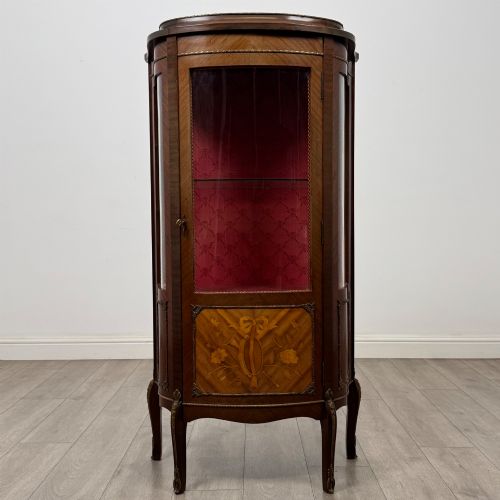
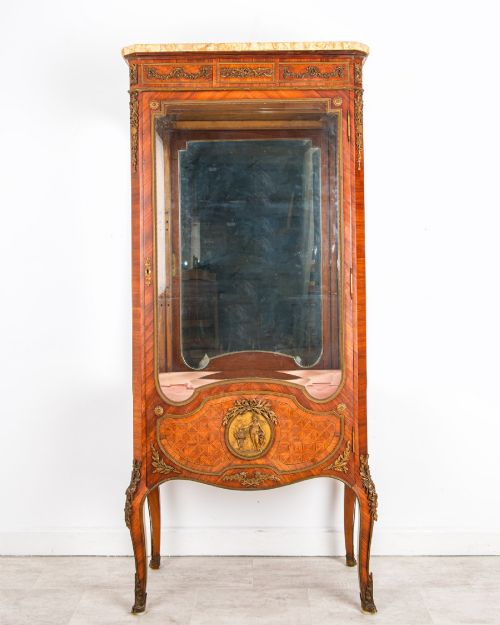
Most examples encountered on this page derive from nineteenth-century French workshops or Edwardian English interiors, reflecting revival styles such as Louis XV, Napoleon III, and Directoire. The typical piece relies on glazed doors or panels held within a structural wooden carcase.
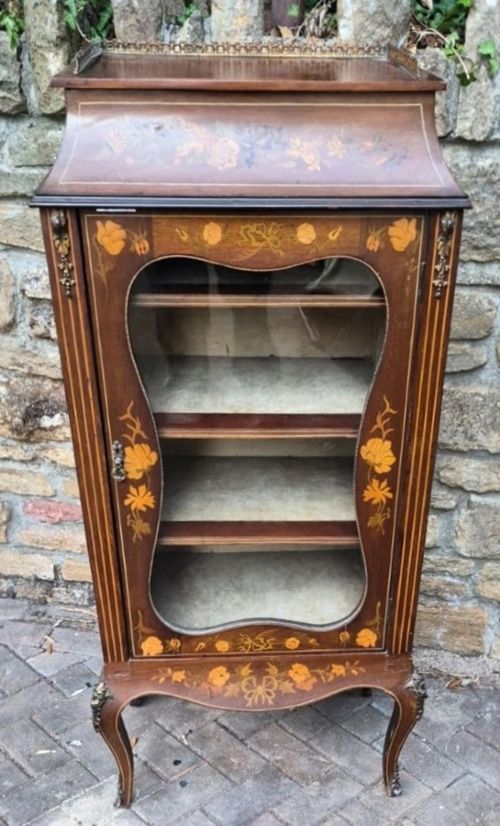
Makers adapted these cabinets for domestic drawing rooms as well as commercial retail spaces, creating variations like the low-profile display table or the tall bookcase hybrid. Selecting one involves matching the scale of the room to the proportions of the frame, whether serpentine, oval, or rectangular.
Materials and construction
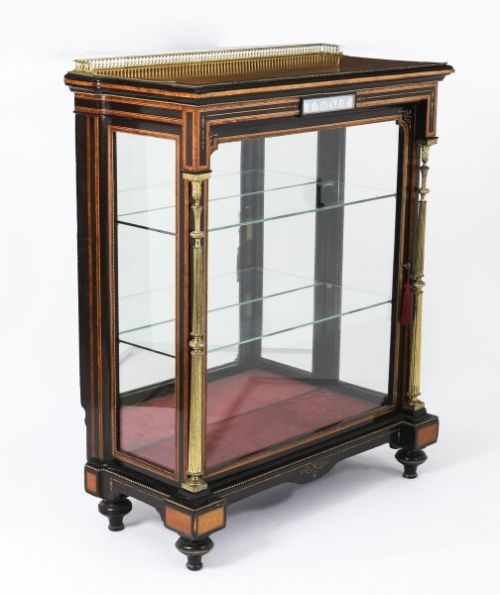
Makers constructed the foundational frames from dense timbers such as mahogany, kingwood, rosewood, and walnut, often applying ebonised finishes or intricate marquetry and boulle inlays. Brass and ormolu mounts provide structural framing around the glass panels, serving both decorative and protective functions.
Glazing technique required precise rebate cutting to hold glass securely within slender wooden and metal muntins. Ormolu mounts, cast in bronze and gilt, were meticulously chased and pinned to corners, legs, and cornices to accentuate the contours of the cabinet.
Some nineteenth-century shop cabinets retain their original velvet linings, preserving the exact shadows cast by long-vanished trinkets.
Distinctions in quality
Quality rests primarily on the crispness of the brass casting and ormolu chasing, where finer pieces display sharp relief and secure attachment without visible gaps. The selection of timber veneers, such as figured kingwood or Boulle tortoiseshell work, dictates the visual depth of the carcase.
Construction details differentiate standard production from workshop masterpieces, visible in the hand-cut dovetails of internal drawers, the weight of the bevelled glass, and the smooth operation of hinged doors. Attributed pieces and documented maker signatures indicate higher standards of design execution.
François Linke·F. Sage and Co·Paul Sormani·Edwards and Roberts·Siegel
The Brass Vitrine Cabinet Glossary
- Ormolu
- Gilt bronze mounted onto furniture surfaces as an ornamental feature. The technique involves applying a mercury and gold amalgam to cast bronze.
- Bijouterie cabinet
- A shallow glass-topped table or cabinet intended for jewellery and small precious objects. These often include lined interior trays for sorting items.
- Boulle
- An intricate marquetry technique combining tortoiseshell and brass inlay, popular in nineteenth-century French cabinet making. It creates high-contrast patterns across ebonised surfaces.
- Pier cabinet
- A narrow cabinet built to fit the wall space between windows. These pieces often incorporate mirrored backs and adjustable shelving.
Brass Vitrine Cabinet: Frequently Asked Questions
What is a brass vitrine cabinet used for?
These cabinets were originally designed to house and display collections of porcelain, small silver, books, and curiosities while protecting them from dust. In commercial settings, similar brass-framed cases served to present jewellery and high-end retail goods to customers.
Today, they function primarily as focal points in living spaces for exhibiting personal collections. The transparent glass panels allow items to be viewed from multiple angles.
How do I date a brass vitrine cabinet?
Dating relies on examining the timber construction, veneer types, and the style of the brass mounts. Nineteenth-century pieces frequently exhibit French revival influences such as Louis XV curves or Napoleon III Boulle work.
Later Edwardian and 1920s examples often feature cleaner mahogany lines or specialised commercial framing from makers like F. Sage and Co. Fasteners, screw types, and lock mechanisms also provide chronological clues.
How are brass mounts cleaned?
Cleaning requires gentle dusting with a soft, dry cloth to prevent abrasive particles from scratching the gilt surface. Chemical polishes must be avoided near wood veneers and fabric linings.
If tarnish requires attention, professional conservation advice should be sought to preserve the original ormolu gilding. Maintaining stable indoor humidity prevents both wood movement and metal corrosion.