




Brass Tortoiseshell Credenza
A brass tortoiseshell credenza brings nineteenth-century French and Victorian grandeur into a room through rich marquetry and gleaming metal mounts.
Brass Tortoiseshell Credenza
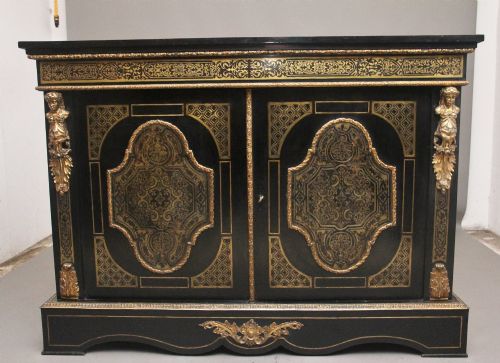
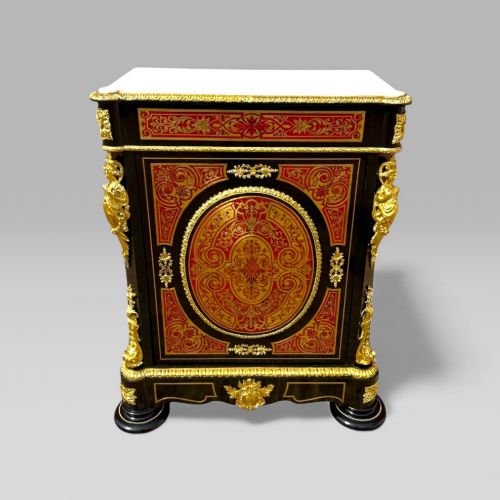
A brass tortoiseshell credenza is a nineteenth-century display or storage piece defined by elaborate Boulle marquetry, combining side cabinets, pier cabinets, and breakfront credenzas. These forms emerge primarily from French Napoleon III, Victorian, and Louis XVI style traditions.
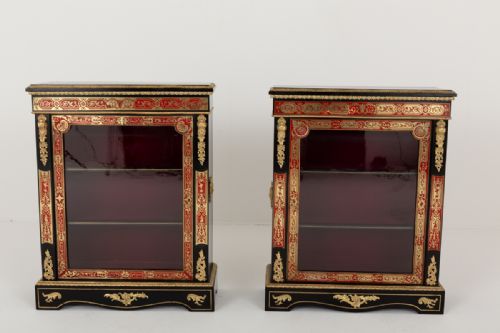
Buyers browsing this selection will frequently encounter ebonised wood frames mounted with contrasting brass and tortoiseshell inlay. Pier cabinets and serpentine side cabinets form the bulk of the available shapes from this era.
Origins trace back to nineteenth-century workshops producing French Revival and Boulle Revival furniture. Pieces range from grand breakfront credenzas to pairs of compact pier cabinets.
Materials and construction
Maker workshops built these cabinets upon robust timber carcasing, frequently utilising ebonised wood or rosewood as a dark foundation. Ormolu and gilt bronze mounts accent the structure, framing doors and corners.
The characteristic marquetry relies on tortoiseshell and brass meticulously cut and fitted together. Glass panels appear in display cabinets, whilst marble surfaces top several of the side cabinets and credenzas.
Velvet linings often furnish the interior spaces behind glazed or panelled doors. Cast or chased ormolu details secure the edges and provide structural relief to the dark wooden surfaces.
Materials across these listings concentrate on brass, tortoiseshell, ebonised wood, and ormolu, with several examples incorporating marble tops and velvet interiors.
Distinctions in quality
Quality rests upon the precision of the brass and tortoiseshell marquetry. Finer examples display tight, seamless cuts where metal and shell meet without excess adhesive or gaps.
The crispness of the ormolu mounts separates superior cabinets from simpler workshop output. Hand-chased bronze details exhibit sharp definition and depth, whereas lesser mounts appear soft and flat.
Timber selection and structural stability dictate longevity. Dense ebonised woods and solid marble tops indicate higher grade production during the nineteenth century.
The Brass Tortoiseshell Credenza Glossary
- Boulle
- A marquetry technique of inlaying brass and tortoiseshell, developed in France and revived during the nineteenth century. It creates striking metallic patterns against a dark ground.
- Ormolu
- Gilded bronze used for decorative mounts and feet on nineteenth-century furniture. It provides a bright golden contrast to ebonised wood and dark shell.
- Credenza
- A low cabinet used for display or storage, often featuring glass doors or central shelving. In nineteenth-century variants, it serves as a grand reception room focal point.
- Pier cabinet
- A narrow cabinet designed to stand against the wall space between windows. These tall, slender pieces often house collections behind single glazed doors.
- Ebonised
- Wood stained or painted black to imitate ebony. This dark finish highlights the reflective qualities of brass and tortoiseshell inlay.
Brass Tortoiseshell Credenza: Frequently Asked Questions
What is a boulle credenza?
A boulle credenza is a nineteenth-century cabinet decorated with tortoiseshell and brass marquetry in the style popularised by André-Charles Boulle and revived during the Napoleon III era.
These pieces typically feature dark ebonised wooden carcases embellished with cast ormolu mounts and often incorporate glass display doors or marble tops.
How do I clean tortoiseshell and brass?
Maintenance requires gentle dusting with a soft, dry cloth to protect the delicate junction between the brass inlay and tortoiseshell.
Harsh chemical polishes should be avoided entirely, as they damage the organic shell and loosen the historic adhesives holding the marquetry in place.
Where were these cabinets made?
The majority of these pieces originate from nineteenth-century French workshops influenced by Napoleon III taste and Louis XVI revival aesthetics.
English cabinet makers also produced similar designs during the Victorian period, adapting continental Boulle techniques for local homes.
Can I use a credenza for storage?
These cabinets provide enclosed shelving behind wooden or glass doors, making them suitable for storing glassware, books, or tableware.
Interior velvet linings and adjustable wooden shelves accommodate functional domestic use whilst maintaining the decorative display function.
How do I date a nineteenth-century cabinet?
Dating relies on examining construction methods, timber types, and the style of the ormolu mounts alongside secondary woods used inside the carcase.
Napoleon III and Victorian examples from the mid to late nineteenth century show distinct stylistic shifts from earlier Louis XVI revival interpretations.